
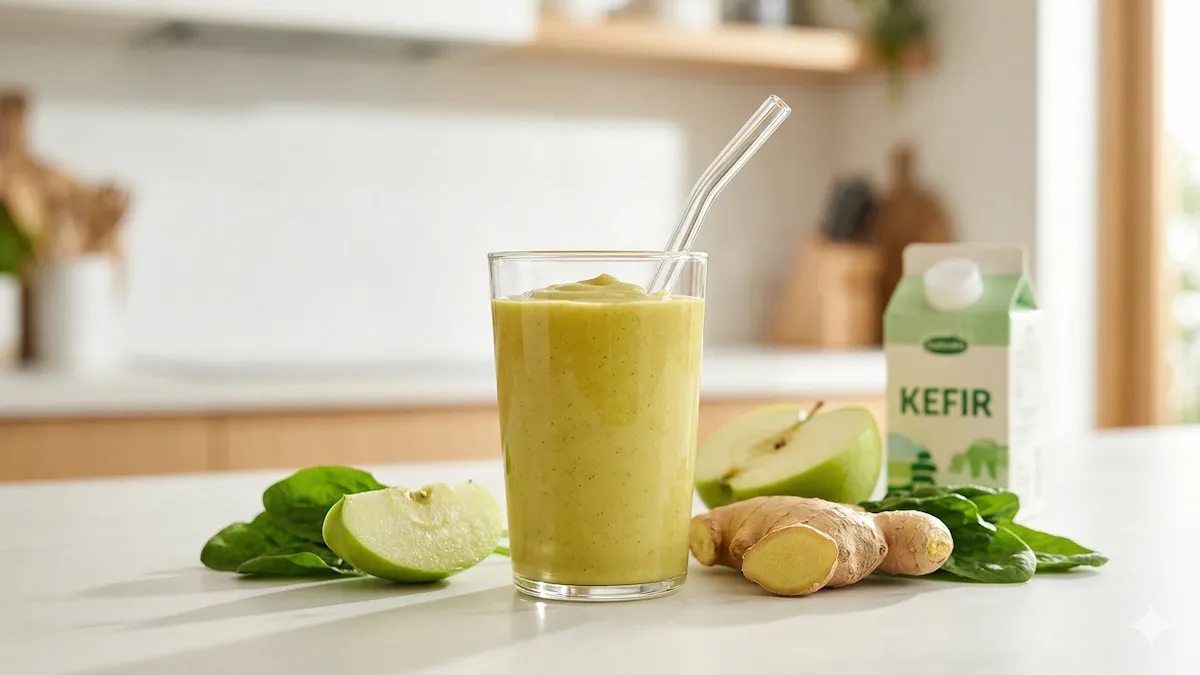
Antibiotics can help clear an infection, but they can also throw off the balance of bacteria in your gut. As a result, you might deal with diarrhea, bloating, gas, stomach cramps, or a low appetite for days after your last dose. That’s why smoothies for gut health after antibiotics can be such a practical place to start. They’re easy to sip when solid food sounds unappealing, and they can help you get fluids, gentle nutrition, probiotics, and prebiotic fiber in one glass.
Still, smoothies aren’t a cure on their own, and they won’t fix every post-antibiotic gut issue overnight. What they can do is support recovery while your gut flora starts to rebuild, especially if you choose the right ingredients and skip the ones that may make symptoms worse. In this guide, you’ll learn what to include, what to avoid, the best smoothie ideas for recovery, and when ongoing symptoms mean it’s time to call a doctor.
What happens to your gut after antibiotics, and why food matters
Antibiotics can wipe out harmful bacteria, but they also thin out some of the helpful microbes that support digestion. As a result, your gut can feel unsettled for a while, almost like a garden after a hard frost. Food matters here because it shapes what your gut has to work with while that balance starts to rebuild.
Weight Loss Programs

Diet & Weight Loss

Diet & Weight Loss

Diet & Weight Loss
The Mediterranean Diet – Diamond Evergreen Digital Diet Program

Diet & Weight Loss
That doesn’t mean every stomach issue after antibiotics points to major damage. Still, what you eat can either calm things down or make symptoms drag on. This is one reason smoothies for gut health after antibiotics can be useful, especially when regular meals feel like too much.
Common signs your gut may need extra support
The most common sign is antibiotic-associated diarrhea. It can show up during treatment or after you finish, because antibiotics can disrupt the normal mix of bacteria in your intestines. If you want a plain-language overview, Cleveland Clinic’s guide to antibiotic-related diarrhea explains why this happens and when to get help.
Diarrhea isn’t the only clue. You might also notice bloating, constipation, nausea, extra gas, stomach discomfort, or that strange feeling of getting full after only a few bites. When your gut is off, even foods you usually handle well can suddenly feel heavy.
A few signs tend to come up again and again:
- Loose stools or more urgent bathroom trips than usual
- A swollen, gassy, or tight feeling in your belly
- Slower digestion and fewer bowel movements
- Mild nausea, especially around meals
- Early fullness, so you stop eating sooner than normal
Some people bounce back quickly. Others need more time, especially after a longer antibiotic course or if their appetite was already low. According to this overview of gut recovery after antibiotics, recovery can vary quite a bit from person to person, which is why a gentle food plan often works better than forcing a fast return to heavy meals.
If your stomach feels “off” after antibiotics, that’s common. If symptoms are severe, persistent, or getting worse, it’s time to call your doctor.
Why smoothies are often easier to tolerate than heavy meals
When your appetite is low, a full plate can feel like too much work. A smoothie lowers the effort. You don’t need much chewing, and you can sip it slowly instead of pushing through a large meal.
That matters when nausea, fullness, or fatigue make eating hard. Blended foods often feel gentler because the texture is smooth and the portions are easy to control. In addition, smoothies can help you get fluids, protein, and simple carbs at the same time, which is helpful if you’ve had diarrhea or haven’t eaten much.
Smoothies can also support hydration, which people often overlook after stomach upset. A simple blend with yogurt or kefir, fruit, and liquid can be easier to manage than eggs, toast, or a rich dinner. For many people, that’s why the best smoothies after antibiotics are the ones that feel light, not loaded.
Still, not every smoothie helps. Some can backfire fast, especially if they contain:
- Lots of added sugar or fruit juice
- Very large portions
- Heavy cream, ice cream, or too much nut butter
- High-fat add-ins that slow digestion
- Sugar alcohols that can trigger gas or loose stools
In other words, think of a recovery smoothie like a soft landing, not a cheat meal in a glass. If you’re trying to figure out how to restore gut flora with probiotics, food choices like plain yogurt or kefir may fit better than dessert-style blends. The goal is to give your gut something calm and steady, especially in the first few days when heavy meals still feel rough.
The best ingredients to put in smoothies for gut health after antibiotics
When your stomach feels touchy, the right smoothie ingredients can make a big difference. The goal is simple, give your gut a mix of probiotics, gentle fiber, and fluids without overloading digestion. For many people, the best smoothies after antibiotics are the ones that feel plain, balanced, and easy to finish.
If you’re using smoothies for gut health after antibiotics, think soft textures, low added sugar, and modest portions. A recovery smoothie should support your gut, not challenge it.
Probiotic foods that can help rebuild healthy gut bacteria
Probiotic foods add live microbes that may help restore gut flora with probiotics after a round of antibiotics. In smoothie form, the easiest options are plain kefir and plain yogurt with live cultures. Both can add protein, creaminess, and a tangy taste, which is helpful when your appetite is low.
If you’re choosing between them, kefir often has more probiotic strains and a thinner texture, so it blends easily and feels lighter to sip. Yogurt usually tastes milder and can be easier for some people to enjoy, especially if kefir’s tang feels too sharp. A simple breakdown from Verywell Health’s kefir vs. yogurt guide explains why both can fit a gut-friendly routine.
A few easy probiotic add-ins work well here:
- Plain kefir
- Plain yogurt labeled live and active cultures
- Small amounts of probiotic drinkable yogurt
- Unsweetened dairy-free yogurt with live cultures, if you don’t tolerate dairy
If dairy bothers your stomach, a coconut or almond-based yogurt with live cultures can be a reasonable swap. Just check the label and skip options packed with sugar. The best choice is often the one you can tolerate consistently for several days.
If your gut feels raw, start with a small serving of kefir or yogurt first. More isn’t always better on day one.
Prebiotic fibers that feed the good bacteria
Probiotics are only part of the picture. Prebiotic fibers for post-antibiotic recovery help feed the helpful bacteria already living in your gut. Think of them as fertilizer for the garden you’re trying to regrow.
Some of the easiest smoothie choices are bananas, oats, chia seeds, and ground flax. Bananas are usually gentle, especially when they’re not overly ripe. Oats add body and can feel soothing, while chia and ground flax bring a little fiber without needing a huge amount.
A few simple add-ins often work well:
- Half a banana
- A few tablespoons of oats
- One teaspoon to one tablespoon of chia seeds
- One teaspoon to one tablespoon of ground flax
- Small portions of soft fruit, like blueberries
- Mild vegetables, like a little cooked zucchini if you tolerate it
Cooked and cooled oats can also work if you want a smoother texture. However, add fiber slowly. Too much too soon can lead to gas, bloating, or cramping, especially when your digestion already feels off. A helpful overview of prebiotics after antibiotics covers why gradual increases tend to work better.
If you’re not sure where to start, go small. One banana plus a spoonful of oats is often easier than a blender full of seeds and greens.
Gentle add ins that support hydration and digestion
Hydration matters just as much as ingredients with probiotics or fiber. After antibiotics, especially if you’ve had loose stools, your smoothie base should be easy on the stomach. Water, coconut water, milk, or a simple nondairy milk are all good starting points.
Then add a few calm, easy-to-digest extras. Ginger may help settle nausea, and mint can make the smoothie feel fresher without making it heavy. Soft fruits like blueberries or peeled pear blend well and usually go down easily in small portions.
If you’re making smoothies to prevent antibiotic-associated diarrhea, aim for a bland, lower-sugar mix. That often means:
- Plain yogurt or kefir
- Banana, blueberries, or peeled pear
- Water or unsweetened milk
- A little oats, if tolerated
High-sugar blends can pull in extra fluid and leave your stomach feeling worse. On the other hand, simple probiotic ingredients may help some people lower the risk of antibiotic-associated diarrhea. For a research summary, see AAFP’s review on probiotics for preventing antibiotic-associated diarrhea.
A good recovery smoothie should feel more like a light meal than a dessert. If it tastes sweet but not sugary, you’re probably on the right track.
What to limit if your stomach feels irritated
Even healthy ingredients can backfire right after antibiotics. When your gut is irritated, concentrated smoothies often cause the most trouble. That includes blends loaded with fruit juice, sweeteners, or hard-to-digest extras.
Try to limit very high-sugar juices, large amounts of honey or maple syrup, and products with sugar alcohols like sorbitol or xylitol. These can trigger gas, cramping, or loose stools. The same goes for smoothie-shop style blends that pack several servings of fruit into one cup.
Raw veggies can also be rough in large amounts. A handful of spinach may be fine, but big portions of raw kale, broccoli, or cauliflower can feel like too much for a recovering gut. Also go easy on nut butters, because high fat can slow digestion and make nausea or fullness worse. Spicy add-ins, such as cayenne or lots of fresh turmeric with pepper, may irritate an already sensitive stomach.
If your smoothie keeps upsetting your stomach, simplify it. Use one probiotic base, one fruit, one liquid, and maybe one small fiber add-in. That’s often a better path to natural ways to rebuild microbiome diversity than tossing in every “healthy” ingredient at once.
7 easy smoothie ideas to support post antibiotic recovery
When you’re choosing smoothies for gut health after antibiotics, the best approach is usually the simplest one. Start soft, keep portions modest, and build up as your stomach gets calmer. Think of it like turning the lights up slowly, not all at once.
These smoothie ideas follow that pattern. First, go with gentle blends that are easy to tolerate. Then add more prebiotic fibers for post-antibiotic recovery. After that, bring in more plant variety over time, which is one of the more practical natural ways to rebuild microbiome diversity.
Start with gentle options when your stomach is still sensitive
In the first few days, bland and soothing usually wins. You want a smoothie that feels light, not one that hits your gut like a brick.
A banana oat kefir smoothie is a good place to start. Blend plain kefir, half a banana, and a small spoonful of oats with water or milk. It gives you probiotics, a little starch, and a soft texture that often sits well. If you want a simple reference, this pear and kefir smoothie example shows the same gentle idea, keep it plain and easy.
A plain yogurt blueberry smoothie also works well when your appetite is low. Use plain yogurt, a small handful of blueberries, and enough liquid to thin it out. Blueberries add flavor without pushing sweetness too far, and the yogurt gives you protein plus live cultures. For many people comparing kefir vs yogurt for gut healing, yogurt tastes milder while kefir feels lighter. The better pick is the one your stomach handles best.
If dairy feels fine but your stomach still seems touchy, try a pear ginger smoothie. Use peeled pear, a little fresh ginger, and water or a splash of kefir. Pear is soft and mild when peeled, while ginger may help if nausea is part of the picture.
Keep these early blends simple:
- Use plain yogurt or kefir
- Stick to one fruit at first
- Skip juice, sweeteners, and big handfuls of seeds
- Start with a small glass, then see how you feel
Right after antibiotics, a calm smoothie is usually better than a “superfood” smoothie.
Add more fiber slowly as your digestion starts to settle
Once bloating, cramps, or loose stools start easing, you can add a little more fiber. The key word is little. Too much too fast can leave you feeling worse, even if the ingredients are healthy.
A banana oat chia smoothie is a smart next step. Blend plain kefir or yogurt with half a banana, oats, and just 1 teaspoon of chia seeds. Chia can help add soluble fiber, but a large scoop may be too much early on. If you tolerate it well for a few days, move up slowly.
Another solid option is a berry flax yogurt smoothie. Blend plain yogurt, a small handful of mixed berries, and 1 teaspoon of ground flax. Flax adds fiber and helps make the smoothie more filling, but starting small matters here too. If you’re looking for one of the best smoothies after antibiotics once your stomach settles, this is an easy upgrade from the gentler blends.
A simple way to scale portions is to increase one thing at a time:
- Start with a half serving.
- Keep that same smoothie for two or three days.
- Increase either the portion or the fiber add-in, not both.
- Pull back if gas or bloating picks up again.
That slow ramp matters because your gut may still be healing, even if you feel mostly better. In other words, don’t turn one teaspoon of chia into two tablespoons overnight. A steady pace tends to work better than trying to rush how to restore gut flora with probiotics and fiber in one go.
Try more variety to help rebuild microbiome diversity over time
After your digestion feels more stable, more ingredient variety can be helpful. You still don’t need a blender packed with ten foods, though. A little more range over several days works better than cramming everything into one glass.
A kefir green smoothie with spinach and kiwi is a nice step up. Use plain kefir, a small handful of spinach, half to one kiwi, and a little banana if you want a smoother taste. This gives you probiotics plus a wider mix of plant compounds without making the smoothie too heavy. If you want inspiration, this kiwi kefir smoothie recipe shows how those ingredients fit together in a simple blend.
You can also try a mixed berry smoothie with flax and mint. Blend yogurt or kefir with mixed berries, a teaspoon of ground flax, and a few mint leaves. Berries bring different plant compounds, while mint can make the smoothie feel fresher and easier to sip. For some people, this style fits well with smoothies to prevent antibiotic-associated diarrhea, especially when it’s low in added sugar and not oversized.
Here’s the main idea: variety helps over time. You do not need spinach, kiwi, berries, flax, mint, oats, chia, and yogurt all in the same week, let alone the same day. Add one or two new ingredients, notice how you feel, then build from there.
That slow mix of probiotics, fiber, and plant variety is often what makes smoothies for gut health after antibiotics useful. Not because one perfect recipe fixes everything, but because small, steady choices give your gut room to recover.
How to make gut healing smoothies work better for your body
A good smoothie can help after antibiotics, but how you use it matters just as much as what’s in it. Your gut is often more sensitive than usual, so the best plan is simple, steady, and easy to adjust.
Think of recovery like turning down background noise. The less chaos you add, the easier it is to notice what actually helps. That’s why smoothies for gut health after antibiotics tend to work best when you keep the recipe basic, the portion modest, and the routine consistent.
Start small, sip slowly, and watch how your gut responds
When your stomach is unsettled, a giant smoothie can feel like too much all at once. Start with a small glass, then give your body time to react. If it sits well, you can always have more later.
Keep the ingredient list short at first. A probiotic base, one fruit, and one small fiber add-in is often enough. This makes it easier to spot foods that trigger bloating, cramping, or loose stools.
A simple tracking habit can help more than people expect. For a few days, jot down:
- what you used
- how much you drank
- how your stomach felt an hour or two later
- whether symptoms improved, stayed the same, or got worse
That quick note can show patterns fast. Maybe banana and kefir feel fine, but chia pushes things too far. Maybe yogurt works, but a lot of berries doesn’t.
Temperature matters too. Very cold drinks can bother some people, especially when the gut already feels irritated. In that case, use less ice, let frozen fruit soften a bit, or make the smoothie cool instead of icy. For many people, that small change makes it easier to tolerate.
If you need a reminder, keep it simple: small serving, slow sips, few ingredients. That’s often the difference between a helpful smoothie and one that leaves your stomach complaining.
When to drink smoothies after taking antibiotics or probiotics
Timing doesn’t need to be perfect, but a little spacing can make your routine easier. If a clinician has suggested probiotic foods or supplements while you’re taking antibiotics, many people prefer to leave some time between the two instead of taking everything together. General guidance often suggests a gap of a couple of hours when possible, as noted in this overview of timing probiotics with antibiotics.
That doesn’t mean you need a rigid schedule. What matters most is picking a time when your stomach feels calm enough to handle it.
For example, a smoothie can work well as:
- a light breakfast when solid food feels unappealing
- a mid-morning or afternoon snack
- part of a small meal with something bland on the side
If antibiotics make you nauseated, you may do better sipping a smoothie between meals rather than chugging one on an empty stomach. On the other hand, if mornings are your best window, use that. Recovery is rarely one-size-fits-all.
If you’re also trying how to restore gut flora with probiotics, consistency helps more than perfection. A smoothie that you tolerate well several days in a row is usually more useful than a “perfect” one you only manage once.
Easy ways to turn one base smoothie into a full recovery routine
You don’t need a brand-new recipe every day. In fact, one basic smoothie can carry most of the load, then you can rotate a few ingredients across the week. That gives you more variety without making your gut guess what’s coming next.
A base smoothie might be plain kefir or yogurt, banana, and oats. From there, switch just one extra ingredient at a time. This kind of rotation can support natural ways to rebuild microbiome diversity while still keeping the routine gentle. A good overview of small, steady gut reset habits follows the same idea.
Here’s what that can look like through the week:
- Use banana and oats for a calmer day.
- Swap in blueberries the next day.
- Add a small amount of ground flax later in the week.
- Try spinach or kiwi only after your stomach feels steadier.
This also helps prevent smoothie fatigue. Drinking the exact same blend every day can get old fast, even if it’s one of the best smoothies after antibiotics.
If the smoothie doesn’t keep you full, pair it with a simple food. Good options include toast, eggs, rice, soup, or a yogurt bowl. That way, you get the ease of a smoothie plus enough staying power to make it through the next few hours.
The goal isn’t to build the most impressive blender drink. It’s to create a routine your gut can handle, your appetite can accept, and your body can actually use.
When smoothies are not enough, and when to call a doctor
Smoothies for gut health after antibiotics can be a helpful bridge while your stomach settles. Still, they are not the answer for every symptom. If your body is sending louder warning signs, think of a smoothie as support, not a fix.
Most post-antibiotic stomach issues improve with time, fluids, and simple foods. But some symptoms point to something more serious, and that’s when it makes sense to stop troubleshooting at home and get medical advice.
Red flags that should not be ignored
A rough stomach after antibiotics can be common. What should make you pause is severity, speed, or a pattern that keeps worsening. If diarrhea is intense, frequent, or leaves you weak and dizzy, don’t try to push through it with smoothies alone.
Call a doctor if you have any of these signs:
- Severe diarrhea, especially if it’s happening many times a day
- Dehydration, such as very dark urine, a dry mouth, dizziness, or trouble keeping fluids down
- Blood in your stool
- Fever
- Strong belly pain or cramping that feels more than mild stomach upset
- Symptoms that keep getting worse, not better
- Diarrhea that continues after finishing antibiotics
Those symptoms can sometimes raise concern for C. diff, a gut infection that can happen after antibiotic use. In plain terms, it’s a harmful bacteria problem that can cause a lot more than a mildly upset stomach. The American Gastroenterological Association’s C. diff patient page gives a clear overview of what it can look like and when to call a doctor.
If diarrhea is strong, painful, or still going after your antibiotic is done, it’s time to check in with a clinician.
Don’t wait too long if you feel drained, faint, or can’t stay hydrated. Diarrhea can dry you out faster than many people expect. A simple smoothie may help with fluids in mild cases, but it won’t treat a serious infection or replace medical care.
If dairy bothers you, or your symptoms keep coming back
After illness or antibiotics, your gut can get a lot more sensitive for a while. Foods you normally tolerate may suddenly feel like too much. Dairy is a common one, because temporary lactose intolerance can flare after your gut has been irritated.
That can show up as bloating, gas, cramps, nausea, or diarrhea after milk, yogurt, or some smoothie bases. If that sounds familiar, it doesn’t mean dairy will bother you forever. It may just mean your gut needs a gentler approach for now. The Minnesota Department of Health lactose intolerance guide lists the common symptoms in plain language.
A simple test can help. For a few days, switch to:
- Lactose-free milk
- Lactose-free yogurt
- Dairy-free yogurt with live cultures
- Unsweetened almond, oat, or coconut milk
Then keep the rest of your smoothie simple. If symptoms improve, dairy may be part of the problem. If they don’t, something else may be going on, such as another food sensitivity or a gut issue that needs more attention.
Recurring symptoms matter too. Maybe you feel better for a day or two, then the diarrhea, cramping, or bloating comes right back. That’s a sign to stop guessing. A healthcare professional can help sort out whether you’re dealing with lactose intolerance, a food trigger, ongoing antibiotic-related diarrhea, or something else entirely.
If smoothies keep upsetting your stomach, that’s useful information. It means your body may need a different recovery plan, not just a better recipe.
Conclusion
The best smoothies for gut health after antibiotics are usually the simplest ones. Start with gentle probiotic foods like plain kefir or yogurt, add prebiotic fibers slowly, and skip high-sugar or irritating extras that can make bloating, cramps, or loose stools worse.
Over time, build more variety with small changes instead of overloading one smoothie. That’s what makes smoothies for gut health after antibiotics helpful, because consistency matters more than perfection when you’re trying to restore gut flora with probiotics and support a calmer gut.
So, keep it practical. Start with one simple smoothie, pay attention to how you feel, and adjust from there. A steady routine often works better than chasing the “best smoothies after antibiotics” all at once, and those small daily choices can help your gut recover with less stress.
Hormonal Balance FAQ
How can smoothies for hormonal balance help with PCOS?
Smoothies designed for hormonal balance focus on low-glycemic fruits and high-quality fats like avocado and seeds. These ingredients help stabilize insulin levels, which is crucial for managing PCOS symptoms and reducing androgen production naturally.
What is seed cycling in smoothies?
Seed cycling involves adding specific seeds to your smoothies depending on your menstrual cycle phase. Flax and pumpkin seeds are typically used in the first half of the cycle to support estrogen, while sesame and sunflower seeds are used in the second half to support progesterone.
Can I add maca powder to my hormone-balancing smoothie?
Yes, maca is a popular adaptogen for hormone regulation. It doesn’t contain hormones itself but helps the endocrine system find its natural balance. It is best to start with a small amount, such as half a teaspoon, to see how your body responds.

The AnySmoothie team is all about smarter smoothie recipes made with whole-food ingredients. Everything we share centers on balanced nutrition, steady energy, and low-glycemic choices, so you can sip a smoothie that keeps you full, feels good, and helps you avoid sugar crashes.
- Disclaimer: This content is for educational use only. These smoothie recipes and nutrition details aren’t a substitute for medical advice from a licensed health professional. Please read our full Medical Disclaimer here.
Dietary Supplements

Dietary Supplements

Dietary Supplements
Cardio Slim Tea – Daily Support for Heart Health and Weight Management
Dietary Supplements
ZenCortex – Daily Support for Brain Clarity and Hearing Health

Dietary Supplements