
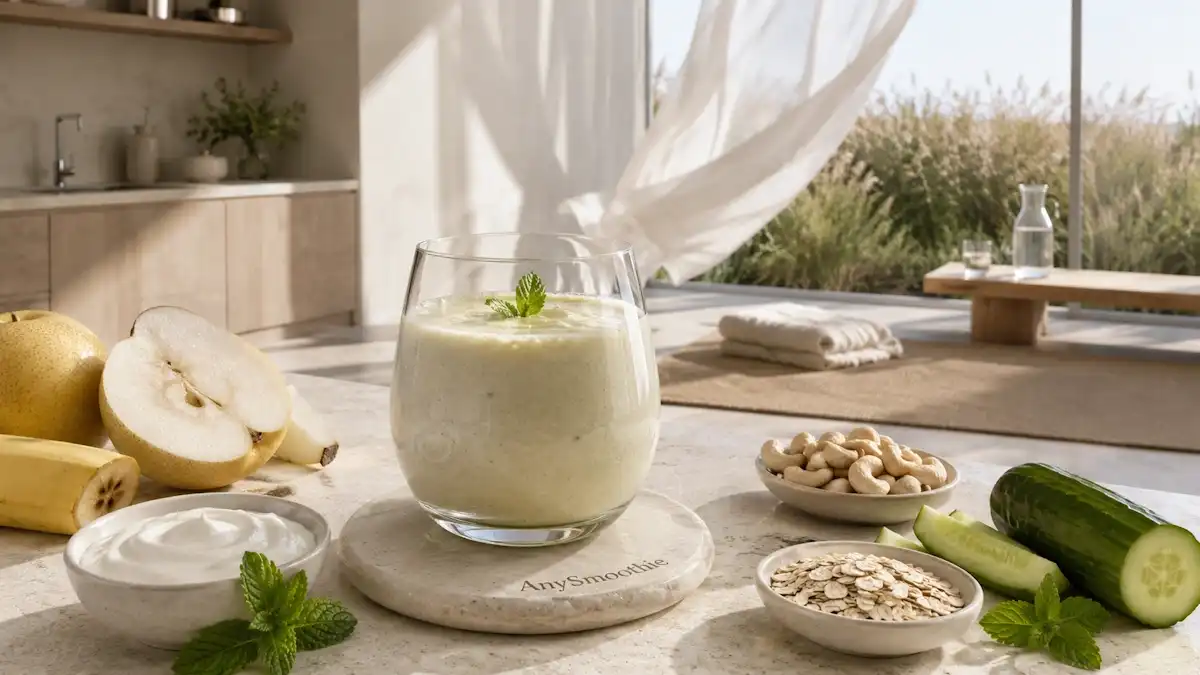
Should you eat before breathwork, or does food get in the way? The answer depends on the pace of your breathing, the length of the session, and how your stomach handles liquid food.
For some people, smoothies before breathwork practice offer easy carbohydrates, fluids, and familiar ingredients without the weight of a full meal. Others feel better with only water, especially before fast breathing or breath holds. Use these recipes and timing ideas as practical starting points, then let comfort guide the next session.
How Food Timing Affects Comfort During Breathwork
A small smoothie can provide fluid plus carbohydrates that your body can use for normal energy metabolism. Fruit, milk, yogurt, oats, and seeds each change the composition and fullness of the drink.
A light blend may fit a gentle 20-minute session or a longer seated practice when you haven’t eaten for several hours. However, rapid breathing, strong abdominal movement, and early-morning sessions can feel more comfortable with an empty stomach or a few sips of water.
Breathwork can sometimes bring on lightheadedness, tingling, or nausea, particularly with intense patterns. A review of breathing practices for stress reduction illustrates how widely breathing protocols can differ, so food timing should not follow a one-size-fits-all rule. Stop if you feel unwell, return to normal breathing, and never practice while driving, swimming, or in water.
Choose Ingredients That Digest Easily
A light smoothie is closer to a snack than a meal. Start with half to one banana, 1/2 cup berries or mango, and 3/4 to 1 cup water or unsweetened milk. Blend until completely smooth.
Greek yogurt, oats, chia, and nut butter can make a drink more filling. Larger amounts of protein, fat, and fiber can also make a smoothie feel heavier, which may be uncomfortable during vigorous breathing. Skip large amounts of added sugar, caffeine, and unfamiliar supplements before practice.
For a simple template, this strawberry banana smoothie recipe can be kept light by using water and leaving out oats or nut butter.
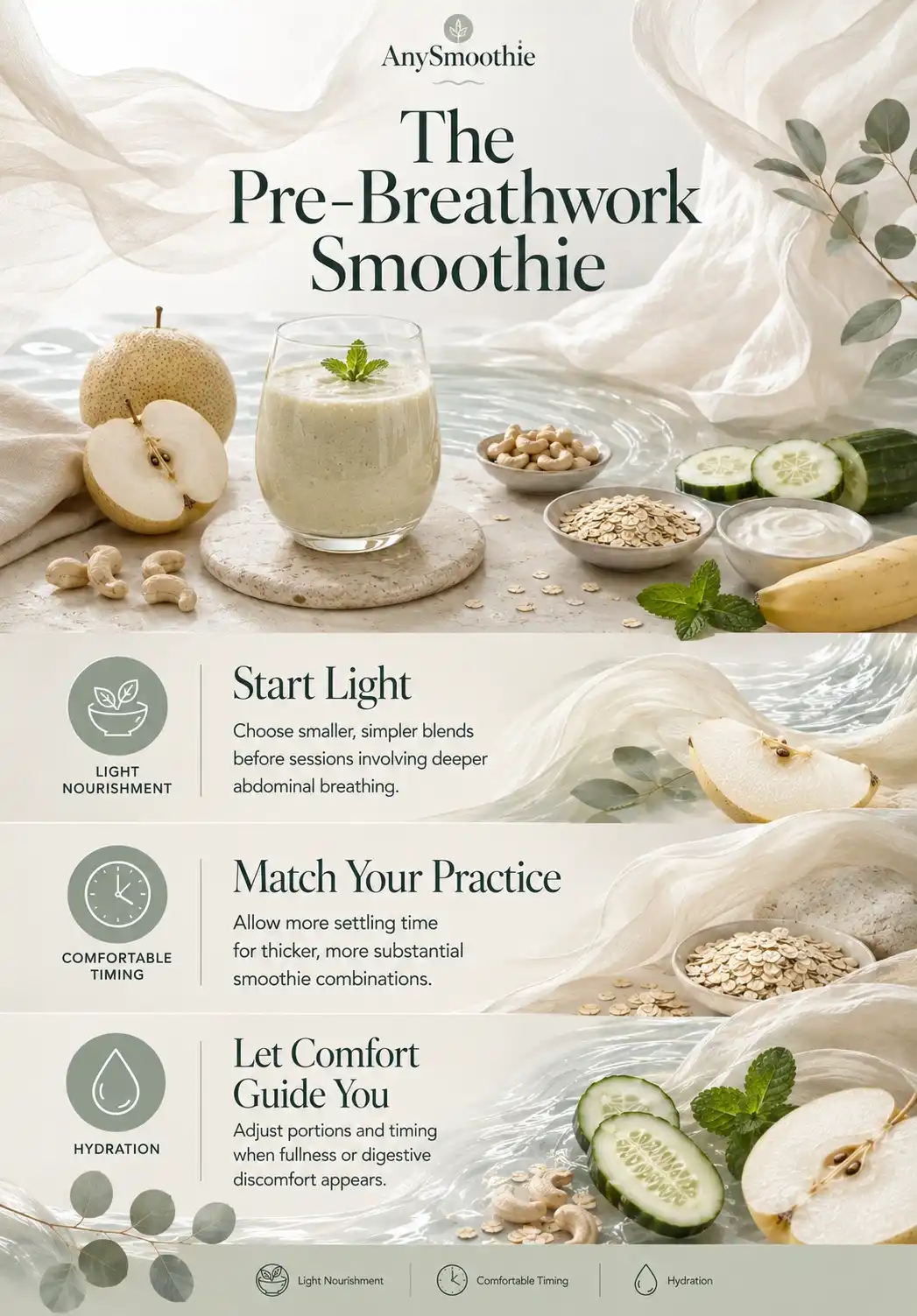
Match the Drink to Your Breathwork Session
Use a smaller, lower-fiber smoothie before energizing, rapid techniques. A more balanced blend can fit a longer, gentle session with steady nasal breathing or relaxed mobility work.
Also consider your last meal, the time of day, recent exercise, and food sensitivities. People with diabetes, digestive disorders, food allergies, or other health concerns should ask a qualified clinician about safe food timing and breathwork choices.
For sessions centered more on relaxation than energizing breathing, the relaxation smoothie for nighttime meditation offers a useful companion approach to lighter evening nutrition.
A smoothie should feel settled before practice. Fullness, reflux, or cramping are useful signals to reduce the portion or wait longer.
3 Smoothies Before Breathwork Practice
These smoothies before breathwork practice use moderate portions and common ingredients. Adjust thickness with water, reduce sweetness if needed, and treat each recipe as a comfort-based starting point rather than a treatment.
| Smoothie | Main Ingredients | Preparation Time | Best Before | Digestion Notes |
|---|---|---|---|---|
| Banana Berry Hydration | Banana, berries, water, optional yogurt | 5 minutes | Gentle or moderate practice | Lightest option without yogurt |
| Mango Ginger Green | Mango, greens, cucumber, ginger | 5 minutes | Calm morning sessions | Keep ginger small or omit it |
| Oat and Almond Butter | Oats, banana, almond milk, almond butter | 5 minutes | Longer gentle practice | More filling and slower to digest |
The first two options are designed as lighter blends. The oat-based option is more substantial because it contains oats and almond butter.
Banana Berry Hydration Smoothie
Ingredients
- 1 small banana
- 1/2 cup frozen berries
- 3/4 cup cold water or unsweetened milk
- 2 tablespoons plain Greek yogurt, optional
Steps
Blend all ingredients until completely smooth. Add a small splash of water if you prefer a thinner consistency.
Banana and berries provide carbohydrate-containing fruit, while the liquid contributes fluid. Yogurt adds protein and a creamier texture. As a practical starting point, try this light smoothie 30 to 60 minutes before gentle or moderate breathwork, then adjust the timing according to comfort and the type of practice.
Estimated Nutrition per Serving
Estimated with cold water and without the optional Greek yogurt.
- Calories: ~155 kcal
- Protein: ~2 g
- Carbohydrates: ~39 g
- Fat: ~1 g
- Fiber: ~6 g
- Sugars: ~23 g
If I were testing food timing before breathwork for the first time, I’d start with half this smoothie rather than the full serving. It makes it easier to judge how comfortable the stomach feels during deeper abdominal breathing.
Mango Ginger Green Smoothie
Ingredients
- 3/4 cup frozen mango
- 1/2 cup chopped cucumber
- 1 small handful baby spinach
- 3/4 cup water
- 1 thin slice fresh ginger, optional
Steps
Blend until completely smooth. Add the ginger only if you already know that it sits comfortably with you.
Mango and cucumber keep the blend refreshing, while the small amount of greens adds modest fiber. Ginger can irritate some stomachs, so leave it out if it causes discomfort. This option fits warm mornings, mobility work, and calm breath-focused sessions better than intense rapid breathing.
Estimated Nutrition per Serving
Estimated with approximately 1/2 cup baby spinach and a small slice of ginger.
- Calories: ~105 kcal
- Protein: ~2 g
- Carbohydrates: ~26 g
- Fat: ~1 g
- Fiber: ~4 g
- Sugars: ~19 g
Oat and Almond Butter Smoothie
Ingredients
- 1/2 medium banana
- 1/4 cup rolled oats
- 1 cup unsweetened almond milk
- 1 teaspoon almond butter
- Water as needed
Steps
Blend until smooth. Add water gradually if the mixture becomes too thick.
Oats contribute carbohydrate and fiber, while almond butter adds fat. That combination makes the smoothie more substantial than the fruit-based options. As a practical starting point, have it 60 to 90 minutes before a longer, gentler practice and adjust according to your comfort. Halve the recipe if fullness is common for you.
Estimated Nutrition per Serving
Estimated with unsweetened almond milk and 1 teaspoon almond butter.
- Calories: ~225 kcal
- Protein: ~6 g
- Carbohydrates: ~34 g
- Fat: ~8 g
- Fiber: ~5 g
- Sugars: ~9 g
Oats continue absorbing liquid after blending. If this smoothie is prepared well before the session, I’d make it slightly thinner than usual so the texture doesn’t become unexpectedly heavy by the time you drink it.
Find the Right Timing, Portion, and Practice Plan
Start with a small serving, about 8 to 12 ounces. If you plan to practice right away, choose water or wait until afterward. If you prefer a smoothie first, 30 to 90 minutes can be used as an experimental starting range rather than a universal rule, with longer waits generally making more sense for larger or more substantial blends.
Try the same recipe and session style two or three times before changing several variables at once. That makes it easier to notice whether fruit and fluids, a balanced smoothie, or no smoothie fits your routine.
If nausea, cramping, reflux, unusual dizziness, or uncomfortable fullness appears, pause the session. Breathwork safety guidance also recommends caution around advanced breath holds and advises against practicing immediately after a heavy meal.
What to Do If a Smoothie Feels Too Heavy
Reduce the serving size first. You can also dilute it with water, blend longer to remove chunks, and use less nut butter, oats, chia, or yogurt.
Avoid testing new ingredients before an important class or retreat. If discomfort or lightheadedness develops, rest and return to normal breathing rather than trying to push through the sensation.
For people who also use temperature-based wellness practices, smoothies before cold plunge sessions covers a different pre-session context where timing and comfort also matter.
Conclusion: A Comfortable Starting Point
A small, familiar smoothie can support fluid intake and available fuel, but it isn’t required for every session. Match the ingredients and waiting time to the breathing technique, then use your body’s feedback to make small changes.
Begin with a smaller portion of the banana berry smoothie before a gentle practice and allow enough time for it to feel comfortable. Comfort matters more than a perfect recipe.
🛡️ Safety Notes & Dietary Interactions
- Breathwork Intensity: Rapid breathing, prolonged breath holds, or forceful techniques can cause lightheadedness, tingling, nausea, or fainting regardless of food intake. Stop the practice, return to normal breathing, and sit or lie safely if symptoms develop.
- Food Timing and Reflux: Smoothies containing oats, nut butter, yogurt, or larger portions may increase fullness during abdominal breathing. People prone to reflux or nausea may prefer a smaller, thinner blend, a longer waiting period, or eating after practice.
- Practice Environment: Never perform intense breathwork or extended breath holds while driving, swimming, bathing, standing somewhere unsafe, or operating equipment. Food choices cannot prevent loss of awareness or coordination caused by an overly demanding breathing practice.
- Individual Health Considerations: Pregnancy and certain cardiovascular, respiratory, neurological, metabolic, or digestive conditions may require modifications to breathwork or meal timing. Seek individualized professional guidance before combining intensive breathing techniques with fasting, dietary changes, or unfamiliar supplements.
FAQs
Is it better to do breathwork on an empty stomach?
There is no single rule for every breathing practice. Gentle seated breathing may feel comfortable after a small smoothie, while vigorous breathing or strong abdominal movements can be easier without recent food. Your last meal, reflux tendency, session intensity, and individual digestion all matter. Avoid interpreting an empty stomach as a requirement for effective breathwork.
How long should I wait after a smoothie before starting breathwork?
The article suggests roughly 30–60 minutes after a lighter smoothie and 60–90 minutes after the more substantial oat and almond butter blend. These are practical starting points rather than physiological guarantees. If you still notice fullness, reflux, cramping, or nausea, extend the interval or reduce the serving at your next session.
Which smoothie is best before faster or more energizing breathing?
The banana berry smoothie without yogurt is the lightest of the three and therefore the most practical candidate when you want some carbohydrate and fluid beforehand. Even then, keep the portion modest and allow it to settle. Intense breathing itself can cause uncomfortable symptoms, so a lighter smoothie does not eliminate the need for safe practice.
Should I use ginger before breathwork if I sometimes feel nauseated?
Ginger can be a familiar food ingredient, but it should not be treated as protection against nausea caused by intense breathing. Some people also find ginger irritating to the stomach. Use only a small amount if you already tolerate it, or omit it entirely rather than introducing it immediately before an unfamiliar breathwork session.
What should I do if I become dizzy during breathwork after drinking a smoothie?
Stop the breathing technique and return to normal, comfortable breathing in a safe position. Do not assume dizziness simply means the smoothie was mistimed, because intensive breathing patterns themselves can cause lightheadedness. Persistent, severe, recurrent, or otherwise concerning symptoms warrant appropriate medical evaluation rather than repeatedly changing food timing and continuing the same practice.

Medical Disclaimer: AnySmoothie content is for educational purposes only and is not a substitute for professional medical advice. Consult a healthcare provider for personalized guidance. See our full Disclaimer & Terms of Use. AI Transparency: AnySmoothie may use AI to support content development. All content undergoes human editorial review for accuracy, clarity, and editorial quality. See our full AI Transparency.