
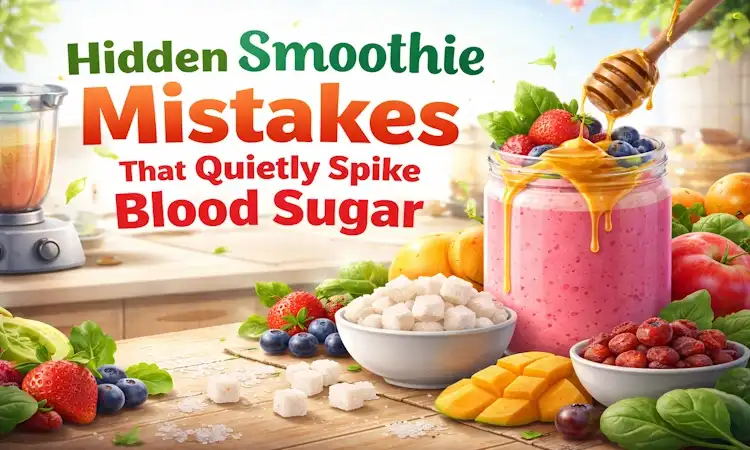
Smoothies seem like a smart choice by default, and sometimes they are. But a healthy-looking blend can still send your blood sugar up fast when a few hidden smoothie mistakes that quietly spike blood sugar slip into the mix.
Often, the problem isn’t the smoothie itself. It’s the balance. Too much fruit, sweetened add-ins, low fiber, or not enough protein and fat can turn an easy breakfast into a quick sugar hit that leaves you hungry again soon. Even natural ingredients can hit hard when they’re blended in the wrong amounts, because liquid meals are easy to drink fast and easier to overload without noticing.
That’s why smoothie mistakes that spike blood sugar often hide in plain sight, from juice bases to flavored yogurt to “healthy” extras with hidden sugars in smoothies. Next, you’ll see why smoothies cause blood sugar spikes, which low-glycemic smoothie mistakes to avoid, and how to prevent blood sugar spikes in smoothies so your drink feels more steady, satisfying, and worth having.
The biggest smoothie mistakes start with too much fast sugar
Weight Loss Programs
Diet & Weight Loss

Diet & Weight Loss

Diet & Weight Loss
The Mediterranean Diet – Diamond Evergreen Digital Diet Program

Diet & Weight Loss
A smoothie can look healthy and still act like a sugary drink. That usually happens when the blend piles up fast-digesting sugars without enough fiber, protein, or fat to slow things down.
This is one of the most common hidden smoothie mistakes that quietly spike blood sugar. The trouble isn’t fruit by itself. It’s how easy it is to stack sweet ingredients in liquid form, drink them quickly, and miss how much sugar ended up in the glass.
In many smoothies, the sugar problem starts before the blender is even full.
Using fruit juice as the base makes sugar hit faster
Fruit juice sounds harmless because it comes from fruit. But juice is missing much of the fiber that helps slow how fast sugar moves into your bloodstream. When you swap water, milk, or unsweetened plant milk for orange juice or apple juice, you make the smoothie sweeter and easier to absorb fast.
That’s a big reason why smoothies cause blood sugar spikes. Whole fruit still has natural sugar, but it also brings structure and fiber. Juice strips much of that away, so the sugar lands faster. Research on whole fruit versus blended fruit also points to the importance of the food’s structure in glycemic response, as discussed in this whole fruit versus blended fruit study.
The bigger issue is the double sugar load. A lot of people blend banana, mango, or berries, then pour in juice as the liquid. So now the smoothie has the sugars from whole fruit plus the sugars from juice. It tastes fresh, but it can act more like dessert than breakfast.
Common examples show up all the time:
- Orange juice as the base for a tropical smoothie
- Apple juice mixed with banana and berries
- Bottled smoothie blends that already contain juice concentrates
- Store-bought “green” smoothies that sound light but still rely on fruit juice
Bottled smoothie blends deserve extra attention. Many look balanced from the front label, yet the ingredient list starts with apple juice, grape juice, or pear juice concentrate. That is one of the easiest hidden sugars in smoothies to miss.
If you want a steadier blend, start with a low-sugar base instead. Water works. Unsweetened milk works. Unsweetened almond or soy milk works too. According to Health’s smoothie tips for steadier blood sugar, choosing an unsweetened liquid base is one of the simplest ways to cut down the sugar rush.
Too much high sugar fruit turns a smoothie into dessert
Fruit is not the enemy. Still, portion creep is real, and smoothies make it easy. One banana becomes two. A handful of grapes turns into a cup. Then mango, pineapple, and a date or two go in because they “only add natural sweetness.”
That adds up fast.
Some fruits tend to push sugar higher more quickly when the portions get large, especially in a drink. The usual suspects are bananas, mango, pineapple, grapes, dates, and very ripe fruit. Ripeness matters because starches convert to sugar as fruit gets softer and sweeter. So that extra-ripe banana can push the blend further than you think.
The problem usually isn’t one sweet fruit. It’s several sweet fruits in the same blender. A smoothie with banana, mango, pineapple, and dates may sound wholesome, but it can carry a heavy sugar load even before extras go in.
A simple way to think about it is this: count portions, not just ingredients. Seeing “banana, mango, pineapple” on your counter doesn’t feel like much. But when each ingredient adds a full serving, the glass can hold the sugar of multiple fruit servings at once.
Here is where many smoothie mistakes that spike blood sugar happen:
- You use more than one large sweet fruit.
- You add dried fruit like dates for extra sweetness.
- You use very ripe fruit because it blends better.
- You drink it quickly because liquids go down fast.
That combination turns a snack into a sugar rush.
A smarter move is to keep sweet fruit portions tighter and mix them with lower-sugar choices. For example, use half a banana instead of two whole bananas. Pair a little mango with berries, avocado, chia, Greek yogurt, or nut butter. In other words, keep the fruit, but stop treating the blender like a fruit bowl with no limit.
For people trying to figure out low-glycemic smoothie mistakes to avoid, this one matters most: healthy ingredients can still push blood sugar up when the amount gets too big. The fix is not to fear fruit. The fix is to build with intention.
Honey, agave, maple syrup, and flavored yogurt add more sugar than people think
A drizzle here and a spoonful there can change the smoothie a lot. Honey, agave, and maple syrup seem small, but they are concentrated sweeteners. Once they hit the blender, they raise the sugar total without adding the fiber that helps slow the response.
“Natural” doesn’t mean blood sugar-neutral. Honey is still sugar. Agave is still sugar. Maple syrup is still sugar. They may differ slightly, but they can all push a smoothie higher than expected. This practical look at honey vs. agave and blood sugar helps explain why these sweeteners are not free passes just because they sound less processed.
The same thing happens with flavored yogurt. Vanilla yogurt, fruit-on-the-bottom yogurt, and many “light” yogurts often carry added sugar before you add a single piece of fruit. Then the smoothie gets sweeter again from banana, juice, or dates, and suddenly the sugar stacks from three directions at once.
Sweetened plant milks can do the same. Original oat milk, vanilla almond milk, and some coconut milk blends may contain added sugars that don’t stand out until you read the label. If you use them with sweet fruit and a sweetener, you can build a high-sugar smoothie without noticing.
Watch for these common add-ons:
- Honey in a berry smoothie
- Agave in a green smoothie
- Maple syrup in a cinnamon or pumpkin blend
- Flavored yogurt instead of plain yogurt
- Sweetened almond, oat, or coconut milk instead of unsweetened versions
This doesn’t mean you can never use them. It means they should count as sugar, not as harmless “healthy extras.” That’s one of the clearest examples of ingredients that raise blood sugar in smoothies while still looking wholesome.
A more balanced approach is simple:
- Use plain Greek yogurt or plain unsweetened yogurt
- Choose unsweetened plant milk
- Let fruit provide most of the sweetness
- If needed, use a very small amount of sweetener, not a free pour
The label can matter as much as the blender.
When people want to know how to prevent blood sugar spikes in smoothies, trimming these hidden add-ins is often the fastest win. You don’t need to make your smoothie bland. You just want the sweetness to come from a thoughtful amount of fruit, not from extra sugars hiding in the background.
Blending changes how your body handles food
Blending doesn’t automatically make a smoothie “bad.” Still, it can change how fast and how easily you consume it, and that matters when you’re trying to avoid hidden smoothie mistakes that quietly spike blood sugar.
A whole apple asks more of you. You bite it, chew it, and eat it over a few minutes. A smoothie made from several fruits can be gone in a few gulps. That faster pace, along with a larger amount in the glass, helps explain why smoothies cause blood sugar spikes for some people, even when the ingredients look wholesome.
Less chewing can make it easier to drink too much, too fast
Chewing slows you down. Drinking usually doesn’t.
That’s a big part of the issue. When fruit is blended into a smooth drink, you can take in a lot of carbs in a short window without noticing. Your body still has to process that sugar load, but the smoothie may be long gone before your fullness signals catch up.
Whole fruit usually creates more natural speed bumps. You peel the orange, chew the berries, or work through slices of apple. That extra time can help you feel more satisfied with less. By contrast, a smoothie can turn three or four servings of fruit into something that feels as easy as a glass of water.
Here’s where one of the hidden smoothie mistakes that quietly spike blood sugar shows up: speed plus volume. Even a balanced smoothie can hit harder when you drink it quickly on an empty stomach. If the blend is already heavy on fruit and light on protein or fat, the rise may feel even sharper.
Research comparing whole fruit and blended fruit suggests food structure can affect glycemic response, as seen in this study on whole versus blended fruit. That doesn’t mean every smoothie causes a problem. It means the way you eat or drink the same ingredients can change the result.
A smoothie can go down like a snack but land like a full meal.
If you notice you feel hungry again soon after a fruit-heavy smoothie, this may be part of the reason. It wasn’t just the ingredients. It was also the speed.
A smooth texture can make a big serving feel smaller than it is
Liquids can play tricks on portion size. A tall smoothie often looks light, fresh, and harmless, even when it packs multiple servings of fruit plus extras like oats, nut butter, yogurt, or dates.
That matters because a large glass doesn’t always feel like a large meal. You see one drink. Your body gets the carbs from several ingredients blended into one easy-to-finish serving. That’s one reason smoothie mistakes that spike blood sugar can hide so well. Nothing looks extreme, yet the total adds up fast.
Think of it like this: a smoothie is a suitcase with compression straps. Once everything gets blended, it takes up less visual space in your mind. A banana, a cup of mango, berries, milk, honey, and granola don’t look like much when they become one creamy drink. But your blood sugar doesn’t care that it looks neat in the blender jar.
A simple reality check helps. Before blending, pause and ask:
- How many servings of fruit are going in?
- Am I adding carb-heavy extras too?
- Would I sit down and eat all of this whole?
Container size matters more than people think. A 12-ounce glass creates a very different habit than a 24-ounce tumbler. If you always use the biggest cup you own, you’re more likely to turn breakfast into a sugar-heavy drink without meaning to.
One practical fix is to build your smoothie in a measuring cup or blender cup with ounce marks. Another is to pour your smoothie into a regular glass instead of drinking straight from a large bottle. That one small change makes portion awareness much easier.
The goal isn’t tiny smoothies. It’s seeing the serving clearly. When you can spot the difference between a balanced blend and a fruit-heavy pitcher in disguise, it’s much easier to prevent blood sugar spikes in smoothies.
Straining out pulp or using ultra-smooth blends lowers the staying power
Texture affects satisfaction. When you strain out pulp or blend until everything is almost juice-like, the smoothie often feels lighter in your stomach, even if the calories and carbs are still there.
That’s not a nutrition rule carved in stone. It’s just a practical pattern. More fiber and a bit more texture often help a smoothie feel like actual food, not just a sweet drink. On the other hand, when pulp and fibrous bits are removed, the blend may be less filling and easier to get through fast.
Health notes on drinks that keep pulp and seeds point out that keeping more of the edible parts can support fiber intake. In real life, that usually means better staying power too. You may feel steady longer with a thicker smoothie than with a thin, strained one that drinks like juice.
This doesn’t mean you need a gritty smoothie. It means there is a middle ground.
A few simple choices can help:
- Keep the pulp instead of straining it out.
- Use whole fruit instead of more juice.
- Blend until drinkable, not watery.
- Add texture from chia, flax, or plain Greek yogurt when it fits the recipe.
If your smoothie is ultra-smooth, sweet, and easy to chug, it may leave you looking for food again an hour later. That short-lived fullness is one more reason ingredients that raise blood sugar in smoothies are not the only issue. Texture and structure matter too, because they shape how satisfying the drink feels and how quickly you finish it.
What is missing matters just as much as what goes in
A smoothie can spike blood sugar not only because of what you add, but also because of what you leave out. This is one of the most common hidden smoothie mistakes that quietly spike blood sugar. When protein, fat, and fiber are too low, even a wholesome-looking blend can act more like a quick snack than a steady meal.
Skipping protein leaves the smoothie less steady and less filling
Protein helps slow digestion, so the smoothie tends to feel more even and satisfying. It also helps with fullness, which matters if you don’t want to feel hungry again an hour later.
Easy options don’t have to be fancy. Plain Greek yogurt, cottage cheese, tofu, unsweetened kefir, or a protein powder with low added sugar can all help round things out. If you want a simple swap, EatingWell’s Greek yogurt smoothie tip is a good example of how one ingredient can make a blend more balanced without making it complicated.
Too little fat can make a smoothie wear off quickly
A small amount of fat can help slow absorption and keep the smoothie from fading fast. The goal isn’t to make it heavy. You just want enough staying power so it feels like food, not a sweet drink.
A spoonful of nut butter works well. So do chia seeds, ground flaxseed, hemp seeds, a few slices of avocado, or a little unsweetened coconut. Think of fat as the brake pedal, not the whole car. A little is often enough.
Low fiber add-ins can make a smoothie look healthy without helping much
Some smoothies sound healthy on paper but still fall short on fiber. Juice, sweet fruit, and sweetened milk can create that problem fast. You get the sweet taste, but not much of the slow-down effect that helps with steadier energy.
Better choices are usually simple. Berries, spinach, chia, flax, and modest amounts of oats can all help. Also, keep edible skins on fruit when it makes sense, because that’s often where some fiber lives. If you’re trying to figure out how to prevent blood sugar spikes in smoothies, this is one of the easiest fixes: build the drink so it has something to hold onto, not just something sweet to blend.
A few “healthy” extras often cause the real problem
Some of the biggest smoothie mistakes that spike blood sugar do not come from the obvious stuff. They come from the add-ins that sound wholesome, helpful, or extra healthy.
That is why this is one of the most common hidden smoothie mistakes that quietly spike blood sugar. A smoothie can start out balanced, then get pushed off track by a few scoops, pours, or toppings that seem harmless on the surface.
Granola, flavored protein powders, and cafe boosters can quietly raise sugar
Granola has a healthy reputation, but many packaged versions are sweetened to make them crunchy and more snackable. In a smoothie, that can mean added sugar on top of fruit, milk, and anything else already in the blender. Some blends also use syrups, brown rice syrup, honey, or sweet clusters that act more like dessert toppings than a blood-sugar-friendly extra. Even outside smoothies, Verywell Health’s look at granola bars and blood sugar shows how quickly these products can add more carbs and sugar than people expect.
Protein powder can create the same problem. Plain or lightly sweetened powders are one thing. Dessert-style options like cookies and cream, birthday cake, or cinnamon roll are often another story. Those products may include sugar, flavor blends, maltodextrin, or sweeteners paired with extra carbs to improve texture and taste. The label does not need to be perfect, but it does deserve a quick look.
Cafe add-ons are another easy miss. Smoothie bars often offer boosters for energy, meal replacement, recovery, or flavor. That sounds smart until the extra scoop brings sweetened powder, syrupy mix-ins, or a carb-heavy base you never planned on. A drink can go from simple to sugar-stacked in seconds.
Here is a simple filter to use when you’re scanning the label:
- If the add-in sounds like a dessert, check it closely.
- If it says “meal replacement,” look for sugars and total carbs, not just protein.
- If a cafe offers boosters, ask what is in them before saying yes.
“Healthy” packaging can hide the same sugar load as a sweet coffee drink.
You do not need to fear these products. You just want to stop giving them a free pass.
Dried fruit, coconut water, and big scoops of oats can add up fast
Natural ingredients can still push the carb load up quickly. That is where many hidden sugars in smoothies show up, not because the foods are bad, but because they are easy to overpour.
Dried fruit is a clear example. Raisins, dates, dried mango, and dried cranberries are small, sweet, and concentrated. Since the water has been removed, the sugar is packed into a smaller bite. A few pieces may not seem like much, but they can act like a fast sugar boost once blended. Dates are especially common in “no added sugar” smoothie recipes, yet they still count.
Coconut water has a clean, hydrating image, so people often use it like plain water. It is not the same. It contains natural sugars, and when you pair it with sweet fruit, the total climbs fast. That does not make coconut water unhealthy. It just means it should count as part of the carbohydrate load, not as a neutral base.
Oats can also tip the balance when the scoop gets too generous. Oats are not the problem by themselves. In fact, they can help with texture and make a smoothie more filling. But a large scoop of oats, plus banana, plus berries, plus coconut water, can turn a good idea into a very carb-heavy drink. As Health’s smoothie guidance points out, total fruit and carb-heavy add-ins matter just as much as the ingredient list sounding healthy.
A better way to think about it is this: clean and natural do not always mean low impact. If your smoothie includes several of these at once, the numbers can climb before you notice.
Store-bought smoothies often pack more sugar than a homemade one
Homemade smoothies give you control. You choose the fruit, the liquid, and the extras. That makes it easier to keep the drink balanced with protein, fiber, and a reasonable portion size.
Store-bought smoothies often work differently. Bottled smoothies, smoothie bar drinks, and freezer-pack blends may use juice concentrates, fruit purees, sweetened yogurt, or larger serving sizes to boost flavor. The front label may say “green,” “protein,” or “superfood,” but the ingredient list can tell a different story. A balanced homemade smoothie might use unsweetened milk and one serving of fruit. A premade one may stack several fruit sources before you even take a sip.
This quick comparison shows where the gap usually appears:
| Type | What often raises sugar |
|---|---|
| Homemade smoothie | Less risk when you control fruit, liquid, and portions |
| Bottled smoothie | Juice concentrates, purees, and multi-serving bottles |
| Smoothie bar drink | Large cups, sweetened yogurt, sherbet, and boosters |
| Premade smoothie packs | Sweet fruit-heavy combos with little protein or fat |
The pattern is simple. The less control you have, the more closely you need to look.
When buying instead of making, watch for a few red flags:
- Juice or juice concentrate near the top of the ingredient list
- Sweetened yogurt or flavored dairy bases
- Purees stacked with juice and whole fruit
- Bottles that look single-serve but contain more than one serving
- Large smoothie bar sizes that are easy to drink fast
If you want to compare the tradeoff, this overview of bought vs homemade smoothies is a helpful reminder that convenience often comes with extra sugar. In other words, one of the easiest ways to prevent blood sugar spikes in smoothies is to treat store-bought options with the same caution you would give a sweet bottled drink. The label matters, the portion matters, and the extras matter more than most people think.
How to build a smoothie that is better for blood sugar
Once you know the hidden smoothie mistakes that quietly spike blood sugar, the next step is simple, build a better blend on purpose. You don’t need a strict recipe or a shelf full of powders. In most cases, a blood sugar-friendlier smoothie comes down to better balance, not less flavor.
A good smoothie should feel more like a meal and less like sweet fruit puree in a cup. That means keeping the sugar side modest, then backing it up with protein, fiber, and fat so it has some staying power.
Start with an easy blood sugar friendly smoothie formula
If you want a smoothie that feels steady instead of spiky, use a simple formula and repeat it. Think of it like building a sandwich. You need a base, a main filling, and a few things that make it satisfying.
A simple build looks like this:
- Unsweetened base: One cup of water, unsweetened almond milk, unsweetened soy milk, or plain dairy milk.
- One serving of fruit: One handful of berries, half a banana, or a small handful of mango or cherries.
- Protein source: One scoop of protein powder, one generous spoonful of plain Greek yogurt, cottage cheese, or silken tofu.
- Fiber source: One spoonful of chia seeds, ground flaxseed, or a small spoonful of oats.
- Healthy fat: One spoonful of peanut butter, almond butter, hemp seeds, or a few avocado slices.
- Optional greens: One handful of spinach or kale.
That structure works because it keeps fruit in the mix without letting it run the whole show. It also makes how to prevent blood sugar spikes in smoothies much easier to answer in real life. You don’t need to memorize nutrition charts every morning, you just need a repeatable pattern.
For example, a solid combo could be unsweetened soy milk, a handful of frozen berries, plain Greek yogurt, chia seeds, peanut butter, and spinach. It’s simple, it tastes good, and it doesn’t rely on hidden sugars in smoothies to carry the flavor. Tips like these line up with Health’s smoothie advice for steadier blood sugar.
A better smoothie usually isn’t about taking fruit out, it’s about giving fruit some backup.
Smart swaps that lower sugar without making the smoothie boring
A lot of smoothie mistakes that spike blood sugar come from habit. People reach for juice, flavored yogurt, or extra sweet fruit because they want the smoothie to taste good. The good news is that you can lower sugar without ending up with something flat and chalky.
Start with the easiest swaps. They make a real difference:
- Use whole fruit instead of juice. Juice makes sugar hit faster, while whole fruit brings more fiber and texture.
- Pick berries more often than multiple tropical fruits. Blueberries, strawberries, and raspberries usually fit better than a pile of mango, pineapple, and banana in one glass.
- Choose plain yogurt instead of flavored yogurt. You can always add cinnamon or fruit, but you can’t take the added sugar back out.
- Pour unsweetened milk instead of vanilla or sweetened plant milk.
- Add cinnamon or unsweetened cocoa powder instead of honey, maple syrup, or flavored syrups.
- Blend in ice or frozen cauliflower for more volume without loading in extra sugar.
Frozen cauliflower is one of those quiet tricks that sounds strange until you try it. It adds body and creaminess, but it doesn’t make the smoothie taste like vegetables. In the same way, cocoa powder can make a smoothie taste richer, while cinnamon helps it feel sweeter without actually adding sugar.
If you like examples, imagine this swap in action. Instead of orange juice, banana, mango, vanilla yogurt, and honey, try unsweetened milk, a handful of berries, half a banana, plain Greek yogurt, cinnamon, and ice. That one change cuts several ingredients that raise blood sugar in smoothies, but the drink still tastes full and satisfying.
For more low-sugar inspiration, recipes like this low-sugar blueberry smoothie show how a smoothie can stay creamy and flavorful without turning into dessert.
Signs your smoothie is working better for you
You don’t need a perfect formula to know you’re moving in the right direction. Usually, your body gives you a few plain clues.
A better-balanced smoothie often looks like this in daily life:
- You stay full longer instead of hunting for a snack soon after.
- Your energy feels more even, not high for a short burst and then flat.
- You have less hunger soon after drinking it.
- It’s easier to keep the portion reasonable because the smoothie feels satisfying, not like sweet air.
Those signs matter because they help you spot progress without overthinking every ingredient. If your smoothie used to leave you hungry in an hour, and now it keeps you going through the morning, that’s useful feedback. In other words, you’re likely avoiding some of the low-glycemic smoothie mistakes to avoid, even if you aren’t tracking every gram.
You can also use a simple gut check. Ask yourself, “Did this feel like actual food?” If the answer is yes, you’re probably closer to the mark. If it went down like juice and left you wanting toast, a bar, and coffee 30 minutes later, it likely needs more balance.
People with diabetes or insulin resistance may need a more personal approach, especially around fruit type, portion size, and total carbs. If that’s you, a dietitian or healthcare professional can help fine-tune what works best. For general ideas, Healthline’s diabetes-friendly smoothie guide offers a few practical examples.
Conclusion
Smoothies don’t need to be off the menu. Still, hidden smoothie mistakes that quietly spike blood sugar are easy to miss when a healthy drink turns into a fast sugar load. The biggest fix is usually balance, watch liquid sugars, keep fruit portions sensible, and skip extra sweeteners that pile on more than you think.
Just as important, add some backup. Protein, fat, and fiber help slow things down, so your smoothie feels more like a real meal or snack and less like dessert in a glass. That’s often the real answer to why smoothies cause blood sugar spikes, not one single ingredient, but a mix that leans too hard on quick carbs.
So take one look at your usual blend and make one smart change this week. Small shifts can turn smoothie mistakes that spike blood sugar into a steadier routine, and that can make your next glass work with you, not against you.

The AnySmoothie team is all about smarter smoothie recipes made with whole-food ingredients. Everything we share centers on balanced nutrition, steady energy, and low-glycemic choices, so you can sip a smoothie that keeps you full, feels good, and helps you avoid sugar crashes.
- Disclaimer: This content is for educational use only. These smoothie recipes and nutrition details aren’t a substitute for medical advice from a licensed health professional. Please read our full Medical Disclaimer here.
Dietary Supplements

Dietary Supplements

Dietary Supplements
Cardio Slim Tea – Daily Support for Heart Health and Weight Management
Dietary Supplements
ZenCortex – Daily Support for Brain Clarity and Hearing Health
Dietary Supplements