
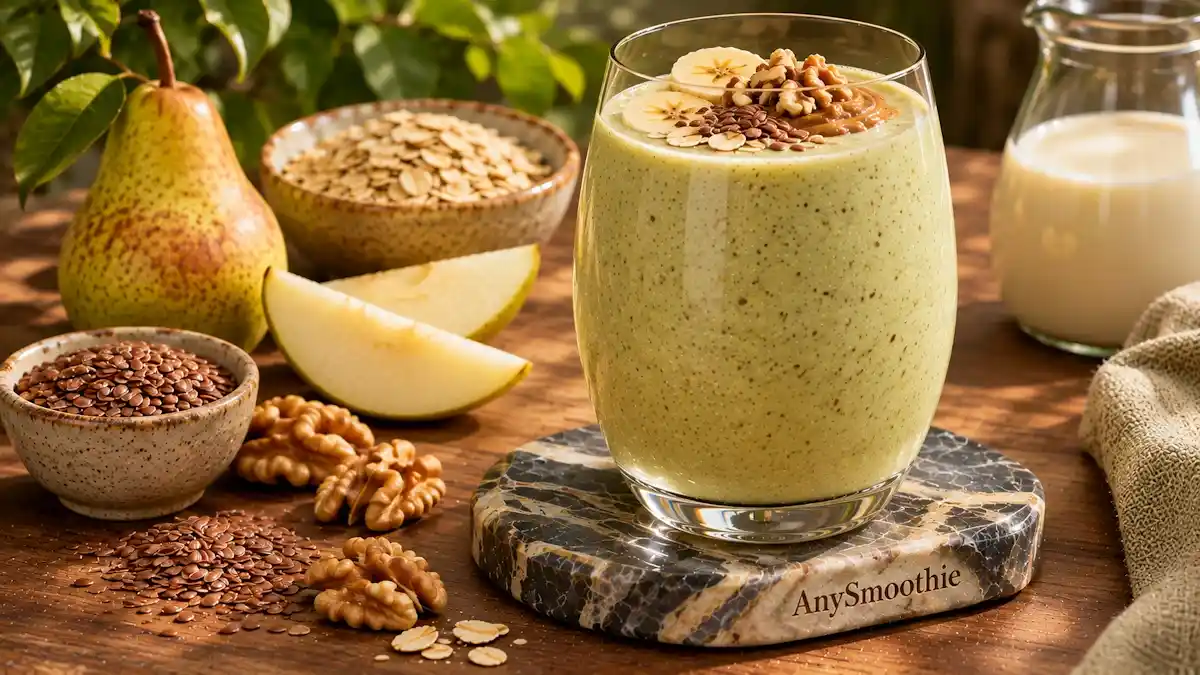
A smoothie can supply essential fats and nutrients used in normal metabolism, but it can’t control fatty-acid desaturation. When choosing smoothies for essential fatty acid desaturation, focus on what the ingredients provide, rather than promises about enzyme activity.
Your body gets essential fatty acids through food, then processes them through regulated biochemical pathways. The three recipes below offer practical combinations, followed by a guide to what that processing involves.
For another smoothie example combining chia and flax as sources of plant-based omega-3 ALA, see hydrating smoothies for dry eye support.
How essential fatty acid desaturation works in the body
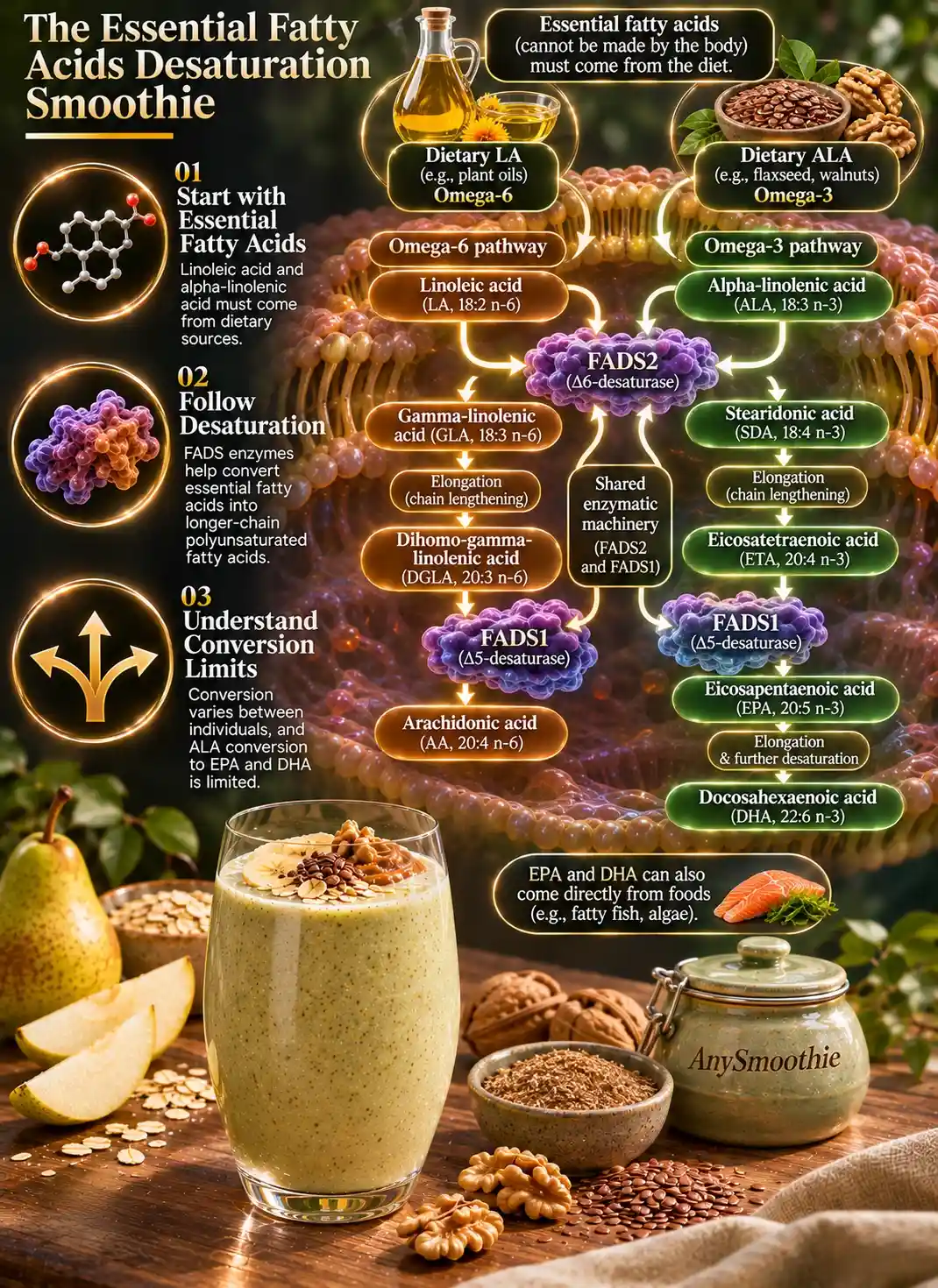
Desaturation is an enzyme-driven reaction that adds a double bond to a fatty acid. Elongation, a separate reaction, lengthens its carbon chain. These processes help the body change dietary fats into other fatty acids.
The omega-6 pathway can convert linoleic acid into longer-chain fats, including arachidonic acid. Meanwhile, the omega-3 pathway can convert ALA into EPA and DHA, although conversion is limited. A review of ALA metabolism describes the desaturase and elongase enzymes involved.
A related discussion of how oxidized membrane fats fit into cellular processes appears in smoothies for ferroptosis and lipid peroxidation.
No single ingredient or drink switches on these pathways or guarantees a conversion rate.
What smoothie ingredients can contribute
Flax and chia supply ALA, an essential omega-3 fat. Walnuts and hemp hearts also contribute unsaturated fats, but their presence doesn’t establish a particular effect on desaturase enzymes.
Soy milk and yogurt add protein. Fruit, greens, oats, and seeds contribute varying amounts of vitamins, minerals, and fiber. Together, these foods provide nutrients involved in normal physiological systems without directing a specific biochemical outcome.
Why balance and the full diet still matter
Fatty-acid intake, your overall eating pattern, and individual biology affect how the body processes fats. Because several enzymes and reactions are involved, eating more ALA doesn’t produce a predictable amount of EPA or DHA.
For a broader look at how dietary fats feature in metabolic energy use, see smoothies to support brown adipose tissue.
Variety across meals matters more than relying on one drink. Treat these smoothies as part of your usual diet, rather than a complete essential-fat strategy or a replacement for prescribed care.
3 Smoothies for Essential Fatty Acid Desaturation
Each recipe makes one serving. Nutrition estimates are approximate and vary by brand, fruit size, and portion size.
Banana-Flax Breakfast Smoothie
Ingredients
- 1 cup unsweetened soy milk
- 1 small banana
- 1 tablespoon ground flaxseed
- 2 tablespoons rolled oats
- 1 cup baby spinach
- ½ cup ice
Instructions
Blend all ingredients until smooth, adding a splash of water if needed. Pause and scrape down the blender if oats or spinach collect along the sides.
Estimated Nutrition (per serving)
- Calories: ~250 kcal
- Protein: ~11 g
- Carbohydrates: ~38 g
- Fat: ~10 g
- Fiber: ~7 g
- Sugars: ~14 g
Flax provides alpha-linolenic acid (ALA), a plant-based omega-3 fatty acid. Meanwhile, banana adds sweetness and oats give the drink a fuller texture.
Blueberry-Walnut Yogurt Smoothie
Ingredients
- ¾ cup plain nonfat Greek yogurt
- ½ cup blueberries
- 1 tablespoon chopped walnuts
- 1 tablespoon hemp hearts
- ½ cup cold water or ice
Instructions
Blend until creamy, adding more water or ice to reach the texture you like. Blend a little longer if pieces of walnut remain.
Estimated Nutrition (per serving)
- Calories: ~250 kcal
- Protein: ~22 g
- Carbohydrates: ~18 g
- Fat: ~10 g
- Fiber: ~4 g
- Sugars: ~12 g
Walnuts and hemp hearts supply unsaturated fats. Greek yogurt contributes protein and a tangy flavor, while blueberries add sweetness without requiring flavored yogurt.
Strawberry-Kiwi Chia Smoothie
Ingredients
- 1 cup unsweetened soy milk
- 1 cup strawberries
- 1 peeled kiwi
- 1 tablespoon chia seeds
- ½ cup ice
Instructions
Blend until smooth. Let the drink sit for a few minutes if you prefer a thicker texture, since chia absorbs liquid as it rests.
Estimated Nutrition (per serving)
- Calories: ~230 kcal
- Protein: ~10 g
- Carbohydrates: ~36 g
- Fat: ~8 g
- Fiber: ~12 g
- Sugars: ~21 g
Chia provides ALA, while strawberries and kiwi add natural sweetness and tartness. The seeds also create a thicker consistency than the fruit alone would provide.
For another seed-based smoothie ingredient, see black seed smoothie for everyday wellness.
Compare the smoothies and choose one that fits your day
The main differences are protein, fiber, and texture, rather than any demonstrated effect on desaturation.
| Smoothie | Fatty-acid sources | Nutritional standouts | Texture and flavor | Best fit |
|---|---|---|---|---|
| Banana-Flax Breakfast | Plant-based ALA | Moderate protein and fiber | Mild, sweet, oat-thickened | Breakfast alongside other food |
| Blueberry-Walnut Yogurt | Mixed unsaturated fats | Highest estimated protein | Creamy, tangy, lightly nutty | Protein-focused snack |
| Strawberry-Kiwi Chia | Plant-based ALA | Highest estimated fiber | Fruity, tart, thickens as it rests | Fiber-focused snack |
Choose the yogurt option when protein is your priority. If you prefer a fruitier drink with more estimated fiber, choose strawberry-kiwi. Banana-flax offers a mild flavor and an oat-based texture.
Adjust thickness without changing the whole recipe
For a thicker drink, start with less water or use frozen fruit. For a thinner consistency, add water a little at a time. Chia continues absorbing liquid after blending, so judge its final thickness after a few minutes.
Let the fruit guide the sweetness
Taste before adding sweeteners. Ripe banana and berries often provide enough sweetness, while kiwi and plain yogurt bring more tartness.
The listed sugar estimates include naturally occurring sugars, not just added sugar. Also, nutrition estimates remain approximate: changing the milk, yogurt, or portions changes the totals. Additions such as honey or extra nuts count toward the finished drink’s nutrition, too.
Conclusion: Essential fats without promises about conversion
These smoothies offer practical ways to include foods containing essential fats, alongside protein and fiber. However, they don’t control desaturation or guarantee how much ALA your body converts into EPA or DHA.
Choose the recipe you enjoy and adjust its texture to suit you. A varied eating pattern remains the foundation, with a smoothie as one convenient part of it.
🛡️ Safety Notes & Dietary Interactions
- Omega-3 Expectations: Flax and chia provide ALA, but the body converts ALA to EPA and DHA only to a limited extent. Eating more ALA does not guarantee a predictable increase in either long-chain fatty acid.
- Allergen Awareness: The recipes include soy, dairy, walnuts, and hemp. Check labels carefully and avoid ingredients associated with known allergies, particularly when substituting milk, yogurt, nuts, or seeds.
- Fiber and Texture: Chia, flax, oats, spinach, berries, and kiwi contribute substantial fiber. Increase portions gradually if needed, and add liquid because chia continues absorbing water after blending.
- Fat Intake: Walnuts, hemp hearts, flax, chia, and soy contribute different unsaturated fats. More dietary fat does not automatically improve desaturase activity or produce a specific fatty-acid conversion rate.
FAQs
Which smoothie provides the most protein?
The Blueberry-Walnut Yogurt Smoothie provides the most estimated protein, at approximately 22 grams per serving. The Banana-Flax Breakfast Smoothie provides about 11 grams, while the Strawberry-Kiwi Chia Smoothie provides approximately 10 grams. These differences describe the nutritional composition of each drink, not its effect on fatty-acid desaturation.
Does eating more flax or chia increase EPA and DHA production?
Not predictably. Flax and chia provide ALA, which the body can use as a starting material for the omega-3 pathway, but conversion to EPA and DHA is limited. Increasing ALA intake does not guarantee a specific conversion rate or establish that desaturase enzymes will become more active.
Which smoothie has the most fiber?
The Strawberry-Kiwi Chia Smoothie has the highest estimated fiber content, at approximately 12 grams per serving. Chia contributes substantially, while strawberries and kiwi add additional fiber. Because chia absorbs liquid after blending, allow the smoothie to rest briefly or add more water if the final texture becomes too thick.
Are walnuts and hemp hearts sources of the same fatty acids as flax and chia?
Not exactly. Flax and chia are highlighted primarily as sources of ALA, while walnuts and hemp hearts contribute a broader mixture of unsaturated fats. Their nutritional profiles differ, so they shouldn’t be treated as interchangeable sources of a specific fatty acid or as equivalent ways to influence desaturation.
Can these smoothies control fatty-acid desaturation?
No. Desaturation is an enzyme-driven process involving several regulated reactions, and the article does not establish that any particular ingredient or smoothie switches those pathways on. These recipes provide essential fats and other nutrients as part of ordinary nutrition, without guaranteeing a particular biochemical conversion.

Medical Disclaimer: AnySmoothie content is for educational purposes only and is not a substitute for professional medical advice. Consult a healthcare provider for personalized guidance. See our full Disclaimer & Terms of Use. AI Transparency: AnySmoothie may use AI to support content development. All content undergoes human editorial review for accuracy, clarity, and editorial quality. See our full AI Transparency.