
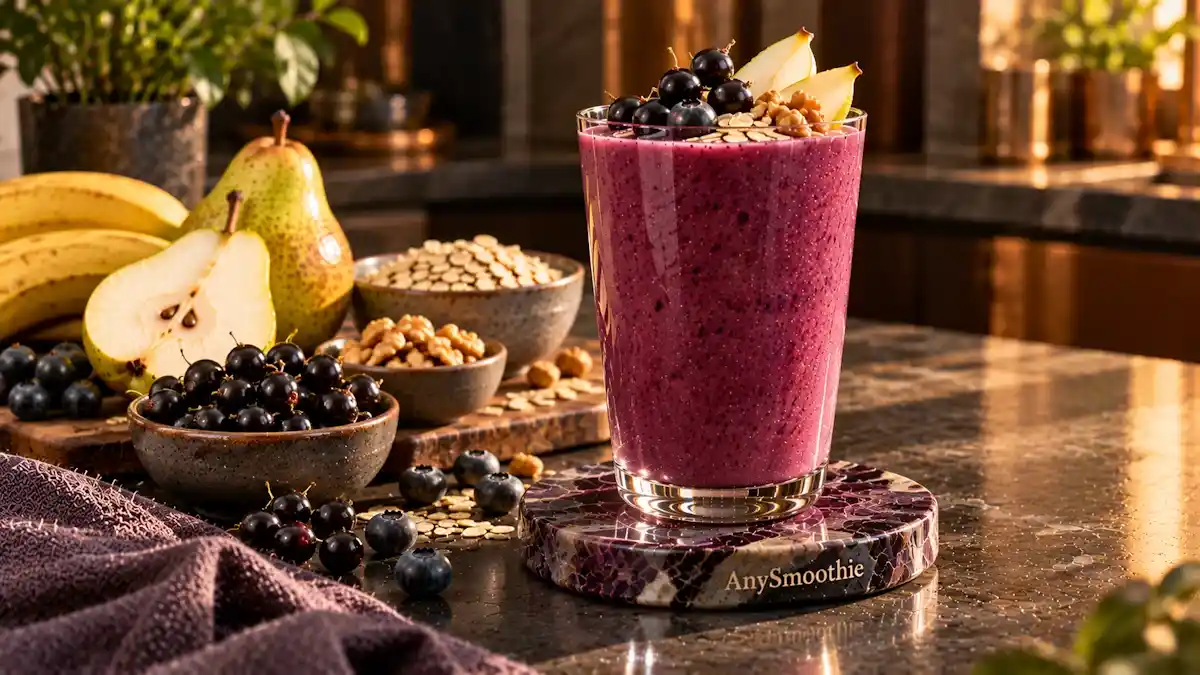
Food supplies nutrients that cells use in gene-regulating pathways, but a smoothie can’t predictably change your gene activity. If you’re curious about smoothies for histone acetylation and gene regulation, start with that distinction.
Berries, greens, and oats offer nutritional variety without needing an epigenetic promise. The connection begins with how cells package DNA, followed by three blends you can choose for taste and nourishment.
How histone acetylation connects food, cells, and gene regulation
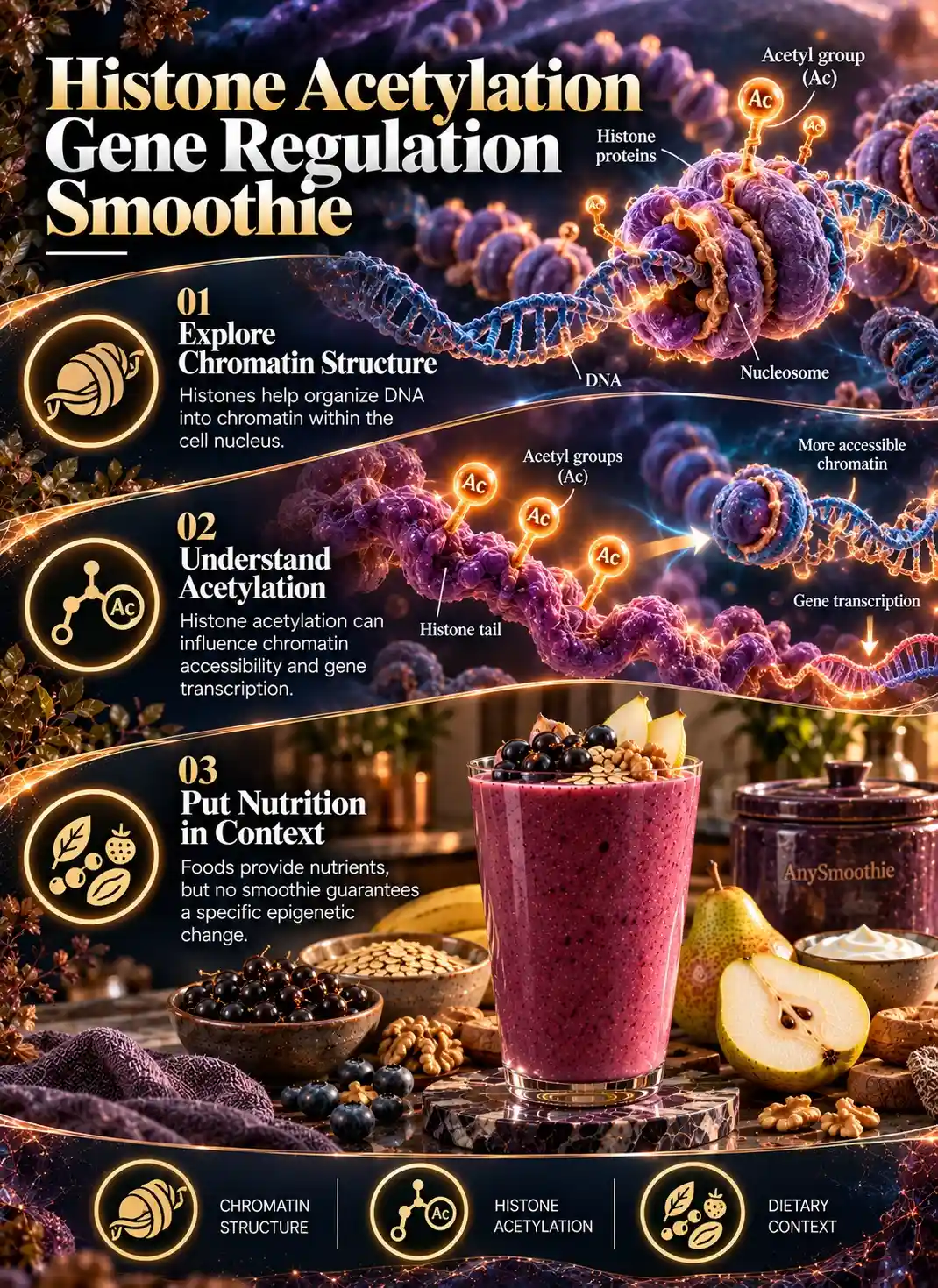
Your DNA wraps around proteins called histones. Together, DNA and its associated proteins form chromatin, the material that packages genetic information inside cells.
Adding small chemical groups called acetyl groups to histones can change local packaging and make some DNA regions more accessible. Enzymes add and remove these groups. However, acetylation is only one of several histone modifications involved in gene regulation, so accessibility alone doesn’t determine whether a gene becomes active. For a related but distinct process involving sirtuins, see apigenin smoothies for sirtuin support.
Food connects to this chemistry through ordinary metabolism. Cells process carbohydrates, fats, and proteins through pathways that produce molecules such as acetyl-CoA. This molecule supplies acetyl groups for histone acetylation, as described in research on dietary control of chromatin. For another epigenetic mechanism that differs from histone acetylation, see betaine smoothies for methylation support.
Still, eating an ingredient doesn’t deliver a predictable instruction to a particular gene. Digestion, tissue type, enzyme activity, and existing cellular conditions all matter.
Evidence that specific smoothies directly change human gene regulation is limited. These recipes provide familiar foods and nutrients, rather than a tested method for directing histone acetylation. For a related topic involving plant compounds and gene-associated signaling, see stilbenoid smoothies and foxo3 signaling.
3 Smoothies for Histone Acetylation and Gene Regulation
Each recipe makes one serving. Nutrition estimates use typical ingredient values; brands, fruit varieties, and portion sizes will change the totals. Sugars include those naturally present in fruit and milk.
Berry, oat, and yogurt smoothie
Blueberries and yogurt make this blend creamy and gently tangy. Oats add body, while yogurt supplies most of its protein.
Ingredients
- 3/4 cup frozen blueberries
- 1/2 cup plain nonfat Greek yogurt
- 1/4 cup dry rolled oats
- 1/2 cup 2% milk
- 1 teaspoon chia seeds
Instructions
Pour the milk into a blender, then add the yogurt, oats, chia seeds, and blueberries. Blend until smooth, scraping down the sides if necessary. Let it stand for two minutes so the oats soften, then stir before drinking.
Estimated Nutrition (per serving)
- Calories: ~290 kcal
- Protein: ~20 g
- Carbohydrates: ~41 g
- Fat: ~6 g
- Fiber: ~6 g
- Sugars: ~21 g
Spinach, avocado, and seed smoothie
Mango and lime give this green blend a bright flavor. Avocado creates a thick texture, while hemp hearts contribute unsaturated fats.
Ingredients
- 1 cup raw spinach
- 1/4 medium avocado, about 50 g
- 1/2 cup frozen mango
- 3/4 cup unsweetened soy milk
- 1 tablespoon hemp hearts
- 1 tablespoon lime juice
Instructions
Blend the soy milk and spinach first until no large leaf pieces remain. Add the avocado, mango, hemp hearts, and lime juice. Blend again until creamy, pausing to scrape the sides if needed. Serve immediately for the freshest flavor and smoothest texture.
Estimated Nutrition (per serving)
- Calories: ~260 kcal
- Protein: ~11 g
- Carbohydrates: ~23 g
- Fat: ~16 g
- Fiber: ~7 g
- Sugars: ~13 g
Cocoa, cherry, and walnut smoothie
Tart cherries balance cocoa’s bitterness, while banana adds sweetness. Walnuts contribute unsaturated fats and a richer texture without needing syrup or sweetened chocolate.
Ingredients
- 3/4 cup frozen pitted tart cherries
- 1 small ripe banana
- 3/4 cup 2% milk
- 1 tablespoon unsweetened cocoa powder
- 1 tablespoon chopped walnuts
Instructions
Add the milk, banana, cocoa, and walnuts to the blender. Blend briefly, then add the frozen cherries and blend until smooth. Scrape any cocoa from the sides into the mixture and blend again. Serve promptly while the cherries keep it cold.
Estimated Nutrition (per serving)
- Calories: ~300 kcal
- Protein: ~10 g
- Carbohydrates: ~50 g
- Fat: ~10 g
- Fiber: ~7 g
- Sugars: ~32 g
The cocoa gives this smoothie a rich chocolate flavor, while the tart cherries add a pleasant fruity contrast. Banana keeps it naturally sweet, and walnuts bring a subtle nutty taste that makes every sip feel a little more satisfying.
Compare the smoothies by flavor, texture, and nutrition
The recipes differ in their balance of protein, carbohydrates, and fat, as well as their flavor.
| Smoothie | Flavor | Texture | Nutritional standout | Best fit |
|---|---|---|---|---|
| Berry blend | Sweet and tangy | Creamy and hearty | Highest protein | A filling breakfast component |
| Green blend | Bright and citrusy | Thick and silky | Lowest sugar; unsaturated fats | Less-sweet flavor preferences |
| Cocoa blend | Rich and tart | Smooth with slight nuttiness | Carbohydrates and fiber | A chocolate-style snack |
Choose according to appetite and preference. The higher-protein berry blend and higher-fat green blend offer different nutritional profiles, but neither has a demonstrated advantage for histone acetylation.
How to enjoy these smoothies with realistic expectations
Match the serving to your appetite and the rest of your meal. For example, pair a smaller smoothie with eggs and whole-grain toast if you want breakfast with more chewing and variety.
Adjust texture before adding sweetness. A splash of water thins a thick blend without changing its flavor much. Meanwhile, frozen fruit makes a smoothie colder and thicker. Taste it first, since ripe fruit may provide all the sweetness you want.
For substitutions, unsweetened fortified soy milk can replace dairy milk. However, almond and oat beverages often contain less protein, so substitutions change the nutrition estimates. Use seed butter instead of walnuts when avoiding tree nuts, with attention to individual allergies.
Whole foods supply nutrients that support normal physiological systems. Research on dietary regulation of histone enzymes examines biochemical mechanisms, but it doesn’t establish these recipes as gene-regulating interventions.
No smoothie is proven to control histone acetylation or gene regulation on its own.
Conclusion
Smoothies can make varied whole foods easier to include in your routine. Their value rests in their ingredients and nutritional contribution, while gene regulation depends on many interacting cellular processes.
Keep realistic expectations alongside your curiosity about food and biology. Choose the blend whose flavor, texture, and preparation fit your day, without expecting one recipe to direct your genes.
🛡️ Safety Notes & Dietary Interactions
- Allergen awareness: The recipes contain dairy, soy, chia, hemp, walnuts, and oats. Check labels and choose substitutions appropriate for known allergies, especially when replacing walnuts with seed-based ingredients.
- Fiber and fullness: Oats, chia, spinach, fruit, avocado, and nuts or seeds contribute fiber and can make these smoothies filling. Adjust portions or liquid if the texture feels too dense.
- Added sweetness: The recipes rely mainly on fruit for sweetness, while cocoa adds bitterness and walnuts add richness. Taste before adding sweeteners, particularly when using ripe banana or cherries.
- Realistic expectations: Acetyl-CoA participates in cellular metabolism and can supply acetyl groups for histone acetylation, but these smoothies are not established methods for directing histone modifications or gene activity.
FAQs
Which smoothie provides the most protein?
The berry, oat, and yogurt smoothie provides the most estimated protein at approximately 20 grams per serving. The spinach, avocado, and seed smoothie provides about 11 grams, while the cocoa, cherry, and walnut version provides approximately 10 grams.
Why is acetyl-CoA relevant to histone acetylation?
Cells produce acetyl-CoA through normal metabolism, and it can supply acetyl groups used in histone acetylation. This creates a biochemical connection between nutrient metabolism and chromatin regulation. However, eating a particular smoothie does not deliver a predictable instruction to a specific gene or guarantee increased histone acetylation.
Can I make the smoothies dairy-free?
Yes. The article specifically suggests unsweetened fortified soy milk as an alternative to dairy milk. However, substitutions can change protein and other nutritional values. The berry recipe also contains Greek yogurt, so a suitable plant-based yogurt would be needed if avoiding dairy throughout the entire recipe.
Which smoothie is the least sweet?
The spinach, avocado, and seed smoothie has the lowest estimated sugar content, at approximately 13 grams per serving. It combines mango and lime with spinach, avocado, soy milk, and hemp hearts, creating a brighter, less dessert-like profile than the banana- and cherry-containing alternatives.
Do these smoothies actually change gene regulation?
The article does not establish that they do. Histone acetylation is one mechanism involved in gene regulation, and cellular metabolism supplies molecules such as acetyl-CoA that participate in the process. But digestion, tissue type, enzyme activity, and cellular conditions all influence gene regulation, so no recipe can reliably direct it.

Medical Disclaimer: AnySmoothie content is for educational purposes only and is not a substitute for professional medical advice. Consult a healthcare provider for personalized guidance. See our full Disclaimer & Terms of Use. AI Transparency: AnySmoothie may use AI to support content development. All content undergoes human editorial review for accuracy, clarity, and editorial quality. See our full AI Transparency.