
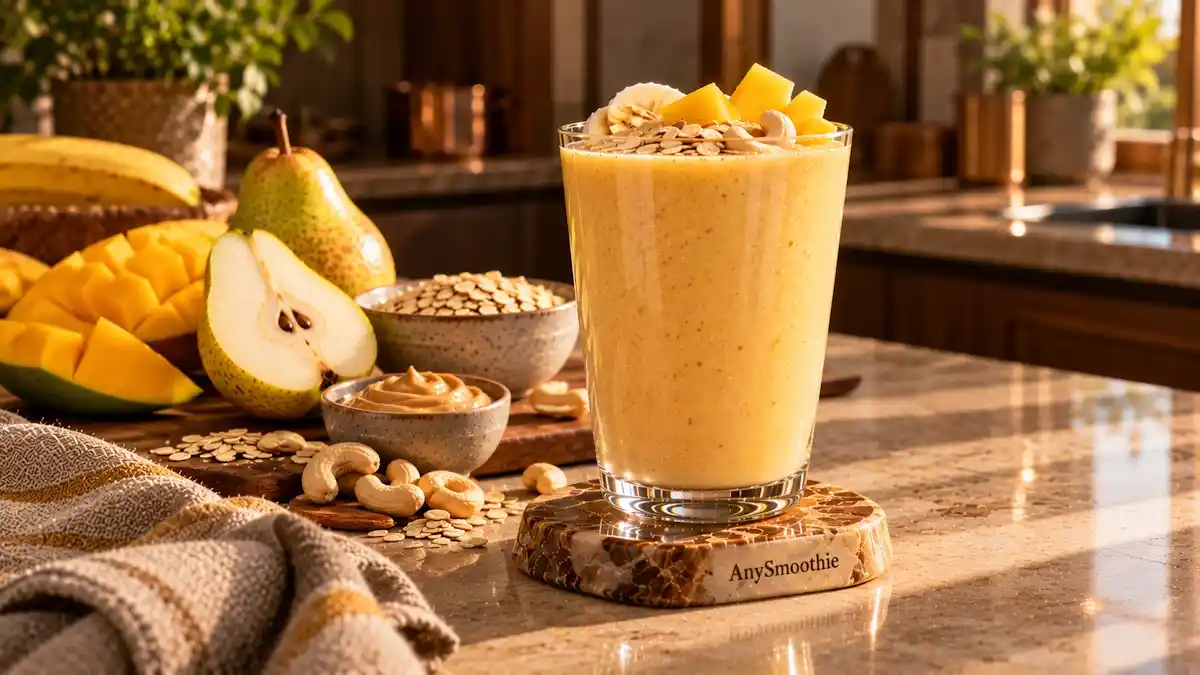
A smoothie can provide pantothenate, or vitamin B5, which your body uses to make coenzyme A (CoA). It can also contribute protein, fiber, and fats, but nutrient intake doesn’t directly control this complex pathway.
No individual drink guarantees increased CoA synthesis. Instead, these smoothies offer convenient ways to include nutrient-containing foods within a varied diet. Start with what B5 does, then choose ingredients for their flavor, nutritional contribution, and ability to keep you satisfied.
How Pantothenate Helps the Body Make Coenzyme A
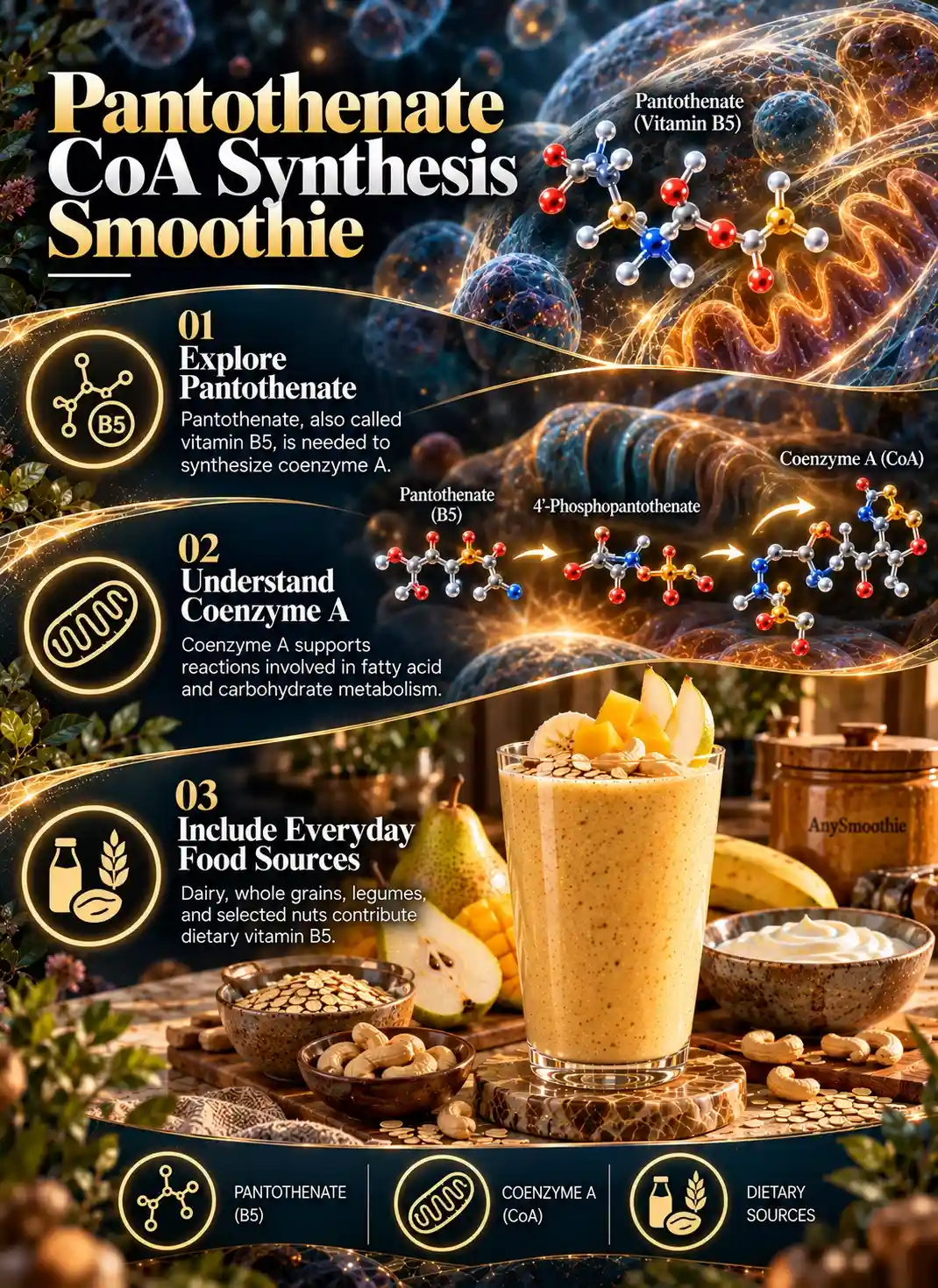
Pantothenate is a building block for CoA. Your cells convert it through several enzyme-controlled steps that also use cysteine, an amino acid, and ATP, an energy-carrying molecule.
A review of CoA biosynthesis describes pantothenate as the vitamin precursor for this essential metabolic cofactor.
CoA carries chemical groups called acyl groups between reactions. For example, acetyl-CoA participates in processes that release energy from nutrients and build other molecules. CoA also helps cells process fatty acids. For a related topic involving another cellular cofactor, see nmn smoothies for nad support.
Food supplies materials for these normal physiological systems. However, eating more B5 doesn’t automatically make the pathway run faster. Enzyme regulation and the body’s metabolic needs also matter, so a smoothie supports nutrition without determining a specific biochemical outcome. For another related topic involving mitochondrial regulation, see honokiol smoothies and mitochondrial sirt3 activity.
Choose Smoothie Ingredients That Supply Vitamin B5 and Other Nutrients
Build your smoothie around foods you enjoy, with enough variety to contribute more than sweetness.
What to Look for in a B5-Rich Smoothie
Milk, yogurt, avocado, mushrooms, and legumes contribute pantothenate, although amounts vary by food and serving. The NIH pantothenic acid fact sheet identifies food sources and explains B5’s role in CoA synthesis.
For sweet smoothies, dairy provides a familiar base, while avocado adds mild flavor and thickness. Chickpeas offer another creamy option when blended thoroughly. Mushrooms also provide B5, but their earthy flavor generally suits savory meals better.
Balance Protein, Fat, and Fiber
Pairing fruit with milk or yogurt adds protein and can make a smoothie more filling. Meanwhile, avocado and sunflower seeds contribute unsaturated fats. Whole fruit, oats, and legumes add fiber. For a complementary discussion of carbohydrate metabolism after eating, see smoothies for postprandial glucose support.
These choices improve the drink’s nutritional balance without promising greater CoA production. For a related topic on mitochondrial redox processes, see methylene blue smoothie for mitochondrial redox support. Keep juice, syrups, and other sweeteners optional, since ripe fruit often supplies enough sweetness.
3 Smoothies for Pantothenate and Coenzyme A Synthesis
Each recipe makes one serving and includes foods that contribute B5 or other useful nutrients. Nutrition estimates are rounded; brands, fruit size, and measuring differences will change the totals.
Creamy Yogurt, Banana, and Avocado Smoothie
Banana gives this smoothie its sweetness, while avocado creates a thick, spoonable texture. Greek yogurt supplies most of the protein without overpowering the fruit.
Ingredients
- 3/4 cup (170 g) plain nonfat Greek yogurt
- 1 medium banana
- 1/4 medium avocado (50 g flesh)
- 1/2 cup cold water
- 1/4 teaspoon ground cinnamon
Instructions
Add the water and yogurt to a blender, followed by the banana, avocado, and cinnamon. Blend until completely smooth, scraping down the sides if needed. Add a little more water if you prefer a thinner drink, then pour into a glass.
Estimated Nutrition (per serving)
- Calories: ~290 kcal
- Protein: ~20 g
- Carbohydrates: ~38 g
- Fat: ~8 g
- Fiber: ~7 g
- Sugars: ~21 g
For the creamiest texture, use a ripe banana and a perfectly ripe avocado. If you prefer a little extra warmth, add a light dusting of cinnamon on top before serving.
Berry, Milk, and Sunflower Seed Smoothie
Blueberries give this option a sharper fruit flavor and deep purple color. Sunflower seeds add richness, while oats provide body without the thickness of avocado.
Ingredients
- 1 cup low-fat milk (1% milkfat)
- 1 cup (140 g) frozen unsweetened blueberries
- 2 tablespoons (18 g) unsalted sunflower seed kernels
- 2 tablespoons (10 g) rolled oats
- 1/4 cup cold water
Instructions
Blend the milk, water, sunflower seeds, and oats first to break down the seeds. Add the frozen blueberries and blend again until evenly mixed. Let it stand briefly before drinking if you prefer softer oat particles and a slightly thicker consistency.
Estimated Nutrition (per serving)
- Calories: ~330 kcal
- Protein: ~14 g
- Carbohydrates: ~43 g
- Fat: ~13 g
- Fiber: ~6 g
- Sugars: ~27 g
Mango, Yogurt, and Chickpea Smoothie
Mango brings tropical sweetness, and a small portion of chickpeas adds fiber and a creamy texture. Fresh ginger gives the drink a brighter finish.
Ingredients
- 3/4 cup (125 g) frozen unsweetened mango chunks
- 3/4 cup (170 g) plain low-fat Greek yogurt (2% milkfat)
- 1/4 cup (40 g) canned chickpeas, drained and rinsed
- 1/4 cup low-fat milk (1% milkfat)
- 1 teaspoon grated fresh ginger
- 1/4 cup cold water
Instructions
Blend the chickpeas, yogurt, milk, and water until no visible chickpea pieces remain. Add the mango and ginger, then blend again until creamy. Scrape the blender’s sides as needed, and serve immediately for the thickest texture.
Estimated Nutrition (per serving)
- Calories: ~285 kcal
- Protein: ~23 g
- Carbohydrates: ~38 g
- Fat: ~6 g
- Fiber: ~5 g
- Sugars: ~26 g
These three smoothies offer distinct flavor profiles and functional advantages, from a creamy, satisfying blend to a tangy berry option and a tropical smoothie with a stronger emphasis on protein.
| Smoothie | Main Benefit | Key Distinction | Texture & Flavor | Best Use |
|---|---|---|---|---|
| Creamy Yogurt, Banana, and Avocado | Satisfying creaminess and balanced macronutrients | Combines a smooth consistency with a mild, naturally sweet flavor | Thick, velvety, and gently sweet with warm cinnamon notes | A filling breakfast or morning snack |
| Berry, Milk, and Sunflower Seed | Fruit variety with a richer, seed-based character | Offers a tangier taste and a more pronounced nutty finish | Fruity, slightly tart, and nutty with a deep berry flavor | A refreshing snack or light breakfast |
| Mango, Yogurt, and Chickpea | Higher protein content among the three options | Combines tropical fruit character with subtle savory depth | Creamy, tropical, and sweet with a fresh ginger finish | A protein-focused breakfast or post-activity snack |
Make a Smoothie That Fits Your Day
Choose the banana-avocado option when you want a mild, thick smoothie. The blueberry version has a nuttier finish and more texture, while mango and ginger offer a brighter flavor.
For fullness, consider both protein and portion size. The yogurt-based options provide more protein in these recipes, while seeds contribute additional fat to the blueberry drink.
Vitamin B5 needs are generally met through food. According to the NIH consumer guidance on B5, pantothenic acid occurs naturally in almost all foods.
A smoothie can fit into breakfast or serve as a substantial snack. Across the day, keep eating varied foods rather than relying on one blended drink.
Conclusion: Keep the Focus on Everyday Nutrition
Smoothies can conveniently provide pantothenate and other nutrients used in normal metabolism. However, no recipe guarantees increased coenzyme A synthesis.
Choose the flavor and texture you enjoy, then treat it as one part of a varied diet. Consistent food variety matters more than trying to control a biochemical pathway through a single drink.
🛡️ Safety Notes & Dietary Interactions
- Digestive tolerance: Chickpeas, oats, sunflower seeds, and avocado add fiber and fat, which can make these smoothies more filling. Adjust portions if legumes or higher-fiber blends feel uncomfortable.
- Dairy considerations: The recipes contain Greek yogurt and milk. Choose suitable alternatives if dairy causes digestive symptoms, and remember that substitutions can change protein, fat, carbohydrate, and calorie values.
- Allergen awareness: Sunflower seeds are used in the blueberry smoothie, while dairy appears throughout the recipes. Check packaged ingredients and choose alternatives appropriate for known allergies or dietary restrictions.
- Supplement expectations: Pantothenate supports formation of coenzyme A, but increasing B5 intake doesn’t guarantee faster CoA synthesis. Avoid treating a B5-rich smoothie as a way to control a specific metabolic pathway.
FAQs
Which smoothie provides the most protein?
The mango, yogurt, and chickpea smoothie provides the most estimated protein at approximately 23 grams per serving. The creamy yogurt, banana, and avocado version provides about 20 grams, while the berry, milk, and sunflower seed smoothie provides approximately 14 grams.
Why are chickpeas included in a B5 smoothie?
Chickpeas contribute pantothenate while also adding fiber, carbohydrate, and some protein. Their mild flavor can work with mango and yogurt, and blending them thoroughly creates a creamy texture. The recipe uses a modest 1/4-cup portion rather than relying on chickpeas as the sole nutritional focus.
Does eating more vitamin B5 make the body produce more CoA?
Not necessarily. Pantothenate is a building block for coenzyme A, but CoA synthesis involves several enzyme-controlled steps and depends on broader cellular conditions. Providing additional B5 through food supports nutrient availability, but a smoothie cannot establish or guarantee a specific increase in CoA production.
Which smoothie is best if I want more dietary fat?
The berry, milk, and sunflower seed smoothie has the highest estimated fat content at approximately 13 grams per serving. The sunflower seeds provide much of this contribution. The banana-avocado smoothie contains about 8 grams, while the mango-chickpea version contains approximately 6 grams.
Can I replace the dairy ingredients with plant-based alternatives?
Yes, but the nutritional profile will change. Plant-based yogurt or beverages can replace dairy when appropriate, but protein, carbohydrate, fat, and micronutrient content varies substantially between products. Check labels when choosing a substitute, particularly if you’re using the smoothie to contribute meaningful protein to your daily diet.

Medical Disclaimer: AnySmoothie content is for educational purposes only and is not a substitute for professional medical advice. Consult a healthcare provider for personalized guidance. See our full Disclaimer & Terms of Use. AI Transparency: AnySmoothie may use AI to support content development. All content undergoes human editorial review for accuracy, clarity, and editorial quality. See our full AI Transparency.