
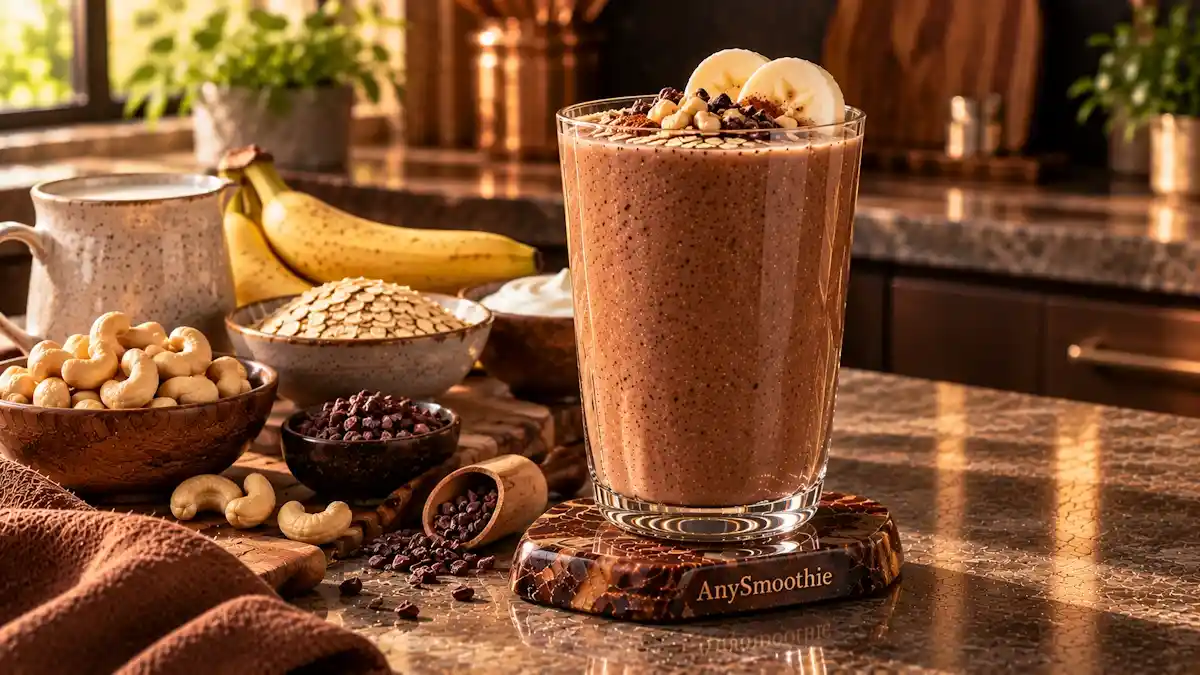
Yes, a smoothie can provide copper used by cytochrome c oxidase, an enzyme that helps cells use oxygen to make energy. Copper is one of its required components, but food can’t target this enzyme or guarantee a change in its activity.
If you’re considering copper-rich smoothies for cytochrome c oxidase, focus on normal nutrient intake rather than promised energy boosts. These three recipes offer familiar ingredients and flexible portions, starting with a brief explanation of what dietary copper does.
Copper Rich Smoothies for Cytochrome c Oxidase: What the Science Says
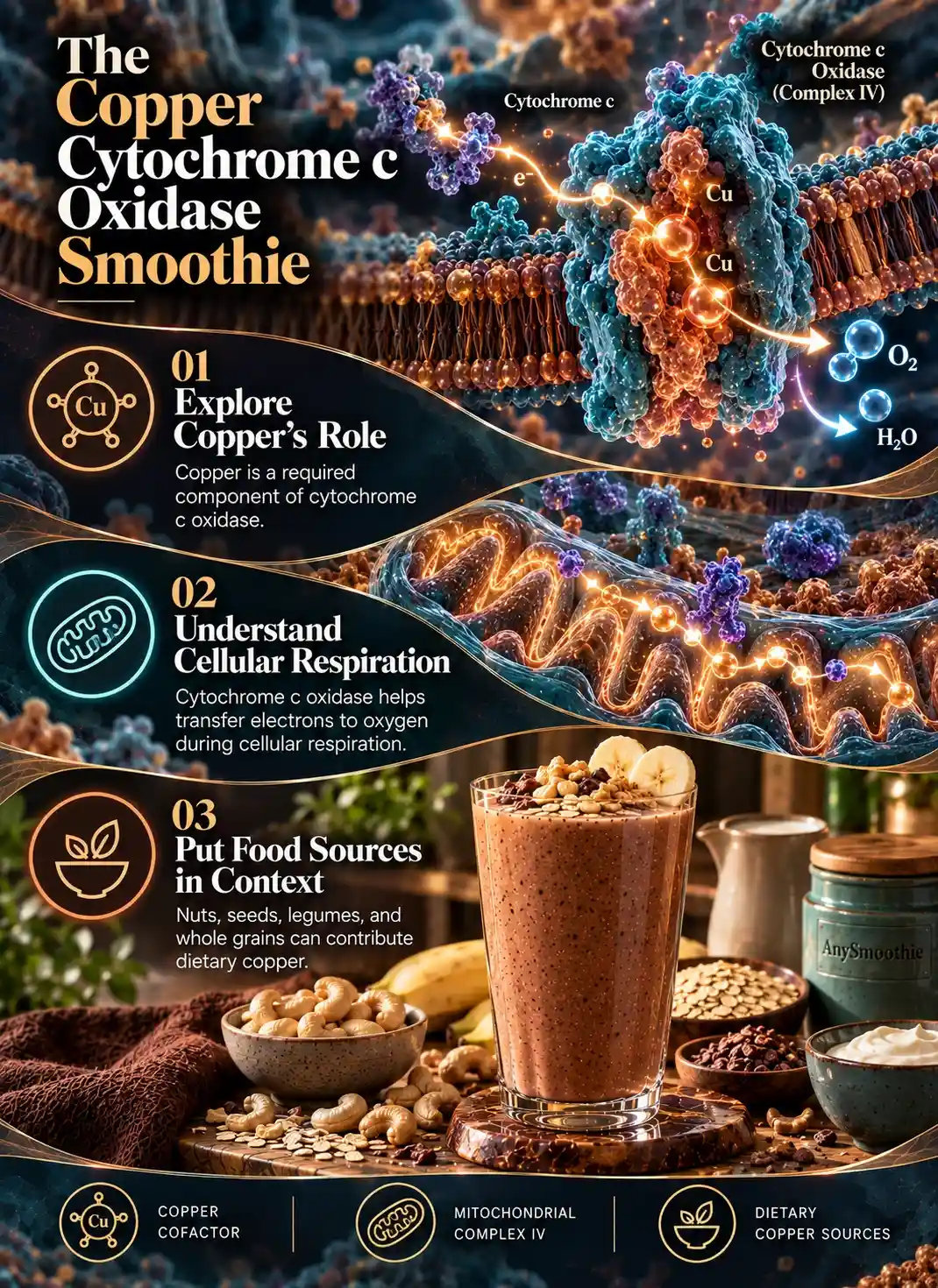
Copper contributes to the assembly and function of mitochondrial enzymes involved in cellular energy production.
How copper fits into the enzyme’s energy pathway
Cytochrome c oxidase is part of the mitochondrial electron transport chain. It transfers electrons to oxygen, which combines with hydrogen ions to form water. The enzyme also helps establish the proton gradient that powers ATP production. For a broader look at this cellular process, see smoothies for cellular respiration support.
Its structure includes copper centers that participate in electron transfer and oxygen reduction. A review of mitochondrial copper delivery describes how cells supply copper during enzyme assembly. Your body needs copper to make and maintain functional copper-containing proteins. For a related discussion of ATP and dietary minerals, see magnesium orotate smoothies for ATP support. Magnesium’s role in ATP-related physiology is distinct from copper’s role in cytochrome c oxidase.
What a copper-rich smoothie can, and cannot, do
Nuts, seeds, and cocoa can contribute dietary copper. Including them in meals supports physiological systems that require this mineral. For another example involving a trace mineral and a specific enzyme, see molybdenum smoothie for sulfite oxidase support. Molybdenum and copper serve different enzymatic roles, so the two topics shouldn’t be treated as interchangeable.
However, a smoothie can’t switch on a particular enzyme, treat a condition, or promise greater energy. Getting enough copper and directly increasing cytochrome c oxidase activity are different claims.
Copper-dependent enzymes participate in several physiological processes, while mitochondrial integrity involves additional cellular systems. For that broader mitochondrial perspective, see ergothioneine smoothies for mitochondrial integrity.
3 Copper-Rich Smoothies for Cytochrome c Oxidase
Each recipe makes one substantial serving. Split it into smaller portions if you’re having it alongside a meal rather than drinking it alone.
The nutrition estimates below assume 2% dairy milk where specified, plain low-fat dairy yogurt, and no optional maple syrup. Values vary by brand and by whether you choose milk, water, or a plant-based alternative.
Cocoa, cashew, and banana smoothie
Ingredients
- 1 medium banana
- 1 cup milk or unsweetened fortified soy milk
- 2 tablespoons smooth cashew butter
- 1 tablespoon unsweetened cocoa powder
- 1/2 cup ice
- Optional: up to 1 teaspoon maple syrup
Steps
Blend 1 medium banana, 1 cup milk or unsweetened fortified soy milk, 2 tablespoons smooth cashew butter, and 1 tablespoon unsweetened cocoa powder. Add 1/2 cup ice, then blend until creamy and uniform.
Cashews and chocolate appear among the NIH’s dietary sources of copper. Here, banana softens cocoa’s bitterness, while cashew butter adds richness.
Taste before sweetening. If needed, add up to 1 teaspoon maple syrup, then blend briefly. For a colder, thicker drink, use frozen banana slices instead of fresh banana and reduce the ice. Add a splash of milk if the mixture stalls.
Estimated Nutrition per Serving
- Calories: ~430 kcal
- Protein: ~16 g
- Carbohydrates: ~52 g
- Fat: ~22 g
- Fiber: ~7 g
- Sugars: ~28 g
Tahini, date, and berry smoothie
Ingredients
- 1 tablespoon tahini
- 3/4 cup frozen mixed berries
- 1 pitted Medjool date
- 1/2 cup plain low-fat yogurt
- 1/2 cup milk or water
Steps
Combine 1 tablespoon tahini, 3/4 cup frozen mixed berries, 1 pitted Medjool date, 1/2 cup plain yogurt, and 1/2 cup milk or water. Blend thoroughly, pausing to scrape down any sesame paste stuck to the blender.
Tahini supplies sesame-based copper and gives this smoothie a nutty flavor. Meanwhile, berries add tartness, and the date provides sweetness without needing syrup.
Because tahini can be dense, add liquid 1 tablespoon at a time until the smoothie pours easily. Unsweetened soy yogurt is a dairy-free option. Stir separated tahini before measuring so its consistency is even.
A useful preparation detail is to stir the tahini in its jar before measuring. Sesame paste can separate during storage, and mixing it first helps make each spoonful more consistent.
Estimated Nutrition per Serving
- Calories: ~350 kcal
- Protein: ~15 g
- Carbohydrates: ~48 g
- Fat: ~13 g
- Fiber: ~8 g
- Sugars: ~37 g
Sunflower seed, avocado, and spinach smoothie
Ingredients
- 2 tablespoons unsalted sunflower seed butter
- 1/4 medium avocado
- 1 cup loosely packed baby spinach
- 1 peeled, seedless orange
- 3/4 cup cold water
- A few ice cubes
Steps
Blend 2 tablespoons unsalted sunflower seed butter, 1/4 medium avocado, 1 cup loosely packed baby spinach, and 1 peeled, seedless orange. Add 3/4 cup cold water and a few ice cubes.
Run the blender until no leafy pieces remain. Sunflower seed butter contributes copper, while avocado thickens the mixture. Orange adds tartness that balances the seeds’ earthy flavor.
Seed butters vary in thickness, so add more water gradually if needed. You can substitute 2 tablespoons finely ground, hulled sunflower seeds, although the texture may be slightly grainier. Blend those thoroughly before deciding whether to add more liquid.
Estimated Nutrition per Serving
- Calories: ~315 kcal
- Protein: ~9 g
- Carbohydrates: ~22 g
- Fat: ~24 g
- Fiber: ~8 g
- Sugars: ~10 g
The sunflower-seed recipe is naturally thick from the avocado and seed butter. Add water gradually until it reaches a texture you can comfortably drink.
Use this comparison to choose a flavor and texture.
| Smoothie | Main copper-containing ingredients | Other ingredients | Flavor and texture | Practical note |
|---|---|---|---|---|
| Cocoa, cashew, banana | Cocoa, cashew butter | Banana, milk, ice | Chocolatey and creamy | Sweeten after tasting |
| Tahini, date, berry | Tahini | Berries, date, yogurt, liquid | Nutty, tart, thick | Stir tahini first |
| Sunflower, avocado, spinach | Sunflower seed butter | Avocado, spinach, orange, water | Earthy and citrusy | Blend greens thoroughly |
Choose according to taste and the ingredients you already enjoy. The amount of copper in each serving depends on the specific products and quantities used.
How to enjoy these smoothies while keeping copper intake balanced
These recipes are food ideas, not a plan to increase copper intake. Your needs depend on your overall diet and health. A different cellular energy pathway involving succinate is discussed in succinic acid smoothies for cellular energy; this is a complementary topic, not an alternative way to supply copper to cytochrome c oxidase.
Choose portions and ingredients that fit your usual diet
Treat a smoothie as one part of a varied eating pattern. You don’t need to drink all three regularly or combine them with other copper-focused foods.
Check packaged ingredient labels for added sugars, sodium, and allergens. Cashew butter contains tree nuts, tahini contains sesame, and milk or yogurt may contain dairy.
Also, fortified plant-based drinks differ in their nutrient content. Choose one that fits your usual diet, then adjust the serving for taste and fullness. Combining these ingredients doesn’t establish better copper absorption or greater enzyme activity.
When to ask a health professional about copper
If you have a diagnosed condition affecting copper balance, including Wilson disease, ask a qualified health professional for individual guidance. General recipes may not fit a prescribed eating plan.
Discuss copper supplements with a clinician before taking them, especially if you also use other mineral supplements. Food choices and supplements aren’t interchangeable approaches to nutrient intake.
A smoothie doesn’t replace medical advice or an evaluation of persistent fatigue. Those concerns deserve attention based on your symptoms and health history.
Conclusion: Keep Copper in the Context of Balanced Eating
Cytochrome c oxidase uses copper in normal cellular energy processes. These cocoa-cashew, tahini-berry, and sunflower-avocado recipes offer enjoyable ways to include copper-containing foods without promising a specific enzyme effect.
Choose portions and flavors that fit your meals. Balanced eating is the practical goal, with realistic expectations about what any single smoothie can do.
🛡️ Safety Notes & Dietary Interactions
- Copper balance: These recipes contain several copper-rich ingredients, but they are not designed to increase copper intake therapeutically. People with conditions affecting copper metabolism should follow individualized dietary guidance.
- Allergen awareness: Cocoa-cashew, tahini-berry, and sunflower-avocado smoothies involve tree nuts, sesame, or seeds, while dairy appears in some versions. Check labels and substitutions carefully for personal allergies.
- Portion awareness: Cashew butter, tahini, sunflower seed butter, and avocado are energy-dense. Larger portions can substantially increase calories and fat, so adjust amounts according to your overall meals and appetite.
- Supplement caution: Copper supplements can provide substantially different amounts from food. If you use mineral supplements or have a condition such as Wilson disease, discuss copper intake with a qualified health professional.
FAQs
Which smoothie contains the most copper-rich ingredients?
The cocoa-cashew smoothie combines two specifically identified copper-containing foods: cocoa and cashew butter. The tahini-berry and sunflower-avocado recipes also include copper-containing seeds or seed products. However, the article does not rank the recipes by exact copper content because amounts vary with products and portions.
Can these smoothies increase cytochrome c oxidase activity?
Not predictably. Copper is required by cytochrome c oxidase, but supplying copper-containing foods is different from directly increasing the enzyme’s activity. The article presents these recipes as ways to include copper in a varied diet, without establishing an enzyme-targeting or energy-boosting effect.
Which recipe is best if I need a dairy-free option?
The tahini-berry smoothie can use unsweetened soy yogurt instead of dairy yogurt. The cocoa-cashew recipe can use unsweetened fortified soy milk, while the sunflower-avocado smoothie already uses water as its liquid base. Check individual product labels because substitutions can change the nutritional profile.
Why does the tahini recipe require stirring before measuring?
Tahini can separate during storage, leaving a denser paste at the bottom and more oil near the surface. Stirring the jar before measuring helps distribute the sesame paste more evenly, making the specified tablespoon more consistent between preparations.
Should I take a copper supplement with these smoothies?
Not automatically. The recipes are intended as food choices rather than a copper supplementation plan. Copper supplements can substantially alter intake and aren’t interchangeable with food. If you have a diagnosed copper-related condition, take mineral supplements, or have concerns about copper status, seek individualized professional guidance.

Medical Disclaimer: AnySmoothie content is for educational purposes only and is not a substitute for professional medical advice. Consult a healthcare provider for personalized guidance. See our full Disclaimer & Terms of Use. AI Transparency: AnySmoothie may use AI to support content development. All content undergoes human editorial review for accuracy, clarity, and editorial quality. See our full AI Transparency.