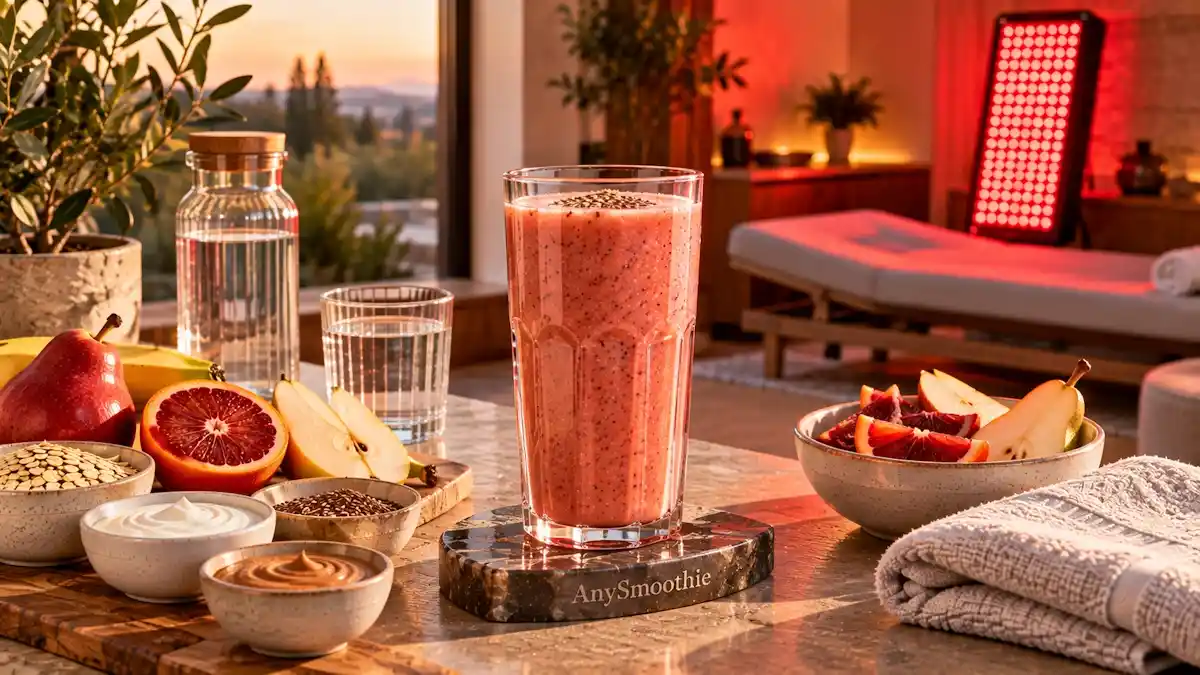
What should you eat after a red light therapy session? A smoothie can provide fluids and everyday nutrients, but there’s no evidence that it improves the session’s results.
If you’re hungry, blending fruit with yogurt, soy milk, or oats is a convenient option without turning your snack into a treatment requirement. The useful focus is balanced nutrition, rather than ingredients marketed as therapy boosters.
Start with what your body normally needs, then choose a recipe and timing that fit your appetite and routine.
What Makes a Good Post–Red Light Therapy Smoothie
There’s no special smoothie or proven post-session diet required for red light therapy. Evidence doesn’t establish that drinking a smoothie afterward changes treatment outcomes.
As Stanford Medicine explains, evidence for red light therapy varies by application. That research shouldn’t be extended to claims about berry blends, protein powders, or other foods consumed afterward.
Choose ingredients that support everyday nutrition
Berries and leafy greens add variety, fiber, and plant compounds to your diet. For example, strawberries supply vitamin C, while spinach supplies folate. Neither ingredient needs to be paired with a light session to contribute nutrients.
For more ideas using produce in combination, see our fruit and vegetable smoothie formulations for micronutrient synergy.
Plain yogurt, Greek yogurt, and soy milk provide protein. Meanwhile, oats add carbohydrates and fiber, and nut butter adds fat plus some protein.
Choose ingredients you enjoy and tolerate. Whole foods and a balanced eating pattern matter more than any single ingredient. If your smoothie replaces breakfast, give it enough substance for a meal; a small fruit blend may suit a snack.
How nutrients support normal physiological systems
Digestion breaks protein into amino acids, which the body uses to build enzymes and maintain tissues. Carbohydrates provide sugars that cells can use to produce ATP, the molecule that supplies energy for cellular work.
Dietary fats provide fatty acids and help your body absorb vitamins A, D, E, and K. Other vitamins participate in ordinary metabolic reactions, while water provides the fluid environment for those reactions and nutrient transport.
These are normal biochemical processes that happen regardless of a therapy appointment. Supplying nutrients doesn’t demonstrate that a food activates red light therapy or improves its effects.
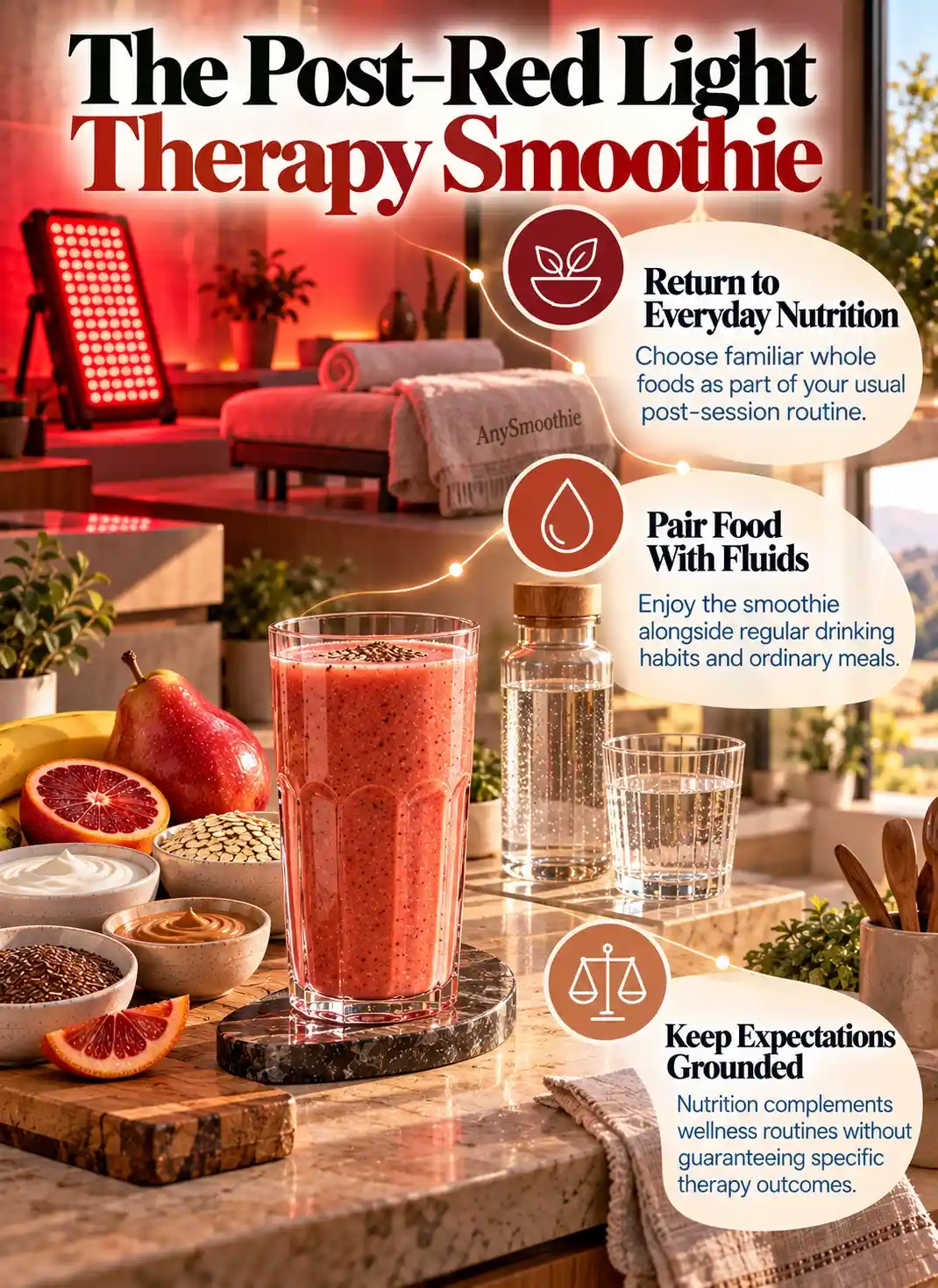
3 Smoothies After Red Light Therapy
Each recipe makes one serving. Blend until smooth, adding a splash of water if needed. Frozen fruit creates a thicker texture without requiring ice.
Berry-yogurt blend
Ingredients
- 3/4 cup frozen mixed berries
- 3/4 cup plain Greek yogurt
- 1/2 cup milk
Steps
Blend 3/4 cup frozen mixed berries, 3/4 cup plain Greek yogurt, and 1/2 cup milk.
The yogurt supplies protein, while the berries contribute fiber and fruit flavor. For a dairy-free version, use unsweetened soy milk and soy yogurt. Check the yogurt label because protein content varies. Add water gradually if the mixture is too thick.
Estimated Nutrition per Serving
- Calories: ~215 kcal
- Protein: ~22 g
- Carbohydrates: ~25 g
- Fat: ~3 g
- Fiber: ~4 g
- Sugars: ~20 g
This is a useful lighter option when the session falls between meals and you want protein without making the smoothie especially dense. For another yogurt-and-fruit combination, see our strawberry yogurt smoothie for polyphenol bioavailability.
Leafy green and banana blend
Ingredients
- 1 medium banana
- 1 cup loosely packed spinach
- 1 cup milk
- 1/4 cup rolled oats
Steps
Blend 1 medium banana, 1 cup loosely packed spinach, 1 cup milk, and 1/4 cup rolled oats.
A ripe banana adds sweetness, and the oats give the drink a thicker texture. Use unsweetened soy milk instead of dairy milk if preferred. Choose certified gluten-free oats when your dietary needs require them.
Estimated Nutrition per Serving
- Calories: ~310 kcal
- Protein: ~13 g
- Carbohydrates: ~57 g
- Fat: ~7 g
- Fiber: ~6 g
- Sugars: ~21 g
Mango-soy blend
Ingredients
- 1 cup frozen mango
- 1 cup unsweetened soy milk
- 1 tablespoon peanut butter
Steps
Blend 1 cup frozen mango, 1 cup unsweetened soy milk, and 1 tablespoon peanut butter.
This dairy-free option combines fruit, protein, and fat. For a peanut-free version, substitute sunflower seed butter and check its allergen labeling. If you avoid soy, use a tolerated milk alternative; its protein content may differ.
Estimated Nutrition per Serving
- Calories: ~275 kcal
- Protein: ~13 g
- Carbohydrates: ~35 g
- Fat: ~11 g
- Fiber: ~4 g
- Sugars: ~26 g
Compare the three recipes at a glance
Choose based on flavor, ingredients, and dietary needs.
| Smoothie | Main ingredients | Protein source | Nutritional focus | Simple swap |
|---|---|---|---|---|
| Berry-yogurt | Berries, yogurt, milk | Greek yogurt and milk | Protein and fruit fiber | Soy yogurt and soy milk |
| Green-banana | Banana, spinach, oats, milk | Milk | Carbohydrates and fiber | Certified gluten-free oats |
| Mango-soy | Mango, soy milk, peanut butter | Soy milk and peanut butter | Protein and dietary fat | Sunflower seed butter |
The recipes offer different food combinations, not different therapeutic effects.
When to drink a smoothie and how to make it fit your routine
There’s no established post-session waiting period or special timing rule for smoothies. Drink one when it fits your hunger and schedule, unless your clinician has given you other instructions.
If you’ve already eaten and aren’t hungry, you don’t need another snack because you finished a session. Water is also a simple option when you’re thirsty. A smoothie contributes fluid, but it doesn’t have to replace your usual drinking habits.
For a meal, consider the portion and ingredients together. Fruit alone supplies a different nutrient mix than fruit blended with yogurt and oats. Meanwhile, a smaller serving may fit better between meals. You can also refrigerate a freshly made smoothie promptly and drink it later.
Check labels on flavored yogurt, sweetened milk alternatives, and packaged smoothie mixes. Fruit already contributes sweetness, so taste the blend before adding honey or syrup. Those additions count as added sugar.
Also, match ingredients to allergies and personal dietary needs. Dairy-free doesn’t automatically mean soy-free or nut-free. If you follow a prescribed eating plan, use its portion guidance rather than assuming a smoothie is interchangeable with any snack.
Keep food choices separate from treatment instructions. Cleveland Clinic’s red light therapy guidance recommends discussing treatment with a healthcare provider. Follow your clinician’s advice where relevant, including any directions connected to other procedures or your individual care.
Conclusion: Keep the smoothie optional
A smoothie after red light therapy is a convenient food choice, not a proven way to change treatment results. Its nutrients support the same everyday physiological processes as nutrients in other meals.
Choose a recipe you enjoy, adjust it for your dietary needs, and drink it when you’re hungry. Overall eating and hydration habits deserve more attention than matching a particular ingredient to the end of a session.
🛡️ Safety Notes & Dietary Interactions
- Treatment expectations: A smoothie provides ordinary nutrients and fluids after red light therapy, but the article does not establish any food-based effect on treatment outcomes. Keep nutrition separate from therapy claims.
- Allergen awareness: The recipes contain dairy, soy, peanuts, and oats, with sunflower seed butter suggested as an alternative. Check labels carefully because dairy-free products are not necessarily soy-free or nut-free.
- Added sugar: Berries, bananas, and mango already provide naturally occurring sugars. Taste smoothies before adding honey, syrup, flavored yogurt, or sweetened milk alternatives to avoid unnecessary added sugar.
- Individual dietary needs: Portion size and ingredient choices should reflect your usual eating pattern and any prescribed dietary plan. A smoothie is not automatically interchangeable with another snack or meal.
FAQs
Do I need a smoothie after red light therapy?
No. The article presents a smoothie as an optional food choice rather than a required part of a red light therapy routine. If you’re hungry, it can provide fluids and everyday nutrients. If you’ve already eaten and aren’t hungry, there is no stated need to add another snack simply because you completed a session.
Is there a best smoothie for improving red light therapy results?
No specific recipe is presented as improving treatment results. The berry-yogurt, green-banana, and mango-soy blends provide different combinations of protein, carbohydrates, fiber, and fats, but the article explicitly separates these normal nutritional functions from claims about enhancing red light therapy.
When should I drink a smoothie after a red light therapy session?
There is no established waiting period or special post-session timing rule in the article. Drink it when hunger and your schedule make sense, unless your clinician has provided different instructions. A freshly prepared smoothie can also be refrigerated promptly and consumed later.
Which smoothie is best if I need a dairy-free option?
The mango-soy blend is already dairy-free, using unsweetened soy milk and peanut butter. The berry-yogurt recipe can also be adapted with soy yogurt and soy milk. Check labels carefully, because dairy-free does not automatically mean soy-free or nut-free, and protein levels vary between alternatives.
Can I use these smoothies as meal replacements after treatment?
That depends on the portion and your overall eating pattern. The article notes that a fruit-only blend provides a different nutrient mix from one containing yogurt and oats. If the smoothie replaces a meal, choose ingredients and a portion that fit your nutritional needs rather than assuming every recipe is a complete meal.

Medical Disclaimer: AnySmoothie content is for educational purposes only and is not a substitute for professional medical advice. Consult a healthcare provider for personalized guidance. See our full Disclaimer & Terms of Use. AI Transparency: AnySmoothie may use AI to support content development. All content undergoes human editorial review for accuracy, clarity, and editorial quality. See our full AI Transparency.