
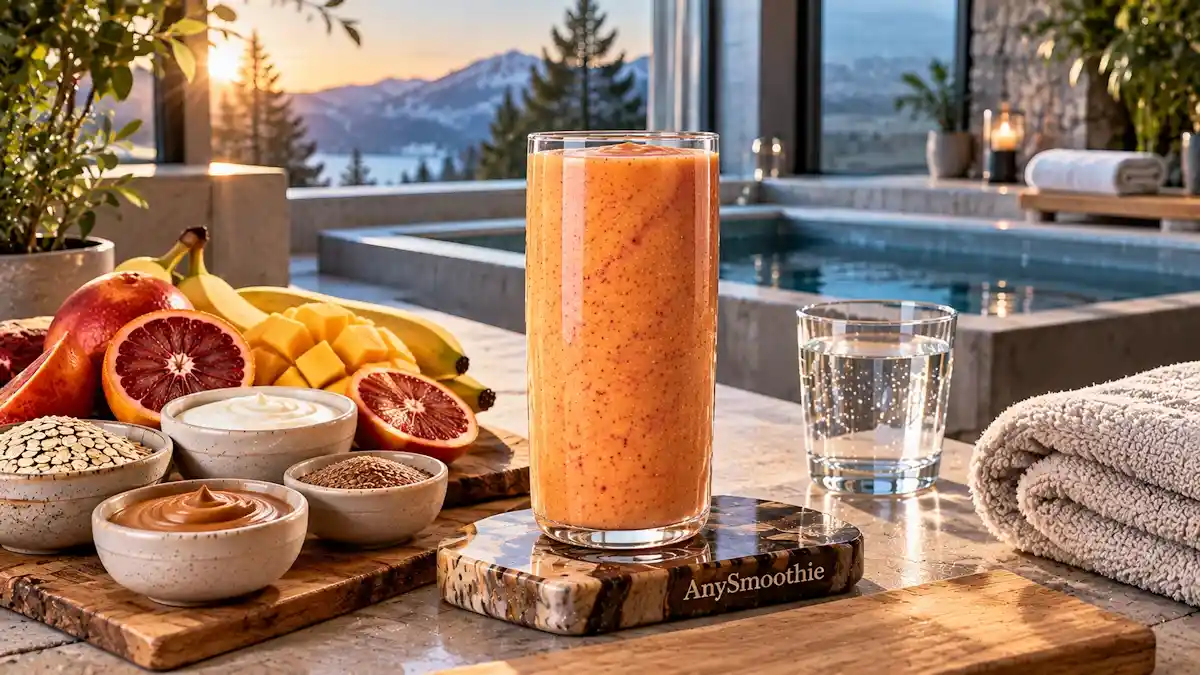
Should you drink a smoothie before a cold plunge? You can, but a comfortable portion and sensible timing matter more than finding a special ingredient.
If you’re considering smoothies before cold plunge sessions, focus on digestive comfort rather than a promised cold-exposure benefit. Start with how much you want to drink and how much time you have before entering the water.
How to Time a Smoothie Before a Cold Plunge
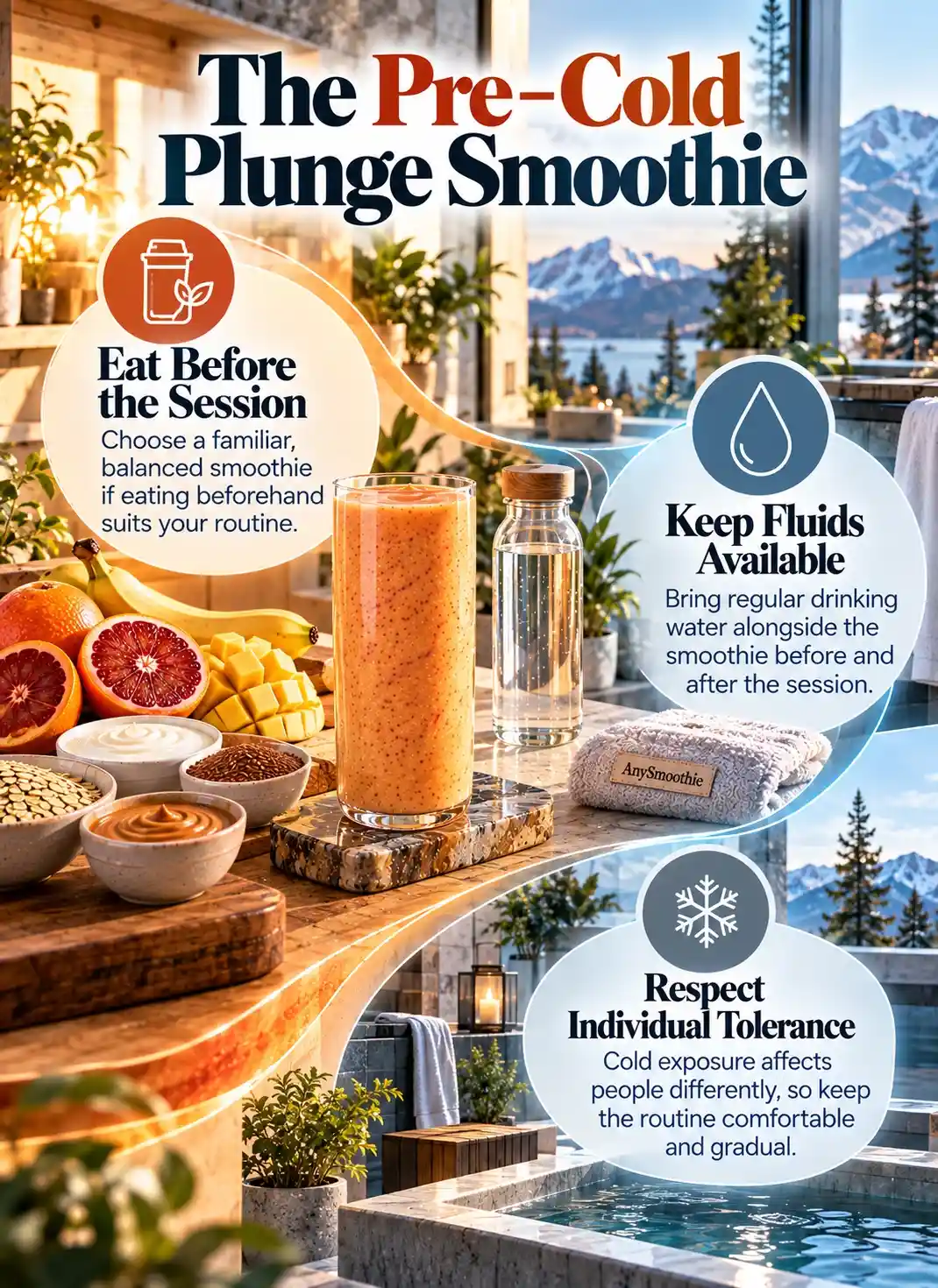
There’s no universal ideal timing. Allow time to digest a full smoothie before entering the water. If you prefer drinking closer to your session, choose a smaller serving with ingredients you already tolerate.
During digestion, your body breaks down carbohydrates into sugars, including glucose, that cells can use for energy. Protein, fat, and fiber can slow digestion or make a blend feel more filling. These normal processes support physiological systems, but they don’t establish a special benefit for cold exposure.
Choose a serving size that feels comfortable
A large, thick smoothie immediately before immersion may feel heavy. However, a few sips or a smaller glass may suit you better when your session is approaching.
Consider your session plan and previous experience with the ingredients. If breakfast smoothies usually leave you comfortably satisfied, drink yours earlier rather than finishing it at the plunge entrance. For your first attempt, save part of the recipe for afterward instead of assuming you need the whole batch.
Keep hydration and cold-plunge safety in view
A smoothie contributes fluid, but it doesn’t replace sensible hydration throughout the day. Keep water available and pay attention to thirst.
Follow facility instructions on entry, temperature, and session length. Start conservatively, don’t plunge alone, and keep an easy way to exit.
As WebMD’s cold-plunge safety guidance advises, talk with a healthcare professional before trying cold immersion if you have health concerns. What you drink beforehand doesn’t replace those precautions.
3 Smoothies Before Cold Plunge Sessions
These recipes combine fruit with familiar dairy, grain, or nut ingredients.
Banana, oats, and yogurt for a balanced option
Ingredients
- 1 medium banana
- 1/4 cup rolled oats
- 1/2 cup plain yogurt
- 1/2 cup milk or water
Steps
Blend the banana, rolled oats, plain yogurt, and milk or water until smooth. Add liquid as needed.
Banana and oats supply carbohydrates, while yogurt adds protein. Oats also contribute fiber. This thicker, filling blend may suit you when there’s time to digest it. Both yogurt and dairy milk contain milk allergens.
Estimated Nutrition per Serving
- Calories: ~270
- Protein: ~10 g
- Carbohydrates: ~45 g
- Fat: ~5 g
- Fiber: ~5 g
- Sugars: ~24 g
A smaller portion can make this thicker smoothie easier to fit into a pre-plunge routine when you have less time before immersion.
Berry and kefir for a lighter blend
Ingredients
- 1 cup fresh or frozen berries
- 3/4 cup plain kefir
- 1/2 banana, optional
Steps
Blend the berries and plain kefir until smooth. Add the banana if you’d like more sweetness and carbohydrates. Add water for a thinner texture.
Fruit supplies carbohydrates, and kefir contributes protein. For an easier-to-drink texture, add water. You can also pour a smaller serving. Berries still contribute fiber, so a thinner texture doesn’t necessarily mean faster digestion. Dairy kefir contains milk allergens.
Estimated Nutrition per Serving
- Calories: ~170
- Protein: ~8 g
- Carbohydrates: ~27 g
- Fat: ~3 g
- Fiber: ~5 g
- Sugars: ~20 g
If I were choosing between the three, I’d use the portion size as the first adjustment rather than changing several ingredients at once.
Mango, spinach, and nut butter for extra staying power
Ingredients
- 3/4 cup mango
- 1/2 cup baby spinach
- 1 tablespoon almond or peanut butter
- 3/4 cup milk or a milk alternative
Steps
Blend the mango, baby spinach, nut butter, and milk or milk alternative until smooth. Adjust the liquid to reach your preferred consistency.
Mango supplies carbohydrates. Nut butter adds fat and some protein, which can make the drink more filling. Check for peanut, tree nut, milk, or soy allergens, depending on your choices.
Estimated Nutrition per Serving
- Calories: ~260
- Protein: ~9 g
- Carbohydrates: ~32 g
- Fat: ~12 g
- Fiber: ~5 g
- Sugars: ~24 g
A smaller serving may be more practical if you’re drinking this relatively close to the session because the nut butter makes it more substantial.
Compare the ingredient mixes before choosing your serving.
| Smoothie | Key ingredients | Main carbohydrate source | Protein or fat addition | Best fit |
|---|---|---|---|---|
| Banana-oat | Banana, oats, yogurt | Banana and oats | Yogurt | More digestion time |
| Berry-kefir | Berries, kefir | Berries; optional banana | Kefir | Adjustable portion |
| Mango-spinach | Mango, spinach, nut butter | Mango | Nut butter; milk choice | Filling snack |
Choose according to appetite and comfort, not expected cold tolerance.
Adjust Your Pre-Plunge Smoothie to Your Needs
Smoothies before cold plunge sessions don’t need a fixed formula. A lighter portion may suit one morning, while a more filling blend works better when you’re hungry and have time.
Keep the purpose straightforward: ordinary food and fluids that fit your routine. Ingredient changes affect flavor, nutrient content, and fullness, not a guaranteed plunge outcome.
Make simple swaps for dietary needs and taste
Replace dairy yogurt with a dairy-free version, or use a suitable milk alternative. However, check the label because plant-based products vary in protein content. A coconut-based yogurt won’t necessarily offer the same protein as dairy yogurt.
Swap mango for peaches, or use strawberries instead of mixed berries. If nuts don’t suit you, omit the nut butter. For allergies, also check packaged ingredients for cross-contact warnings and review added sugars.
The emphasis on varied plant foods in Harvard’s Healthy Eating Plate fits these substitutions. You don’t need an expensive powder or supplement to make a practical snack.
Use your own comfort as the guide
Try a recipe on a non-plunge day or well before a session. Notice whether the amount leaves you satisfied, overly full, or uncomfortable.
Then change one factor at a time: serving size, timing, or an ingredient. Reduce the oats if that blend feels too substantial, or leave more time after drinking.
Adding water thins a smoothie, but it doesn’t remove the fat or fiber that may affect how it sits.
Keep those observations separate from claims about cold exposure. Feeling comfortable after breakfast doesn’t prove that its ingredients improve your response to immersion.
For ideas about what to drink and eat after the session, see our recovery smoothies after cold exposure.
Conclusion: Choose Comfort Before the Plunge
A smoothie before a cold plunge can provide convenient food and fluids. The best choice depends on timing and comfort, rather than a particular fruit or recipe.
Start with a modest serving of familiar ingredients, and allow more digestion time for a filling blend. Keep safe plunge practices central, regardless of what’s in your glass.
🛡️ Safety Notes & Dietary Interactions
- Cold-plunge safety: A smoothie does not make cold immersion safer. Follow facility instructions, start conservatively, avoid plunging alone, and maintain an easy way to exit the water.
- Digestive comfort: Larger servings containing oats, nut butter, or thicker dairy ingredients may feel heavy before immersion. Choose familiar foods and allow adequate digestion time before entering.
- Allergen awareness: The recipes contain dairy, peanuts, tree nuts, and potentially soy through milk alternatives. Check labels carefully and use suitable substitutions when managing allergies or dietary restrictions.
- Hydration: Smoothies contribute fluid but do not replace normal hydration. Keep water available throughout the day, and don’t assume a smoothie alone provides sufficient fluid before or after cold exposure.
FAQs
How long should I wait after drinking a smoothie before a cold plunge?
The article does not establish a universal waiting period. Instead, timing depends on portion size, ingredients, appetite, and personal digestive comfort. A larger smoothie containing oats or nut butter may warrant more time, while a smaller serving may feel comfortable closer to the session. Test your routine before relying on it.
Which smoothie is best if I have little time before plunging?
The berry-kefir smoothie is the most adjustable because you can reduce the serving, add water for a thinner consistency, or omit the optional banana. However, thinner does not necessarily mean faster digestion. If you have very little time, a modest portion of familiar ingredients is preferable to experimenting with a new recipe.
Does adding water make a smoothie easier to digest before immersion?
Adding water makes the smoothie thinner and easier to drink, but it does not remove the fat or fiber that can influence how filling the drink feels. The article specifically recommends changing one factor at a time—such as portion size, timing, or ingredients—to identify what feels comfortable before your session.
Can I have the mango-spinach smoothie close to a cold plunge?
You can, but its nut butter makes it more substantial than a simple fruit-and-liquid drink. If drinking relatively close to immersion, the article suggests using a smaller serving. Almond or peanut butter also introduces relevant allergen considerations, so choose the ingredient only if it fits your dietary needs.
Does a pre-plunge smoothie improve my response to cold exposure?
No specific benefit is established by the article. The smoothies are presented as ordinary food and fluids that can fit a routine, with emphasis on comfort and timing. Feeling comfortable after drinking a particular smoothie does not demonstrate that its ingredients improve cold tolerance or produce a special physiological response.

Medical Disclaimer: AnySmoothie content is for educational purposes only and is not a substitute for professional medical advice. Consult a healthcare provider for personalized guidance. See our full Disclaimer & Terms of Use. AI Transparency: AnySmoothie may use AI to support content development. All content undergoes human editorial review for accuracy, clarity, and editorial quality. See our full AI Transparency.