
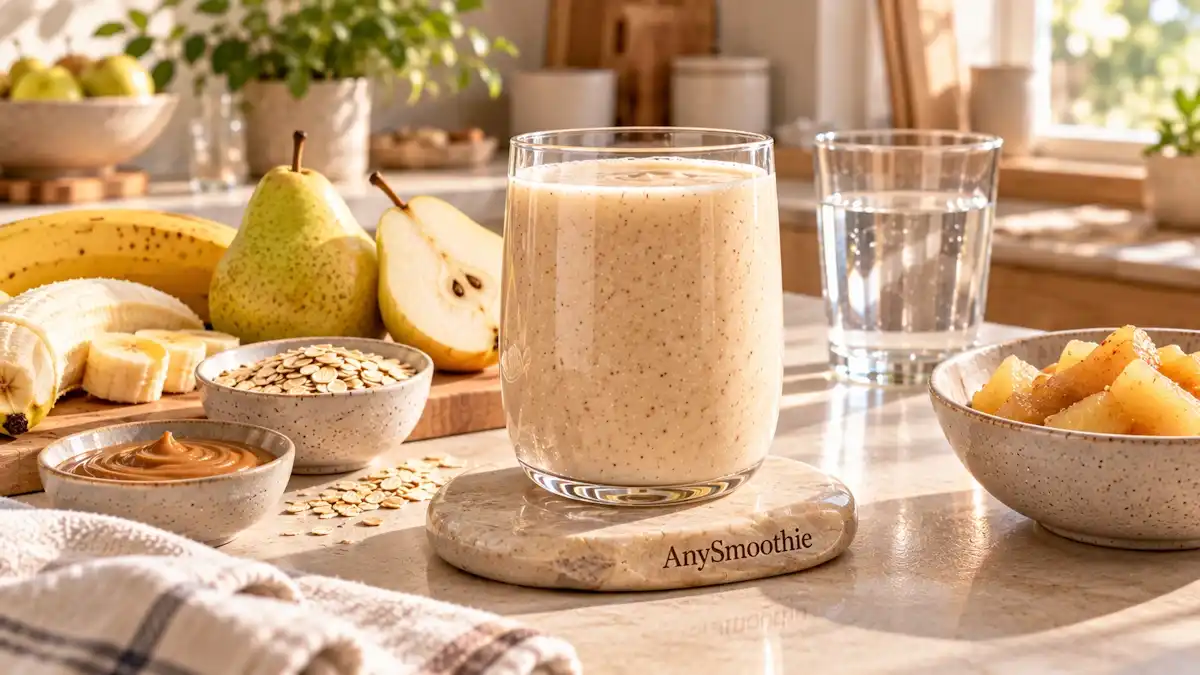
Can a smoothie be a gentle choice while you’re recovering from diarrhea? A small, simple blend may be tolerable, but smoothies for diarrhea recovery don’t stop symptoms or treat their cause.
Your usual fruit-and-greens blend might feel uncomfortable right now, and hydration comes first. Smoothies don’t replace drinking fluids or using oral rehydration solution when needed.
Start with modest portions and familiar ingredients, then let your symptoms guide you through these three recipes, ingredient choices, and warning signs that deserve medical advice.
Can They Play a Role in Diarrhea Recovery?
Some people find a smooth drink easier to sip than eating a full meal. However, blending doesn’t remove fiber, lactose, or sugar, so a smoothie can still worsen discomfort.
These drinks are optional food choices during recovery, not remedies.
Choose simple ingredients and small servings
Ripe banana and smooth, unsweetened applesauce make simple starting points. Keep portions modest because a large drink delivers more sugar and fiber at once, even without added sweeteners.
Choose low-fat ingredients and avoid loading the blender with several fruits. Start with a few slow sips, then pause before drinking more.
Dairy can cause trouble during or after diarrhea because some people temporarily have difficulty digesting lactose. Plain lactose-free yogurt is an option, but skip it if dairy seems to worsen symptoms. Stop drinking any blend that increases cramps, bloating, or loose stools.
Keep hydration the priority
Take frequent small sips of fluid. When diarrhea causes ongoing fluid loss, oral rehydration solution replaces water and salts in measured amounts.
Its glucose and sodium work together through intestinal transport pathways to help the body absorb water. A review of oral rehydration therapy describes this mechanism. A smoothie doesn’t have the same formulation, and plain water doesn’t replace lost salts.
Ask a pharmacist or clinician which solution and amount suit your situation. Children, older adults, and people with kidney disease or other health conditions need individualized guidance. Mix rehydration packets exactly as directed. For another practical hydration-focused smoothie approach, see hydration smoothies for frequent travelers.
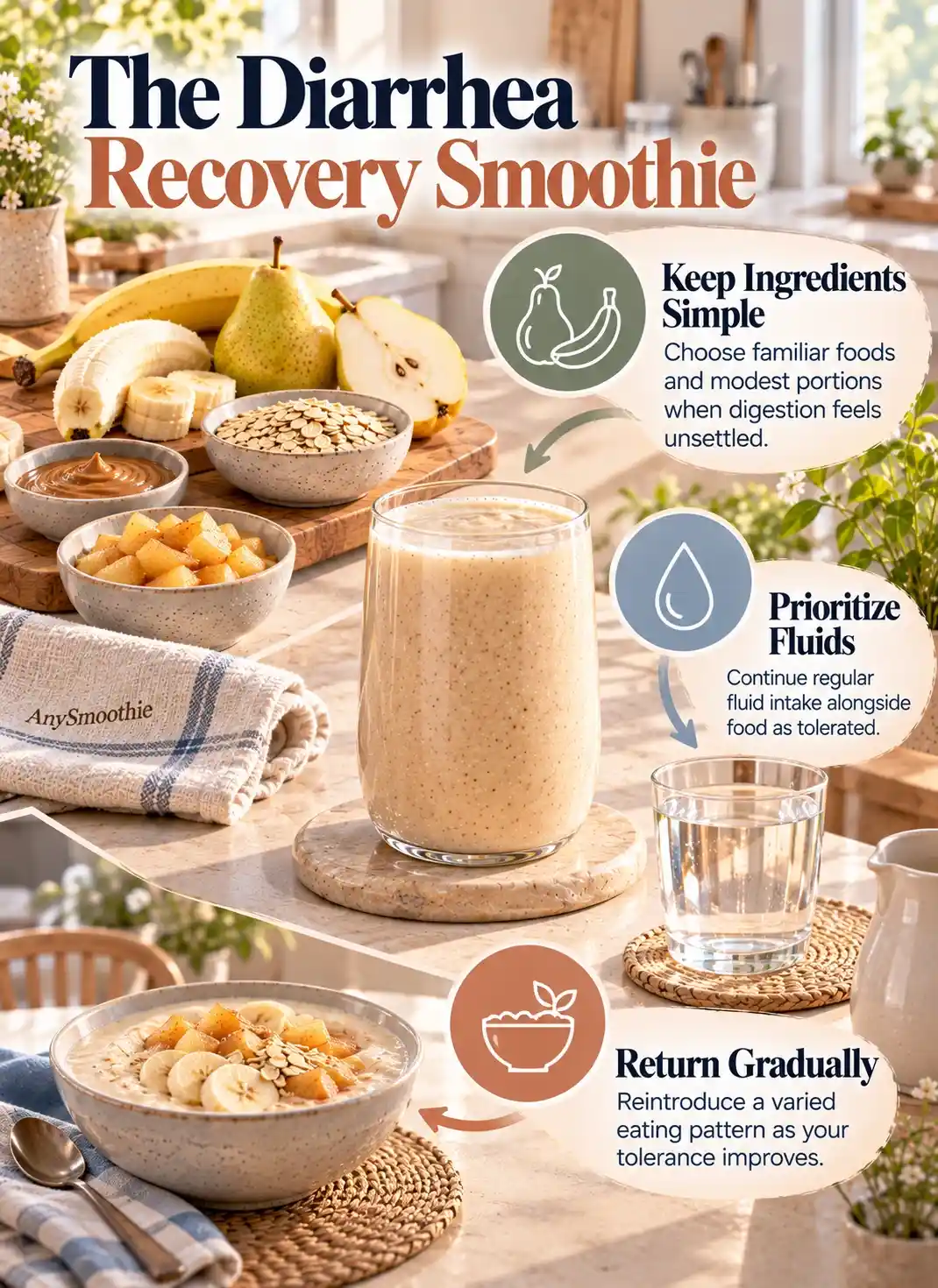
3 Smoothies for Diarrhea Recovery
Try these small blends only if you feel ready to eat. As your appetite returns, NIDDK’s diarrhea treatment guidance supports returning to your usual diet rather than prolonged restriction.
Ripe banana and lactose-free yogurt smoothie
Ingredients
- 1/2 ripe banana
- 1/4 cup plain, low-fat lactose-free yogurt
- 1/4 cup water
Steps
Blend the ripe banana, plain low-fat lactose-free yogurt, and water until smooth. Add a little more water if needed for a pourable texture.
If you don’t tolerate dairy, leave out the yogurt and blend the banana with water. Lactose-free yogurt still contains milk proteins.
Estimated Nutrition per Serving
- Calories: ~85
- Protein: ~3 g
- Carbohydrates: ~16 g
- Fat: ~1 g
- Fiber: ~1.5 g
- Sugars: ~10 g
Banana and rice cereal smoothie
Ingredients
- 1/2 ripe banana
- 2 tablespoons prepared plain rice cereal
- 1/3 cup water
Steps
Combine the ripe banana, prepared plain rice cereal, and water. Use cereal cooked according to its package directions and cooled before blending.
Blend until completely smooth. Keep the cereal portion small so the drink stays easy to sip rather than becoming a thick meal.
Estimated Nutrition per Serving
- Calories: ~75
- Protein: ~1 g
- Carbohydrates: ~18 g
- Fat: ~0.2 g
- Fiber: ~1.5 g
- Sugars: ~7 g
Applesauce and banana smoothie
Ingredients
- 1/4 cup unsweetened, smooth applesauce
- 1/2 ripe banana
- 1/4 cup water
Steps
Blend the unsweetened, smooth applesauce, ripe banana, and water until smooth. Thin it further if needed.
Skip juice, honey, and extra sweeteners. Applesauce still contains fruit sugars, so begin with a few sips and stop if it causes discomfort. Avoid chunky applesauce for this blend.
Estimated Nutrition per Serving
- Calories: ~80
- Protein: ~0.5 g
- Carbohydrates: ~20 g
- Fat: ~0.2 g
- Fiber: ~2 g
- Sugars: ~12 g
Here’s how the three options compare:
| Smoothie | Ingredients | Why it may be gentle | Dairy option | Serving tip |
|---|---|---|---|---|
| Banana-yogurt | Banana, plain yogurt, water | Smooth, modest fat | Lactose-free; omit if needed | Sip slowly |
| Banana-rice | Banana, prepared rice cereal, water | Mild, low-fat ingredients | None needed | Blend thoroughly |
| Applesauce-banana | Unsweetened applesauce, banana, water | Smooth, no added sugar | None needed | Start with a few sips |
These smoothies for diarrhea recovery are optional. You don’t need to finish a serving.
Ingredients to Avoid and Signs to Get Medical Help
Personal tolerance matters more than a fixed ingredient list. However, certain additions can make a drink harder to tolerate, and some symptoms need prompt attention.
Skip rich, very sweet, or rough-textured blends
Large amounts of juice, added sugar, and honey can leave poorly absorbed sugars in the intestine. Those sugars can draw water into the bowel and worsen loose stools.
Also skip sugar-free syrups containing sugar alcohols, such as sorbitol. These sweeteners can cause diarrhea in some people.
High-fat additions, including cream and generous portions of nut butter, may feel uncomfortable. Caffeine can also worsen symptoms. Meanwhile, lots of seeds, fruit skins, or raw greens add fiber that blending doesn’t remove.
Avoid ingredients that seem to make you feel worse. However, don’t continue a narrow diet longer than needed, especially if you’re struggling to eat enough.
Know when diarrhea needs medical attention
Seek medical advice promptly for blood in your stool, severe abdominal pain, high fever, or symptoms that are worsening. Black, tarry stool also needs evaluation.
Watch for dehydration. Warning signs include much less urination, dark urine, marked thirst, dizziness, and unusual tiredness. In children, fewer wet diapers, no tears when crying, or unusual sleepiness warrant prompt advice.
NIDDK’s diarrhea warning signs include diarrhea lasting more than two days in adults. Contact a clinician sooner for a young child, an older adult, or someone with a weakened immune system.
If you can’t keep fluids down, don’t rely on smoothies while waiting for symptoms to pass.
Conclusion: Keep Hydration and Tolerance First
A small, simple smoothie may suit you when your appetite returns, but personal tolerance should guide every ingredient and serving. Skip any blend that increases discomfort.
Keep replacing fluids, and use oral rehydration solution when needed rather than relying on a smoothie. If warning signs appear or symptoms aren’t improving, contact a health professional instead of trying another recipe.
🛡️ Safety Notes & Dietary Interactions
- Hydration First: Smoothies do not replace oral rehydration solution when diarrhea causes ongoing fluid and electrolyte losses. Follow professional guidance on rehydration products, especially when symptoms are persistent or significant.
- Lactose Sensitivity: Temporary difficulty digesting lactose can occur during or after diarrhea. Lactose-free yogurt may be an option, but it still contains milk proteins and should be omitted if dairy worsens symptoms.
- Sugar and Fat: Juice, honey, added sugars, sugar alcohols, cream, and large amounts of nut butter may worsen digestive symptoms for some people. Keep recipes simple and avoid additions that increase discomfort.
- Warning Signs: Blood or black stools, severe abdominal pain, high fever, worsening symptoms, significant dehydration, or inability to keep fluids down require medical attention rather than continued reliance on smoothies.
FAQs
Which smoothie is the simplest place to start?
The Banana and Rice Cereal Smoothie uses only ripe banana, prepared plain rice cereal, and water. Its small ingredient list and smooth texture make it a straightforward option if you’re ready to eat. Start with a few slow sips rather than assuming you need to finish the serving.
Can a smoothie replace oral rehydration solution?
No. Oral rehydration solution is formulated to provide water and salts in specific proportions, while a smoothie does not have the same composition. If diarrhea is causing ongoing fluid loss, use an appropriate oral rehydration solution according to professional guidance rather than relying on smoothies or plain water alone.
Why does the article recommend lactose-free yogurt?
Some people temporarily have difficulty digesting lactose during or after diarrhea. Lactose-free yogurt removes lactose as a potential issue, but it remains a dairy product containing milk proteins. If yogurt itself seems to worsen cramps, bloating, or loose stools, leave it out and use the banana-and-water version instead.
Why should I avoid juice, honey, and sugar alcohols?
Large amounts of certain sugars can remain in the intestine and draw water into the bowel, potentially worsening loose stools. Sugar alcohols such as sorbitol can also cause diarrhea in some people. The recipes therefore use unsweetened applesauce and ripe banana rather than adding juice or concentrated sweeteners.
When should I stop trying smoothies and seek medical advice?
Seek medical advice promptly for blood or black, tarry stool, severe abdominal pain, high fever, worsening symptoms, or signs of significant dehydration. You should also seek advice if you cannot keep fluids down. The article notes that adults with diarrhea lasting more than two days should contact a clinician

Medical Disclaimer: AnySmoothie content is for educational purposes only and is not a substitute for professional medical advice. Consult a healthcare provider for personalized guidance. See our full Disclaimer & Terms of Use. AI Transparency: AnySmoothie may use AI to support content development. All content undergoes human editorial review for accuracy, clarity, and editorial quality. See our full AI Transparency.