
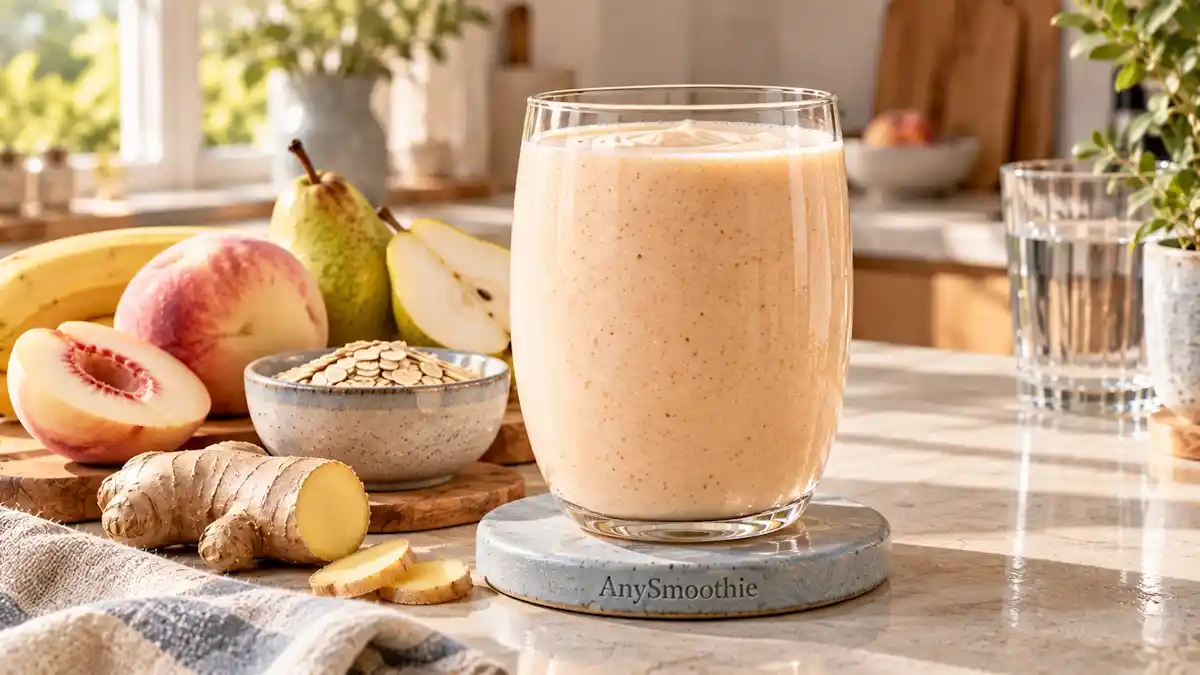
When nausea makes food unappealing, choosing what to eat can feel like work. If you’re considering smoothies to ease nausea, a cool, mild drink may be easier to sip than a full meal. Still, a smoothie won’t treat the cause of nausea, and some people won’t tolerate one at all.
The recipes below make small portions you can adjust for flavor and thickness. Start with ingredients you know you tolerate, and pay attention to symptoms that call for medical advice.
How to make a smoothie easier to sip
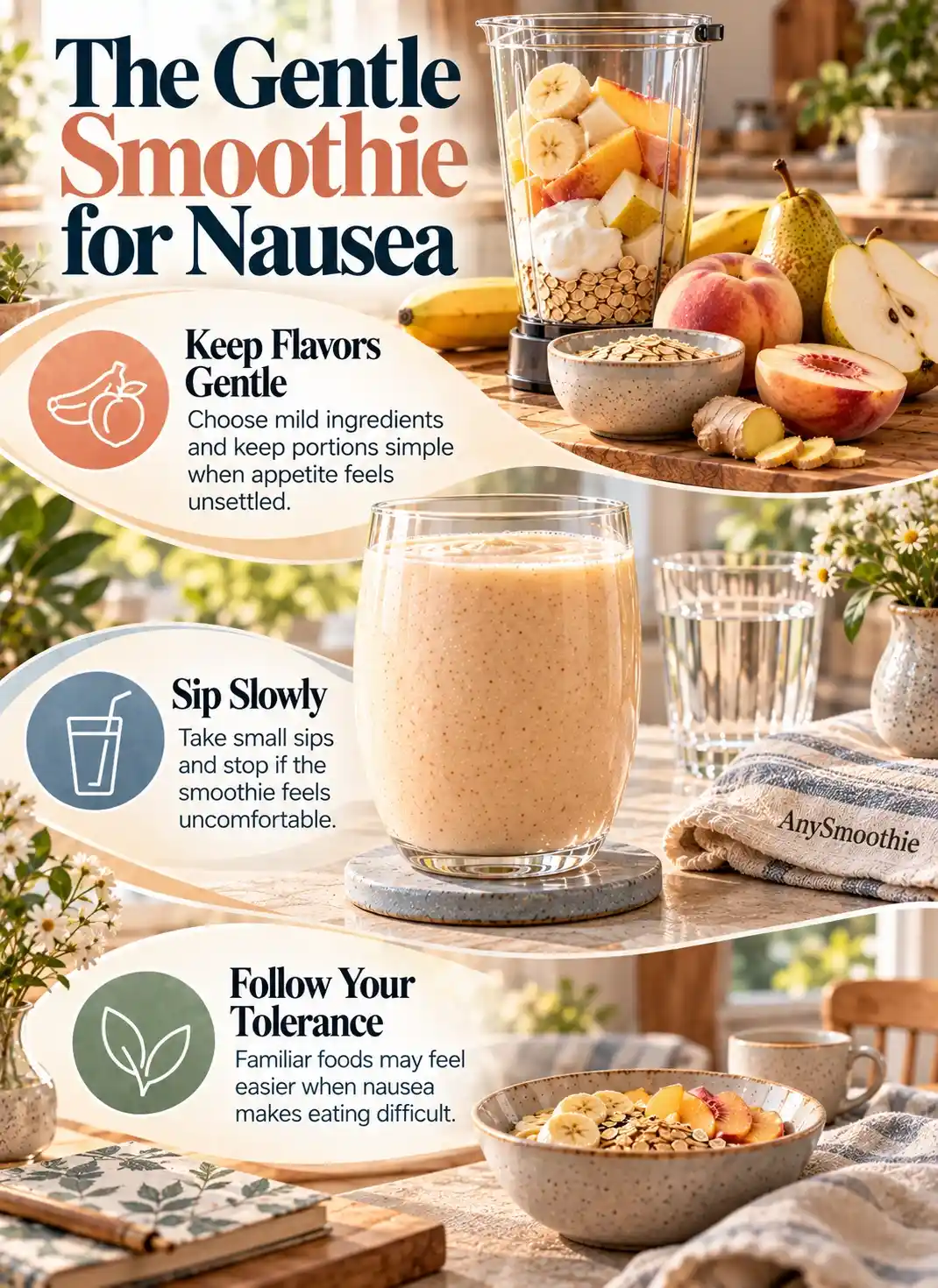
A small portion gives you room to see how a drink sits before you make more. Blend until no fruit pieces or oat bits remain, then add water to adjust the thickness. Sip slowly instead of treating the glass as a serving you need to finish. If solid food feels too heavy, morning smoothies can provide another simple starting point for a smaller, drinkable option.
Temperature and smell matter, too. Use cool ingredients if you prefer them, but skip ice if very cold drinks bother you. Avoid strong extracts, spices, or heavily scented ingredients when their aromas make nausea worse. These choices won’t change the cause of nausea, but they let you tailor the drink to what feels manageable.
Fluids support normal hydration. However, vomiting can deplete both water and electrolytes, and a smoothie may not meet your needs if you’re losing fluids. Follow a clinician-recommended rehydration plan if you’ve been given one. MedlinePlus guidance on nausea and vomiting also recommends enough fluids to help avoid dehydration.
Choose ingredients and timing that suit you
Change one ingredient at a time. For example, try the melon smoothie with water first if you aren’t sure whether yogurt agrees with you. That makes it easier to notice which ingredients and textures you tolerate. You can also try a few sips at a different time rather than forcing a drink when its smell is off-putting.
Very rich, greasy, highly acidic, or strongly flavored additions may bother some people. Peanut butter can make a smoothie richer, while citrus juice can make it sharper. Neither needs to be off-limits for everyone; your own response is the useful guide.
If you’re pregnant, managing a medical condition, or following a prescribed diet, stick with your health care professional’s guidance. That includes advice about foods, fluid intake, and when to seek care.
Know when nausea needs medical attention
Smoothies to ease nausea are food options, not a substitute for medical care. Seek prompt medical advice if you’re vomiting repeatedly, can’t keep fluids down, have severe pain, see blood in your vomit, or develop other worrying symptoms.
Watch for dehydration as well. MedlinePlus lists signs of dehydration that include unusual thirst, dry mouth, dark urine, and urinating less than usual. If symptoms persist or worsen, don’t wait for a recipe to help. The MedlinePlus advice on nausea and vomiting in adults explains when to contact a health care professional.
3 Smoothies to Ease Nausea
Try a few small sips before deciding whether to drink more. Individual responses vary, even with familiar foods. Each recipe uses modest amounts and can be thinned with water if it feels too heavy.
These three options offer different starting points.
| Smoothie | Key ingredients | Flavor | Texture | Simple adjustment |
|---|---|---|---|---|
| Ginger, banana, and oat | Banana, oats, ginger, yogurt | Mildly sweet, lightly spicy | Creamy | Use less ginger |
| Cool melon and yogurt | Ripe melon, yogurt, water | Mild and fresh | Light | Add more water |
| Applesauce and toast-inspired | Applesauce, oats or cracker | Familiar and gently sweet | Soft | Use less oats |
Choose the one with ingredients you already tolerate. You can make another version later if your first choice doesn’t appeal to you.
Ginger, banana, and oat smoothie
Ingredients
- 1/2 ripe banana
- 1/4 cup plain yogurt
- 1 tablespoon quick oats
- 1/4 cup water
- 1 thin slice fresh ginger, or a pinch of ground ginger
Steps
Blend until smooth. Add water a tablespoon at a time until it pours easily.
Ginger contains compounds called gingerols, which contribute to its sharp flavor. According to the National Center for Complementary and Integrative Health’s ginger overview, evidence for nausea varies by its cause. A small amount in food isn’t a predictable remedy. If strong flavors bother you, use only a trace of ginger or leave it out. The banana and oats provide carbohydrates, which the body breaks down into glucose during digestion.
Estimated Nutrition per Serving
- Calories: ~105
- Protein: ~4 g
- Carbohydrates: ~20 g
- Fat: ~1.5 g
- Fiber: ~2 g
- Sugars: ~9 g
Estimated using 1/2 ripe banana, 1/4 cup plain yogurt, 1 tablespoon quick oats, 1/4 cup water, and a small amount of ginger.
Cool melon and yogurt smoothie
Ingredients
- 1/2 cup ripe melon
- 1/4 cup plain yogurt
- 2 tablespoons water
Steps
Blend until smooth. Add another tablespoon or two of water if you’d prefer a thinner drink.
Choose a melon you already enjoy rather than one you’re trying for the first time while queasy.
If dairy feels difficult to digest, try a plain non-dairy yogurt you already tolerate. Check its ingredients for sweeteners, added flavors, or allergens that bother you. Melon has a mild aroma, but smell preferences vary. If the blender’s scent is unpleasant, refrigerate the ingredients before blending and serve a small amount.
Estimated Nutrition per Serving
- Calories: ~45
- Protein: ~1.5 g
- Carbohydrates: ~10 g
- Fat: ~1 g
- Fiber: ~1 g
- Sugars: ~8 g
Estimated using 1/2 cup ripe melon, 1/4 cup plain yogurt, and 2 tablespoons water.
Applesauce and toast-inspired smoothie
Ingredients
- 1/2 cup unsweetened applesauce
- 1 tablespoon quick oats
- 1/4 cup water or a milk you tolerate
Steps
Blend until smooth. For a toast-like flavor, replace the oats with one plain cracker. Let the cracker soften in the liquid before blending so the drink turns smooth.
Keep added sweeteners minimal. If the applesauce tastes sweet enough, there’s no need to add anything. This option has the familiar flavors of a simple snack, which some people may find easier to approach when eating feels unappealing. If it seems too thick, thin it rather than trying to finish a heavy serving.
Estimated Nutrition per Serving
- Calories: ~70
- Protein: ~1 g
- Carbohydrates: ~16 g
- Fat: ~0.5 g
- Fiber: ~2 g
- Sugars: ~10 g
Estimated using 1/2 cup unsweetened applesauce, 1 tablespoon quick oats, and 1/4 cup water.
If I were choosing among these on a day when food felt unappealing, I’d keep the portion small and change only one ingredient at a time so it would be easier to identify what worked.
Conclusion: A gentle place to start
When eating feels difficult, mild ingredients, a smooth texture, and a few small sips may help you find something you personally tolerate. You can thin any of these recipes or set the glass aside if it doesn’t feel right.
A smoothie can’t resolve the reason you feel sick. Seek medical guidance when nausea is severe, lasts, or comes with concerning symptoms.
🛡️ Safety Notes & Dietary Interactions
- Small Portions: Nausea can make larger drinks difficult to tolerate. Start with a few sips and a modest serving, then thin the smoothie with water if it feels too thick or heavy.
- Ginger Tolerance: Ginger may suit some people, but its effects can vary depending on the cause of nausea. Use only the small amount listed, or leave it out if its flavor or aroma worsens symptoms.
- Hydration Losses: Vomiting can involve both fluid and electrolyte losses. A smoothie may not provide an appropriate rehydration solution, so follow any clinician-recommended fluid or electrolyte plan when one has been provided.
- Warning Symptoms: Persistent vomiting, inability to keep fluids down, severe pain, blood in vomit, or signs of dehydration require medical attention rather than continued experimentation with smoothie ingredients.
FAQs
Which smoothie is the gentlest place to start?
The Cool Melon and Yogurt Smoothie is the lightest of the three, using a small amount of ripe melon, yogurt, and water. If dairy is difficult to tolerate, use a plain non-dairy yogurt you already know suits you. Start with a few sips rather than committing to the whole serving.
Should I drink a smoothie when I’m actively vomiting?
Not necessarily. The article emphasizes that smoothies are food options rather than treatments and notes that vomiting can cause fluid and electrolyte losses. If you cannot keep fluids down, a smoothie may not meet your needs. Follow professional rehydration guidance and seek medical advice when vomiting persists.
Why are the smoothie portions so small?
Small portions leave room to assess how the drink feels without committing to a large serving when appetite is poor. Nausea can make volume, texture, temperature, or smell difficult to tolerate. Starting with a few sips also makes it easier to stop if the smoothie increases discomfort.
Can ginger in the smoothie actually stop nausea?
The article does not present ginger as a predictable nausea treatment. Ginger contains gingerols, but evidence varies depending on the cause of nausea. The recipe therefore uses only a small amount, and you can reduce it to a trace or leave it out if its strong flavor is unpleasant.
When should nausea be treated as more than a food issue?
Seek prompt medical advice if you are vomiting repeatedly, cannot keep fluids down, have severe pain, see blood in your vomit, or develop concerning dehydration signs such as dark urine or unusually infrequent urination. Persistent or worsening nausea also warrants professional evaluation rather than continued recipe adjustments.

Medical Disclaimer: AnySmoothie content is for educational purposes only and is not a substitute for professional medical advice. Consult a healthcare provider for personalized guidance. See our full Disclaimer & Terms of Use. AI Transparency: AnySmoothie may use AI to support content development. All content undergoes human editorial review for accuracy, clarity, and editorial quality. See our full AI Transparency.