
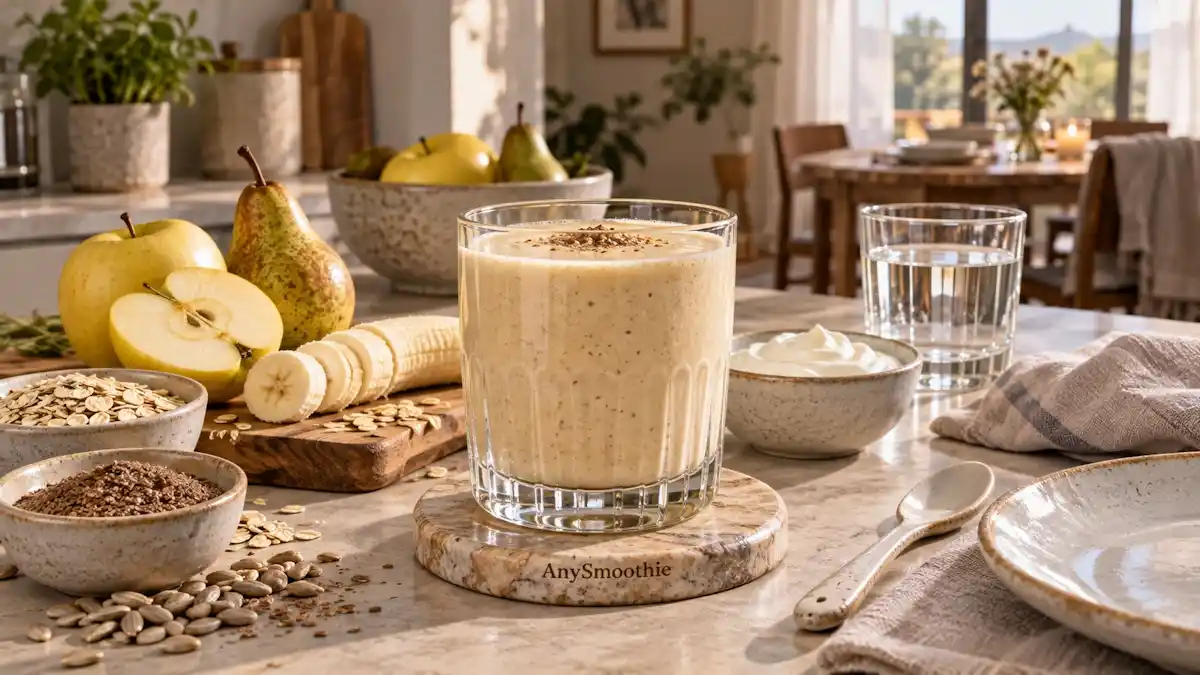
An overly large meal can leave you feeling full, thirsty, and out of rhythm the next morning. A smoothie cannot erase overeating or make food disappear faster, but it can be a comfortable way to get fluids and modest nourishment when your appetite returns.
For smoothies after eating too much, keep expectations realistic. A balanced drink can provide liquid, fiber, protein, and easy-to-digest carbohydrates without turning the day into a punishment. These three recipes and practical tips can help you choose ingredients that feel manageable.
Smoothies After Overeating: What Your Body Needs
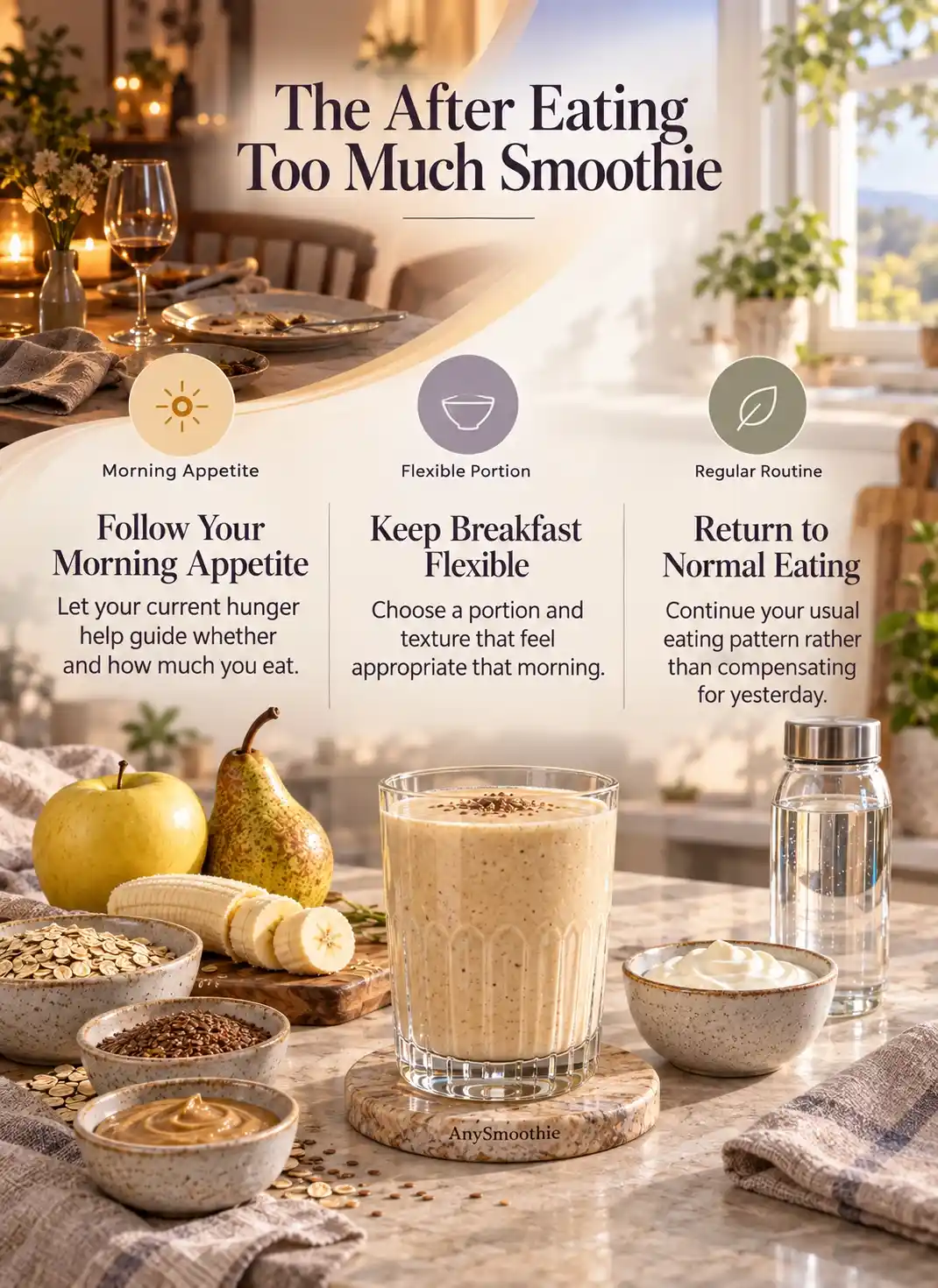
Skipping meals or trying to compensate for yesterday’s food often makes hunger and energy feel less predictable. Instead, start with water and give your body time to settle. If you still feel full, wait until you want food and choose a smaller smoothie rather than forcing down a large one.
A moderate blend can support normal physiological systems. Water adds fluid, while fruit and vegetables provide carbohydrates that break down into glucose for everyday energy. Yogurt, soy yogurt, tofu, nut butter, or milk contribute protein. Meanwhile, oats, berries, greens, and chia supply fiber, which holds water and adds texture during digestion.
Research on weight-focused compensatory behaviors also supports keeping the response to overeating in perspective. A 2024 scientific review of compensatory behaviors describes fasting, dietary restriction, and compensatory exercise among the behaviors people may use after overeating, while also noting associations with poorer psychological well-being.
If a smoothie sounds unappealing while you are still overly full, water and time may feel better than another meal in a glass.
Ginger can add a bright flavor, while cucumber, pineapple, leafy greens, and berries bring variety without needing sweet syrups. Keep the portion modest and avoid packing every “healthy” add-in into one blender.
For a related situation where normal eating has been disrupted, smoothies after missing a meal offers another approach to returning to a balanced food pattern.
3 Smoothies After Eating Too Much the Day Before
Each recipe makes about 10 to 14 ounces. Blend until smooth, adding more liquid for a thinner drink. For less sweetness, reduce the fruit slightly rather than adding sweetened yogurt or juice.
| Smoothie | Key ingredients | Protein source | Best for | Simple swap |
|---|---|---|---|---|
| Berry yogurt | Berries, water, chia | Greek yogurt | A light, cool option | Unsweetened soy yogurt |
| Green pineapple | Pineapple, spinach, cucumber | Yogurt or silken tofu | More fluid-rich produce | Use mango for pineapple |
| Banana oat | Banana, oats, cinnamon | Greek yogurt or nut butter | A more substantial breakfast | Use certified gluten-free oats |
Berry Yogurt Smoothie for Protein and Fiber
Ingredients
- 3/4 cup frozen mixed berries
- 1/2 cup plain Greek yogurt
- 3/4 cup water
- 1 teaspoon chia seeds, optional
Steps
Add the water and Greek yogurt first, followed by the frozen berries. Blend until smooth. Add the chia seeds if desired and blend briefly again.
This makes a lightly tart smoothie with a creamy texture.
Berries provide flavor and fiber, while yogurt adds protein. Use unsweetened soy yogurt or another suitable alternative if dairy does not fit your needs. Skip the chia if extra thickness sounds unappealing that day.
Estimated Nutrition per Serving
- Calories: ~145 kcal
- Protein: ~13 g
- Carbohydrates: ~22 g
- Fat: ~2 g
- Fiber: ~6 g
- Sugars: ~12 g
Estimate uses plain nonfat Greek yogurt, water, and the optional chia seeds.
Green Pineapple Smoothie for a Fresh, Hydrating Option
Ingredients
- 1/2 cup pineapple chunks
- 1 cup spinach
- 1/2 cup chopped cucumber
- 1/2 cup plain Greek yogurt
- 3/4 cup water
Steps
Add the water and yogurt first, followed by the pineapple, spinach, and cucumber. Blend until smooth.
The cucumber and liquid make this blend lighter, while pineapple supplies carbohydrate and spinach adds fiber. Yogurt or tofu balances the drink with protein. This is a food-based option for supporting hydration and normal digestion, not a cleanse.
Estimated Nutrition per Serving
- Calories: ~135 kcal
- Protein: ~12 g
- Carbohydrates: ~20 g
- Fat: ~1 g
- Fiber: ~2 g
- Sugars: ~14 g
Estimate uses plain nonfat Greek yogurt and water.
For more ingredient ideas centered on ordinary digestive nutrition rather than detox claims, smoothies for better digestion and gut health provides a broader food-based guide.
Banana Oat Smoothie for a More Filling Breakfast
Ingredients
- 1 small banana
- 2 tablespoons rolled oats
- 3/4 cup low-fat milk
- 1/3 cup plain Greek yogurt
- A pinch of cinnamon
Steps
Add the milk and Greek yogurt first, followed by the banana, oats, and cinnamon. Blend thoroughly so the texture stays smooth.
Banana and oats provide carbohydrates and fiber. The yogurt or nut butter adds protein and makes the smoothie more satisfying. However, choose half a serving or save it for later if you still feel overly full.
Estimated Nutrition per Serving
- Calories: ~295 kcal
- Protein: ~17 g
- Carbohydrates: ~49 g
- Fat: ~4 g
- Fiber: ~4 g
- Sugars: ~25 g
Estimate uses low-fat dairy milk and plain nonfat Greek yogurt.
If I still felt unusually full, I’d make the full recipe but start with half rather than forcing myself to finish the entire serving.
A Simple Rhythm for the Next Day
Sip water first, then wait for genuine hunger before blending anything. A smoothie can be breakfast, a snack, or part of a normal meal, but it does not need to replace food for the entire day.
Later, return to familiar foods that include produce, protein, and grains. Gentle movement can feel pleasant if you are comfortable, and sleep helps restore a regular routine. Avoid weighing the day against yesterday’s meal. Appetite often changes naturally from one day to the next.
If poor sleep is also affecting appetite and routine the following morning, smoothies after a sleepless night covers that situation separately.
How to Choose and Enjoy a Smoothie After a Large Meal
The best choice is usually one that feels satisfying without making an already full stomach work harder.
Keep the Portion Moderate and the Ingredients Balanced
A simple formula works well: one serving of fruit, one protein source, a small amount of fiber-rich produce or oats, and enough liquid to blend. Start with 10 to 14 ounces rather than filling a large bottle.
Even nutritious ingredients add up in larger amounts. Nut butter, oats, dates, juice, sweetened yogurt, and coconut cream can make a smoothie heavy fast. If you want more flavor, try cinnamon, vanilla, ginger, lemon, or frozen berries before adding sugar.
For people monitoring blood sugar, pair fruit with protein and avoid using juice as the main liquid. Those with allergies, intolerances, or ongoing digestive concerns should choose ingredients carefully and speak with a qualified health professional when appropriate.
Avoid Turning the Smoothie Into a Restriction Plan
Extreme fasting, laxative-style products, and very low-calorie drinks are unnecessary after overeating. Your liver, kidneys, digestive tract, and lungs already carry out normal waste-processing functions. Food does not need a special beverage to be “cleansed.”
Instead, return to regular meals when you are ready. Severe or persistent pain, repeated vomiting, trouble breathing, or other alarming symptoms require prompt medical attention rather than a smoothie.
A More Comfortable Next Day
The goal after a large meal is comfort and balanced nourishment, not compensation. Choose one moderate smoothie when hunger returns, then adjust its ingredients to your appetite, preferences, and dietary needs.
Start with water, wait if you are still full, blend a balanced portion, and notice how it feels. A calm return to normal eating is usually the most useful next step.
🛡️ Safety Notes & Dietary Interactions
- Avoid Compensation: A smoothie should not become part of a fasting, detox, or punishment routine after overeating. Wait for normal hunger, choose a moderate portion, and return to regular meals rather than trying to “undo” the previous day.
- Persistent Fullness or Pain: Mild fullness can pass with time, but severe abdominal pain, repeated vomiting, trouble breathing, or symptoms that continue or worsen need medical attention rather than dietary experimentation or another liquid meal.
- Digestive Comfort: Chia, oats, nut butter, dairy, and large fruit portions can make a smoothie surprisingly dense. Keep fiber, fat, and volume modest when your stomach still feels unsettled, and thin the drink with water if needed.
- Blood Sugar and Sweetness: Fruit, milk, yogurt, and sweetened products contribute carbohydrate. People managing blood glucose should avoid juice-heavy or highly sweetened blends and follow their usual meal plan rather than using a smoothie as a corrective strategy.
FAQs
Should I skip breakfast after eating too much the night before?
There is no need to force breakfast or deliberately skip it as compensation. If you are still full, start with water and wait until hunger returns. When you do want food, a small balanced smoothie can be one option. The goal is to resume normal eating cues rather than punish or restrict yourself.
Which smoothie is lightest if I still feel full?
The Green Pineapple Smoothie is the lightest option because it uses cucumber, spinach, water or coconut water, and a modest amount of fruit with yogurt or tofu. Keep the serving small and add more water if needed. If even that sounds unappealing, waiting longer may be more comfortable.
Which recipe is better when my appetite has returned?
The Banana Oat Smoothie is the most substantial of the three because it combines banana, oats, milk, and yogurt or nut butter. It works better once genuine hunger returns. If you are only mildly hungry, make half a serving instead of automatically finishing the full recipe.
Can a smoothie help “detox” after overeating?
No. A smoothie does not cleanse the body or erase a large meal. Your normal metabolic and elimination systems already handle waste products. The useful role of a smoothie is simply to provide fluid and balanced nutrition when it feels comfortable, without turning the next day into a restrictive or corrective eating plan.
What if overeating is followed by nausea or repeated vomiting?
Do not keep adding food simply because you think you should eat normally. Persistent vomiting, inability to keep fluids down, severe pain, breathing difficulty, or other alarming symptoms deserve prompt medical evaluation. A smoothie is only appropriate when you can tolerate food and fluids comfortably and symptoms are mild.

Medical Disclaimer: AnySmoothie content is for educational purposes only and is not a substitute for professional medical advice. Consult a healthcare provider for personalized guidance. See our full Disclaimer & Terms of Use. AI Transparency: AnySmoothie may use AI to support content development. All content undergoes human editorial review for accuracy, clarity, and editorial quality. See our full AI Transparency.