
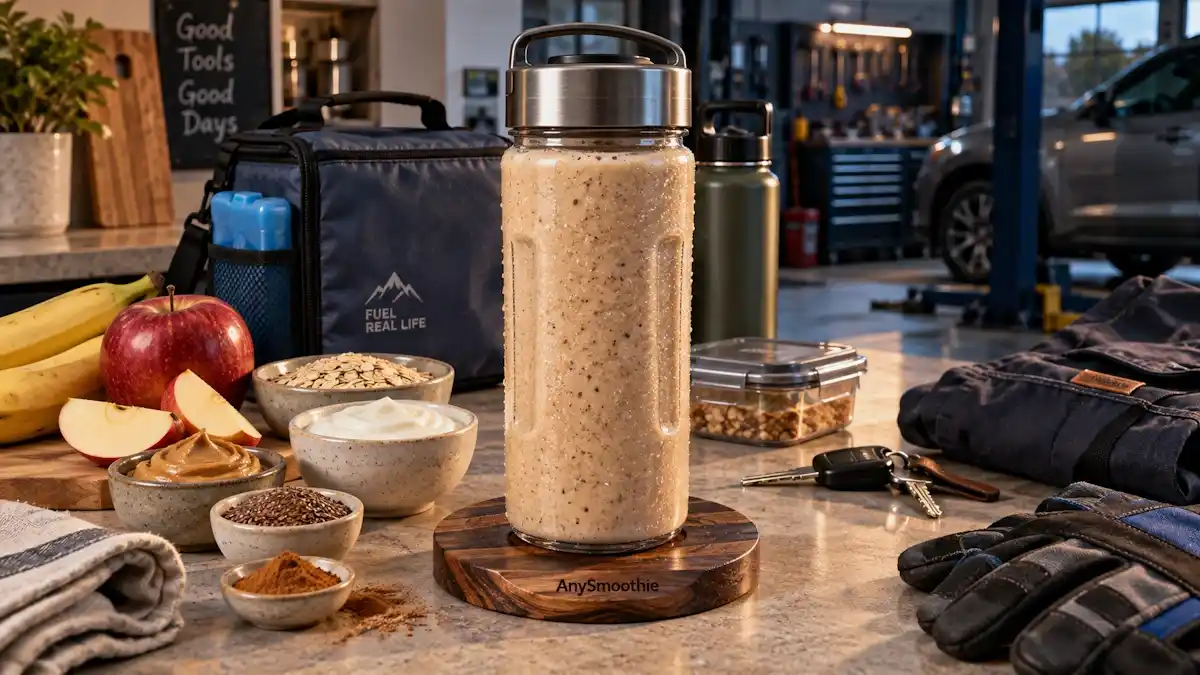
Early starts, greasy hands, short breaks, and physical work can make breakfast easy to skip. However, breakfast smoothies for busy mechanics can combine fluid, carbohydrates, protein, fats, and useful micronutrients in one drinkable meal.
A blender and a few affordable staples are enough to make a portable breakfast before a shift or during a scheduled break. These recipes keep prep simple while supporting normal energy metabolism and muscle function.
Make Each Smoothie Easier to Drink and Better to Pack
Small adjustments can prevent a rushed drink from becoming a thick, gritty mess at the shop.
Fix Common Texture Problems
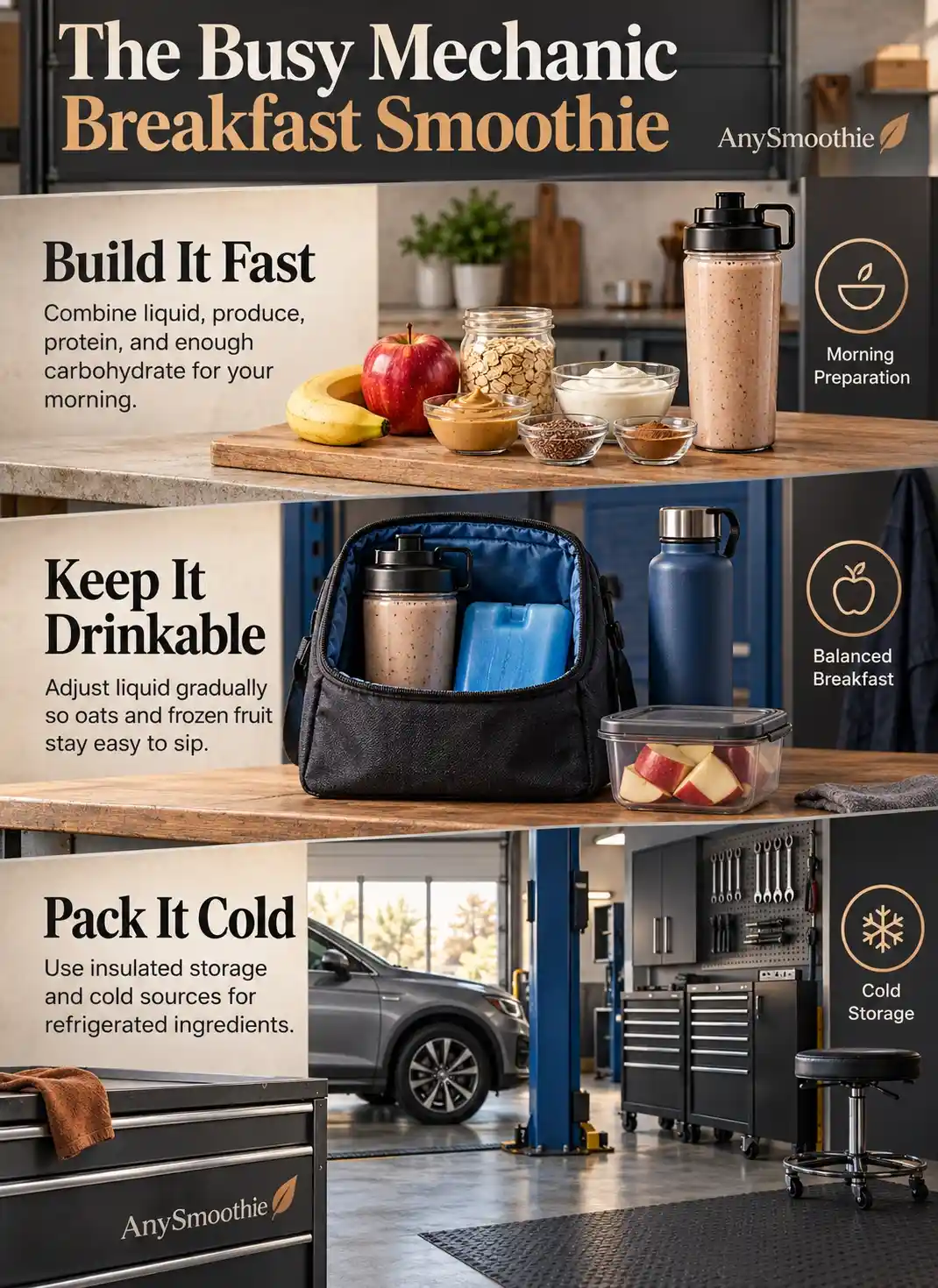
Add more liquid a tablespoon at a time when a smoothie is too thick. If it turns watery, blend in plain yogurt, oats, or more frozen fruit.
Plain yogurt or lime juice can balance excessive sweetness. For a gritty texture, blend longer and choose finely ground flaxseed or quick oats instead of coarser ingredients.
Frozen fruit cools a smoothie without the dilution that comes from adding too much ice.
Pack It for a Real Workday
Use a leak-resistant bottle with a secure lid. A wide straw helps with thicker oat or peanut butter blends, although a screw-top bottle is often easier to rinse.
Rinse the bottle soon after drinking so yogurt, fruit, and oats don’t dry inside. Also, check labels for added sugar and account for allergies to peanuts, tree nuts, dairy, soy, and seeds.
If you bring a smoothie made with milk, yogurt, soy milk, or another refrigerated ingredient to the shop for later, keep it properly chilled. USDA guidance recommends an insulated lunch bag and at least two cold sources for packed perishable foods. USDA’s bag-lunch safety guidance also advises refrigerating perishable food when a workplace refrigerator is available.
A smoothie can complement a broader balanced eating pattern when you need more food than a drink provides. For another physically demanding work setting, job site smoothies for construction workers covers a related portable-food routine.
3 Quick Breakfast Smoothies for Busy Mechanics
Carbohydrates, protein, fat, fiber, and water all contribute differently to an everyday eating pattern. The USDA National Agricultural Library’s macronutrient overview provides nutrient-specific resources for understanding their roles in nutrition.
Banana Peanut Butter Oat Smoothie
This smoothie tastes like a lightly sweet peanut butter banana shake. Oats and banana provide carbohydrates, while soy milk and peanut butter add protein and fat for a more substantial breakfast.
Ingredients
- 1 cup unsweetened fortified soy milk
- 1 medium banana
- 1/3 cup rolled oats
- 2 tablespoons natural peanut butter
- A pinch of cinnamon
- A few ice cubes, optional
Steps
Add the soy milk first, followed by the banana, oats, peanut butter, cinnamon, and optional ice.
Blend until smooth, about 45 to 60 seconds. Add a splash more soy milk or water if the oats make it too thick.
It takes about 5 minutes from start to clean-up.
Estimated Nutrition per Serving
- Calories: ~475 kcal
- Protein: ~19 g
- Carbohydrates: ~56 g
- Fat: ~22 g
- Fiber: ~10 g
- Sugars: ~19 g
Estimate uses unsweetened fortified soy milk and natural peanut butter.
For more ways to increase protein using ordinary foods rather than automatically adding powder, naturally high-protein smoothies offers another useful approach.
Berry Greek Yogurt Smoothie
Frozen berries keep this option cold without watering it down. Greek yogurt gives the blend a tart flavor and adds protein, while banana softens the berry flavor.
Ingredients
- 3/4 cup low-fat milk
- 1 cup frozen mixed berries
- 3/4 cup plain nonfat Greek yogurt
- 1/2 medium banana
- 1 tablespoon ground flaxseed
- Honey, optional
Steps
Add the milk first, followed by the Greek yogurt, berries, banana, and ground flaxseed.
Blend until the seeds and berries are fully broken down. A small amount of honey is optional, although ripe banana often provides enough sweetness.
Plan on about 5 minutes for prep and blending.
Estimated Nutrition per Serving
- Calories: ~335 kcal
- Protein: ~26 g
- Carbohydrates: ~48 g
- Fat: ~6 g
- Fiber: ~9 g
- Sugars: ~32 g
Estimate uses low-fat dairy milk, plain nonfat Greek yogurt, and excludes optional honey.
Pineapple Spinach Breakfast Smoothie
Pineapple and spinach make a bright, fresh-tasting smoothie that doesn’t need extra sugar. The fruit provides carbohydrates, while yogurt and milk add protein with a creamy texture.
Ingredients
- 3/4 cup low-fat milk
- 1 cup frozen pineapple chunks
- 1 packed cup baby spinach
- 1/2 cup plain nonfat Greek yogurt
- 1/4 cup rolled oats
- Juice from 1/2 lime
Steps
Blend the milk and spinach first, then add the pineapple, Greek yogurt, oats, and lime juice.
Blend until completely smooth. Starting with the liquid and spinach helps prevent leafy pieces from sticking to the sides.
It also takes about 5 minutes.
Estimated Nutrition per Serving
- Calories: ~310 kcal
- Protein: ~22 g
- Carbohydrates: ~51 g
- Fat: ~4 g
- Fiber: ~5 g
- Sugars: ~30 g
Estimate uses low-fat dairy milk and plain nonfat Greek yogurt.
If I wanted something that felt fresher before a warm or especially active shift, I’d choose this one and keep the texture fairly thin instead of increasing the oat portion.
What a Mechanic’s Breakfast Smoothie Needs
The three recipes are easy to change when your fridge is low. Start with one liquid base, then add produce, protein, and a flavor that makes the drink worth repeating.
Use a Simple Five-Part Formula
A dependable smoothie usually includes:
- Liquid: Milk, soy milk, water, or coconut water helps the blender move.
- Produce: Use bananas, berries, pineapple, spinach, or another fruit and vegetable combination.
- Protein: Greek yogurt, milk, soy milk, cottage cheese, or a protein powder can contribute amino acids.
- Carbohydrate booster: Oats, banana, or another fruit can add substance for an active morning.
- Flavor: Cinnamon, lime juice, cocoa powder, vanilla, or ginger can change the taste without relying on syrups.
Vitamins and minerals participate in carbohydrate, protein, and fat metabolism and are involved in normal muscle function. Oklahoma State University Extension provides useful context in its nutrition guidance for physical activity.
For another early-start routine where breakfast has to be ready quickly, breakfast smoothies for early-shift chefs uses a similar prep-first approach.
Adjust the Blend to Your Shift
Choose a somewhat more substantial recipe when you expect a long, active shift or a long gap before your next meal. On a lighter day, reduce the oats or choose a smaller portion.
Protein and fat can contribute to a more substantial smoothie, but portions should still fit your appetite and the rest of your meals.
| Smoothie | Main Ingredients | Protein Source | Best Use | Prep Time |
|---|---|---|---|---|
| Banana Peanut Butter Oat | Banana, oats, peanut butter | Soy milk, peanut butter | Before an early shift | About 5 minutes |
| Berry Greek Yogurt | Frozen berries, banana, flaxseed | Greek yogurt, milk | A cold scheduled-break option | About 5 minutes |
| Pineapple Spinach | Pineapple, spinach, oats, lime | Greek yogurt, milk | When you want a fresher flavor | About 5 minutes |
The formula keeps breakfast smoothies for busy mechanics flexible without turning breakfast into another job.
Conclusion: A Breakfast Routine That Fits the Shop
The best breakfast smoothie is fast, portable, satisfying, and easy to make again tomorrow. Banana peanut butter oat, berry Greek yogurt, and pineapple spinach blends each offer a practical starting point.
Prep fruit, oats, and other dry ingredients the night before. Then adjust portions to match your workload and choose flavors you will actually enjoy. Breakfast smoothies for busy mechanics work best when they fit the rhythm of your shift.
🛡️ Safety Notes & Dietary Interactions
- Shop Cold Storage: Milk, yogurt, soy milk, and prepared smoothies require reliable refrigeration. Keep bottles in a staff refrigerator or insulated lunch bag with adequate ice packs rather than leaving them near engines, heaters, or warm work areas.
- Grease and Contamination: Mechanic work can leave hands and surfaces contaminated with oils, fuels, solvents, metal residues, or shop dirt. Wash hands before drinking, and keep smoothie bottles away from benches, tool carts, and chemical storage areas.
- Allergens and Shared Break Areas: Peanuts, dairy, soy, flax, and other common smoothie ingredients may require substitutions. Label personal drinks clearly and follow workplace food-allergy rules when refrigerators, counters, or break spaces are shared.
- Pre-Shift Digestion: Oats, peanut butter, flaxseed, and larger smoothie portions can feel heavy before lifting, bending, or physical repair work. Reduce thickness, fat, fiber, or serving size if fullness or reflux makes the start of a shift uncomfortable.
FAQs
Which smoothie is best before an early mechanic shift?
The Banana Peanut Butter Oat Smoothie is the most substantial option because it combines banana, oats, milk, and peanut butter. That gives it carbohydrate, protein, fat, and fiber in one serving. If your shift begins with heavy physical work, use a slightly smaller portion if a dense breakfast feels uncomfortable.
Which smoothie is easiest to drink during a short scheduled break?
The Berry Greek Yogurt Smoothie is a practical break option because it is cold, fruit-forward, and easier to thin with milk or water than the oat-heavy peanut butter blend. Ground flax still adds some thickness, so reduce it if you need a smoother drink that is quicker to finish.
How should I store a smoothie in a repair shop?
Keep it refrigerated or inside an insulated lunch bag with frozen packs until you are ready to drink it. Avoid leaving the bottle in a hot vehicle, beside machinery, or on a warm bench. Perishable ingredients stay safer when the cold chain is maintained throughout the shift.
Should I drink a smoothie at my workbench?
It is better to use a designated clean break area. Automotive work can involve oils, solvents, coolants, fuels, brake dust, metal particles, and dirty surfaces that should stay separate from food and drinks. Wash your hands before eating or drinking and keep the bottle away from tools and chemicals.
Can one smoothie replace breakfast for a full mechanic shift?
A balanced smoothie can work as breakfast, but whether it is enough depends on serving size, workload, appetite, and when you can eat again. For long or physically demanding shifts, pack a familiar solid snack or meal as backup rather than expecting one drink to cover the entire work period.

Medical Disclaimer: AnySmoothie content is for educational purposes only and is not a substitute for professional medical advice. Consult a healthcare provider for personalized guidance. See our full Disclaimer & Terms of Use. AI Transparency: AnySmoothie may use AI to support content development. All content undergoes human editorial review for accuracy, clarity, and editorial quality. See our full AI Transparency.