
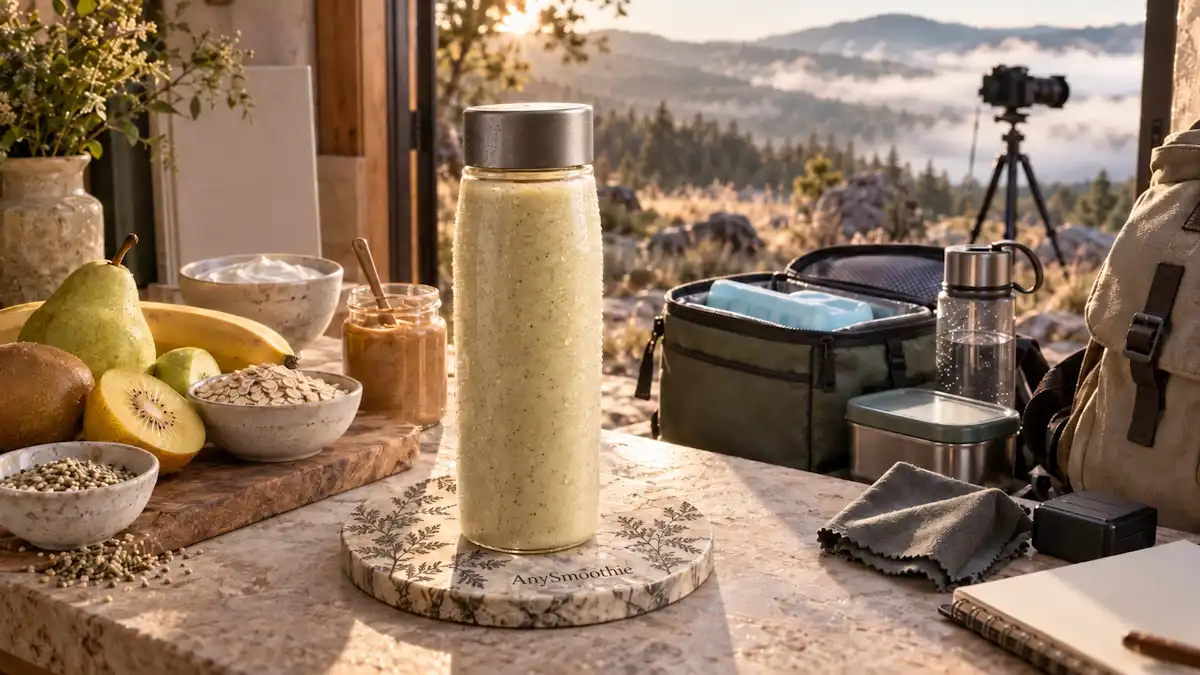
Outdoor photography often means a predawn alarm, miles on foot, sudden weather changes, and few reliable food stops. Smoothies for outdoor photography can put portable calories, fluids, carbohydrates, protein, and fats in one bottle without requiring a full meal stop during a shoot.
The right blend depends on where you’re working and how long you’ll be away from a cooler. These three recipes, packing methods, and safety basics help you choose a bottle that fits the assignment.
Why Smoothies Fit Outdoor Photography Days
A drinkable meal is practical when you’re holding a camera, watching wildlife, or moving between locations. A leakproof bottle fits in a pack’s side pocket, and you can portion it before leaving home instead of stopping to unpack food during changing light.
Carbohydrates are metabolized to provide energy, protein supplies amino acids used by body tissues, and fats contribute concentrated energy. Fluids also support normal physiological function, especially during warm sessions or long walks.
The best smoothies for outdoor photography match the shoot. A short event may call for a lighter bottle, while a remote landscape hike may suit a more substantial blend with oats, yogurt, or nut butter.
Build a Balanced Blend Before You Leave Home
Start with a liquid base, such as milk, fortified plant milk, water, or coconut water. Add fruit or another carbohydrate source, then include a protein source, optional fat, and flavor boosters.
Bananas, berries, oats, Greek yogurt, nut butter, chia seeds, cinnamon, and spinach work well in portable blends. Blend longer than usual if you use oats or greens. A slightly thinner smoothie pours more easily and is less likely to clog a narrow bottle opening.
For another early outdoor routine where breakfast needs to be ready before sunrise, breakfast smoothies for early birdwatching offers a closely related prep approach.
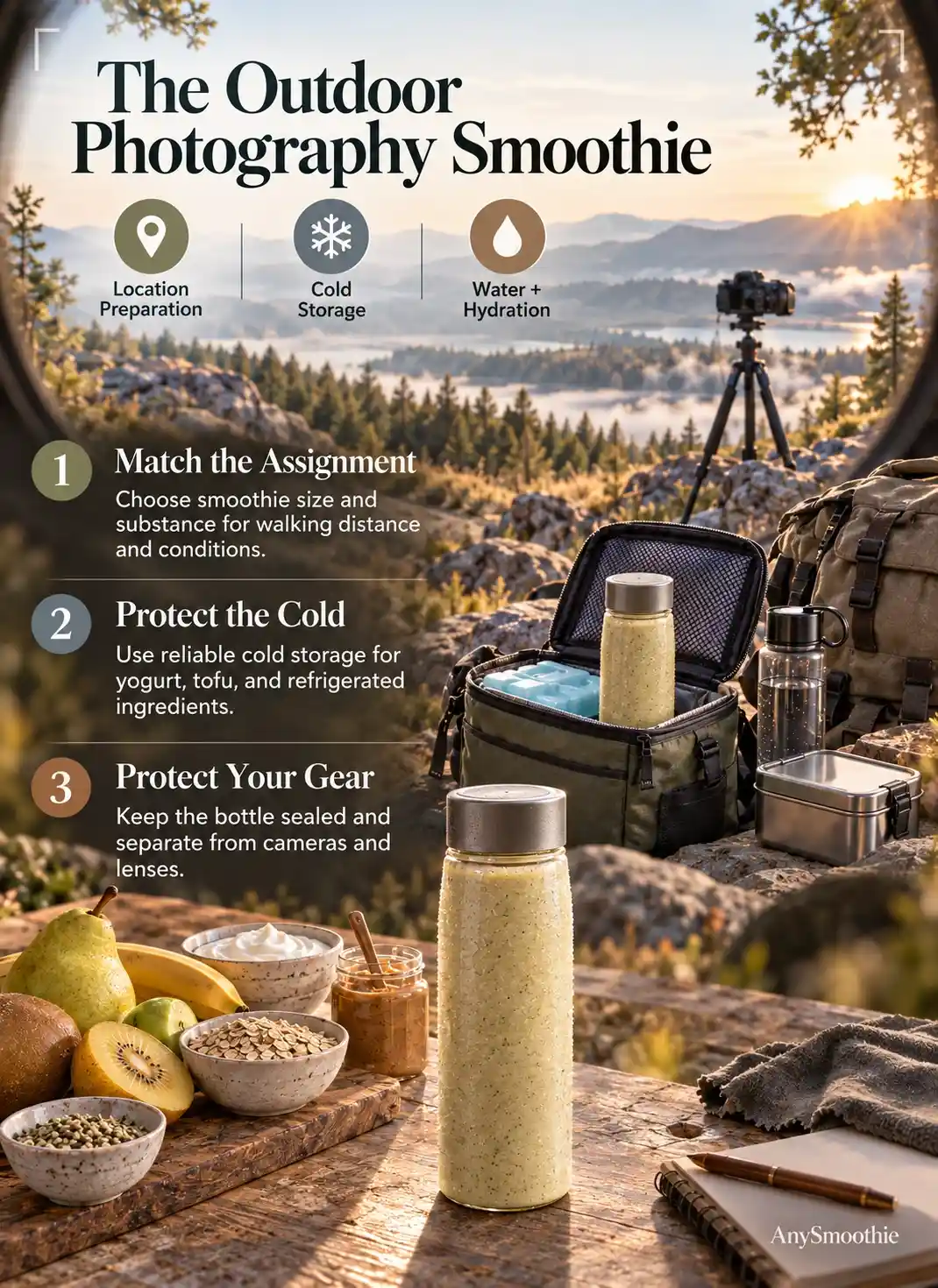
Match the Blend to the Conditions
Cold mornings may suit a thicker, more substantial blend. In warm weather, fruit, water-rich produce, and a thinner texture can make the smoothie easier to drink.
Plain water should still be carried separately. CDC heat guidance emphasizes regular hydration during hot outdoor activity, while electrolyte-containing drinks become more relevant when sweating continues for several hours rather than during every short outdoor session.
For longer walking routes, portable smoothies for day hikers offers additional ideas for matching portability and food choices to time away from refrigeration.
Refrigeration matters, too. If you can’t carry a reliable cold source, pack a shelf-stable snack instead of depending on a perishable smoothie.
3 Portable Smoothies for Outdoor Photography
Each recipe makes about one 16- to 20-ounce serving. Nutrition estimates use the specific base ingredients listed below rather than interchangeable alternatives.
| Smoothie | Key Ingredients | Approximate Calories | Best For | Packing Note |
|---|---|---|---|---|
| Berry Oat | Berries, banana, oats, yogurt | ~465 kcal | Early starts | Keep chilled |
| Peanut Butter Banana | Banana, peanut butter, oats | ~485 kcal | Longer walking days | Use a wide-mouth bottle |
| Green Citrus | Orange, spinach, cucumber, tofu | ~130 kcal | Warm, lighter sessions | Keep texture thin |
The berry blend offers a substantial morning option, while the peanut butter version carries similar energy with more fat. For warmer days or smaller appetites, the citrus smoothie is intentionally much lighter.
Berry Oat Smoothie for Early-Morning Shoots
Ingredients
- 1 cup frozen mixed berries
- 1 medium banana
- 1/3 cup rolled oats
- 3/4 cup plain nonfat Greek yogurt
- 3/4 cup low-fat milk
Steps
Add the milk first, followed by the Greek yogurt, banana, berries, and oats.
Blend until the oats are fully incorporated and the texture is smooth. Add a small splash of milk if you prefer a thinner drink.
Fruit and oats provide carbohydrates, while yogurt and milk contribute protein. If you prepare it ahead, refrigerate it promptly and keep it cold until you leave.
Estimated Nutrition per Serving
- Calories: ~465 kcal
- Protein: ~28 g
- Carbohydrates: ~75 g
- Fat: ~7 g
- Fiber: ~11 g
- Sugars: ~35 g
Estimate uses mixed berries, plain nonfat Greek yogurt, low-fat dairy milk, and one medium banana.
Peanut Butter Banana Smoothie for Long Hiking Days
Ingredients
- 1 medium banana
- 2 tablespoons natural peanut butter
- 1 cup unsweetened fortified soy milk
- 1/3 cup rolled oats
- 1/4 teaspoon cinnamon
- 1 teaspoon unsweetened cocoa powder, optional
Steps
Add the soy milk first, followed by the banana, peanut butter, oats, cinnamon, and optional cocoa.
Blend until completely smooth. Add cold water one tablespoon at a time if the drink is too thick for your bottle.
This more energy-dense option can suit photographers walking longer routes while carrying camera equipment. Use a wide-mouth bottle because thicker oat and nut-butter smoothies are harder to pour and clean.
Estimated Nutrition per Serving
- Calories: ~485 kcal
- Protein: ~21 g
- Carbohydrates: ~58 g
- Fat: ~23 g
- Fiber: ~10 g
- Sugars: ~18 g
Estimate uses natural peanut butter, unsweetened fortified soy milk, and includes the optional cocoa powder.
If I knew I would be climbing between viewpoints with a tripod and full camera bag, I’d keep the oats and peanut butter rather than making the bottle larger with extra fruit.
Green Citrus Smoothie for Warm Outdoor Sessions
Ingredients
- 1 medium orange, peeled and seeded
- 1 packed cup baby spinach
- 1/2 cup peeled cucumber
- 1/2 cup silken tofu
- 3/4 cup cold water
- 1 teaspoon grated fresh ginger
Steps
Add the water first, followed by the tofu, cucumber, spinach, orange, and ginger.
Blend until completely smooth. Add another splash of water if you want an even thinner texture for a narrow bottle.
Orange and cucumber contribute fluid and carbohydrates, while tofu provides some protein without making the blend especially thick.
Estimated Nutrition per Serving
- Calories: ~130 kcal
- Protein: ~7 g
- Carbohydrates: ~20 g
- Fat: ~4 g
- Fiber: ~4 g
- Sugars: ~12 g
Estimate uses silken tofu, one medium orange, and cold water rather than coconut water.
For especially warm assignments, hydration smoothies for summer fatigue offers another relevant way to think about fluid-rich ingredients and outdoor conditions.
Pack and Store Your Smoothie Safely in the Field
Start with cold ingredients and blend shortly before departure when practical. Then refrigerate the bottle until you leave. If you intentionally freeze part of the smoothie, use a freezer-safe container and leave enough space for expansion.
An insulated bottle or lunch bag with frozen gel packs helps keep perishable ingredients cold.
Dairy, yogurt, tofu, and prepared plant-based drinks require temperature control. USDA guidance defines the food-safety danger zone as 40°F to 140°F (4.4°C to 60°C) and advises keeping cold foods at or below 40°F. Perishable food should not remain in the danger zone for more than two hours, reduced to one hour when outdoor temperatures exceed 90°F (32.2°C).
For field days that involve significant walking, USDA also recommends keeping perishable hiking foods cold with frozen gel packs or other frozen cold sources.
Label bottles if you’re packing more than one flavor. When reliable cold storage isn’t available, choose whole fruit, nuts, dried foods, or another shelf-stable snack instead of carrying a perishable smoothie for hours.
Choose the Right Bottle for Cameras, Bags, and Trail Conditions
A leakproof wide-mouth bottle is easiest to fill and scrub, and it handles thick oat smoothies well. An insulated stainless-steel bottle may maintain temperature better than a basic reusable bottle, although it adds weight.
Soft hydration flasks pack down when empty and are light on a trail, but they can be harder to clean and may not suit very thick blends.
Keep the bottle in a separate sealed compartment from camera bodies, lenses, batteries, and memory cards. Carry a backup snack in case a lid leaks, a bottle gets misplaced, or you can’t reach it during a fast-moving shoot.
Pick a Smoothie That Fits the Day
For cold-weather shoots, Berry Oat or Peanut Butter Banana offers a more substantial option. During hot weather or when appetite is lower, Green Citrus is the lighter choice.
Short sessions may call for a smaller bottle and lighter recipe. Longer hikes may justify a more substantial blend, reliable cold storage, plain water, and a separate snack.
Conclusion
The most useful portable smoothie matches the assignment, stays cold, and travels securely beside your camera gear. A mix of fluids, carbohydrates, protein, and optional fats gives you flexible options without adding a full meal stop to the day.
Test each recipe on a short outing before depending on it for an all-day assignment. Clean the bottle as soon as practical, then adjust portions to your own hunger, walking distance, weather, and access to refrigeration.
🛡️ Safety Notes & Dietary Interactions
- Field Cold Storage: Yogurt, milk, tofu, and prepared smoothies require dependable chilling during outdoor assignments. Use an insulated container with frozen packs, and avoid relying on shade alone when temperatures rise or the shoot lasts several hours.
- Gear Separation: Smoothie leaks can damage cameras, lenses, batteries, memory cards, and other equipment. Keep bottles in a separate sealed compartment, confirm lids are fully closed, and avoid storing drinks directly above sensitive gear inside a backpack.
- Trail Digestion: Oats, nut butter, yogurt, and larger portions can feel heavy during long walks, steep terrain, or fast-paced location changes. Test recipes on shorter outings first and reduce thickness, fat, or serving size if discomfort develops.
- Hydration Beyond Smoothies: A smoothie contributes fluid but should not replace regular water during hot or active shoots. Sun exposure, distance walked, pack weight, wind, and temperature can all increase hydration needs throughout the assignment.
FAQs
Which smoothie is best for a predawn outdoor photography start?
The Berry Oat Smoothie is the most practical breakfast-style option because it combines fruit, oats, yogurt, and milk in one portable serving. It works well when you leave before a normal breakfast. If you begin hiking immediately, use a slightly thinner texture or smaller portion if a dense smoothie feels uncomfortable.
Which smoothie is best for a long photography hike?
The Peanut Butter Banana Smoothie is the most substantial choice because banana, oats, milk, and peanut or sunflower seed butter provide carbohydrate, protein, fat, and fiber. It can suit longer walking assignments, but carry additional food as well rather than expecting one bottle to cover an entire remote or all-day shoot.
How should I keep a smoothie cold during an outdoor shoot?
Start with fully chilled ingredients, use a cold leakproof bottle, and place it inside an insulated bag or cooler with adequate frozen gel packs. Keep it out of direct sun and minimize unnecessary opening. If reliable cold storage is impossible, choose shelf-stable food instead of carrying a perishable dairy- or tofu-based smoothie.
Which recipe is easiest to drink during hot weather?
The Green Citrus Smoothie is the lightest of the three because it uses orange or pineapple, cucumber, greens, water or coconut water, and a modest protein source. Its thinner texture can feel more comfortable in heat. Keep plain water available separately, since a smoothie should not become your only hydration source.
What should I pack if the smoothie is not enough for the assignment?
Bring a familiar shelf-stable backup such as whole fruit, crackers, oats, nuts or seeds when appropriate, or a packaged bar that fits your dietary needs. Outdoor photography schedules can change quickly because of light, weather, wildlife, or travel, so a second food option is useful when meal timing becomes unpredictable.

Medical Disclaimer: AnySmoothie content is for educational purposes only and is not a substitute for professional medical advice. Consult a healthcare provider for personalized guidance. See our full Disclaimer & Terms of Use. AI Transparency: AnySmoothie may use AI to support content development. All content undergoes human editorial review for accuracy, clarity, and editorial quality. See our full AI Transparency.