
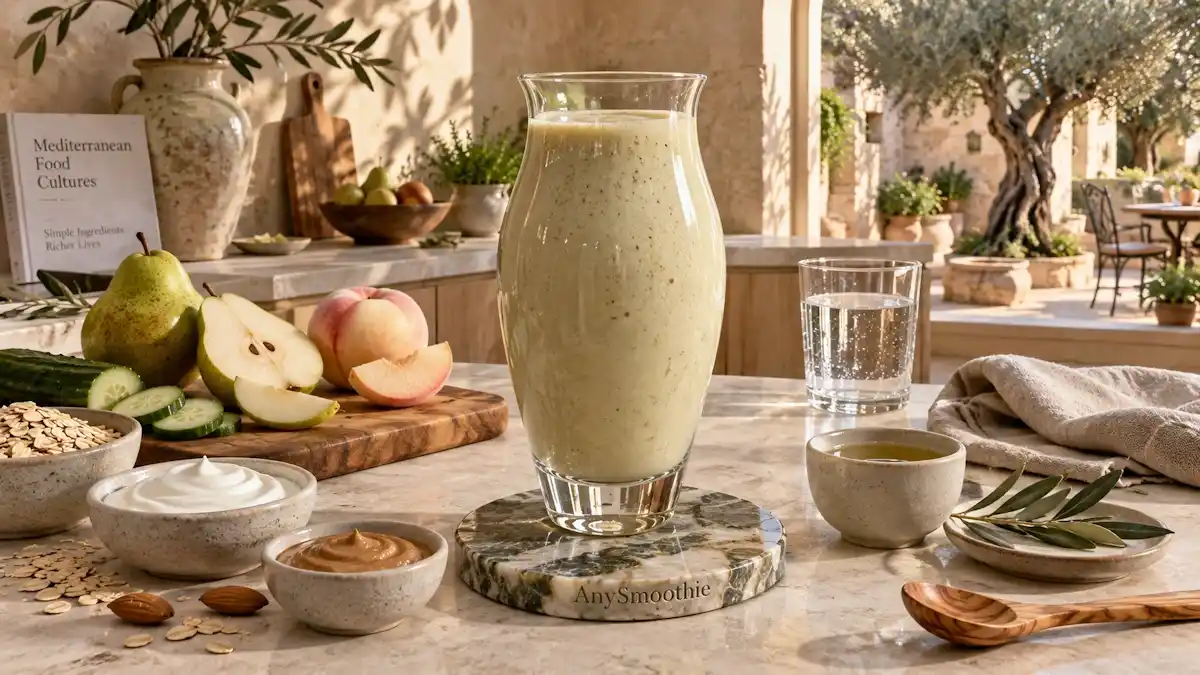
Fruit, greens, fiber, and unsaturated fats make the flavor easier to enjoy while adding their own nutrients. Start with ingredient quality and a small serving, then adjust the recipe to your taste.
How Olive Leaf Polyphenols Fit Into a Balanced Smoothie
Polyphenols are plant compounds found in foods such as berries, cocoa, herbs, tea, and olives. Olive leaves contain several phenolic compounds, with oleuropein among the most prominent.
An updated review of olive-leaf polyphenols describes oleuropein and hydroxytyrosol among the characteristic phenolic compounds found in olive leaves and also shows why extraction method and processing can influence their concentration.
Research on olive leaf includes extracts and isolated compounds as well as food-related preparations. Those forms should not be treated as interchangeable, and a smoothie should not be presented as a treatment or a substitute for medical care.
In fact, a recent systematic review and meta-analysis of randomized clinical trials concluded that current evidence does not support clinical recommendations for olive leaf extract or oleuropein supplementation aimed at metabolic or inflammatory health benefits.
For another fruit-based way to explore naturally occurring polyphenols in a smoothie, pomegranate smoothie: the fresh vitality ritual offers a different food-first approach.
A smoothie offers a practical way to combine a modest amount of food-suitable olive leaf powder or prepared olive leaf tea with familiar ingredients. Berries and cocoa add their own polyphenols, while yogurt, nut butter, chia, or avocado can contribute texture, protein, fiber, or fat.
Olive leaf can taste sharp, grassy, or bitter. Citrus, ripe fruit, cocoa, and fresh herbs help soften that edge without relying on much added sugar. Because product strength and preparation vary, follow the manufacturer’s food-use directions rather than assuming powders, teas, and concentrated extracts are interchangeable.
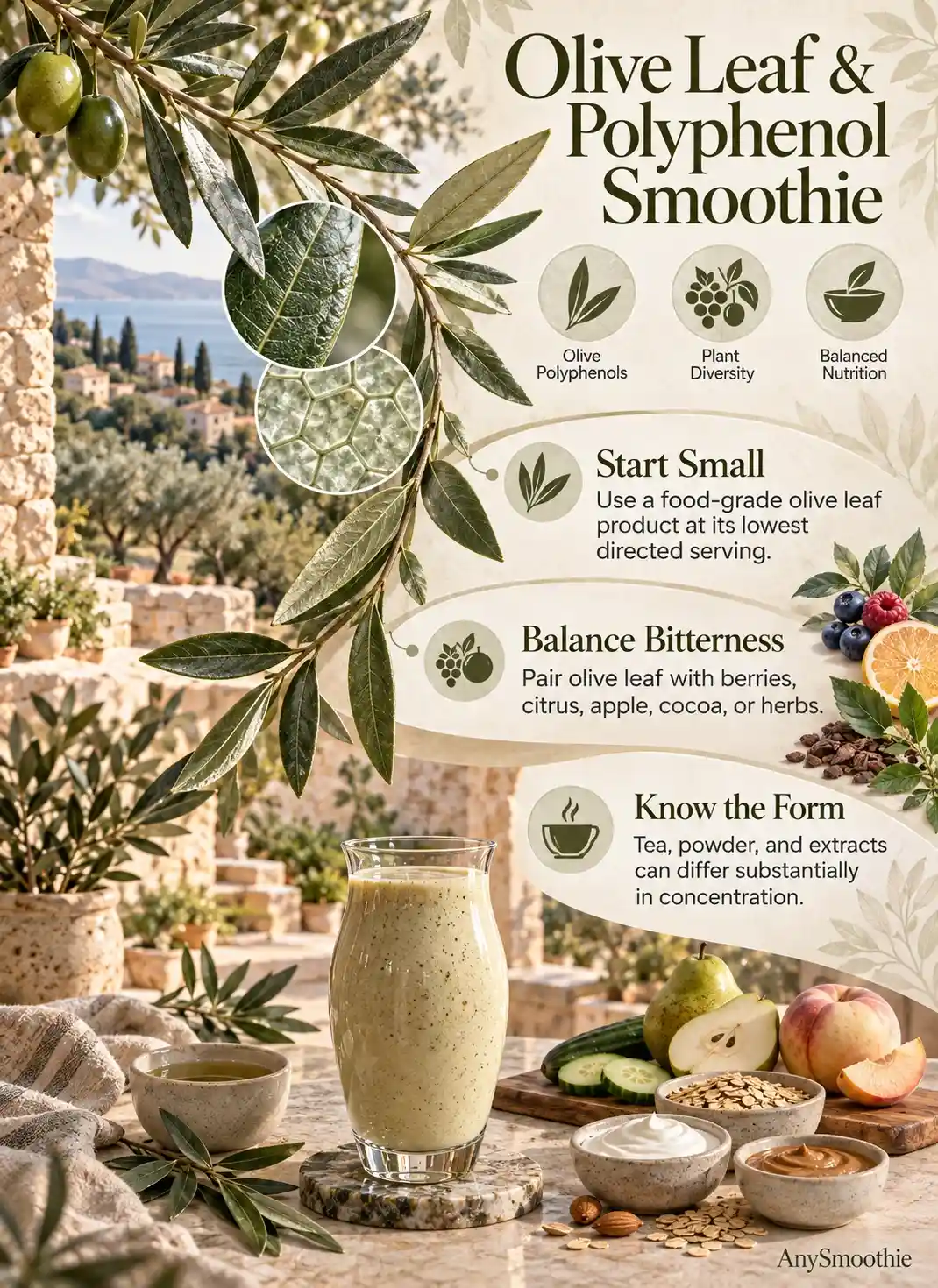
3 Olive Leaf Smoothie for Polyphenol Support
These recipes use a restrained amount of olive leaf alongside everyday ingredients. Choose the version that suits your taste, then adjust liquid and acidity after your first blend.
| Smoothie | Main Ingredients | Flavor Profile | Main Polyphenol Sources | Preparation Note |
|---|---|---|---|---|
| Berry citrus | Blueberries, yogurt, citrus, olive leaf | Bright and creamy | Berries, olive leaf | Use food-grade powder or prepared tea |
| Green apple herb | Spinach, apple, cucumber, mint | Fresh and light | Olive leaf, apple, herbs | Lemon balances bitterness |
| Cocoa banana | Cocoa, banana, almond butter, soy milk | Rich and mellow | Cocoa, olive leaf | Add liquid for a thinner blend |
Berries, green produce, and cocoa each bring different flavors, so olive leaf doesn’t need to dominate the glass.
Berry Olive Leaf Smoothie With Citrus and Yogurt
Ingredients
- 1 cup blueberries
- 3/4 cup plain Greek yogurt
- 1/2 cup unsweetened soy milk
- 1 tablespoon fresh lemon juice
- 1 teaspoon chia seeds
- Smallest label-directed serving of food-grade olive leaf powder
- Ice, optional
Steps
Add the soy milk first, followed by the Greek yogurt, blueberries, lemon juice, chia seeds, and the label-directed olive leaf portion.
Blend until completely smooth. Taste before adding more citrus, since both lemon and olive leaf can contribute sharpness.
Berries provide color and their own plant polyphenols, while yogurt adds protein and chia adds fiber and texture. The fruit and dairy base also helps soften olive leaf’s bitterness.
Estimated Nutrition per Serving
- Calories: ~250 kcal
- Protein: ~18 g
- Carbohydrates: ~35 g
- Fat: ~6 g
- Fiber: ~6 g
- Sugars: ~20 g
Estimate uses plain nonfat Greek yogurt and unsweetened soy milk and excludes the olive leaf product because composition and serving size vary by manufacturer.
Green Olive Leaf Smoothie With Apple and Fresh Herbs
Ingredients
- 1 packed cup baby spinach
- 1/2 medium green apple, chopped
- 1/2 cup peeled cucumber
- 1 tablespoon fresh lemon juice
- 5 fresh mint leaves
- 3/4 cup cold water
- Smallest label-directed serving of food-grade olive leaf powder
Steps
Add the water first, followed by the spinach, apple, cucumber, lemon juice, mint, and olive leaf product.
Blend until the greens are completely incorporated and the texture is smooth. Add a little more water if needed.
Apple and fresh herbs make the herbal flavor more approachable without much added sweetness.
Use packaged olive leaf products specifically intended for consumption. Don’t blend leaves collected from an ornamental or unknown tree because growing conditions, treatments, contamination, and pesticide exposure may be uncertain.
Estimated Nutrition per Serving
- Calories: ~70 kcal
- Protein: ~2 g
- Carbohydrates: ~16 g
- Fat: ~0.5 g
- Fiber: ~4 g
- Sugars: ~10 g
Estimate excludes the olive leaf product because concentration and serving size vary.
If I wanted to learn whether I actually liked olive leaf’s flavor, I’d start with this simpler recipe rather than masking it immediately with several sweet ingredients.
For another fruit-centered polyphenol approach, apple polyphenol smoothies for microbiome balance explores a different food source without relying on concentrated herbal extracts.
Cocoa Olive Leaf Smoothie With Banana and Almond Butter
Ingredients
- 1 frozen medium banana
- 1 tablespoon unsweetened cocoa powder
- 1 tablespoon natural almond butter
- 3/4 cup unsweetened fortified soy milk
- Smallest label-directed serving of food-grade olive leaf powder
- Cinnamon, optional
Steps
Add the soy milk first, followed by the banana, cocoa powder, almond butter, olive leaf product, and optional cinnamon.
Blend until creamy and completely smooth. Add extra soy milk one tablespoon at a time if the mixture becomes too thick.
Cocoa and almond butter help soften bitterness while banana provides a naturally creamy base. Unsweetened cocoa contributes flavanol-containing compounds of its own, creating a different polyphenol profile from the berry or apple recipes.
For more on cocoa as a distinct polyphenol source, cocoa flavanol smoothies for endothelial health offers a related ingredient-focused article.
Estimated Nutrition per Serving
- Calories: ~275 kcal
- Protein: ~10 g
- Carbohydrates: ~37 g
- Fat: ~12 g
- Fiber: ~7 g
- Sugars: ~17 g
Estimate uses unsweetened fortified soy milk and natural almond butter and excludes the olive leaf product.
How to Choose Olive Leaf Ingredients and Use Them Responsibly
Food-grade olive leaf powder can work in thicker smoothies, but its bitterness may be noticeable. Prepared olive leaf tea gives a lighter herbal flavor and can replace part of the liquid.
Concentrated extracts are a different category because their oleuropein and total phenolic content can differ substantially from tea or culinary amounts. Research on olive leaves also shows that variety, processing, extraction method, solvent, temperature, and preparation can change the phenolic profile.
Check the serving directions, complete ingredient list, storage instructions, and available quality information before using a packaged product. Avoid assuming that a teaspoon of one powder is equivalent to the same volume of another product.
Start with the smallest label-directed amount, blend, and taste before adding more. If the smoothie causes digestive discomfort or another unexpected reaction, stop using that product rather than increasing or repeatedly testing the serving.
Olive leaf tea, powder, and concentrated extracts can differ substantially in composition and strength.
People who are pregnant or breastfeeding, have a medical condition, or regularly take prescription medication should discuss concentrated olive leaf products with a qualified clinician or pharmacist before using them routinely.
This is particularly sensible because olive leaf extracts have been investigated in human trials for effects on physiological markers including blood pressure and glucose metabolism, while findings across trials remain inconsistent and product doses differ substantially.
Conclusion: A Practical Way to Use Olive Leaf
An olive leaf smoothie can pair olive leaf polyphenols with fruit, vegetables, fiber, protein, or unsaturated fats in one familiar meal or snack. Modest portions, a verified food-grade product, and balanced flavor matter more than using a large amount.
Choose one recipe, begin with the label’s lowest suggested serving, and adjust citrus, fruit, or cocoa gradually. That approach keeps olive leaf a thoughtful addition to your usual eating pattern without turning a food ingredient into a therapeutic claim.
🛡️ Safety Notes & Dietary Interactions
- Product Strength Varies: Olive leaf powders, teas, and concentrated extracts can differ substantially in oleuropein content and serving size. Use only food-grade products and follow the manufacturer’s directions rather than treating teaspoons, drops, and brewed tea as interchangeable amounts.
- Medication Interactions: Concentrated olive leaf products may be unsuitable with some medicines, particularly those affecting blood pressure or blood glucose. Anyone taking regular medication should check with a pharmacist or clinician before adding an extract-based product to smoothies.
- Digestive Tolerance: Olive leaf can taste bitter and may cause stomach discomfort in some people, especially in concentrated forms. Start with the smallest label-directed serving and reduce or stop the ingredient if nausea, cramping, or other digestive symptoms appear.
- Pregnancy and Health Conditions: Pregnancy, breastfeeding, chronic medical conditions, and prescribed therapeutic diets call for extra caution with concentrated botanical products. A berry or cocoa smoothie can be nutritious without olive leaf, so the extract should remain optional rather than essential.
FAQs
Is olive leaf powder better than olive leaf tea in a smoothie?
Not necessarily. Powder usually contributes a stronger flavor and may contain a more concentrated amount of leaf material, while brewed tea creates a lighter herbal base. The products are not equivalent, so follow each label separately. Choose the form you tolerate best rather than assuming the most concentrated option offers greater everyday benefit.
How much olive leaf should I add to a smoothie?
There is no universal smoothie dose because powders, teas, and extracts vary in concentration. Use the lowest serving recommended on the specific food-grade product you purchased, then assess flavor and tolerance before making any changes. Do not increase the amount simply to make the smoothie feel more “functional” or polyphenol-rich.
Can an olive leaf smoothie lower blood pressure or blood sugar?
These recipes should not be used for that purpose. Research on olive leaf extracts has examined cardiovascular and metabolic outcomes, but a homemade smoothie cannot be assumed to reproduce those interventions. People managing blood pressure or glucose should continue prescribed treatment and discuss concentrated olive leaf products with their healthcare professional.
Can I use fresh olive leaves from a garden or ornamental tree?
It is better not to unless the leaves come from a verified food-use source. Landscaping trees may have been exposed to pesticides, sprays, roadside contamination, or other treatments not intended for edible crops. Packaged culinary tea, food-grade powder, or another clearly labeled consumable product provides a more controlled option.
Which recipe hides the bitterness of olive leaf best?
The cocoa banana smoothie is likely to mask bitterness most effectively because ripe banana, cocoa, and nut or seed butter create a richer, deeper flavor profile. The berry citrus version also balances bitterness well through tart fruit and citrus. The green apple blend leaves the herbal character more noticeable, which may suit people who prefer a fresher taste.

Medical Disclaimer: AnySmoothie content is for educational purposes only and is not a substitute for professional medical advice. Consult a healthcare provider for personalized guidance. See our full Disclaimer & Terms of Use. AI Transparency: AnySmoothie may use AI to support content development. All content undergoes human editorial review for accuracy, clarity, and editorial quality. See our full AI Transparency.