
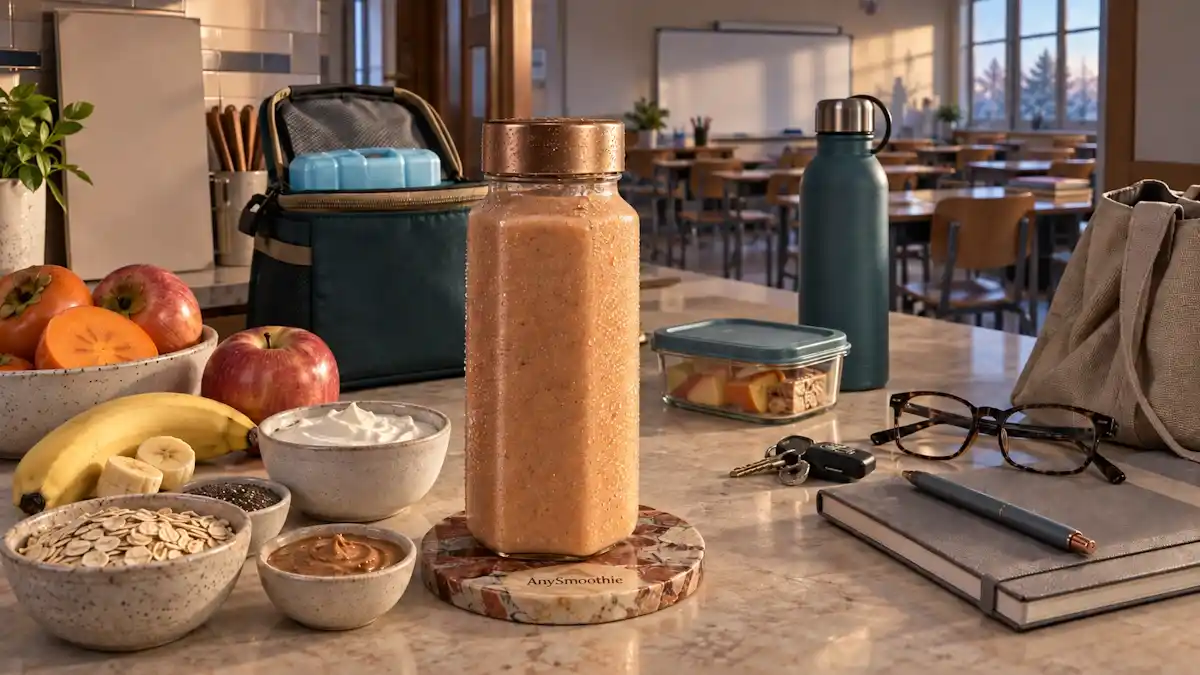
Early teacher shifts leave little room for a sit-down breakfast. Between getting dressed, packing materials, and beating traffic, food often needs to travel with you.
Smoothies for busy teachers can put protein, fiber, unsaturated fats, fluids, and carbohydrates in one portable meal. These three recipes are quick to blend, easy to adapt, and realistic for weekday mornings.
Balancing Breakfast Before the First Bell
A satisfying smoothie starts with a simple balance. Use a liquid base, such as milk, soy milk, kefir, or water. Then add a protein source, fruit or vegetables, and a fiber-rich ingredient like oats, chia seeds, or ground flaxseed.
For another early-start work routine, breakfast smoothies for early-shift chefs offers related ideas for getting breakfast ready before a demanding morning begins.
Build around protein and fiber
Greek yogurt, cottage cheese, soy milk, tofu, or protein powder can add protein. Higher-protein meals can increase fullness in controlled studies, although the effect depends on the overall meal and the individual. A systematic review and meta-analysis of randomized trials found that acute higher-protein intake increased fullness and satiety while reducing hunger compared with lower-protein conditions.
Oats, berries, spinach, and seeds also add fiber. Fiber does not affect appetite uniformly, but cereal fibers such as those found in oats can contribute texture and may support satiety as part of a balanced breakfast. A 2026 systematic review of cereal fiber and satiety found generally favorable effects on appetite measures, with oat and rye fibers showing some of the stronger results.
Carbohydrates from fruit, oats, and milk also provide energy-yielding nutrients for a morning spent standing, talking, and moving between classrooms.
Adjust the recipe to your routine
Unsaturated-fat sources including peanut butter, almond butter, avocado, or seeds add richness and help create a smoother texture. A modest amount is usually enough for a travel cup.
Portions are flexible. Adjust ingredients for your appetite, allergies, dietary preferences, and any school rules about nuts or food in classrooms.
If a smoothie feels too thick, add more liquid. If it feels too tart, use a riper banana or a small amount of naturally sweeter fruit rather than automatically adding extra sweetener.
For teachers whose schedules vary significantly from one day to another, balanced smoothies for shift work nutrition habits provides another useful approach to matching food to irregular work hours.
3 Early-Shift Smoothies for Busy Teachers
Peanut Butter Banana Oat Smoothie
Ingredients
- 1 cup unsweetened fortified soy milk
- 1 frozen medium banana
- 1/2 cup plain Greek yogurt
- 2 tablespoons natural peanut butter
- 1/4 cup rolled oats
- Pinch of cinnamon
Steps
Add the soy milk first, followed by the Greek yogurt, banana, peanut butter, oats, and cinnamon.
Blend for 45 to 60 seconds until the oats are fully incorporated. Add a small splash of water or soy milk if the mixture is too thick for your travel cup.
This makes about 20 ounces and works well for mornings when lunch may be late. Use sunflower seed butter when peanuts are not appropriate for your household or school environment.
Estimated Nutrition per Serving
- Calories: ~520 kcal
- Protein: ~30 g
- Carbohydrates: ~56 g
- Fat: ~22 g
- Fiber: ~9 g
- Sugars: ~23 g
Estimate uses unsweetened fortified soy milk, plain nonfat Greek yogurt, and natural peanut butter.
Berry Spinach Protein Smoothie
Ingredients
- 1 cup unsweetened fortified soy milk
- 1 cup frozen mixed berries
- 1 packed cup baby spinach
- 1/2 cup low-fat cottage cheese
- 1 tablespoon ground flaxseed
- 1/2 teaspoon vanilla extract
Steps
Add the soy milk first, then the cottage cheese, spinach, frozen berries, flaxseed, and vanilla.
Blend until completely smooth and no visible pieces of spinach remain. Add a little cold water if you want a thinner consistency.
Frozen berries chill the drink without watering it down, while spinach blends easily into the fruit flavor. Cottage cheese and soy milk provide protein, and ground flaxseed adds fiber and polyunsaturated fats.
Estimated Nutrition per Serving
- Calories: ~285 kcal
- Protein: ~22 g
- Carbohydrates: ~29 g
- Fat: ~10 g
- Fiber: ~10 g
- Sugars: ~15 g
Estimate uses unsweetened fortified soy milk and low-fat cottage cheese.
If I only had a few minutes between arriving at school and the first class, I’d choose this one over the oat-heavy blend because it stays relatively easy to drink from a travel cup.
Mango Ginger Kefir Smoothie
Ingredients
- 3/4 cup plain low-fat kefir
- 3/4 cup frozen mango
- 1/2 frozen medium banana
- 1/4 cup rolled oats
- 1 tablespoon hemp hearts
- 1/4 teaspoon grated fresh ginger
Steps
Add the kefir first, followed by the mango, banana, oats, hemp hearts, and ginger.
Blend until creamy and smooth. Add a tablespoon or two of cold water if needed.
The yield is about 16 ounces, which suits teachers who prefer a somewhat lighter breakfast before an early commute. Mango and banana provide carbohydrates, kefir contributes protein, and oats and hemp hearts add texture and additional nutrients.
Skip the ginger if you prefer a milder flavor.
Estimated Nutrition per Serving
- Calories: ~340 kcal
- Protein: ~14 g
- Carbohydrates: ~56 g
- Fat: ~9 g
- Fiber: ~6 g
- Sugars: ~33 g
Estimate uses plain low-fat kefir and unsweetened frozen mango.
Frozen fruit does double duty: it keeps the smoothie cold and removes the need to add ice on rushed mornings.
Make Early-Morning Smoothies Easier
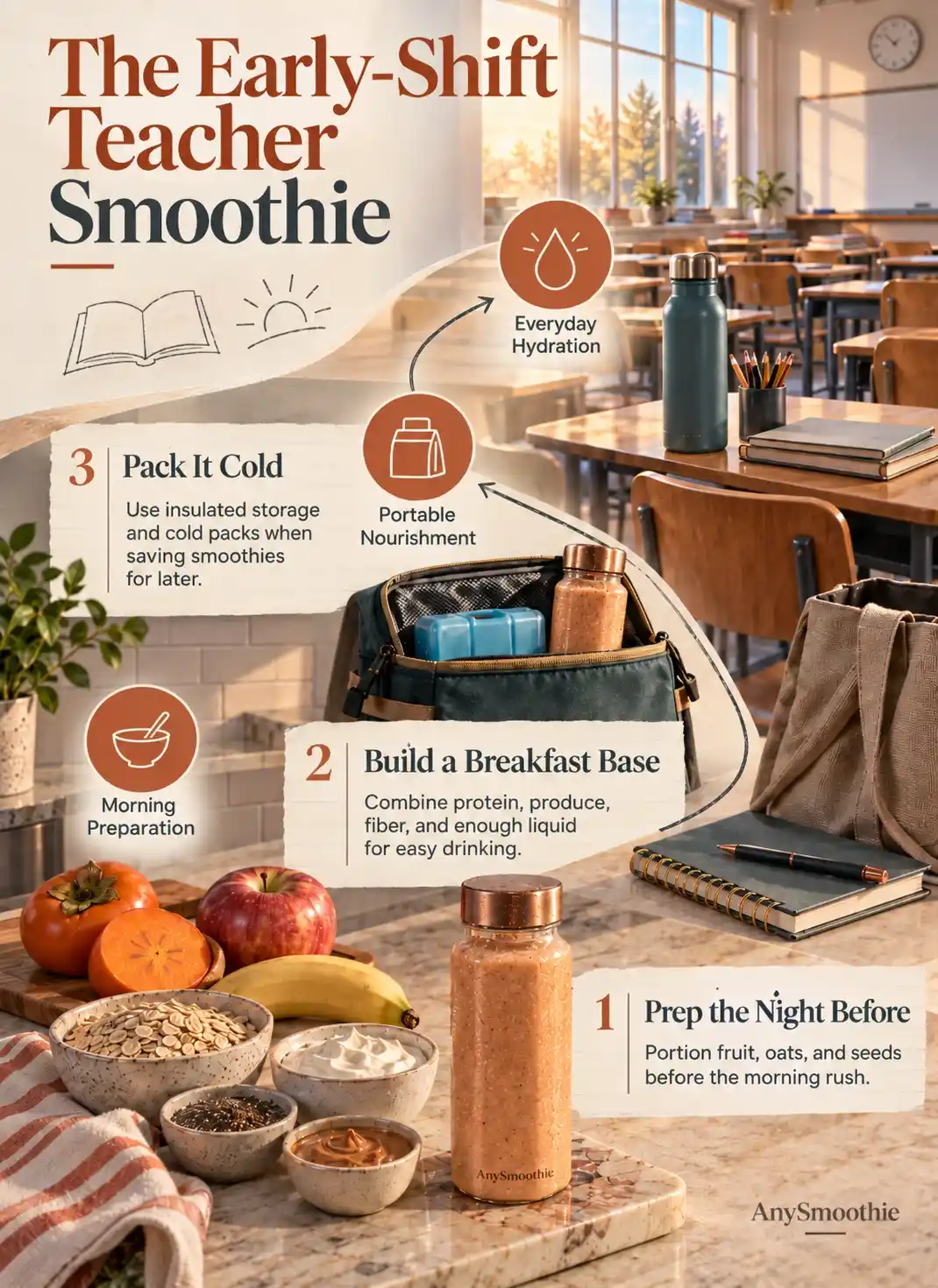
When the morning starts early, having a few things ready the night before can make breakfast feel much less rushed.
Set up ingredients the night before
Portion fruit, oats, seeds, and greens into labeled freezer bags or containers. In the morning, empty one portion into the blender, add refrigerated liquid and protein, then blend.
Keep liquid ingredients in the refrigerator, and place your blender cup, lid, and travel cup where you can reach them quickly. A single-serve blender can reduce dishes, although it may be loud in a shared home before sunrise.
Pack and clean with less hassle
Use a leak-proof travel cup with a secure lid. If you blend ahead or plan to keep the smoothie for later, pack it in an insulated lunch bag with cold sources.
USDA food-safety guidance recommends using at least two cold sources for perishable packed lunches, such as two frozen gel packs or a frozen gel pack paired with a frozen bottle of water. Its bag-lunch safety guidance also recommends positioning cold sources around perishable foods.
When you reach school, move a dairy-, kefir-, cottage-cheese-, or soy-based smoothie to a refrigerator if you are saving it for later.
Rinse the blender immediately after pouring your smoothie. Then wash the cup, blade, and lid with warm soapy water when practical. Dried oats, nut butter, and yogurt are much harder to remove once they set.
Conclusion: A Breakfast Routine You Can Repeat
The best early-shift smoothie is balanced, portable, quick to make, and easy to repeat. Start with one recipe, prep its ingredients the night before, and learn what works on your busiest days.
Adjust the sweetness, thickness, and protein source until it fits your routine. A practical breakfast pattern does not need to be perfect to make rushed school mornings feel more manageable.
🛡️ Safety Notes & Dietary Interactions
- School Allergy Policies: Peanut butter, tree nuts, dairy, soy, flax, chia, and hemp may require substitutions or special handling. Follow school-specific allergen rules, especially when smoothies are carried into classrooms, staff rooms, or shared refrigerators.
- Cold Storage: Kefir, cottage cheese, yogurt, milk, soy milk, and prepared smoothies need dependable refrigeration. Use an insulated lunch bag with an ice pack during the commute, then refrigerate the drink promptly if you will not finish it soon.
- Early-Morning Digestion: Oats, nut butter, seeds, cottage cheese, and larger smoothie portions can feel heavy when consumed quickly before a commute. Reduce thickness or serving size if fullness, reflux, or nausea makes the morning routine uncomfortable.
- Caffeine and Hydration: A smoothie can contribute fluid, but it should not replace water during a long teaching day. If coffee is part of your morning routine, consider total caffeine intake and timing rather than relying on caffeine to compensate for inadequate sleep.
FAQs
Which smoothie is best when lunch may be delayed?
The Peanut Butter Banana Oat Smoothie is the most substantial option because it combines banana, oats, Greek yogurt, milk, and peanut butter. That gives it carbohydrate, protein, fat, and fiber in one serving. If your school has nut restrictions, sunflower seed butter keeps the same basic structure without using peanuts.
Which smoothie is easiest to drink before an early commute?
The Mango Ginger Kefir Smoothie is the lightest of the three at about 16 ounces. It still includes fruit, oats, kefir, and hemp hearts, but the smaller serving may feel easier before an early drive. Skip the ginger if your stomach is sensitive first thing in the morning.
Can I make these teacher smoothies the night before?
Yes. Refrigerate the finished smoothie promptly in a clean, sealed container and keep it cold until morning. Oats, flax, chia, and other seeds may thicken the texture overnight, so shake well and add a small amount of milk or water if needed before leaving home.
What should I do if my school does not allow peanuts?
Replace peanut butter with sunflower seed butter or another school-approved alternative, and check packaged ingredients for cross-contact warnings. School policies can be stricter than personal allergy needs, so follow the rules for your building rather than assuming a substitute is automatically acceptable in shared spaces.
Can one smoothie replace breakfast for an entire teaching morning?
A balanced smoothie can work as breakfast, but whether it is enough depends on serving size, appetite, activity, and when you can eat again. On days with long gaps before lunch, pack a familiar solid snack as backup instead of assuming the smoothie will keep you satisfied through every class period.

Medical Disclaimer: AnySmoothie content is for educational purposes only and is not a substitute for professional medical advice. Consult a healthcare provider for personalized guidance. See our full Disclaimer & Terms of Use. AI Transparency: AnySmoothie may use AI to support content development. All content undergoes human editorial review for accuracy, clarity, and editorial quality. See our full AI Transparency.