
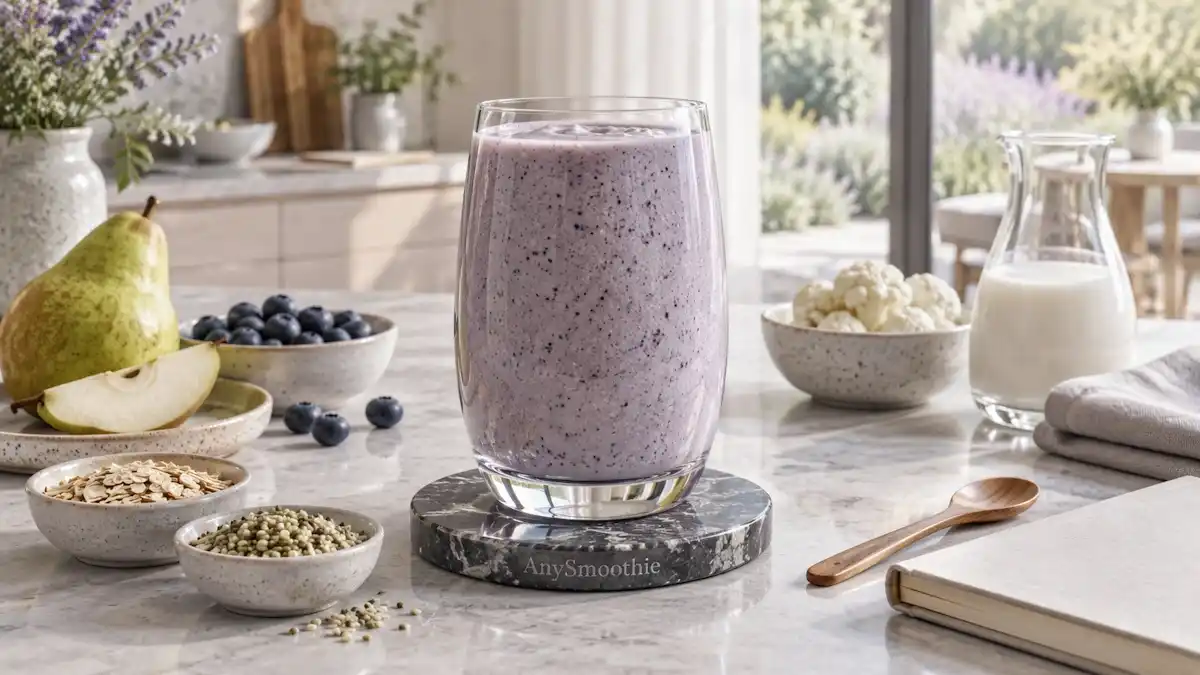
The goal is steady energy, hydration, digestion, and dietary antioxidants, not treatment for a medical condition. These three formulas and a simple tracking process can help you keep each blend easy to assess.
How Mast Cell Support Smoothies Can Fit a Stability-Focused Routine
A balanced smoothie combines fluid, carbohydrate, fiber, protein, and produce in one manageable meal or snack. That balance may help you meet nutrition needs when your food choices feel limited or inconsistent.
However, tolerance is personal. Foods that are aged, fermented, heavily processed, or already known to trigger symptoms may not fit some individual routines. Mast cells can release chemicals in response to triggers, including allergens such as foods, as described in Cleveland Clinic’s overview of mast cell activation syndrome.
Start with a short ingredient list. Track symptoms, timing, portion size, brand, and freshness when this is part of your established care plan. A smoothie doesn’t replace medical care or a clinician-guided elimination plan.
Build a gentler base before adding functional ingredients
Begin with filtered water, ice, unsweetened coconut water if tolerated, or a plain non-dairy milk you already use. Add a tolerated protein source, such as plain rice protein or another individually approved option, if you want a more filling drink.
Then use one fruit and one mild vegetable. Change only one unfamiliar ingredient at a time when that approach fits your clinician-guided plan. This makes it easier to identify which foods fit your routine rather than guessing after a blend contains many new ingredients.
Choose fresh, simple ingredients and manage leftovers
If you have already noticed that storage or freshness affects your food tolerance, preparing small portions can make the routine easier to track. Blend one serving and drink it soon after preparation rather than keeping several servings for days.
Freeze tolerated fruit in small portions for convenience. Also read labels closely. Flavor blends, sweeteners, gums, preservatives, and added extracts can complicate an otherwise simple recipe.
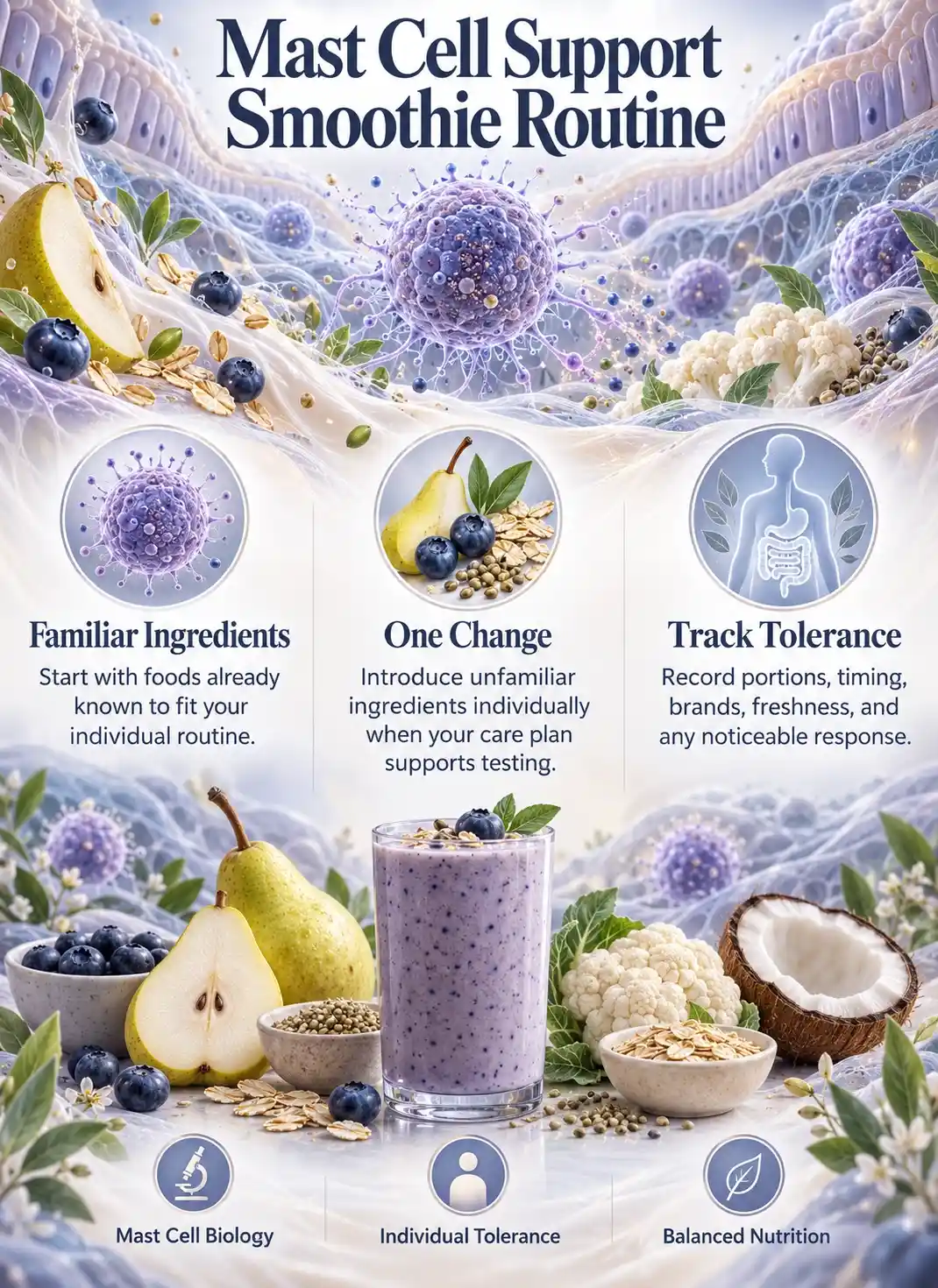
3 Mast Cell Support Smoothies for Stability
These mast cell support smoothies are starting points, not universal food lists. Use ingredients you already tolerate, then adjust slowly. For more general ideas about combining produce in a blender, browse these fruit and vegetable smoothie recipes.
Cucumber, Pear, and Protein Balance Smoothie
Ingredients
- 1 cup filtered water or a tolerated milk
- 1/2 medium cucumber, peeled if preferred
- 1/2 fresh pear
- 1 tablespoon plain rice protein powder or another tolerated protein powder
- 1/2 cup ice
- 1–2 fresh mint or parsley leaves, optional and only if already tolerated
Steps
Add the water or tolerated milk first, followed by the cucumber, pear, protein powder, and ice.
Blend until completely smooth. Add the optional herbs only if they are already familiar and well tolerated.
This drink is light and mildly sweet from the pear. Use freshly prepared produce rather than introducing ingredients whose storage history or tolerance is uncertain.
Estimated Nutrition per Serving
- Calories: ~105 kcal
- Protein: ~7 g
- Carbohydrates: ~20 g
- Fat: ~1 g
- Fiber: ~4 g
- Sugars: ~11 g
Estimate uses filtered water, cucumber, pear, and approximately 1 tablespoon of plain rice protein powder. A milk alternative will change the values.
If I wanted to assess this blend as simply as possible, I’d leave the herbs out at first and keep the ingredient list exactly the same for the initial preparation.
Blueberry, Apple, and Seed Smoothie
Ingredients
- 1/2 cup fresh or individually frozen blueberries
- 1/4 medium apple, peeled
- 3/4 cup filtered water or a tolerated milk
- 1 teaspoon chia seeds
- 1/2 cup ice
- Plain tolerated protein powder, optional
Steps
Add the water or tolerated milk first, followed by the blueberries, apple, chia seeds, and ice.
Blend until smooth. If using protein powder, add only a product you already know fits your routine.
Seeds add texture, fiber, and some fat, but they can be left out when you want fewer variables in the recipe. Keep fruit portions consistent when you are trying to understand your individual response.
Estimated Nutrition per Serving
- Calories: ~90 kcal
- Protein: ~2 g
- Carbohydrates: ~19 g
- Fat: ~2 g
- Fiber: ~4 g
- Sugars: ~12 g
Estimate uses filtered water and chia seeds without optional protein powder.
Mango, Zucchini, and Ginger Smoothie
Ingredients
- 1/2 cup fresh or frozen mango
- 1/2 cup peeled raw zucchini
- 3/4 cup filtered water or a tolerated milk
- 1/2 cup ice
- Up to 1/8 teaspoon freshly grated ginger, optional and only if already tolerated
Steps
Add the water or tolerated milk first, followed by the mango, zucchini, and ice.
Blend until completely smooth. Add the ginger only if it is already a familiar ingredient, then blend briefly again.
Zucchini adds volume with little competing flavor, while ginger gives the smoothie a brighter taste. Remove ginger if it doesn’t fit your established routine. A simpler blend often gives you clearer information than a heavily fortified one.
Estimated Nutrition per Serving
- Calories: ~65 kcal
- Protein: ~1 g
- Carbohydrates: ~15 g
- Fat: <1 g
- Fiber: ~2 g
- Sugars: ~12 g
Estimate uses filtered water and the optional small amount of ginger.
If I wanted this to be more substantial, I’d add only a protein source I already tolerate rather than introducing several new seeds, powders, or extracts at once.
Make Your Smoothie Routine Easier to Personalize
Use each recipe as a structured way to keep ingredients consistent and observe individual tolerance. Avoid introducing several unfamiliar foods in the same glass, because any reaction can become difficult to trace.
| Smoothie | Main Ingredients | Texture and Flavor | Best Starting Adjustment | Storage Note |
|---|---|---|---|---|
| Cucumber-pear | Cucumber, pear, protein | Light, mildly sweet | Omit herbs | Prepare one serving |
| Blueberry-apple | Blueberries, apple, seeds | Tart, lightly textured | Skip seeds first | Use fresh portions |
| Mango-zucchini | Mango, zucchini, ginger | Light, bright | Leave out ginger | Blend one serving |
After choosing a base, change sweetness, protein, fiber, or liquid one variable at a time when that approach is appropriate for your established care plan. Drink slowly and note how your body responds.
For broader protein ideas,protein-rich smoothies can offer useful structure, but your own tolerance remains the deciding factor.
A smoothie that feels boring on paper can be more useful than a complex recipe when it gives you clear, repeatable feedback.
A simple testing plan for individual tolerance
Start with a familiar liquid and one produce item. Keep the serving small, then observe according to your established care plan. Add one unfamiliar ingredient on another day only if that approach has been recommended for you.
Keep a brief food and symptom log. Include ingredient names, brands, freshness, portion size, timing, and preparation method. Personal response carries more weight than broad online lists of “safe” or “unsafe” foods.
People specifically exploring dietary histamine can also read histamine intolerance smoothies, but histamine intolerance and MCAS are distinct conditions and should not be treated as interchangeable.
When to pause and seek professional guidance
Stop testing an ingredient if it causes a concerning reaction. Seek medical guidance for repeated, worsening, or severe symptoms.
Seek emergency medical care for symptoms such as difficulty breathing, fainting, or significant throat or mouth swelling, and follow any emergency treatment plan you have been prescribed. The American Academy of Allergy, Asthma & Immunology’s MCAS information describes severe mast-cell-mediated reactions and their professional assessment. Smoothies should never replace prescribed treatment.
Conclusion: A Simple Smoothie Can Be the Better Choice
The best mast cell support smoothie is one made with simple, familiar ingredients that fit your personal tolerance. Cucumber-pear, blueberry-apple, and mango-zucchini blends offer three straightforward places to begin.
Use the comparison table and a short log to make thoughtful adjustments when appropriate for your care plan. Predictability matters more than complexity, especially when ongoing or serious reactions need professional guidance.
🛡️ Safety Notes & Dietary Interactions
- Individual Trigger Patterns: Food reactions linked with mast cell disorders can vary substantially between people. Do not assume broad online “low-histamine” lists apply universally; prioritize foods already tolerated and make changes within an established clinician-guided plan.
- Freshness and Storage: Prepared smoothies, cut produce, and protein-containing blends should be consumed promptly or kept appropriately chilled. When freshness appears relevant to your symptoms, avoid relying on multi-day leftovers and prepare single servings from ingredients with known storage histories.
- Supplements and Add-Ins: Protein powders, flavorings, gums, preservatives, herbal extracts, and fortified blends can introduce multiple variables at once. Choose simple products with familiar ingredients and avoid testing several new supplements together when trying to identify possible triggers.
- Severe Reactions: Trouble breathing, fainting, rapidly worsening swelling, or swelling involving the mouth or throat requires urgent medical attention. A smoothie, elimination diet, or food log must never replace prescribed emergency medication or professional treatment for serious reactions.
FAQs
Are cucumber, pear, blueberries, mango, and zucchini universally safe for mast cell sensitivity?
No. These recipes are starting points rather than universal “safe food” lists. Individual tolerance can vary, even with foods commonly described as gentle. Use ingredients you already tolerate, introduce unfamiliar foods one at a time, and record portion, freshness, brand, preparation method, and symptoms so patterns are easier to interpret.
Why does freshness matter in a mast cell-focused smoothie routine?
Some people report that storage time, processing, or leftovers influence how well particular foods are tolerated. That response is individual, so freshness should be treated as a personal variable rather than a universal rule. Preparing one serving at a time can also simplify tracking because fewer storage and preparation factors change between tests.
Should I avoid fermented yogurt or kefir in these smoothies?
Not automatically, but fermented foods may not fit every person’s established tolerance pattern. This article intentionally uses simpler liquids and individually approved protein options instead of assuming yogurt or kefir is appropriate. If fermented dairy is already well tolerated, discuss whether it belongs in your routine rather than eliminating it solely because of a general food list.
How many new smoothie ingredients should I test at one time?
One new variable at a time is the clearest approach. Keep the liquid and other ingredients familiar, introduce a small amount of one new food, and follow the observation period used in your existing care plan. Testing several fruits, seeds, powders, and herbs together makes any subsequent reaction much harder to interpret accurately.
Can mast cell support smoothies treat MCAS or prevent reactions?
No. A smoothie can provide convenient nutrition and make ingredient tracking more manageable, but it does not treat mast cell activation syndrome or reliably prevent reactions. Diagnosis and treatment require qualified medical care. Continue prescribed medications and emergency plans, and seek professional assessment when reactions are recurrent, worsening, severe, or difficult to explain.

Medical Disclaimer: AnySmoothie content is for educational purposes only and is not a substitute for professional medical advice. Consult a healthcare provider for personalized guidance. See our full Disclaimer & Terms of Use. AI Transparency: AnySmoothie may use AI to support content development. All content undergoes human editorial review for accuracy, clarity, and editorial quality. See our full AI Transparency.