
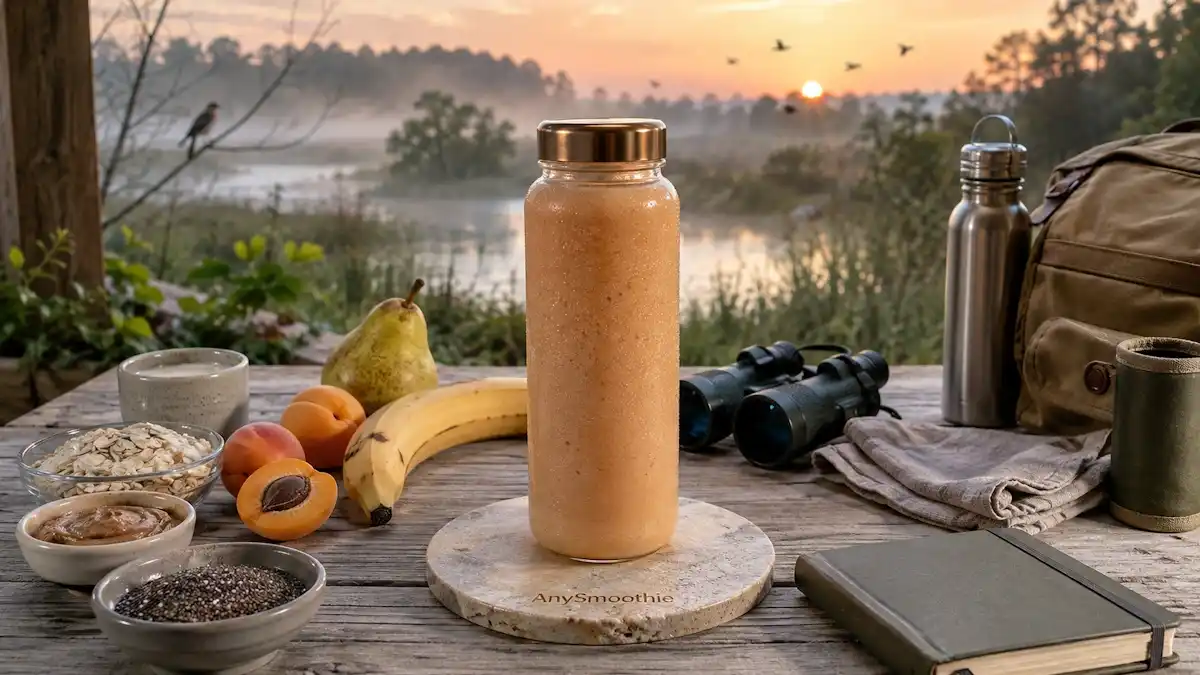
Before sunrise, a trail can feel almost still, except for the first calls in the trees. You need breakfast that won’t slow down your departure or leave crumbs in your binocular case.
Breakfast smoothies for early birdwatching fit that job well. They blend quickly, travel in one bottle, and can combine fluids, carbohydrates, protein, and fiber. The recipes below focus on steady fuel, easy digestion, and a clean handoff from kitchen to trail.
What Makes a Smoothie Work Before Sunrise
A field-ready smoothie starts with about 3/4 to 1 cup of liquid, such as milk, soy milk, water, or coconut water. Add fruit or vegetables for flavor and carbohydrates, then choose a protein source such as Greek yogurt, silken tofu, or peanut butter. Rolled oats, chia seeds, and fruit supply fiber, while nut or seed butter adds fat and a fuller texture.
Carbohydrates from fruit and oats break down into glucose, which supplies energy for normal cellular processes. Protein contributes amino acids, and soluble fiber from oats or chia thickens the drink as it absorbs water. That thicker texture can make a small bottle feel more like breakfast than juice.
For more combinations, these fruit and vegetable smoothie recipes offer useful ideas for pairing produce with oats, yogurt, and plant-based milks.
Keep the portion practical. A 16 to 20-ounce bottle is usually enough for an early outing, especially if you also carry water. Frozen fruit chills the blend without a pile of ice, while overly ripe bananas and sweetened yogurt can make it heavier than needed.
Prep produce, measure oats, and portion add-ins the night before. Store everything in a covered container, then blend while the coffee brews. If your smoothie will sit in a cooler, favor smooth ingredients over chunky nuts, shredded coconut, or thick dates that can settle at the bottom.
For mornings when getting out the door quickly matters most, pre-prep smoothie packs for busy mornings can make the same routine even easier.
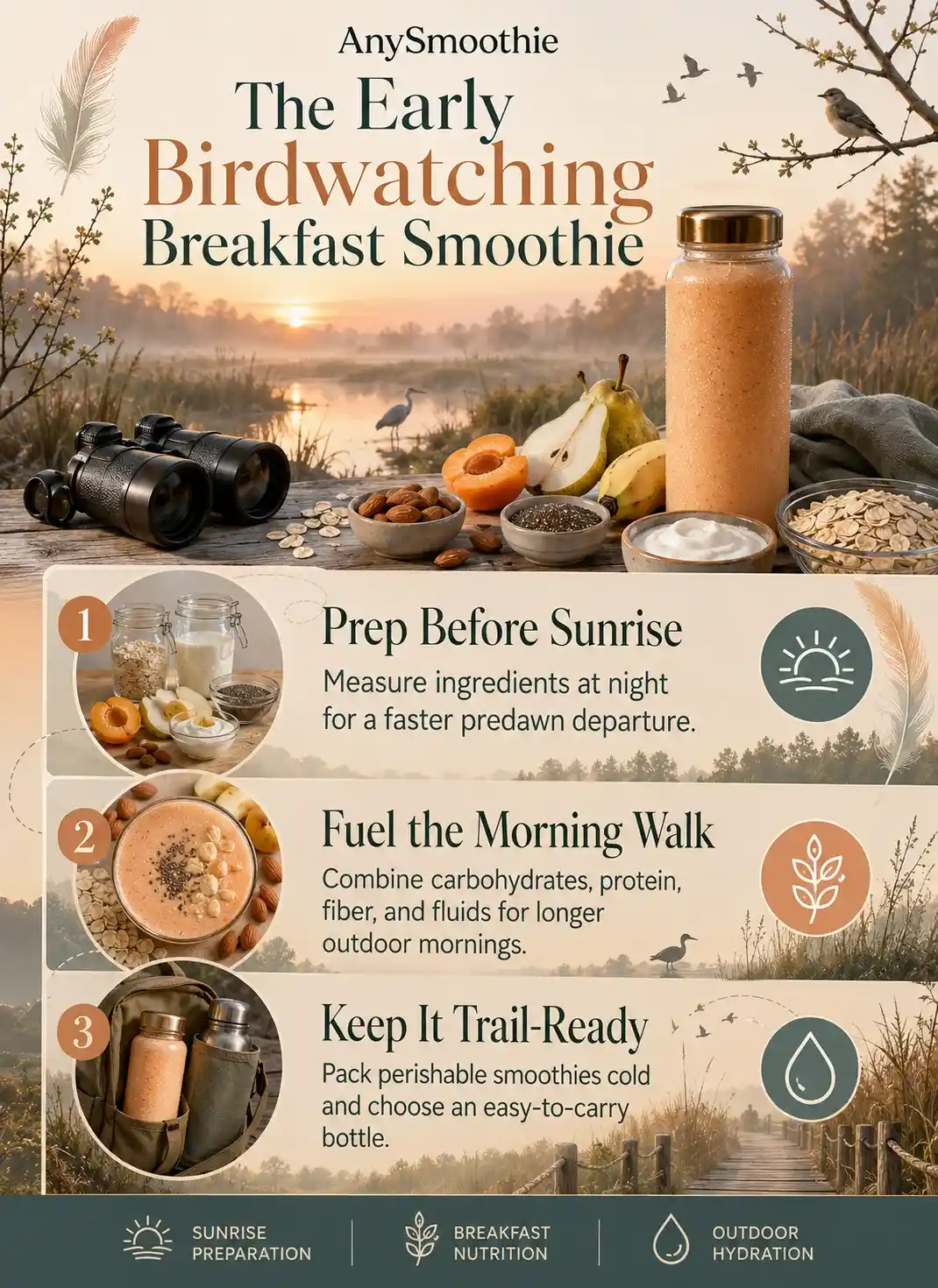
3 Breakfast Smoothies for Early Birdwatching
Each option takes only a few minutes and uses ordinary grocery-store ingredients. Adjust the liquid by a few tablespoons if your blender needs help.
| Smoothie | Main Ingredients | Protein Source | Best For | Make-Ahead Tip |
|---|---|---|---|---|
| Berry Oat | Berries, banana, oats | Greek yogurt | A long morning outdoors | Soak oats in milk overnight |
| Green Apple and Spinach | Apple, spinach, cucumber | Yogurt or silken tofu | A lighter, fresh start | Blend greens and liquid first |
| Peanut Butter Mocha Banana | Banana, cocoa, oats | Peanut butter and milk | Cool, extended outings | Chill coffee before blending |
The berry blend is the most familiar choice, while the green recipe stays crisp and light. Choose the mocha banana version when breakfast needs to carry you through a longer stretch of listening and walking.
Berry Oat Smoothie for a Long Morning
Ingredients
- 1 cup frozen mixed berries
- 1 small banana
- 1/3 cup rolled oats
- 3/4 cup plain Greek yogurt
- 3/4 cup milk or dairy-free milk
- 1/2 teaspoon cinnamon
- 1 teaspoon honey, optional if the berries are unusually tart
Blend until creamy. Soak the oats in the milk for 10 minutes, or overnight in the refrigerator, if you prefer a silkier texture.
Berries and banana provide flavor and carbohydrates, while oats and yogurt add fiber and protein for a more substantial bottle. This recipe holds up well during a slow walk through a large preserve.
Estimated Nutrition per Serving
Estimated with frozen mixed berries, one small banana, rolled oats, nonfat plain Greek yogurt, 2% milk, cinnamon, and no optional honey.
- Calories: ~500 kcal
- Protein: ~29 g
- Carbohydrates: ~83 g
- Fat: ~9 g
- Fiber: ~13 g
- Sugars: ~42 g
Oats keep absorbing liquid while you’re driving to the trailhead. If you expect to drink this an hour or two after blending, make it slightly looser than you would at home so it stays comfortably drinkable from the bottle.
For other combinations built around fruit, oats, and protein, these smoothie recipes for sustained energy provide additional ideas.
Green Apple and Spinach Smoothie for a Light Start
Ingredients
- 3/4 cup water or coconut water
- 1 packed cup baby spinach
- 1 apple, chopped
- 1/2 cup cucumber, chopped
- 1 tablespoon lemon juice
- 1/2 cup plain yogurt or silken tofu
Blend the water or coconut water with the spinach first. Add the apple, cucumber, lemon juice, and yogurt or silken tofu, then blend again until smooth and pale green.
Starting with the greens and liquid helps break down leafy pieces before the apple goes in. The cucumber and lemon keep the flavor fresh instead of candy-sweet. Pack this smoothie in an insulated bottle, and shake it before drinking because apple pulp can settle during the drive.
Estimated Nutrition per Serving
Estimated with unsweetened coconut water, baby spinach, one medium apple, cucumber, lemon juice, and plain nonfat Greek yogurt.
- Calories: ~255 kcal
- Protein: ~14 g
- Carbohydrates: ~51 g
- Fat: ~1 g
- Fiber: ~8 g
- Sugars: ~34 g
Peanut Butter Mocha Banana Smoothie for Cool Mornings
Ingredients
- 1 frozen banana
- 1 tablespoon peanut butter
- 1 tablespoon unsweetened cocoa powder
- 1/4 cup rolled oats
- 3/4 cup milk
- 1/4 cup chilled decaffeinated coffee
- Extra milk, optional in place of coffee
Blend until the oats disappear and the texture is thick but drinkable.
This is a richer option for birdwatchers who expect to be outside for several hours. Banana and oats provide carbohydrates, while peanut butter, milk, and oats add body. For a peanut-free bottle, swap in sunflower seed butter. Soy milk or oat milk works well for a dairy-free version.
Estimated Nutrition per Serving
Estimated with one medium banana, natural peanut butter, unsweetened cocoa, rolled oats, 2% milk, and plain decaffeinated coffee.
- Calories: ~440 kcal
- Protein: ~18 g
- Carbohydrates: ~65 g
- Fat: ~15 g
- Fiber: ~9 g
- Sugars: ~28 g
On a cold predawn morning, a frozen banana can make this much colder than expected. Let it soften for a few minutes before blending if you want the creamy texture without carrying an almost ice-cold breakfast onto the trail.
Pack and Sip Without Missing the Birds
Chill the finished smoothie overnight when possible, then pour it into a leak-resistant insulated bottle before leaving. Leave about an inch of empty space at the top, especially if the drink contains frozen fruit, because it can expand as it warms or shifts.
A cold smoothie can become unpleasant fast in a warm car, even when the bottle looks tightly sealed.
Milk, yogurt, and tofu are perishable ingredients, not shelf-stable foods. USDA guidance recommends keeping perishable foods cold during transport and using cold sources such as frozen gel packs. Cold foods should remain at or below 40°F (4.4°C), and perishable foods should not remain unrefrigerated for more than two hours, or one hour when temperatures are above 90°F (32.2°C). USDA guidance on keeping packed foods cold provides practical guidance for transporting refrigerated foods safely.
Bring plain water, too. A wide-mouth bottle or reusable straw makes thick oat blends easier to drink, although a secure lid matters more on a bumpy trail. After you return, rinse the bottle and wash the blender promptly.
For a brief outing, the green apple smoothie may feel right. Choose berry oat or peanut butter mocha banana for colder weather, a longer route, or a bigger appetite. Adjust ingredients around allergies and dietary needs before you pack.
Conclusion: Before the First Call
A well-built smoothie makes early birdwatching easier because it puts fluids, carbohydrates, protein, and fiber in one portable breakfast. Prep one recipe the night before, then adjust its thickness and sweetness until it suits your routine.
The best field breakfast is ready before the first call of the morning reaches the trail.

Medical Disclaimer: AnySmoothie content is for educational purposes only and is not a substitute for professional medical advice. Consult a healthcare provider for personalized guidance. See our full Disclaimer & Terms of Use. AI Transparency: AnySmoothie may use AI to support content development. All content undergoes human editorial review for accuracy, clarity, and editorial quality. See our full AI Transparency.