
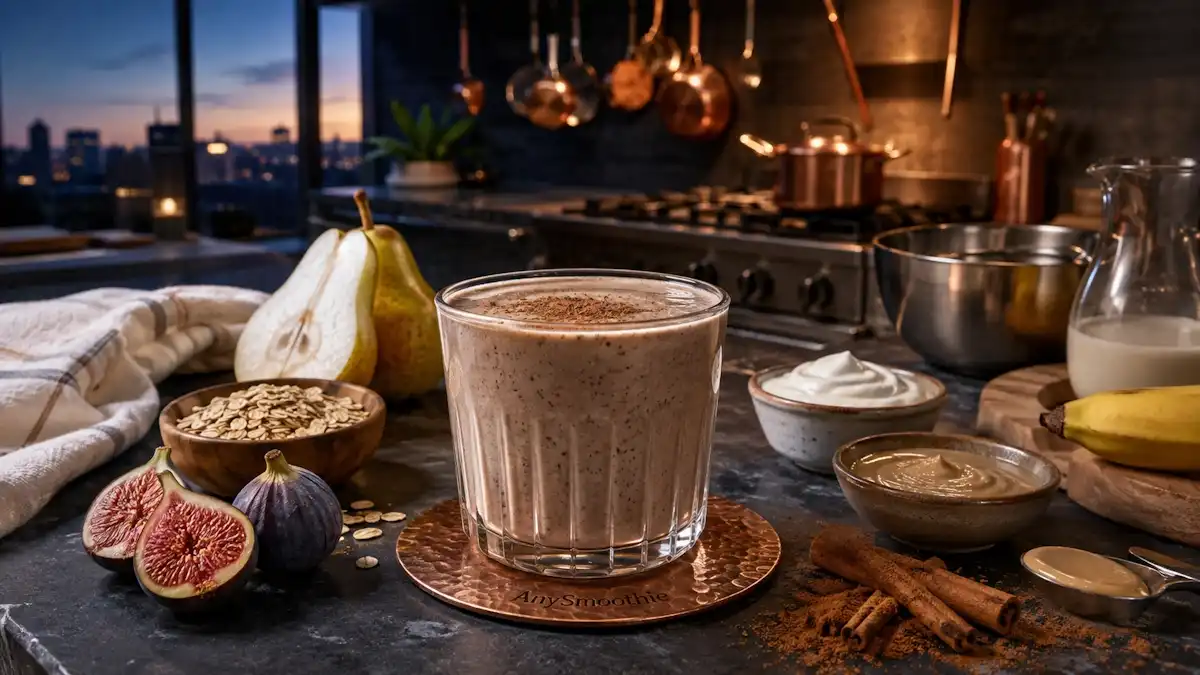
A 5 a.m. kitchen shift doesn’t leave much room for a sit-down breakfast. You need something fast enough to make before the commute, filling enough for physical work, and easy to drink before the burners and tickets start piling up.
Breakfast smoothies for early shift chefs can combine fluid, carbohydrates, protein, fats, and fiber in one portable meal. These three recipes use familiar groceries, and a little prep keeps them practical on the busiest mornings.
Make Breakfast Smoothies Work Before Service
Breakfast smoothies for early shift chefs work best when the recipe fits the shift length and your storage options. Start with one fruit or vegetable base, one protein source, one source of fats or fiber, and enough liquid to keep the blender moving.
| Smoothie | Main Protein Source | Prep Time | Best Feature | Easy Substitution |
|---|---|---|---|---|
| Oat, banana, coffee | Greek yogurt | 5 minutes | More filling texture | Silken tofu |
| Berry, yogurt, spinach | Greek yogurt | 5 minutes | Freezer-friendly | Soy yogurt |
| Mango, ginger, peanut butter | Yogurt or tofu | 5 minutes | Rich tropical flavor | Sunflower seed butter |
Measure oats, seeds, and spices ahead of time. Freezer packs with fruit and spinach also save precious minutes when you’re half awake.
Keep dairy, yogurt, tofu, and cut produce refrigerated. USDA food safety guidance recommends keeping cold foods at or below 40°F (4.4°C) and not leaving perishable foods unrefrigerated for more than two hours, or one hour when temperatures are above 90°F (32.2°C). A chilled smoothie shouldn’t sit at room temperature through a long shift.
A smoothie packed cold at home is a better fit for a break than one left on a warm prep counter.
Choose Ingredients That Match the Demands of a Kitchen Shift
Choose a fruit-forward blend when service starts soon and you expect a short gap before eating again. The berry smoothie fits that role because it stays relatively light while still including protein and fiber.
For a longer morning, oats add more thickness and substance. Seeds or nut butter work well when you want a richer blend, although they can make a drink harder to finish quickly. Adjust sweetness, texture, caffeine, and serving size around your appetite, allergies, and access to refrigeration.
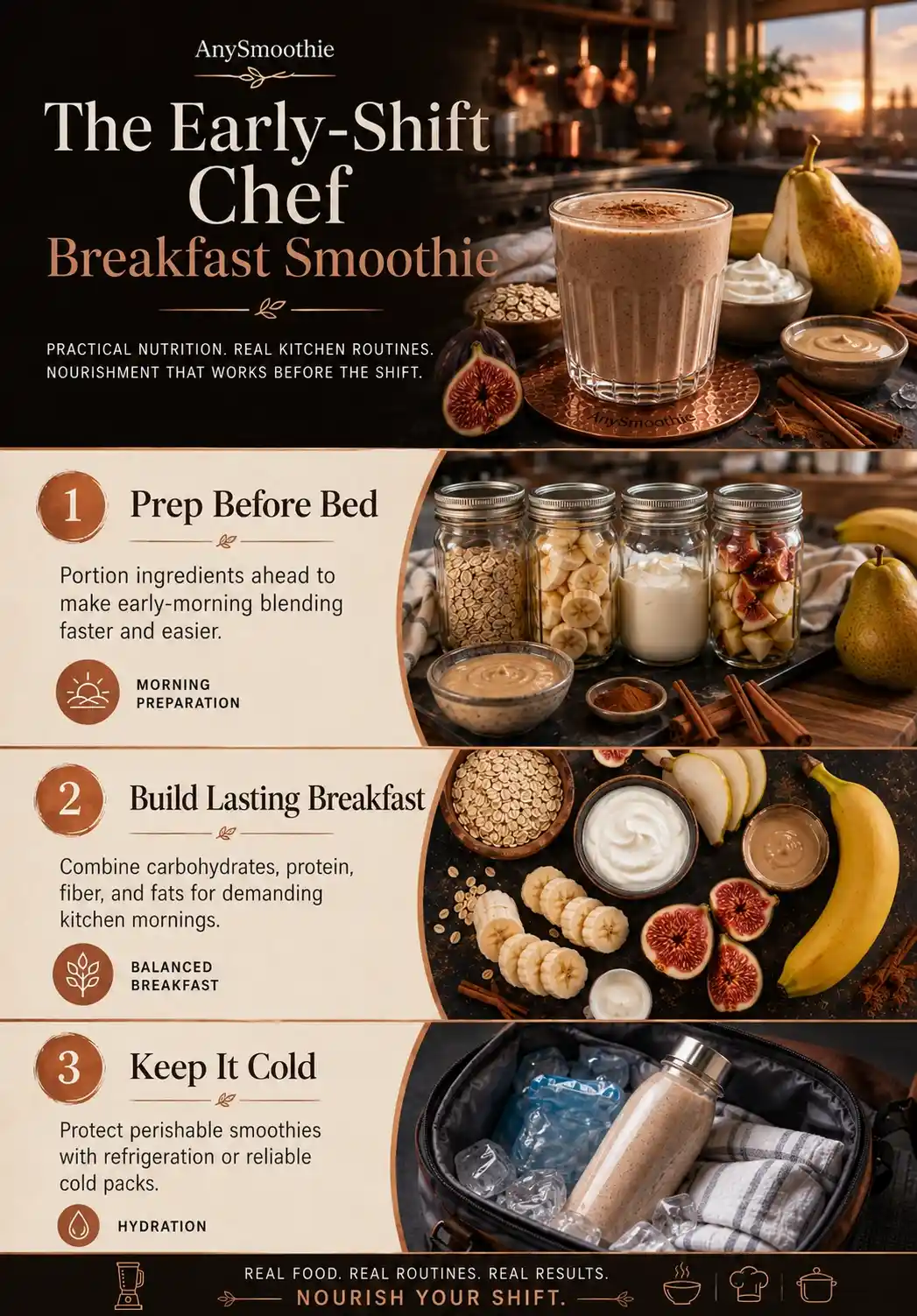
3 Breakfast Smoothies for Early-Shift Chefs
Each recipe makes one generous serving and takes only a few minutes. Fruit and oats provide carbohydrates, while protein, fiber, fats, and liquids round out the blend.
The Quick Oat, Banana, and Coffee Smoothie
Use this option when you have a long morning ahead and want a mellow coffee flavor.
Ingredients:
- 1 small banana
- 1/3 cup rolled oats
- 3/4 cup milk or soy milk
- 1/2 cup plain Greek yogurt or silken tofu
- 1/3 cup cooled brewed coffee, optional
- Pinch of cinnamon
Add the liquid first, then blend everything for 30 to 45 seconds. It takes about five minutes, including gathering ingredients.
The oats and banana provide carbohydrates, while yogurt adds protein and a creamy texture. Coffee adds flavor and caffeine, so use only cooled coffee and stay within the amount of caffeine you normally tolerate. You can blend it the night before, refrigerate it promptly, then shake well and add a splash of milk in the morning. For another familiar variation, try this smoothie for sustained cellular energy.
Estimated Nutrition per Serving
Estimated with one small banana, rolled oats, 2% dairy milk, plain nonfat Greek yogurt, cooled black coffee, and cinnamon.
- Calories: ~390 kcal
- Protein: ~24 g
- Carbohydrates: ~62 g
- Fat: ~7 g
- Fiber: ~7 g
- Sugars: ~28 g
Oats continue absorbing liquid while this smoothie waits in the refrigerator, which matters when breakfast is being prepared before bed. Blend it slightly looser than you normally would, and it should be easier to drink quickly before service the next morning.
The Berry, Yogurt, and Spinach Prep Smoothie
Frozen berries turn this into a cold, thick smoothie without ice. Spinach stays mild when berries and tangy yogurt lead the flavor.
Ingredients:
- 1 cup frozen mixed berries
- 3/4 cup plain Greek yogurt
- 1 packed handful baby spinach
- 1 tablespoon ground flaxseed or chia seeds
- 3/4 cup milk or unsweetened soy milk
Blend for about one minute, especially if you use chia seeds. This takes roughly five minutes. For a dairy-free version, choose soy yogurt or silken tofu and plant milk.
Berries contribute carbohydrates and fiber, while yogurt or tofu provides protein. Flax and chia add fats and fiber, and the milk contributes additional fluid. These morning smoothies to support insulin sensitivity offer more ways to use the same basic ingredients.
Estimated Nutrition per Serving
Estimated with mixed frozen berries, plain nonfat Greek yogurt, baby spinach, ground flaxseed, and 2% dairy milk.
- Calories: ~340 kcal
- Protein: ~24 g
- Carbohydrates: ~43 g
- Fat: ~10 g
- Fiber: ~10 g
- Sugars: ~27 g
The Mango, Ginger, and Peanut Butter Smoothie
Mango makes this smoothie bright and naturally sweet, while peanut butter gives it more body for a commute or a quick drink before prep begins.
Ingredients:
- 1 cup frozen mango
- 1/2 banana
- 1 tablespoon peanut butter
- 3/4 cup milk or soy milk
- 1/2 cup plain yogurt or silken tofu
- 1/2 teaspoon finely grated fresh ginger
Blend until smooth, about 45 seconds. Prep time is five minutes. Use sunflower seed butter for a peanut-free option, or choose almond butter if it fits your needs.
Mango and banana provide carbohydrate, while yogurt or tofu supplies protein. Peanut butter adds fat and a richer texture. Fresh ginger adds a warm, sharp note, so start small if you haven’t used it in smoothies before.
Estimated Nutrition per Serving
Estimated with frozen mango, half a medium banana, peanut butter, 2% dairy milk, plain low-fat yogurt, and fresh ginger.
- Calories: ~425 kcal
- Protein: ~17 g
- Carbohydrates: ~67 g
- Fat: ~12 g
- Fiber: ~6 g
- Sugars: ~48 g
The ginger can taste considerably sharper at 5 a.m. than it does on paper, especially beside sweet mango. If this is becoming a regular pre-shift breakfast, start with half the ginger and increase it only after you’ve found the balance you actually enjoy that early.
A Simple Smoothie Prep Routine for Busy Chefs
Set up tomorrow’s smoothie while preparing for the next morning at home. Wash fresh produce, portion fruit into freezer containers, and place dry add-ins in a small jar. Refrigerate measured milk, yogurt, tofu, or cooled coffee.
In the morning, empty the freezer pack into the blender, add liquids, and blend. Label the bottle if you’re packing more than one drink, then carry it in an insulated lunch bag or cooler with cold packs. USDA recommends using cold sources when transporting perishable foods away from refrigeration.
Rinse the blender right away with warm water, a drop of dish soap, and a quick pulse. Keep a backup breakfast nearby, such as toast, fruit, or a boiled egg, for shifts that run late. Consistency and convenience matter more than complicated recipes.
For more strategies designed around irregular working hours, these smoothies for shift work nutrition provide another useful starting point.
Conclusion: A Better Start Before the First Ticket
These breakfast smoothies for early shift chefs are quick, portable, and easy to adapt. Their mix of fluids, carbohydrates, protein, fats, and fiber can make breakfast more practical during demanding early mornings.
Start with one recipe and prep its ingredients the night before. Then adjust the sweetness, thickness, caffeine, and protein source until the smoothie routine fits your kitchen schedule.

Medical Disclaimer: AnySmoothie content is for educational purposes only and is not a substitute for professional medical advice. Consult a healthcare provider for personalized guidance. See our full Disclaimer & Terms of Use. AI Transparency: AnySmoothie may use AI to support content development. All content undergoes human editorial review for accuracy, clarity, and editorial quality. See our full AI Transparency.