
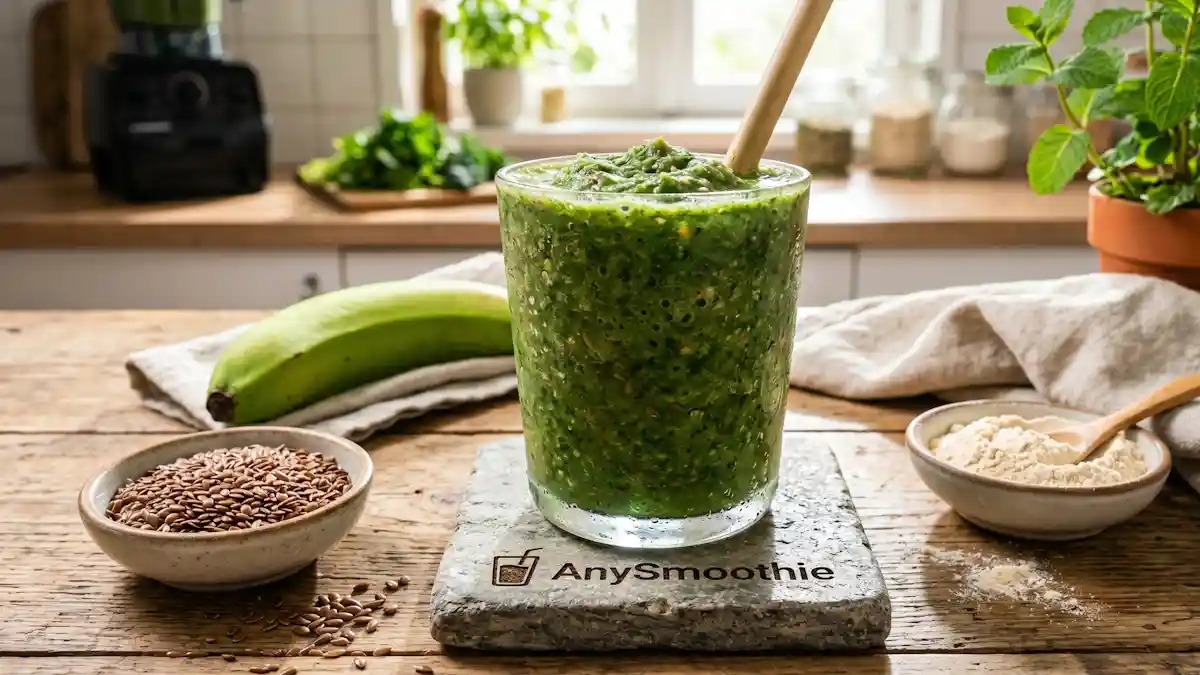
A good high fiber smoothie works like a quiet helper in your day. It keeps your stomach happy, your energy steadier, and your cravings in check.
In simple terms, a high fiber smoothie is just a blended drink packed with fruits, veggies, and add-ins that are rich in fiber. That fiber slows digestion, supports gut health, and helps you feel full longer.
This guide walks you through why fiber matters, what to put in your smoothie, easy ingredient ideas, and one simple starter recipe you can blend in minutes.
Why a High Fiber Smoothie Is Good for Your Body
A high fiber smoothie brings several benefits in one fast drink.
- More stable energy: Fiber slows how fast sugar hits your blood, so you avoid a quick spike and crash.
- Better appetite control: You stay full longer, which can support healthy weight habits.
- Gentler digestion: Fiber helps keep things moving so you feel lighter and less bloated.
- Happier gut: Some fibers act like food for good gut bacteria, which supports overall health.
Helps You Feel Full and Supports Healthy Weight
Fiber behaves a bit like a slow-burning log on a campfire. It keeps your body fueled longer than a quick sugary snack.
When you add fiber to a smoothie, digestion slows down. Your stomach empties more slowly, and your blood sugar rises more gently. That means you are less likely to feel “starving” an hour later and raid the snack drawer.
This is perfect for busy mornings. A high fiber smoothie can be a fast breakfast you drink on the go, yet it still helps control hunger and reduce random snacking.
Keeps Digestion Regular and Supports Gut Health
Fiber also acts like a gentle broom in your digestive tract. It adds bulk to your stool and helps prevent constipation.
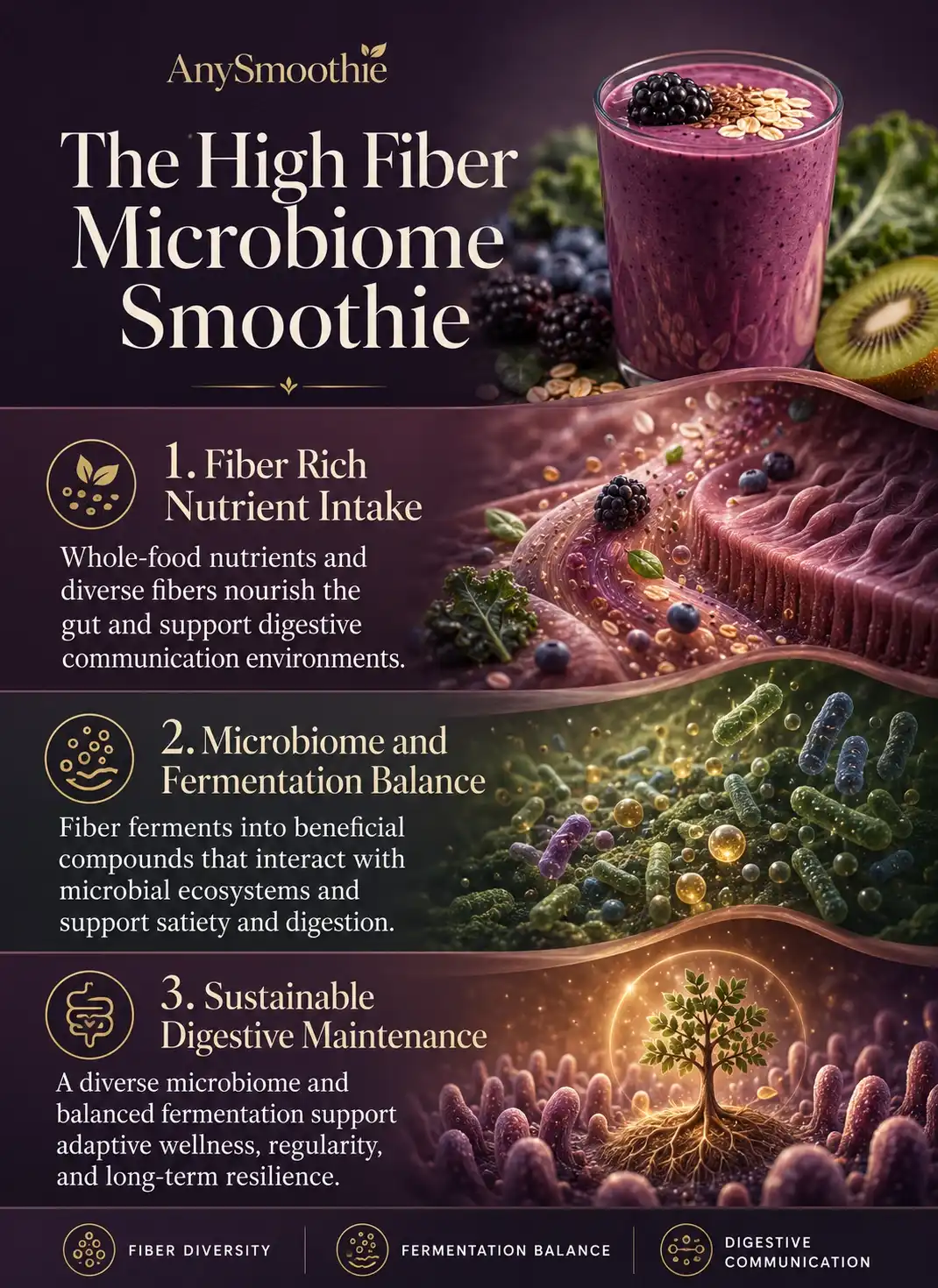
Some types of fiber feed the “good” bacteria in your gut. When those bacteria are well fed, they produce compounds that support gut comfort and overall wellness.
The result is a calmer belly, more regular bathroom trips, and less of that heavy, sluggish feeling many people get from low fiber eating.
Best High Fiber Smoothie Ingredients You Can Use Every Day
You do not need fancy powders to make a high fiber smoothie. Simple grocery store foods work very well and fit most budgets.
Fiber Rich Fruits That Taste Great in Smoothies
Great fiber friendly fruits include:
- Berries, like strawberries, blueberries, and raspberries
- Bananas
- Apples with the skin
- Pears with the skin
- Mango
Frozen fruit works just as well as fresh, often at a lower price. These fruits add natural sweetness, so you usually do not need sugar or syrups. For more ideas on tasty fruit choices, check out this guide on how to make a healthy smoothie.
Veggies That Boost Fiber Without Ruining the Taste
You can slip a lot of veggies into a smoothie without making it taste like a salad.
Good options are spinach, kale, carrots, and frozen cauliflower rice. Mild veggies like spinach and cauliflower almost disappear in flavor when you blend them with fruit.
If you are new to green smoothies, start with a small handful of greens. As you get used to the taste, you can slowly add more.
Seeds, Oats, and Extras That Pack in Even More Fiber
This is where your smoothie becomes a true fiber powerhouse.
- Chia seeds: High in fiber, also add healthy fats.
- Ground flaxseed: Supports digestion and adds healthy fats.
- Hemp seeds: Add some protein and a light nutty flavor.
- Rolled oats: Make smoothies thicker and more filling.
- Nut butter (peanut, almond, cashew): Adds fiber, fat, and protein.
Simple serving ideas: use 1 to 2 tablespoons of seeds or nut butter, or about 1/4 cup oats per smoothie.
Simple High Fiber Smoothie Formula
Once you know the basic mix, you can build almost any high fiber smoothie you like.
Quick Starter Recipe: Berry Oat High Fiber Smoothie
Ingredients
- 1 cup frozen mixed berries
- ½ medium banana
- ¼ cup rolled oats
- 1 tablespoon chia seeds
- 1 cup unsweetened almond milk
Pour the almond milk into the blender first. Add the frozen berries, banana, oats, and chia seeds, then blend until thick and creamy. Add a splash of additional almond milk for a thinner texture or a little more banana if you prefer additional sweetness.
Berries, oats, banana, and chia provide a mixture of soluble and insoluble fiber. Oats also contain beta-glucan, while chia contributes fiber and ALA omega-3 fatty acids. Increasing fiber gradually and consuming adequate fluids can make higher-fiber meals easier to tolerate.
Estimated Nutrition per Serving
- Calories: ~320 kcal
- Protein: ~8 g
- Carbohydrates: ~53 g
- Fat: ~10 g
- Fiber: ~15 g
- Sugars: ~22 g
I’d let the finished smoothie stand for only a minute or two before judging the consistency. Both chia and oats continue absorbing liquid, so a blend that initially looks slightly thin can become noticeably thicker quite quickly.
Quick Starter Recipe: Berry Oat High Fiber Smoothie
Try this easy starter recipe:
- 1 cup frozen mixed berries
- 1/2 banana
- 1/4 cup rolled oats
- 1 tablespoon chia or ground flaxseed
- 1 cup milk or plant milk
Blend until creamy. You get a thick, cold smoothie with a fruity, slightly nutty taste. Add a bit more banana or a splash of honey if you prefer it sweeter, or more liquid if you like a thinner texture.
Conclusion
Building a high fiber smoothie is simple once you know the basic formula. Fruits, a handful of veggies, plus seeds or oats can turn a quick drink into a satisfying meal.
Try one small change this week, like adding chia seeds or oats to your usual smoothie. Or blend the berry oat recipe tomorrow morning and see how long you stay full. Your future self will be glad you did.
⚠️ Safety Notes for High-Fiber Smoothies
Hydration is Mandatory: High-fiber ingredients like chia seeds and psyllium husk act as sponges. If you do not increase your water intake by at least 500ml per day when starting this protocol, you may experience severe constipation or abdominal cramping.
Gradual Introduction: If your current diet is low in fiber, jumping directly to a 15-20g fiber smoothie can cause significant bloating and gas. Start with half the recommended amount of seeds or oats and increase the dosage over 7-10 days to allow your microbiome to adapt.
Drug Absorption Interference: Highly viscous fibers can slow down or interfere with the absorption of certain oral medications (e.g., thyroid hormones, diabetes meds). Take your medications at least 1 hour before or 4 hours after consuming your high-fiber smoothie.
Oxalate Rotation: While spinach is a great fiber source, it is high in oxalates. If you have a history of calcium-oxalate kidney stones, rotate your greens with kale or romaine to keep your mineral balance safe.
Oat Sensitivity: Ensure your rolled oats are certified gluten-free if you have Celiac disease or significant gluten sensitivity to avoid triggering systemic inflammation.
FAQ
What is the difference between “High Fiber” and “Microbiome Priming”
While high fiber generally refers to volume for digestion, Microbiome Priming is a targeted biohack. It involves selecting specific types of fiber—prebiotics—that act as selective fertilizers for beneficial bacteria like Akkermansia and Bifidobacterium. By strategically layering these fibers in a smoothie, you optimize the natural pathways of fermentation, leading to increased production of Short-Chain Fatty Acids (SCFAs) that support the entire physiological system.
Why should I include resistant starch in my smoothie
Resistant starch, found in ingredients like unmodified potato starch or green banana flour, is a type of carbohydrate that “resists” digestion in the small intestine. It reaches the colon intact, where it serves as a primary fuel source for butyrate-producing bacteria. Butyrate is a critical postbiotic that supports the energy requirements of the colon’s epithelial cells and optimizes the mucosal barrier integrity.
How do I avoid bloating when starting a high fiber smoothie guide
The biochemical mechanics of bloating are often due to rapid fermentation by a microbiome that isn’t yet adapted to high fiber loads. The key to successful priming is “Low and Slow.” Start with slow-fermenting fibers like PHGG or Acacia fiber, which provide the microbial benefits without the sudden gas production. Gradually increasing the fiber complexity over 4 weeks allows your bacterial ecosystem to stabilize and scale its metabolic capacity.
What is the synergy between fiber and polyphenols
Polyphenols (found in berries and dark greens) and fiber have a “handshake” agreement in the gut. Fiber acts as a transport vehicle, protecting polyphenols from being absorbed too early in the digestive tract. This ensures they reach the lower gut, where bacteria break them down into smaller, highly bioavailable metabolites that support systemic antioxidant pathways and mitochondrial health.
Can a high fiber smoothie impact my metabolic rate
Yes, through the regulation of gut-derived hormones. When bacteria ferment high-quality fiber, they signal the release of hormones like GLP-1 and PYY. These hormones optimize the natural pathways of glucose management and satiety signaling. By priming your microbiome every morning with a fiber-dense blend, you are supporting a physiological environment that favors stable energy levels and efficient nutrient partitioning.

Medical Disclaimer: AnySmoothie content is for educational purposes only and is not a substitute for professional medical advice. Consult a healthcare provider for personalized guidance. See our full Disclaimer & Terms of Use. AI Transparency: AnySmoothie may use AI to support content development. All content undergoes human editorial review for accuracy, clarity, and editorial quality. See our full AI Transparency.