
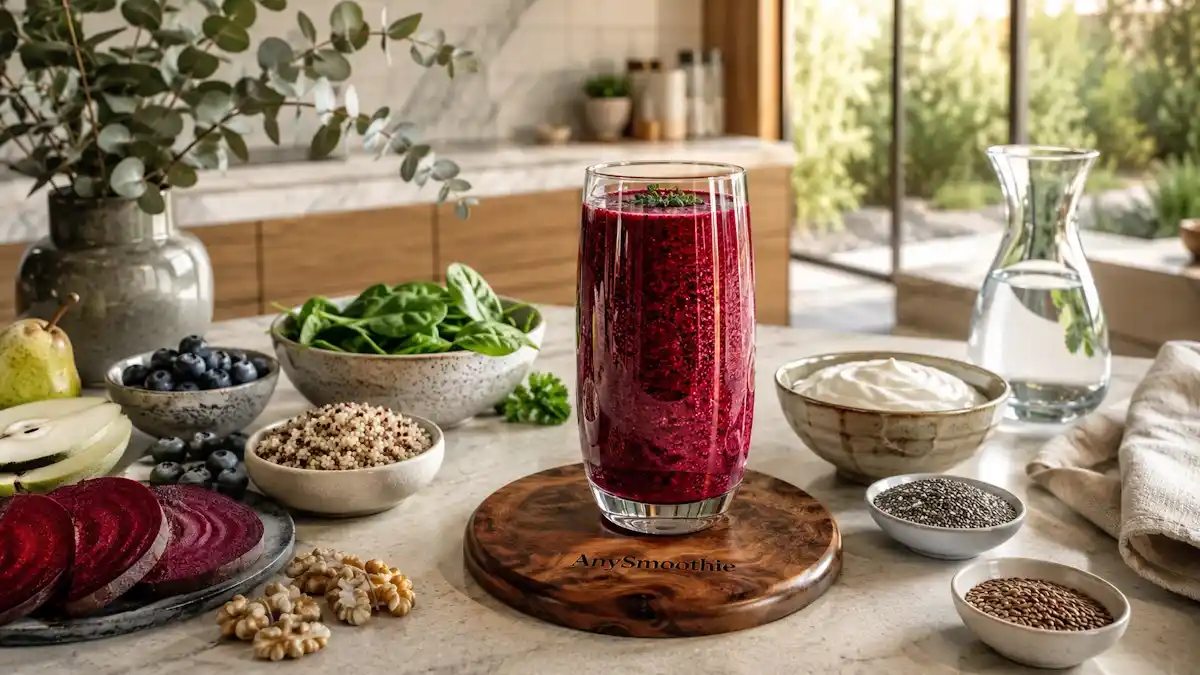
A good smoothie can turn earthy beets, leafy greens, and cooked quinoa into an easy daily food choice. If you’re interested in betaine smoothies for methylation support, the goal is to add betaine-rich ingredients while keeping the drink balanced and enjoyable.
Betaine, also called trimethylglycine (TMG), is a naturally occurring nutrient that participates in normal methylation pathways.. Below, you’ll find practical food sources, three smoothie recipes, ingredient combinations, and safety points to consider.
How Betaine May Support Healthy Methylation Pathways
Betaine, also called trimethylglycine or TMG, is a compound found in foods and human tissues. As a methyl donor, it can provide a methyl group for biochemical reactions. One recognized pathway uses betaine to help convert homocysteine back to methionine, mainly in the liver and kidneys.
Scientific reviews describe betaine as an important methyl donor involved in homocysteine metabolism while emphasizing that dietary intake is only one part of overall methylation physiology.
Methylation is involved in many normal processes, including the creation, modification, and breakdown of certain compounds. However, betaine isn’t a cure or a guaranteed answer for methylation concerns. A smoothie can add useful nutrients, but it can’t replace an overall balanced diet or personalized medical care.
Food sources include beets, beet greens, spinach, quinoa, wheat bran, and seafood. Their betaine content varies with the food, preparation method, and serving size. These rich smoothie ingredients are easy to combine with fruit, protein, and a suitable liquid.
Why Beets and Leafy Greens Work Well in Smoothies
Beets offer betaine, fiber, folate, potassium, and their familiar ruby color. Beet greens and spinach add leafy texture, folate, fiber, and minerals. Their earthy flavor can taste strong alone, but citrus, berries, apple, and ginger can balance it.
Folate and betaine are different nutrients, even though they participate in related methylation pathways. Including both in a varied recipe supports broader nutrient intake. More betaine isn’t automatically better, so portion size and overall diet still matter.
Betaine From Food Compared With Betaine Supplements
The following comparison focuses on practical smoothie use rather than exact nutrient amounts.
| Source | Typical smoothie use | Main nutritional strengths | Flavor or texture | Key considerations |
|---|---|---|---|---|
| Beets | 1/4 to 1/2 small beet | Betaine, fiber, folate, potassium | Earthy and smooth when cooked | Start with a small portion; pigments may alter urine or stool color |
| Beet greens | 1/2 to 1 cup, stems trimmed | Betaine, folate, fiber, vitamin K | Leafy and earthy | Wash well and remove tough stems |
| Spinach | 1 to 2 packed cups | Folate, fiber, minerals | Mild and soft | Increase raw greens gradually if your digestion is sensitive |
| Quinoa | 1/4 to 1/2 cup cooked | Betaine, plant protein, fiber | Creamy and filling | Cool before blending and use cooked quinoa |
| Wheat bran | 1 to 2 tablespoons | Betaine and concentrated fiber | Nutty and slightly gritty | Contains wheat and gluten |
| Betaine supplements | Amount listed on the product label | More concentrated TMG | Usually mild | Ask a qualified professional about use with health conditions, medications, or pregnancy |
3 Betaine Smoothies for Methylation Support
These recipes are food-based ideas, not medical formulas. You may also enjoy our Methylation smoothies for homocysteine balance for additional food-first ingredient ideas.
Beet, Berry, and Citrus Smoothie
Ingredients
- 1/2 small cooked beet, cooled, or 1/3 small raw beet
- 1 cup frozen berries
- 1/2 peeled orange, or 1 tablespoon lemon juice
- 3/4 cup plain yogurt or unsweetened milk
- 1/2 teaspoon grated ginger, optional
Blend all ingredients until smooth. Add a splash of milk if the mixture is too thick.
Citrus and berries soften the beet’s earthy flavor, while yogurt or milk adds protein and a smoother texture. If beets are new to you, start with a smaller portion. Beet pigments can temporarily turn urine or stool pinkish or red.
Estimated Nutrition per Serving
Estimated with half a small cooked beet, mixed frozen berries, half a medium orange, plain nonfat Greek yogurt, and without optional ginger.
- Calories: ~250 kcal
- Protein: ~17 g
- Carbohydrates: ~43 g
- Fat: ~2 g
- Fiber: ~10 g
- Sugars: ~27 g
Cooked beet usually gives this smoothie a softer, less earthy finish than raw beet. If you’re trying the combination for the first time, the cooked version also blends more easily with frozen berries and creates a noticeably smoother texture.
Green Betaine Smoothie With Spinach and Quinoa
Ingredients
- 1 cup packed spinach
- 1/2 cup cooked, cooled quinoa
- 1/2 banana
- 1/2 cup chopped cucumber
- 1 cup unsweetened milk
- 1 teaspoon lime juice, optional
Blend the milk and spinach first. Then add the quinoa, banana, cucumber, and lime juice. Continue blending until the quinoa is fully incorporated.
Quinoa adds body, fiber, and plant protein, while banana brings sweetness and a soft texture. Use unsweetened soy or pea milk when you want more protein without adding dairy.
Estimated Nutrition per Serving
Estimated with spinach, cooked quinoa, half a medium banana, cucumber, unsweetened soy milk, and without optional lime juice.
- Calories: ~320 kcal
- Protein: ~15 g
- Carbohydrates: ~51 g
- Fat: ~8 g
- Fiber: ~8 g
- Sugars: ~13 g
Beet Greens, Apple, and Ginger Smoothie
Ingredients
- 1 cup washed beet greens, tough stems removed
- 1/2 small beet, raw or cooked
- 1/2 apple, cored
- 1/2 cup pineapple
- 1/2 teaspoon fresh grated ginger
- 1 cup water or coconut water
Wash the produce well, then blend the liquid and greens before adding the remaining ingredients. Add more liquid as needed.
Pineapple and apple help soften the bitter or earthy taste of beet greens. Replace beet greens with spinach for a gentler flavor. Cooked beets and frozen pineapple also create a smoother blend.
Estimated Nutrition per Serving
Estimated with beet greens, half a small cooked beet, half a medium apple, pineapple, fresh ginger, and plain water.
- Calories: ~155 kcal
- Protein: ~4 g
- Carbohydrates: ~37 g
- Fat: ~1 g
- Fiber: ~7 g
- Sugars: ~25 g
Beet greens can be more assertive than spinach, particularly when the leaves are mature. Removing the tougher stems and blending the greens with the water first helps reduce fibrous pieces, while ripe pineapple keeps their slightly bitter character from dominating the fruit.
How to Build a Balanced Betaine Smoothie Without Overdoing It
A balanced smoothie usually needs four parts: a betaine-rich ingredient, a protein source, enough liquid, and flavor or texture boosters. Beets, beet greens, spinach, quinoa, and wheat bran can supply the first part. Yogurt, kefir, tofu, protein powder, nut butter, or seeds can make the drink more satisfying.
Fruit adds sweetness, but large portions can make a smoothie sugary and less enjoyable as part of a regular meal. Choose unsweetened milk, use whole fruit instead of juice, and include fiber-rich ingredients. A moderate serving also makes it easier to notice how your digestion responds.
Smoothies should complement meals rather than replace a varied diet by default. Rotate ingredients instead of relying on one recipe every day. If raw greens cause bloating, begin with a small handful or use cooked ingredients.
Ingredient Swaps for Taste, Diet, and Texture
For a dairy-free smoothie, use unsweetened soy milk, pea milk, or a calcium-fortified plant beverage. Silken tofu can add protein and a creamy texture. Nut-free recipes can use sunflower seed butter or pumpkin seeds instead of almond butter.
Chia seeds or ground flax can add fiber, although they also make a smoothie thicker. For less sweetness, replace some banana with cucumber or frozen cauliflower. Berries, lemon, lime, ginger, and herbs can add flavor without extra sugar. Cooked beets and frozen fruit usually blend more smoothly than firm raw produce.
Who Should Use Extra Caution With Betaine-Rich Recipes
People with kidney or liver conditions, diagnosed homocysteine concerns, digestive disorders, food allergies, or prescribed medications should ask a qualified healthcare professional before taking concentrated betaine supplements or making major dietary changes.
The betaine in a normal food portion is different from the amount in a high-dose supplement. Food sources and concentrated betaine supplements differ substantially in the amount provided per serving.
A sudden increase in fiber may cause gas, bloating, or changes in bowel habits. Increase portions gradually and stop any ingredient that causes signs of an allergic reaction. Pregnancy is another reason to discuss supplements with a qualified professional before use.
Conclusion
Betaine smoothies can make it easier to enjoy beets, greens, quinoa, fruit, and other nutrient-dense foods in one convenient drink. No single smoothie covers every nutrition need, so variety matters more than chasing a large dose of one compound.
Start with one recipe, adjust the portion and flavor, and pay attention to digestion. Before using betaine supplements or changing your diet for a specific health concern, seek personalized guidance.

Medical Disclaimer: AnySmoothie content is for educational purposes only and is not a substitute for professional medical advice. Consult a healthcare provider for personalized guidance. See our full Disclaimer & Terms of Use. AI Transparency: AnySmoothie may use AI to support content development. All content undergoes human editorial review for accuracy, clarity, and editorial quality. See our full AI Transparency.