
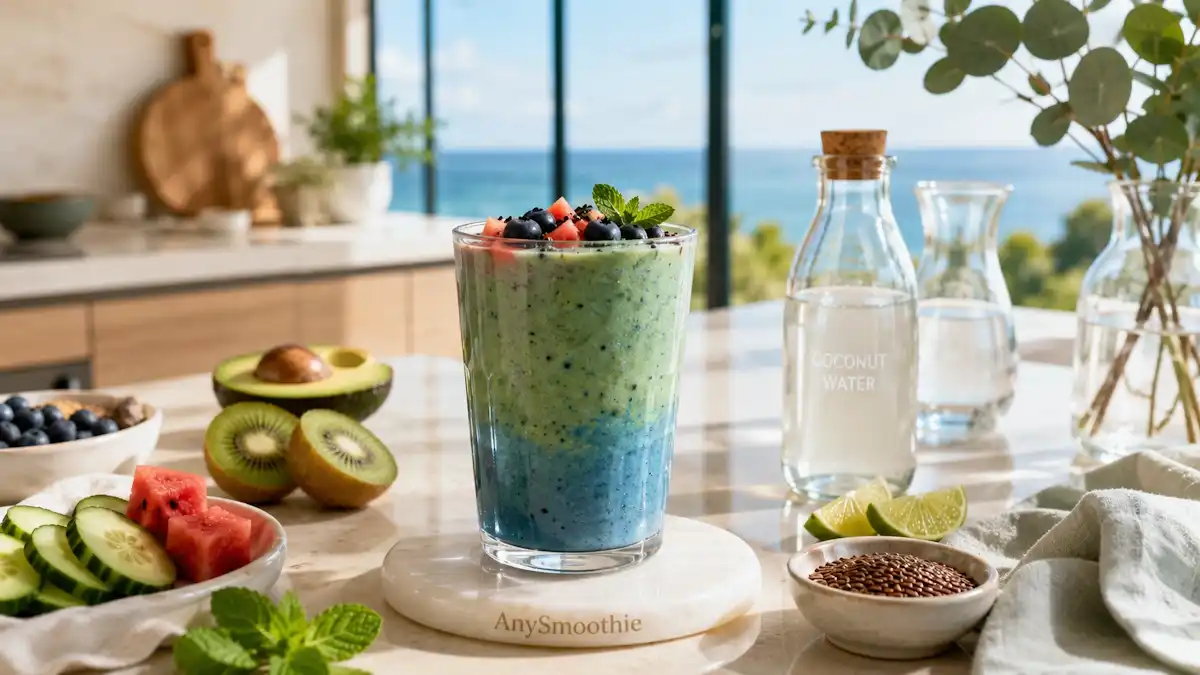
Dry, gritty, tired eyes can make a normal day feel uncomfortable. A smoothie won’t treat dry eye disease, but it can make it easier to consume fluids, electrolytes, healthy fats, and colorful produce.
These ingredients support normal hydration and nutrient intake, including the physiological systems involved in tear film maintenance. Plain water, regular meals, sleep, and professional eye care still matter. Below are three practical recipes, ingredient notes, and safety tips for building a supportive routine.
How Hydrating Smoothies May Support Comfortable Eyes
The tear film is a thin coating that protects the eye’s surface. It has three interacting layers: a watery layer that supplies moisture, an oily layer that slows evaporation, and a mucus layer that helps the tears spread evenly.
The American Academy of Ophthalmology explains that dry eye can result from reduced tear production, excessive tear evaporation, or an imbalance in the tear film, making hydration and overall eye care important parts of daily management.
Fluids from water, cucumber, kiwi, berries, and other produce contribute to your overall fluid intake. Potassium-rich foods, including kiwi, avocado, and mango, also provide an electrolyte involved in normal fluid balance. These foods don’t act as eye treatment, but they can fit into a diet that supports the body’s hydration systems.
Nutrient variety matters, too. Leafy greens provide carotenoids and other plant compounds. Carrots and mango contain beta-carotene, which the body can convert to vitamin A as needed. Vitamin C sources, such as kiwi, lime, and berries, support normal collagen formation and antioxidant pathways. Chia, flax, avocado, and walnuts supply fats, including plant-based omega-3 ALA and monounsaturated fat.
A smoothie works best beside plain water and balanced meals, not instead of them. If you have diabetes, food allergies, kidney concerns, or a fluid restriction, ask a qualified health professional before changing your diet.
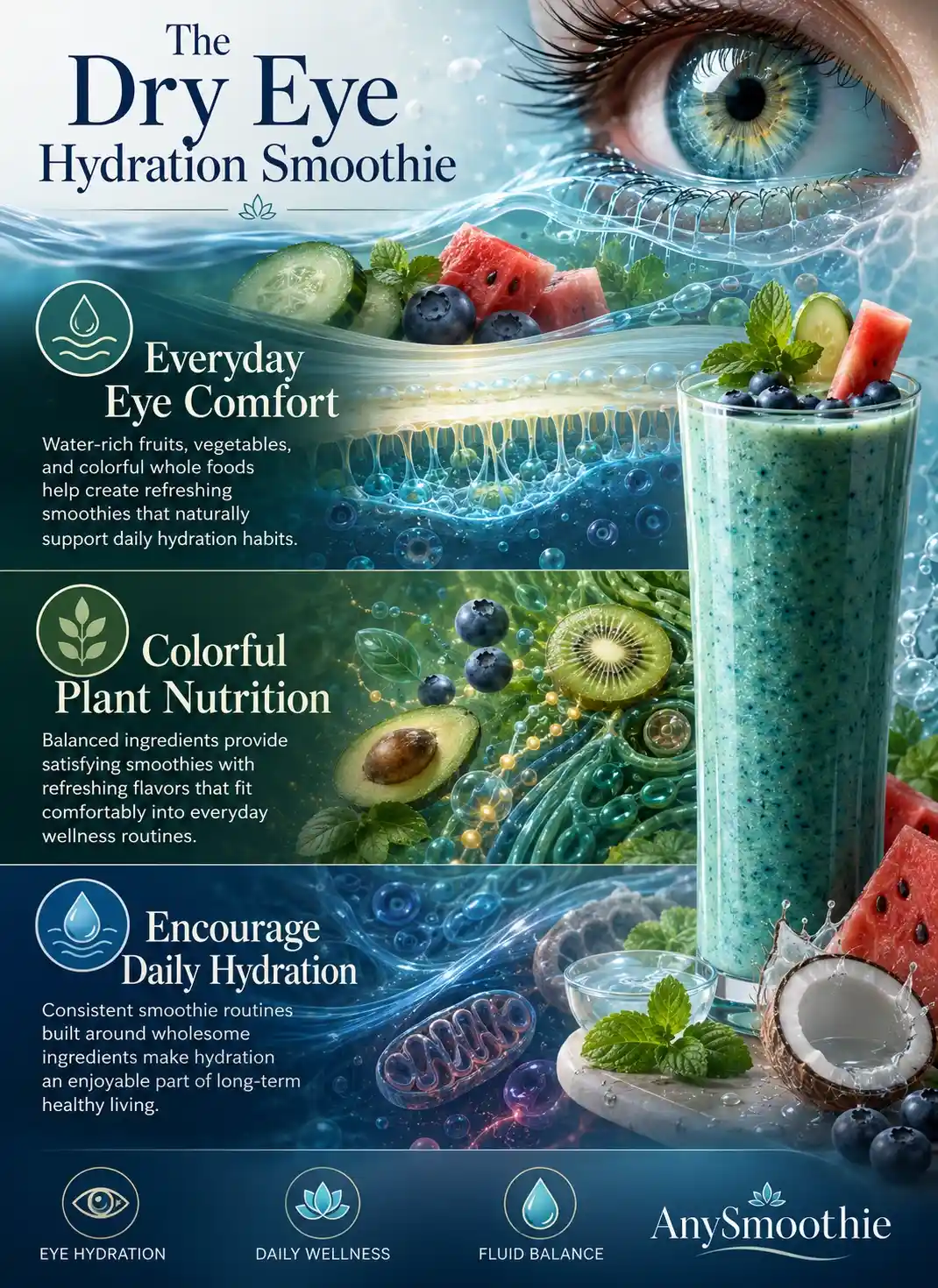
3 Hydrating Smoothies for Dry Eye Support
Use whole produce and unsweetened liquids to keep added sugar low. Unsweetened dairy or fortified plant milk can add fluid, protein, calcium, or vitamin D, depending on the product.
| Smoothie | Main hydration ingredients | Key nutrient focus | Healthy fat source | Best time to enjoy |
|---|---|---|---|---|
| Cucumber Kiwi Refresher | Cucumber, water | Potassium, leafy greens | Yogurt | Morning or after light activity |
| Berry Chia Flax Blend | Berries, soy milk, water | Fiber, vitamin C, polyphenols | Chia and flax | Breakfast or afternoon |
| Mango Carrot Avocado | Mango, kefir, water | Beta-carotene, potassium | Avocado | With a meal |
Cucumber, Kiwi, and Spinach Refresher
Ingredients
- 1/2 medium cucumber
- 1 peeled kiwi
- 1 packed cup baby spinach
- 1 tablespoon lime juice
- 1/2 cup plain Greek yogurt or unsweetened yogurt
- 3/4 cup water or unsweetened coconut water
Add everything to a blender and process until smooth. Add another splash of liquid if the spinach or cucumber leaves a thick texture.
Cucumber and kiwi contribute water and potassium, while spinach adds leafy-green nutrients. Yogurt brings protein, which can make this light smoothie more satisfying.
Lime gives the blend a bright finish. If acidic foods bother your stomach, reduce the lime or replace it with a small amount of water and extra cucumber.
Estimated Nutrition per Serving
Estimated with cucumber, kiwi, spinach, lime juice, plain nonfat Greek yogurt, and water.
- Calories: ~145 kcal
- Protein: ~13 g
- Carbohydrates: ~21 g
- Fat: ~1 g
- Fiber: ~5 g
- Sugars: ~12 g
Cucumber releases quite a bit of liquid once fully blended, so resist adding extra water at the beginning. Blend everything first, then adjust the consistency; this keeps the refresher light without accidentally making the flavor too diluted.
Berry, Chia, and Flax Hydration Blend
Ingredients
- 1 cup frozen blueberries or mixed berries
- 1 cup unsweetened fortified soy milk
- 1 tablespoon chia seeds
- 1 tablespoon ground flaxseed
- 1/2 cup water
Blend the soy milk, water, and berries first. Add the chia and flax, then blend again until combined.
The berries provide colorful plant compounds, while soy milk supplies fluid and protein. Chia and flax add fiber and plant omega-3 ALA, which support overall nutrition and natural pathways related to cell protection.
Both seeds absorb liquid after blending. Add more water for a thinner texture, and continue drinking fluids during the day rather than relying on the smoothie alone.
Estimated Nutrition per Serving
Estimated with frozen blueberries, unsweetened fortified soy milk, chia seeds, ground flaxseed, and water.
- Calories: ~310 kcal
- Protein: ~13 g
- Carbohydrates: ~39 g
- Fat: ~13 g
- Fiber: ~13 g
- Sugars: ~17 g
Mango, Carrot, and Avocado Creamy Smoothie
Ingredients
- 1/2 cup chopped mango
- 1/2 cup chopped carrot
- 1/4 avocado
- 3/4 cup unsweetened kefir or fortified oat milk
- 1/2 teaspoon fresh grated ginger
- 1/2 cup water
Blend until the carrot is fully broken down and the texture is creamy.
Mango and carrots provide beta-carotene, which the body can convert to vitamin A as needed. Avocado adds monounsaturated fat and gives the drink a smooth consistency.
Kefir or oat milk changes the flavor and nutrient profile, so check labels for added sugar. A smaller portion can work better if you’re monitoring total carbohydrate or natural sugar intake.
Estimated Nutrition per Serving
Estimated with mango, raw carrot, 1/4 medium avocado, plain unsweetened low-fat kefir, fresh ginger, and water.
- Calories: ~250 kcal
- Protein: ~9 g
- Carbohydrates: ~35 g
- Fat: ~10 g
- Fiber: ~7 g
- Sugars: ~23 g
Raw carrot can leave this smoothie slightly coarse even when the avocado is creamy. Cutting it into thin pieces before blending—or using cooled, lightly steamed carrot when convenient—produces a silkier texture without changing the mango-avocado character of the drink.
How to Choose Ingredients and Build a Daily Hydration Routine
Choose the recipe that fits your taste, dietary pattern, and schedule. Whole fruit usually provides more fiber than juice, while unsweetened liquids help control added sugar. Keep calorie-dense ingredients measured, especially avocado, seeds, nut butters, and full-fat dairy.
A balanced smoothie usually includes a liquid, produce, protein, fiber, and a modest amount of fat. That combination can provide steadier nourishment than a drink made mostly from fruit and juice. Still, smoothies are only one part of daily hydration. Drink water regularly, eat normal meals, take screen breaks, sleep adequately, and keep indoor air comfortable when possible.
Common mistakes include using juice as the main liquid, adding syrups or sweetened yogurt, skipping protein, and assuming that more supplements are always better. Food-first variety is often easier to manage, and concentrated supplements can interact with health conditions or medications.
Hydration-focused smoothies can support a healthy eating pattern, but they cannot identify or correct the cause of persistent eye symptoms.
Simple Swaps for Allergies, Vegan Diets, and Lower Sugar
Use fortified soy or pea milk instead of dairy-based yogurt or kefir. Pumpkin seeds or hemp hearts can replace chia or flax, although their texture and nutrient profiles differ. For less natural sugar, choose berries instead of mango and reduce the fruit portion without removing the liquid.
Water can replace coconut water when you need to limit potassium or sugar. Check plant milk and yogurt labels for added sugar, protein, calcium, and vitamin D. If you have a diagnosed condition or a prescribed diet, use those labels with guidance from your health professional.
When a Smoothie Is Not Enough
Dry eye symptoms can have many causes, including prolonged screen use, contact lenses, environmental dryness, medication effects, eyelid problems, and other health conditions. Nutrition can’t identify or resolve the underlying cause. The National Eye Institute also notes that persistent dry eye symptoms deserve a professional evaluation because they may have multiple underlying causes requiring different approaches.
Arrange an eye-care evaluation when symptoms continue, worsen, or interfere with daily activities. Sudden vision changes, severe eye pain, an eye injury, marked redness, strong light sensitivity, or discharge require prompt medical attention. A smoothie can support your nutrition routine while an eye-care professional evaluates what your eyes need.
Conclusion
These recipes use three practical approaches: water-rich produce, colorful plant foods, and balanced healthy fats. Hydrating smoothies for dry eye support can make nutritious fluids easier to consume, but they aren’t a standalone treatment.
Choose one recipe, adjust it to your dietary needs, and drink water throughout the day. If gritty, painful, or changing eye symptoms persist, seek guidance from an eye-care professional.
🛡️ Safety Notes & Dietary Interactions
- Nutrition Supports, Not Treats: Hydrating smoothies can contribute fluids, healthy fats, vitamins, minerals, and plant compounds that support overall nutrition, but they do not treat dry eye disease or replace professional eye care. Persistent or worsening symptoms should be evaluated by an eye-care professional.
- Adjust Ingredients to Your Health Needs: People with kidney disease, diabetes, food allergies, lactose intolerance, or prescribed fluid or potassium restrictions should choose ingredients that match their healthcare provider’s recommendations. Smoothie recipes can be easily modified to fit individual dietary needs.
- Be Careful With Supplements: Whole foods provide nutrients together with fiber and other naturally occurring compounds. High-dose omega-3, vitamin A, or antioxidant supplements may not be appropriate for everyone and can interact with medications or medical conditions. Discuss supplements with a qualified healthcare professional before use.
- Hydration Is a Daily Habit: Smoothies work best alongside regular water intake, balanced meals, adequate sleep, screen breaks, and appropriate environmental humidity. Long-term eye comfort depends on many lifestyle and medical factors, not on a single drink.
FAQ
Can smoothies help relieve dry eyes?
Smoothies can support overall hydration and nutrient intake by providing fluids, healthy fats, vitamins, minerals, and colorful fruits and vegetables. However, they do not treat dry eye disease or replace artificial tears, prescribed therapies, or professional eye care when symptoms persist.
Which ingredients are good for hydrating smoothies?
Water-rich foods such as cucumber, kiwi, berries, watermelon, leafy greens, and citrus fruits work well. Pairing these with protein sources like yogurt or fortified soy milk and healthy fats such as chia seeds, flaxseed, walnuts, or avocado creates a more balanced smoothie.
Are omega-3 foods helpful in dry eye smoothies?
Foods containing plant-based omega-3 ALA, including chia seeds, ground flaxseed, and walnuts, contribute healthy fats as part of a balanced eating pattern. While these foods support overall nutrition, no smoothie recipe has been proven to prevent or treat dry eye disease.
Should I use fruit juice or whole fruit?
Whole fruit is generally the better choice because it retains fiber, which slows digestion and creates a more satisfying smoothie. Fruit juice contains much less fiber and can increase the natural sugar concentration without adding the same nutritional balance.
When should I see an eye-care professional for dry eyes?
Persistent dryness, worsening discomfort, blurred vision, severe pain, marked redness, light sensitivity, eye injury, or discharge should be evaluated promptly by an eye-care professional. Nutrition can support general health, but it cannot identify or correct the underlying cause of ongoing eye symptoms.

Medical Disclaimer: AnySmoothie content is for educational purposes only and is not a substitute for professional medical advice. Consult a healthcare provider for personalized guidance. See our full Disclaimer & Terms of Use. AI Transparency: AnySmoothie may use AI to support content development. All content undergoes human editorial review for accuracy, clarity, and editorial quality. See our full AI Transparency.