

Eating after jaw surgery can feel like solving a daily puzzle, especially when chewing is limited or your jaw is wired or banded. Smoothies for jaw surgery recovery can provide calories, protein, fluids, and tolerated nutrients in a form you can adjust.
Your surgeon’s instructions come first. Confirm the allowed texture, ingredients, straw use, and food safety steps with your oral surgeon or dietitian. A thin liquid may be appropriate for one patient, while another may need a thicker, spoonable blend.
How to Build a Recovery-Friendly Smoothie
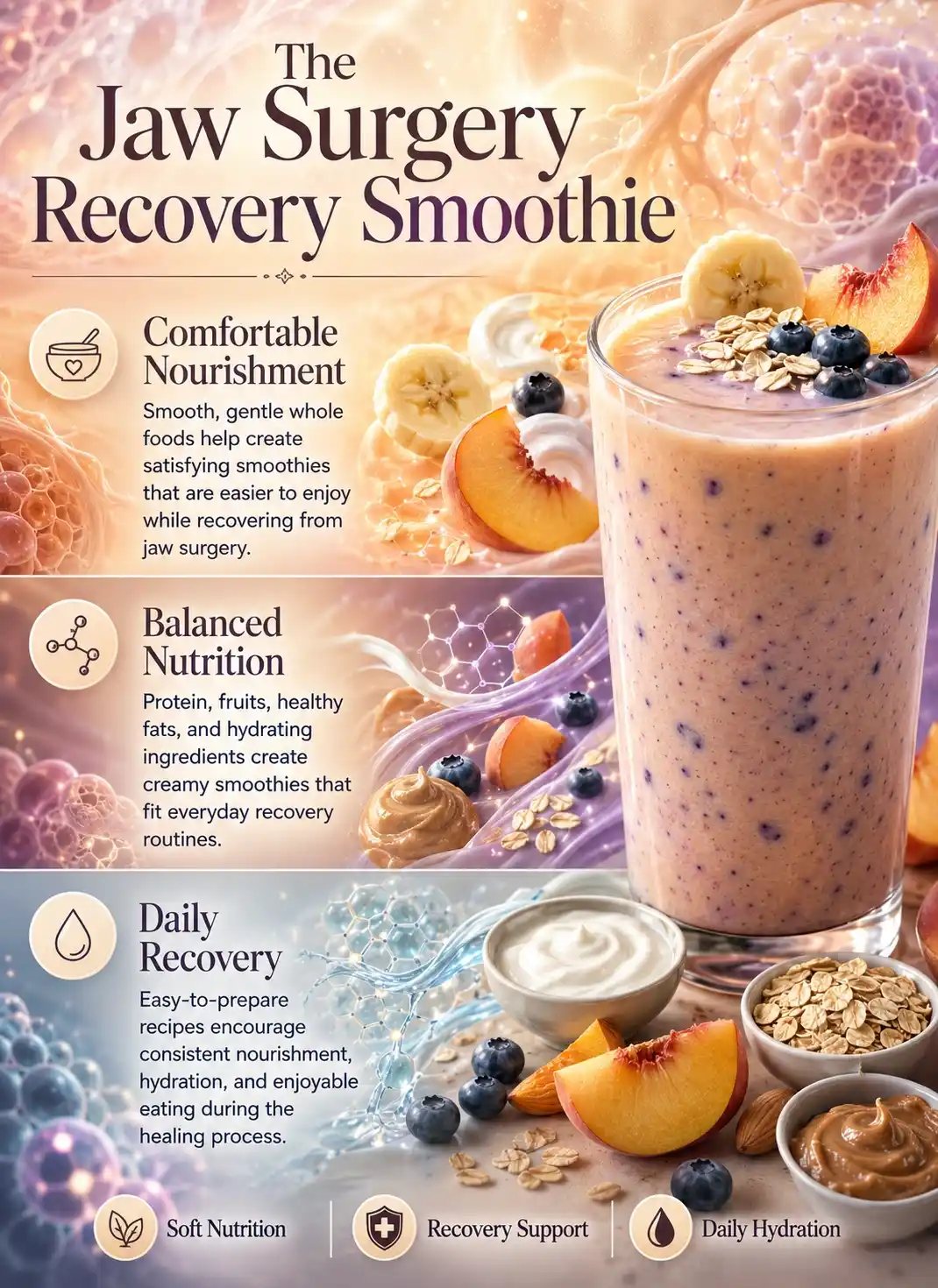
A useful formula includes one protein base, one calorie source, soft produce, and enough liquid for the approved consistency. Yogurt, milk, silken tofu, or fortified soy milk can provide protein. Banana, avocado, cooked oats, or smooth nut butter can add energy and body.
Protein supports normal tissue maintenance, while fluids help you meet hydration needs when eating and drinking feel difficult. Carbohydrates can also provide usable energy. These roles support normal physiological processes, but a smoothie can’t guarantee faster healing.
The NIH overview of protein and amino acids provides general nutrition information. Your personal protein and fluid needs may differ because of your procedure, medications, health conditions, and prescribed diet.
Choose Ingredients That Blend Smooth and Stay Gentle
Soft foods usually need less preparation, but peeling, cooking, or straining can improve the final texture. Bananas, applesauce, avocado, yogurt, silken tofu, cooked oats, and smooth nut butter are common choices. Milk and fortified soy milk can also add protein and fluid without extra chewing.
Seeds and rough particles need more care. Strain raspberries and blackberries when necessary, and blend leafy greens longer than soft fruit. Skip granola, coconut flakes, whole seeds, chunky nut butter, and ice pieces until your care team allows them.
Acidic citrus and pineapple may sting sensitive tissues. Very cold or very hot drinks can also feel unpleasant after surgery. Use room-temperature or mildly chilled ingredients if that feels better.
For allergies, replace dairy with a suitable fortified alternative and replace nut butter with an approved seed-free option. Check labels for hidden allergens, sweeteners, and ingredients that conflict with your diet.
Make the Texture Match Your Surgeon’s Instructions
A thin liquid pours quickly. A smooth pourable smoothie has more body, while a spoonable blend is thicker and holds its shape briefly. Don’t assume any of these textures is safe for you. Ask your surgeon or dietitian before changing consistency.
Some patients are told not to use straws because suction may be restricted after oral surgery. A cup, spoon, or approved syringe may be safer for the prescribed stage. Take small sips and go slowly. Stop if you develop pain, coughing, choking, or unusual discomfort.
If your jaw is banded or wired, follow the emergency instructions provided by your surgical team. Keep required supplies nearby, and don’t alter the plan because a recipe feels convenient. The following recipes apply these principles using soft, easy-to-blend ingredients that can be adjusted to your recovery stage.
3 Smoothies for Jaw Surgery Recovery
These recipes use soft ingredients that blend easily. Remove skins, cook oats thoroughly, strain seeds, and add liquid until the texture matches your current diet stage.
| Smoothie | Main protein source | Best use | Texture adjustments | Key caution |
|---|---|---|---|---|
| Banana and Greek yogurt | Greek yogurt and milk | Higher-protein option | Add milk to thin | Use smooth nut butter only if approved |
| Berry oat | Yogurt and milk | More calories and a thicker drink | Cook oats, blend well, strain seeds | Berry seeds and pulp may irritate |
| Avocado green | Yogurt, tofu, or soy milk | Creamy, mild option | Remove skins and blend spinach fully | Avoid acidic fruit and coarse greens |
| Customizable base | Yogurt, milk, tofu, or approved protein liquid | Adapting to your diet stage | Adjust liquid, strain, or spoon-feed | Follow allergies and surgical restrictions |
For post-surgery warning signs, follow the instructions from your surgical team. Contact them if you can’t keep fluids down, dehydration becomes a concern, fever develops, breathing is difficult, or symptoms feel urgent. The NHS oral surgery recovery guidance also advises patients to seek help when recovery symptoms worsen or become concerning.
Clean preparation matters too. The USDA food safety basics covers safe handling, cleaning, and refrigeration practices that apply to smoothie ingredients.
Conclusion
The most useful smoothies for jaw surgery recovery are smooth, nourishing, easy to thin, and compatible with your surgeon’s instructions. Build them around protein, calories, fluids, and produce you tolerate well.
There isn’t one recipe for every patient. Texture, straw restrictions, allergies, mouth sensitivity, and medical needs take priority over convenience. Choose one simple recipe, prepare it safely, and confirm the plan with your care team before making changes.
🛡️ Safety Notes & Dietary Interactions
- Follow Your Surgical Instructions: Your oral surgeon’s or dietitian’s guidance always takes priority over any smoothie recipe. Follow recommendations for texture, temperature, straw use, and approved foods, as these vary depending on the procedure and stage of healing.
- Prioritize Safe Texture: Blend ingredients until completely smooth and strain the mixture if necessary. Avoid seeds, fruit skins, crunchy nut butters, ice chunks, coarse fibers, or any particles that could irritate surgical sites or interfere with safe swallowing during recovery.
- Meet Nutrition and Hydration Needs: Protein, calories, and fluids all support normal recovery after surgery. If you’re unable to meet your nutrition goals, have persistent nausea, difficulty swallowing, dehydration, or ongoing weight loss, contact your healthcare team for individualized nutritional guidance.
- Watch for Recovery Concerns: Seek prompt medical advice if you develop increasing swelling after the expected recovery period, fever, uncontrolled bleeding, severe pain, difficulty breathing, inability to keep fluids down, or any symptoms your surgeon identified as requiring immediate attention.
FAQ
What is the best smoothie after jaw surgery?
The best smoothie is one that matches your surgeon’s recommended texture while providing protein, calories, fluids, and nutrients. Greek yogurt, milk or fortified plant milk, banana, avocado, cooked oats, and smooth nut butters are common choices because they blend easily and create a comfortable consistency for many recovery stages.
How much protein should a recovery smoothie provide?
Many recovery smoothies aim to provide approximately 20 to 30 grams of protein when used as a meal or substantial snack, although individual needs vary. Greek yogurt, milk, silken tofu, protein powders, or fortified soy products can help increase protein intake when recommended by your healthcare team.
Can I use a straw after jaw surgery?
Not always. Some oral surgery procedures require patients to avoid straws because suction may interfere with healing, while other procedures have different recommendations. Always follow your surgeon’s instructions regarding cups, spoons, syringes, or straw use rather than relying on general advice.
Which ingredients should I avoid during jaw surgery recovery?
Until your healthcare team approves them, avoid crunchy ingredients, seeds, fruit skins, granola, coconut flakes, chunky nut butters, large ice pieces, and coarse leafy greens. Acidic fruits may also irritate sensitive tissues during early recovery, depending on your individual healing progress and comfort.
How often should I drink recovery smoothies after jaw surgery?
Many people use several smaller smoothies throughout the day because smaller portions are often easier to tolerate than large meals during recovery. Your exact schedule should depend on your appetite, prescribed diet stage, hydration needs, and the recommendations provided by your surgeon or registered dietitian.

Medical Disclaimer: AnySmoothie content is for educational purposes only and is not a substitute for professional medical advice. Consult a healthcare provider for personalized guidance. See our full Disclaimer & Terms of Use. AI Transparency: AnySmoothie may use AI to support content development. All content undergoes human editorial review for accuracy, clarity, and editorial quality. See our full AI Transparency.