
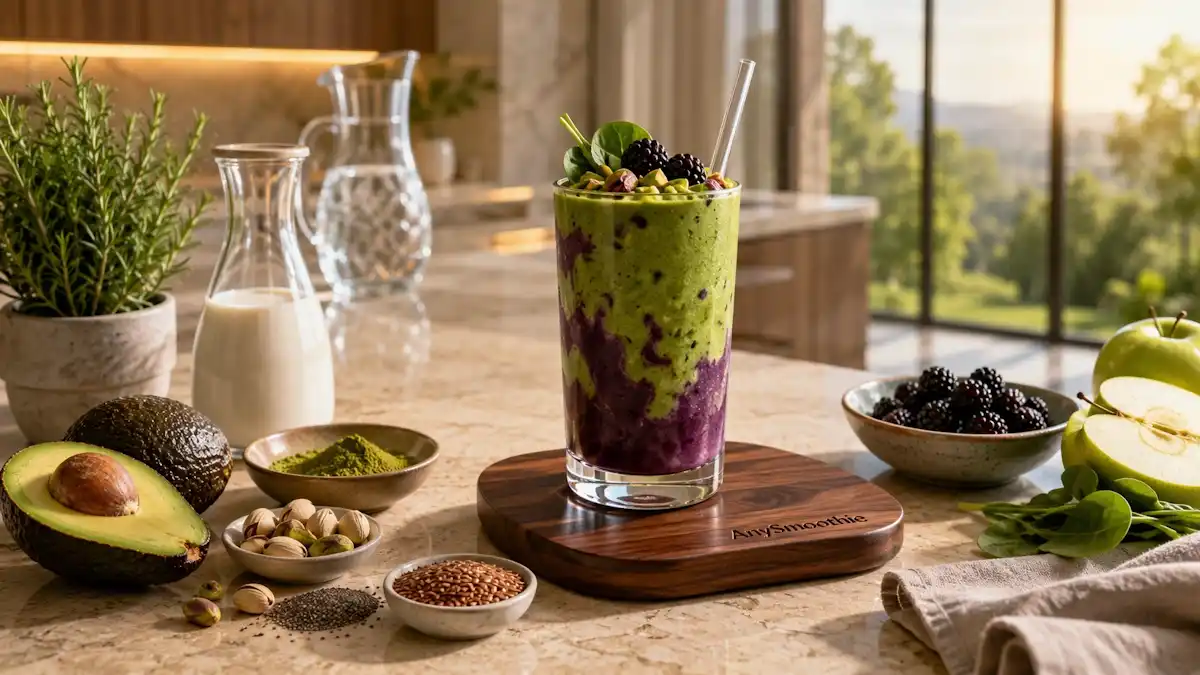
Fat oxidation means your body is using fat for fuel. That happens all day, but the mix of foods you eat and the way you train can change how smooth that process feels.
These smoothies are not a quick fix, and they are not built to force a result. They’re meant to support the body’s natural energy use with protein, fiber, healthy fats, and smart carbs, so your energy stays steadier and your workouts feel better.
What makes a smoothie support fat oxidation?
The basic idea is simple: keep your blood sugar steadier, avoid a big energy spike, and give your muscles the fuel they need at the right time. A smoothie that is mostly fruit can taste good, but it often fades fast. A better blend feels more like a meal in a glass.
Research on diet and exercise shows that fat use shifts with both food intake and workout intensity, as explained in Optimizing fat oxidation through exercise and diet. That’s why the ingredient mix matters more than any one superfood.
A smoothie helps most when it feels like a balanced meal, not a sugar rush.
Balance protein, fiber, and fats first
Protein gives the smoothie staying power. It helps with fullness and supports muscle tissue, which matters if you train regularly. Greek yogurt, skyr, whey, soy protein, and pea protein all work well.
Fiber slows digestion and makes the drink less likely to hit and fade. Chia seeds, ground flax, berries, and oats all help here. Healthy fats, like avocado or nut butter, add creaminess and make the blend more satisfying.
A simple base like how to make a yogurt smoothie base is a good starting point if you want something easy and high in protein.
Use carbs with purpose, not in excess
Carbs still belong in the mix. The trick is choosing them on purpose. Fruit brings flavor, vitamins, and some fiber. Oats can help if you need a slower, more filling blend.
Timing matters too. A smoothie before training can use a little more fruit or oats. A rest-day smoothie may work better with less starch and more protein. The GSSI review on nutritional factors that affect fat oxidation rates during exercise explains that intensity changes what fuel your body leans on.
Too much added sugar works against stable energy. Juice, sweetened yogurt, and syrup can turn a good smoothie into a fast sugar drink.
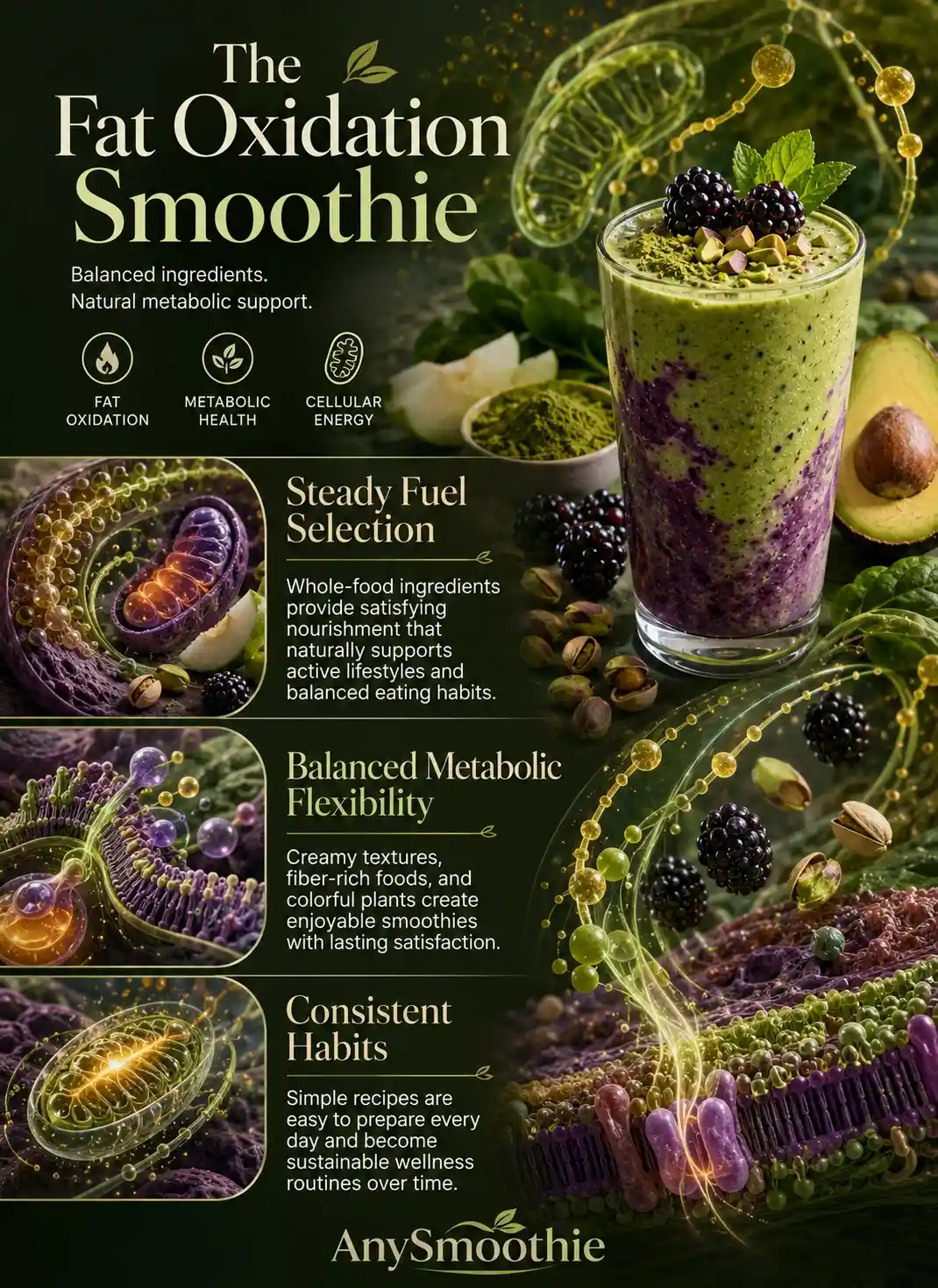
Best ingredients for smoothies for fat oxidation support
The best ingredients are easy to find and easy to repeat. You do not need a long grocery list. You need a few reliable parts that work together.
| Ingredient group | Main benefit | Best amount | Flavor role | Best use case |
|---|---|---|---|---|
| Greek yogurt or skyr | High protein and creamy texture | 3/4 to 1 cup | Tangy, rich | Morning or recovery |
| Protein powder | Easy way to raise protein | 1 scoop | Neutral, depends on brand | Fast blend, post-workout |
| Chia or flax | Fiber plus thickness | 1 to 2 tbsp | Mild, nutty | Breakfast or snack |
| Avocado | Creaminess and healthy fat | 1/4 to 1/2 avocado | Soft, mellow | More filling smoothie |
| Nut butter | Fat, texture, and flavor | 1 tbsp | Roasted, nutty | Pre-workout or snack |
| Oats | Slower carbs and body | 1/4 cup | Mild, hearty | Morning or training day |
Protein sources that keep the blend steady
Protein is the anchor. Whey blends fast and stays smooth. Greek yogurt and skyr give a thicker texture and a little tang. Kefir works if you want a thinner drink with a light finish. Soy and pea protein are solid dairy-free options, and they fit well in easy vegan smoothie recipes.
If you want a smoothie that feels balanced, aim for about 20 to 30 grams of protein.
Fiber and healthy fats that slow the rush
Chia seeds thicken fast, so start with 1 tablespoon. Ground flax brings fiber and a mild nutty flavor. Avocado makes a smoothie feel richer without adding sweetness. Nut butter is useful, but a spoonful is enough. Oats work best in smaller amounts, usually 1/4 cup, because they add body fast.
A little goes a long way here. Too much of these ingredients can make the smoothie heavy.
Flavor boosters that do more than taste good
Cinnamon adds warmth and helps you cut back on sweetener. Ginger gives brightness. Cocoa makes the drink taste fuller without adding sugar. Matcha and coffee add a more focused, bitter edge that works well in pre-workout blends.
Berries do a lot with very little. They bring color, fiber, and a tart note that keeps the smoothie from tasting flat. A handful of spinach or kale fades into the background once the fruit and cocoa are in the mix.
3 Smoothies for fat oxidation support
How to build your own smoothie without overdoing sugar
A simple formula helps more than guesswork: protein first, then fiber or fat, then fruit, then liquid. That order keeps the drink balanced and makes it easier to repeat.
A practical blend looks like this: one protein base, one fiber source, one healthy fat, one fruit, and one unsweetened liquid.
Common mistakes that work against your goal
- Too much juice, which pushes sugar higher than needed.
- Flavored yogurt with added sugar, which hides a dessert-style profile.
- Oversized portions, especially with nut butter, oats, and fruit all at once.
- Smoothie bowls that are really sweets in disguise.
If your smoothie tastes like dessert every day, it probably leans too far from balance.
Conclusion
The best smoothies for fat oxidation support are built for steadier energy, not bigger sweetness. When you balance protein, fiber, healthy fats, and carbs with purpose, the drink fits your day better and supports your training better too.
Try the three blends, then adjust based on hunger, workout timing, and how long the energy lasts. Consistency beats perfection here, and a few solid formulas are enough to keep you on track.
🛡️ Safety Notes & Dietary Interactions
- Match the Smoothie to Your Activity Level: Fat oxidation naturally changes with exercise intensity, meal timing, and overall energy intake. Adjust carbohydrate portions to your training demands instead of following a single recipe every day, since different workouts require different fueling strategies.
- Use Healthy Fats in Moderation: Avocado, nuts, seeds, and nut butters contribute valuable nutrients, but they are also calorie-dense. Moderate portions help create a balanced smoothie that supports satiety without becoming unnecessarily heavy or exceeding your daily energy needs.
- Consider Medical Conditions and Medications: People with diabetes, kidney disease, digestive disorders, or those following medically prescribed diets should personalize smoothie ingredients with guidance from a qualified healthcare professional. Individual nutrition needs always take priority over general wellness recommendations.
- Support Fat Oxidation Through Lifestyle: No smoothie can force your body to burn more fat on its own. Regular physical activity, adequate sleep, balanced nutrition, sufficient protein intake, and consistent eating habits all contribute to healthy metabolic flexibility and normal fat utilization throughout the day.
FAQ
What does fat oxidation actually mean?
Fat oxidation is the process of using stored or dietary fat as a source of energy. Your body relies on fat for fuel throughout the day, particularly during rest and lower-intensity activity, while the balance between fat and carbohydrate use naturally shifts depending on exercise intensity, meal timing, and overall energy availability.
Which smoothie ingredients best support fat oxidation?
Balanced smoothies generally include a source of protein, healthy fats, fiber, and moderate amounts of whole-food carbohydrates. Greek yogurt, protein powder, chia seeds, flaxseed, avocado, berries, spinach, oats, and unsweetened milk alternatives work well together because they provide steady energy rather than relying primarily on fast-digesting sugars.
Should I avoid carbohydrates if my goal is fat oxidation?
No. Carbohydrates remain an important fuel source, especially for moderate and high-intensity exercise. Instead of eliminating them, focus on choosing appropriate portions of whole fruits, oats, and other minimally processed carbohydrates while balancing them with protein, healthy fats, and fiber to create a steadier nutritional profile.
Is a fat oxidation smoothie better before or after exercise?
It depends on your training goals. Before exercise, a lighter smoothie with moderate carbohydrates and protein may provide accessible fuel without feeling too heavy. After exercise, adding sufficient protein and appropriate carbohydrates supports recovery and glycogen replenishment while still fitting into an overall balanced nutrition plan.
Can drinking these smoothies help me lose body fat?
A smoothie alone does not cause body fat loss. Weight management depends on overall eating habits, physical activity, sleep quality, stress management, and long-term energy balance. A well-designed smoothie can support those habits by providing satisfying nutrition that is easier to repeat consistently, but it should be viewed as one component of a healthy lifestyle rather than a standalone solution.

Medical Disclaimer: AnySmoothie content is for educational purposes only and is not a substitute for professional medical advice. Consult a healthcare provider for personalized guidance. See our full Disclaimer & Terms of Use. AI Transparency: AnySmoothie may use AI to support content development. All content undergoes human editorial review for accuracy, clarity, and editorial quality. See our full AI Transparency.