
You sit at your desk in April 2026. Endless work calls buzz. Notifications ping nonstop. Your shoulders tense. Energy crashes mid-afternoon. That’s chronic stress in action. It spikes cortisol and drains key nutrients.
A stress relief smoothie offers a quick fix. These blends pack adaptogens and minerals. They calm cortisol fast and recharge adrenals. Think nutrient partitioning for better uptake. Fats enable liposomal transport. This primes mitochondria for steady energy. You get metabolic efficiency without crashes.
These smoothies target the HPA axis. They build resilience. You’ll find recipes below. Pair them with vagus nerve hacks for deeper calm. Ready to sip your way to focus?
The Cortisol Drain: How Chronic Stress Depletes Vital Micronutrients
Chronic stress hits hard. Cortisol surges through the HPA axis. This overloads your body. It pulls magnesium, vitamin C, and B vitamins for survival mode. Repair work stops.
In 2026, fatigue and brain fog plague many. Shaky energy follows. Your body prioritizes fight-or-flight. Nutrient partitioning shifts resources away from focus and mood. Metabolic efficiency drops. You feel it in poor sleep and scattered thoughts.
Studies show ashwagandha KSM-66 cuts cortisol by 11 to 33 percent. Magnesium supports nerve calm. These losses build over time. A daily smoothie restores them.
The HPA Axis: Nutrients that Modulate the Fight-or-Flight Response
Key compounds calm the HPA axis. They ease fight-or-flight overdrive. Ashwagandha KSM-66 lowers cortisol. L-theanine boosts alpha waves. It crosses the blood-brain barrier for calm focus. Magnesium threonate stands out. This form reaches the brain best. It sharpens focus without drowsiness.
Here’s a quick comparison of these stress-relief compounds:
| Compound | Primary Mechanism | Impact on Focus | Best Time for Intake | Best Smoothie Pairing |
|---|---|---|---|---|
| Magnesium Threonate | Crosses blood-brain barrier | Sharpens without drowsiness | Afternoon | Cacao fats |
| Ashwagandha KSM-66 | Cortisol reduction | Steady, no jitters | Morning | Banana creaminess |
| L-Theanine | Alpha-wave promotion | Jitter-free calm | Anytime | Matcha greens |
Magnesium threonate excels as a brain-specific relaxant.
Adrenal Recovery: Building Resilience with Magnesium and Vitamin C
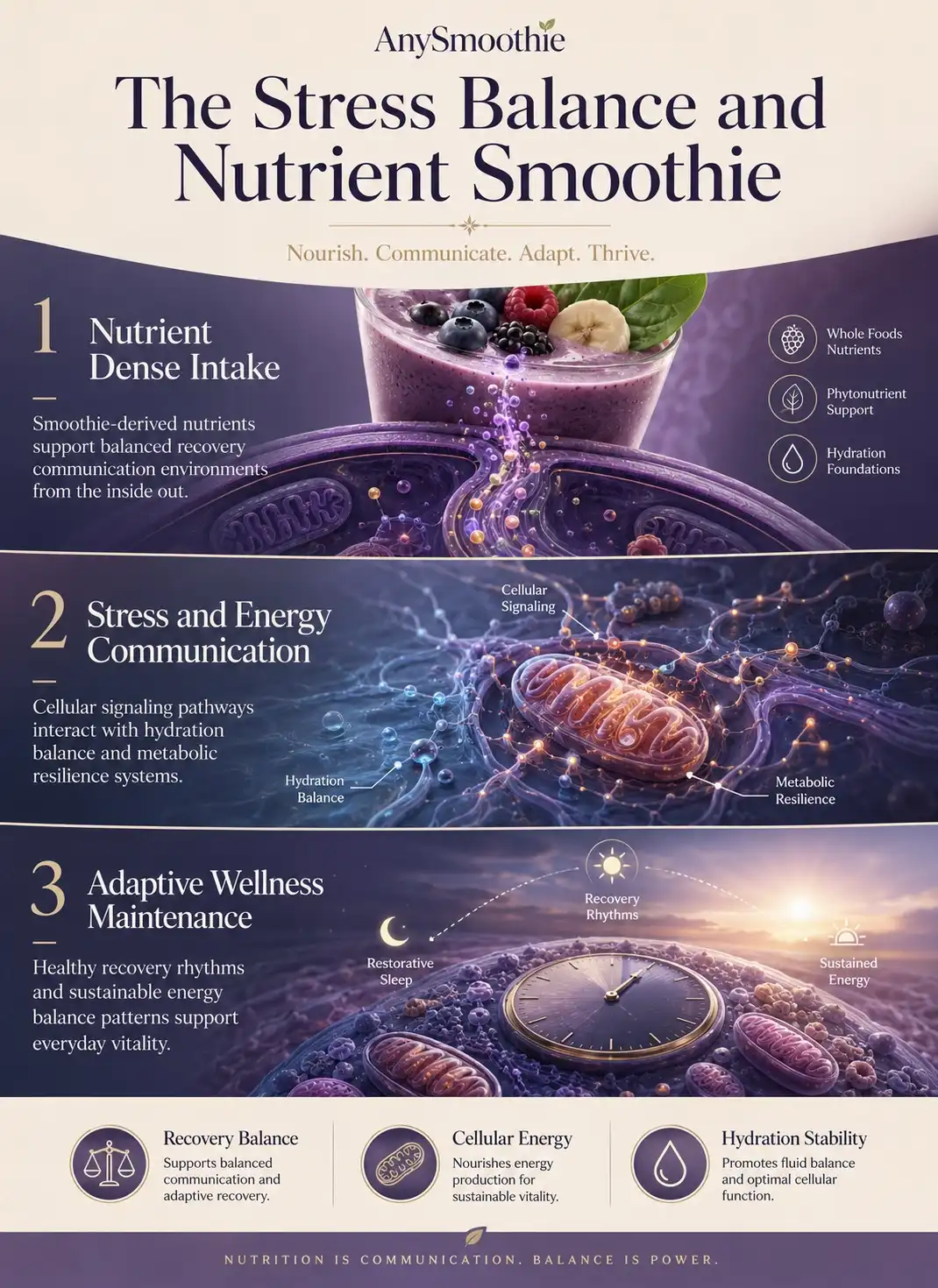
Adrenals take the brunt of stress. They need magnesium from pumpkin seeds. Vitamin C from citrus helps too. These rebuild after cortisol spikes.
Mitochondrial priming kicks in. You get steady energy. Inflammation drops. Vitamin C regulates cortisol release. Magnesium relaxes nerves. Add fats for liposomal transport. This boosts uptake.
Daily needs run high under stress. Aim for 400 mg magnesium. Get 500 mg vitamin C from food. Smoothies deliver both. They support metabolic efficiency.
Adaptogenic Synergy: Why Ashwagandha and Holy Basil Need Healthy Fats
Ashwagandha KSM-66 and holy basil team up for adrenals. They calm the gut-brain link. But they absorb best with fats. Avocado or chia seeds work well.
Fats aid nutrient partitioning. They enhance omega-3s for mood. Holy basil eases emotional fatigue. A 2026 trial showed it cut stress scores by day 60.
In recipes, fats sustain release. This builds vagus tone. Skip them, and benefits fade.
3 Liquid-Zen Nutrient-Dense Stress Relief Smoothie Recipes
These recipes serve one. Prep takes two minutes. They blend smooth. Use 1 tsp adaptogens or supps per drink. Fats boost synergy. Time them for peaks.
Each targets HPA calm, adrenals, or focus. They prime mitochondria. Drink for metabolic wins.
Biohacking Your Environment: Pairing Smoothies with Vagus Nerve Tone
Smoothies pair best with vagus hacks. Sip during deep breaths. This stimulates rest-and-digest. Cold exposure after amps calm.
L-theanine and ginger aid gut-brain signals. Walks boost metabolic efficiency. In 2026 trends, these rituals cut wired feelings.
The Calm-Energy Window: When to Sip for Maximum Neural Stability
Time matters. Sip mid-morning or 3 p.m. These dodge cortisol peaks. Fats slow release for stability.
Avoid evenings to protect sleep. Hum or gargle after for vagus tone. Focus holds without crashes. For vagus smoothie tips, try vagus nerve smoothies for stress relief.
Conclusion
Stress relief smoothies restore depleted nutrients. They cut cortisol and build adrenal resilience. Key wins include HPA calm from ashwagandha and threonate. Fats ensure metabolic efficiency.
Try one recipe today. Track your mood for a week. These biohacks future-proof your calm.

Medical Disclaimer: AnySmoothie content is for educational purposes only and is not a substitute for professional medical advice. Consult a healthcare provider for personalized guidance. See our full Disclaimer & Terms of Use. AI Transparency: AnySmoothie may use AI to support content development. All content undergoes human editorial review for accuracy, clarity, and editorial quality. See our full AI Transparency.