
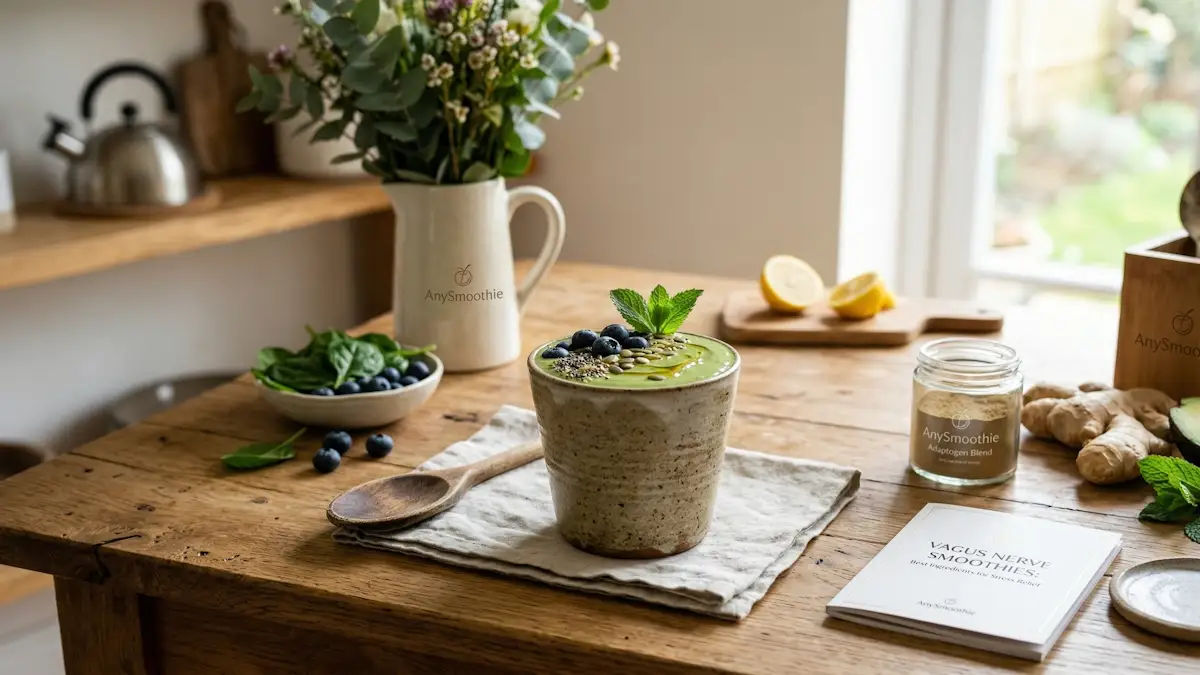
Picture this. It’s April 2026. Your inbox overflows with work emails. Kids demand dinner amid family chaos. Stress knots your shoulders tight. You feel that familiar buzz of anxiety. What if a simple drink could flip the switch?
Your vagus nerve acts like the main highway from gut to brain. It triggers rest-and-digest mode. This cuts stress fast. Vagus nerve smoothies pack ingredients that wake it up. They deliver calm through tasty blends. You’ll get easy recipes and real relief.
In this post, we cover how smoothies stimulate the vagus nerve. Then probiotics kickstart gut health. Magnesium calms nerves next. The gut-brain link follows. Anti-inflammatory recipes build tone. Omega-3s finish strong. Blend one today for steady calm.
How Smoothies Can Stimulate the Vagus Nerve
Smoothies flood your gut with nutrients. These send calm signals up the vagus nerve. Your heart rate slows. Anxiety eases. Food power beats quick fixes like deep breathing or gargling. It builds long-term tone.
A strong vagus nerve means better sleep. Worry fades. Mood lifts. Nutrients feed gut bacteria. They chat with your brain via the nerve. Stress drops as a result.
For example, blend greens and fruits daily. Sip in the morning. Feel the shift by noon. Studies show gut-focused eats tone the nerve over time. Probiotics lead this charge. They grow good bugs that dial down tension.
Nutrient-packed smoothies turn your blender into a stress fighter.
This sets the stage for probiotics as key starters.
Best Probiotic Foods for Vagus Nerve Health
Probiotics build gut armies. These talk to the vagus nerve. They lower stress hormones like cortisol. Your body stays chill.
Start with plain Greek yogurt. It brings live cultures. One tablespoon thickens smoothies creamy. Kefir works too. Its tang pairs with fruit. A half-cup makes a smooth base.
Add a scoop of probiotic powder. It’s flavorless. Stir it in last. For zing, squeeze sauerkraut juice. One teaspoon adds bite without chunks.
Why these? Good bugs produce serotonin. Your gut makes 90% of it. That signals calm to your brain. Stress melts away.
Blend fresh each time. Use 1-2 tablespoons total. One reader swapped coffee for a yogurt-berry mix. Her afternoons improved fast. Multi-species probiotic studies confirm vagal boosts. Keep it simple. Rotate picks for variety.
Magnesium-Rich Ingredients for Nervous System Support
Stress drains magnesium fast. This mineral calms overactive nerves. It boosts vagus function too. Smoothies deliver it easy.
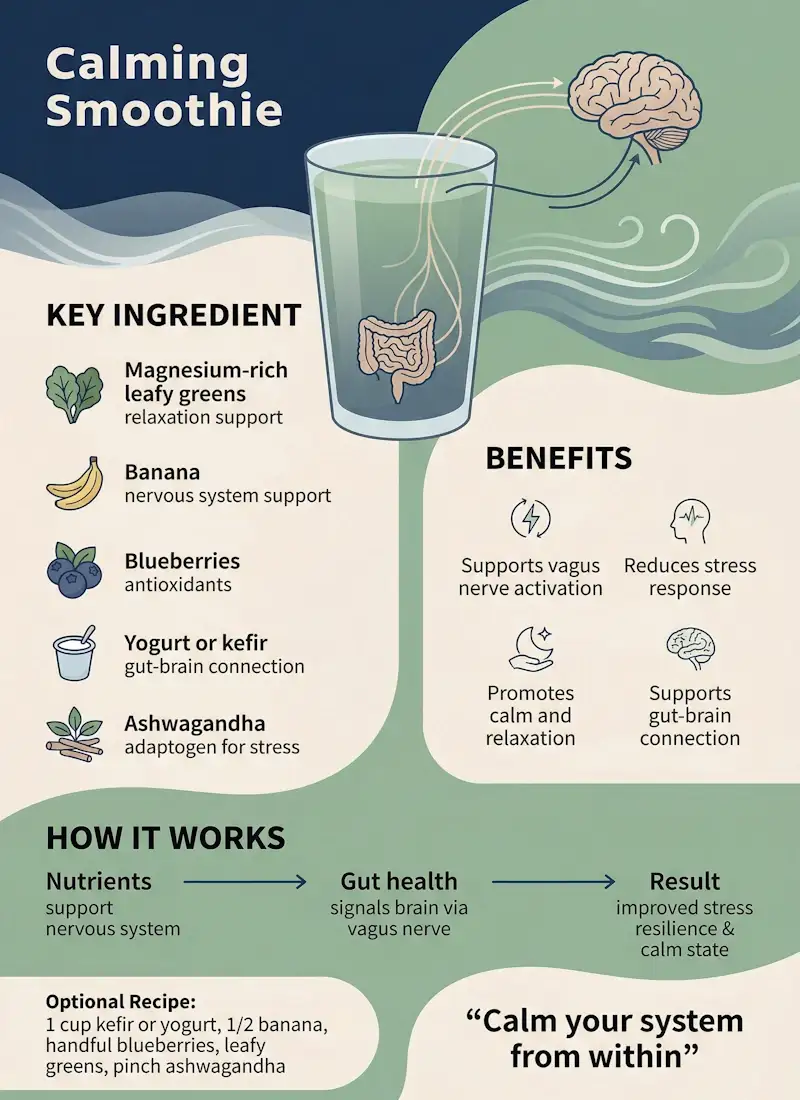
Grab a handful of spinach or kale. They pack magnesium quiet. Blend with water for no grit. A banana adds creaminess. Its potassium teams up.
Try half an avocado. It creams blends rich. Spoon in pumpkin seeds or almond butter. One tablespoon hits daily needs.
Signs of low magnesium? Muscle tension. Fatigue hits hard. These foods refill stores. Nerves relax as a result.
Picture a green banana-avocado mix. It soothes after tough days. Magnesium supports vagus neurotransmitters. Adults need 300-400 mg daily. Smoothies cover half. This leads right to the gut-brain connection.
The Gut-Brain Axis: Smoothies and Stress Relief
The gut-brain axis runs on the vagus nerve. Gut bacteria send feel-good signals up. Your brain gets the memo. Stress fades.
Fiber-rich smoothies feed this. Add oats or banana as prebiotics. They nourish probiotics. Cortisol drops. Mood rises.
Fermented foods shine here. Studies link them to calm nerves. One trial showed less anxiety in weeks. Smoothies make it daily simple.
Max effect? Pair fiber with probiotics. Blend oats, yogurt, banana. Sip slow. Gut bugs thrive. Vagus carries peace signals.
Your stomach butterflies? They quiet down. This axis explains why gut woes spike worry. Smoothies bridge the gap. No pills needed.
Anti-Inflammatory Smoothie Recipes for Vagal Tone
Inflammation weakens the vagus nerve. It blocks clear signals. Cut it with targeted ingredients. Vagal tone strengthens fast.
Berries lead. Blueberries and strawberries burst antioxidants. A cup fights cytokines. These signal stress. Add a turmeric pinch with black pepper. It absorbs better. Ginger root grates fresh zing. Pineapple chunks sweeten natural.
Omega-3 Fatty Acids and Vagus Nerve Stimulation
Omega-3s coat nerves smooth. Signals flow better. They fight inflammation too. Mood lifts quick.
Top picks: Chia seeds, 2 tbsp. They gel in blends. Ground flaxseeds add nutty. Hemp hearts sprinkle easy. A handful walnuts crunches.
Why? EPA and DHA mimic calm. Studies link them to less anxiety. Vagus gets stimulated direct.
Grind seeds fresh. Absorption jumps. Pair with yogurt base. Vegan? All fit.
One smoothie: 2 tbsp chia, banana, spinach, kefir. Omega-3s protect sheaths. Daily use tones nerve. Omega-3s reduce anxiety through vagus stimulation.
Start small. Build to 2-3 grams daily. Feel steadier focus.
Putting It All Together for Daily Calm
Vagus nerve smoothies star probiotics, magnesium picks, anti-inflammatories, and omega-3s. They team up. Gut signals calm. Nerves chill. Stress busts.
Probiotics start chats. Magnesium refuels. Berries and turmeric cut fire. Omega-3s shield paths. Blend one now. Track your mood shifts.
Bonus: Sip slow. It stimulates more. Gargle the last bit for extra tone.
Which recipe calls you? Comment below. Share results. Your calm awaits in the blender. Start today. Feel the difference tomorrow.
⚠️ Specific Safety Notes
Vagal Overstimulation: While cold smoothies can stimulate the vagus nerve, if you are prone to fainting (vasovagal syncope) or have an abnormally slow heart rate (bradycardia), avoid drinking “ice-cold” blends too quickly. Sip slowly to prevent a sudden drop in blood pressure.
Digestive Transition: If you are not used to high-fiber (prebiotics) or fermented foods (probiotics like kefir), start with small servings. A sudden “gut-overload” can cause gas and bloating, which may temporarily irritate the vagus nerve instead of calming it.
Blood Thinners: Ingredients like turmeric and ginger have natural anti-platelet effects. If you are on blood-thinning medications (Warfarin, Aspirin), consult your doctor before making these anti-inflammatory smoothies a daily staple.
Histamine Intolerance: Fermented foods (yogurt, kefir, sauerkraut juice) are high in histamines. If you have a known histamine intolerance, these ingredients may trigger headaches or hives rather than calm. Use non-fermented bases like almond or coconut milk instead.
FAQ
Can drinking a cold smoothie stimulate the vagus nerve?
Yes, cold exposure is a known way to stimulate the vagus nerve. Drinking a very cold or iced smoothie can provide a mild “cold shock” to the receptors in your throat and esophagus, which are closely linked to the vagal pathway, helping to slow your heart rate and promote a state of calm.
What is the best time of day to drink a vagus nerve smoothie?
The best time is usually in the late afternoon or evening. This is when cortisol levels naturally begin to drop and your body prepares for the “rest and digest” phase. Ingredients like magnesium and probiotics in your smoothie will work most effectively to support relaxation before sleep.
How do probiotics in a smoothie help the vagus nerve?
The vagus nerve is the primary communication line between your gut and your brain. Probiotic-rich ingredients like kefir or yogurt help balance your gut microbiome, which then sends “calm” signals through the vagus nerve to your brain, reducing overall feelings of stress and anxiety.

Medical Disclaimer: AnySmoothie content is for educational purposes only and is not a substitute for professional medical advice. Consult a healthcare provider for personalized guidance. See our full Disclaimer & Terms of Use. AI Transparency: AnySmoothie may use AI to support content development. All content undergoes human editorial review for accuracy, clarity, and editorial quality. See our full AI Transparency.