
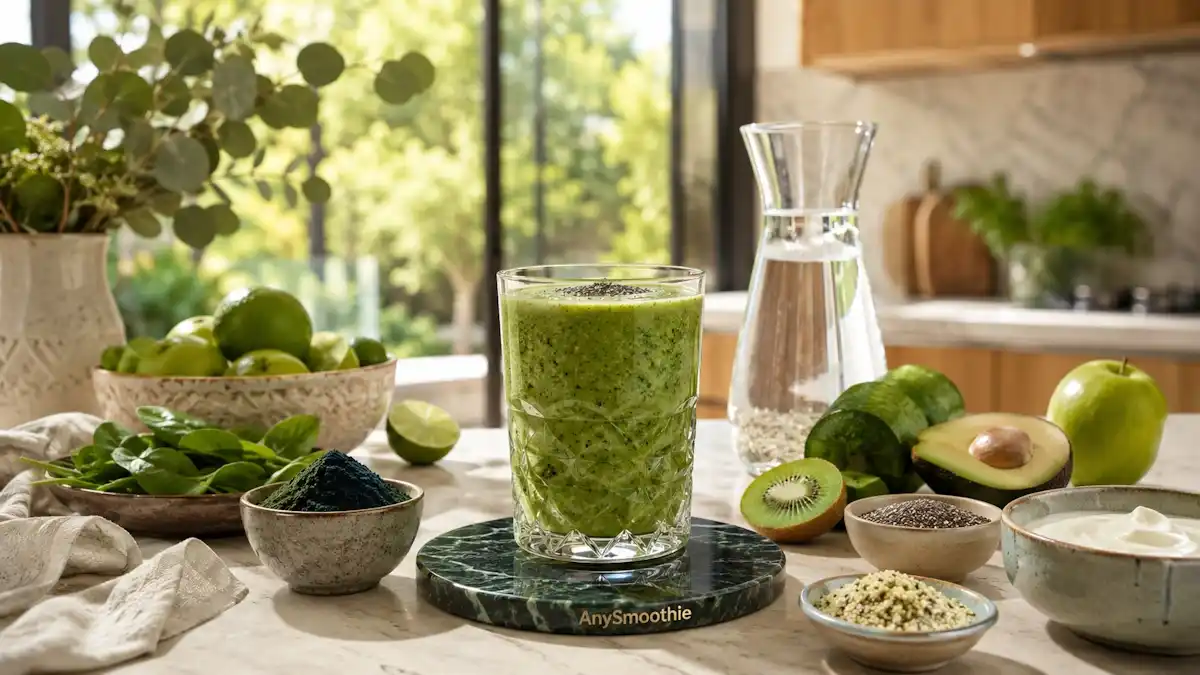
A small spoonful of chlorella can turn an everyday smoothie into a more nutrient-dense meal or snack. Chlorella smoothies for everyday wellness combine freshwater algae with fruit, greens, protein, fiber, and healthy fats for a practical daily option.
Chlorella may support normal nutrition, antioxidant defenses, digestion, and energy metabolism. It isn’t a treatment or a replacement for balanced meals. The recipes below use modest portions, familiar ingredients, and flavor pairings that make chlorella easier to enjoy.
How Chlorella Can Support Everyday Wellness
Chlorella is a green, single-celled freshwater algae sold as powder or tablets. People add it to smoothies because it provides nutrients and plant compounds in a small serving. Its nutrient profile can include protein, fiber, iron, folate, carotenoids, chlorophyll, and other antioxidant compounds.
These nutrients support normal physiological processes. Iron helps transport oxygen in the blood, while iron and folate contribute to normal Cellular energy pathways. Carotenoids and other plant compounds help support the body’s antioxidant systems. Fiber supports regular digestion, especially when the rest of the smoothie contains fruit, seeds, or leafy greens.
Nutrient amounts vary by species, growing conditions, processing methods, and brand. For that reason, check the product label instead of assuming every powder has the same nutritional value. Chlorella should complement fruits, vegetables, protein sources, and unsaturated fats rather than crowd them out.
What to Look for in a Quality Chlorella Powder
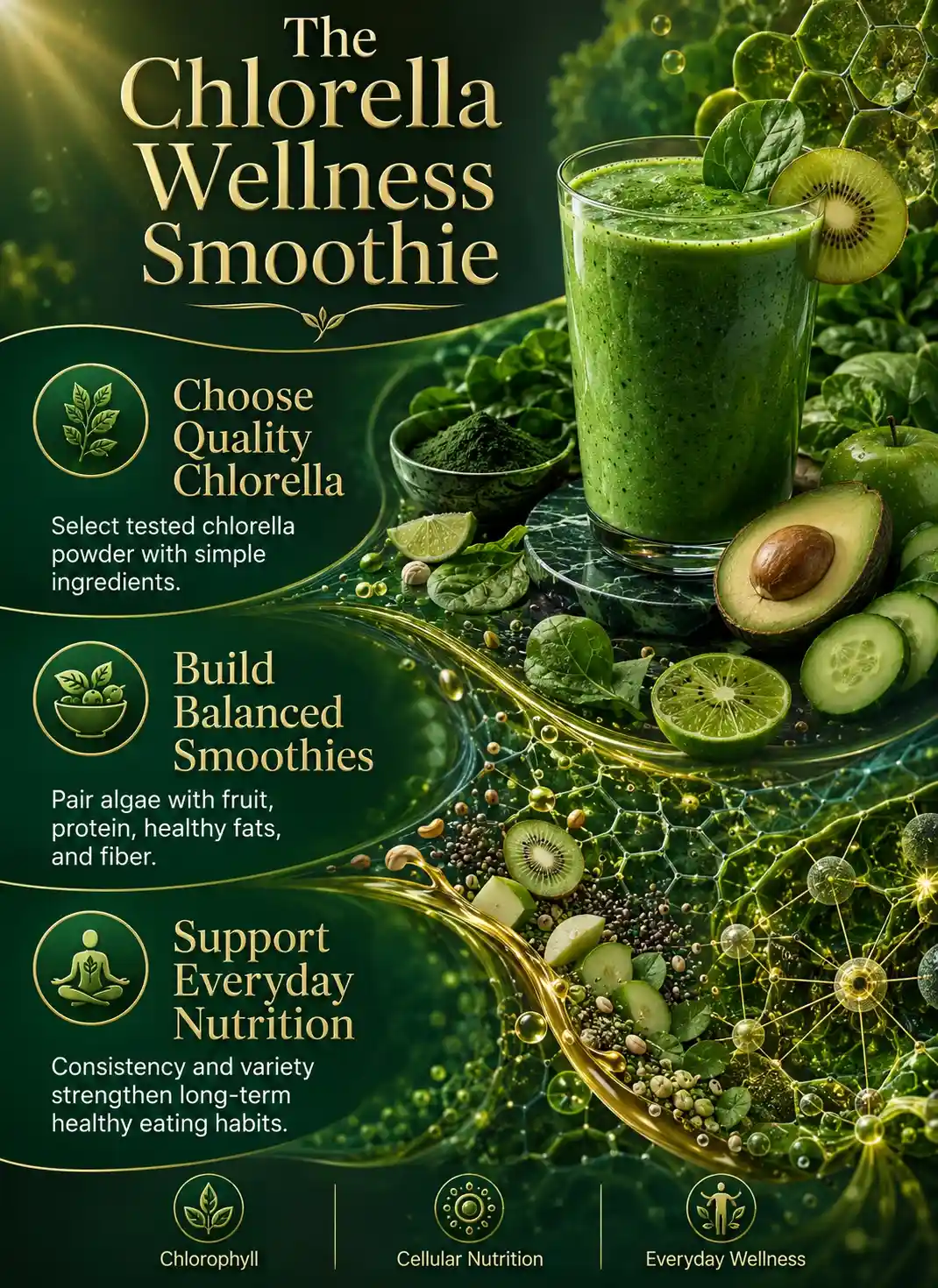
Look for broken-cell-wall chlorella, which may be easier for the body to digest than products with intact cell walls. A clear ingredient list should name chlorella powder without unnecessary sweeteners, flavors, or fillers.
Third-party testing is useful because algae products can vary in purity. Check for testing related to heavy metals, microbes, and other contaminants. Country-of-origin information also gives you more context about how the product was grown and processed.
Independent quality testing can provide additional reassurance when choosing algae products. Organizations that explain supplement quality and third-party testing can help consumers understand what certifications mean before purchasing. Learn more about Dietary supplement quality.
Tablets and powders can provide the same algae, but powder blends more naturally into drinks. Chlorella has a strong grassy flavor, so choose a fresh product and store it tightly sealed in a cool, dry place. If the smell seems stale or unusually harsh, replace it.
Start Small and Pay Attention to Your Body
Begin with the smallest serving listed on the label, often around 1 teaspoon or less. A sudden increase may cause bloating, gas, nausea, or loose stools in some people.
Take chlorella with food and drink enough water. If your digestion feels comfortable, increase the amount slowly rather than chasing a larger serving. More powder doesn’t automatically create a better smoothie.
If you’re pregnant or nursing, have a health condition, take prescription medicines, or have an algae sensitivity, ask a qualified healthcare professional before using chlorella. Stop if you develop an unexpected reaction.
3 Chlorella Smoothies for Everyday Wellness
These chlorella smoothies for everyday wellness each make one serving and use 1/2 teaspoon of chlorella. If your product label gives different directions, follow the label.
Green Citrus Chlorella Smoothie
This bright blend works well for beginners because orange and banana soften chlorella’s earthy taste.
Ingredients
- 1 cup fresh spinach
- 1 medium banana
- 1 medium orange, peeled and seeded
- 1/2 small cucumber
- 3/4 cup water or unsweetened coconut water
- 1/2 teaspoon chlorella powder
- 1/2 cup ice
Add everything to a blender and process until smooth, about 45 seconds. Add another splash of liquid if the cucumber and spinach leave the mixture too thick.
The orange supplies vitamin C, while the fruit, spinach, and cucumber add water and fiber. Together, these ingredients support normal immune function, digestion, and antioxidant pathways. Frozen mango can replace the banana for a sweeter tropical flavor.
Estimated Nutrition per Serving
Estimated with unsweetened coconut water, banana, orange, spinach, cucumber, and chlorella. Actual values vary by chlorella product.
- Calories: ~280 kcal
- Protein: ~7 g
- Carbohydrates: ~65 g
- Fat: ~2 g
- Fiber: ~11 g
- Sugars: ~42 g
Because cucumber and orange already release plenty of liquid, blend without the full amount of ice first. This keeps the citrus flavor brighter and avoids unnecessarily thinning the chlorella taste into a larger drink.
Berry Chlorella Smoothie for a Balanced Breakfast
Berries bring tartness and color, which can soften chlorella’s flavor. Greek yogurt, chia seeds, and milk give this version more protein, fiber, and fat than a fruit-only drink.
Ingredients
- 1 cup frozen mixed berries
- 3/4 cup plain Greek yogurt
- 1 tablespoon chia seeds
- 3/4 cup unsweetened milk
- 1/2 teaspoon chlorella powder
- 1/2 cup ice, if needed
For a dairy-free version, use a high-protein pea or soy yogurt. Blend the milk, yogurt, chlorella, berries, and chia seeds until creamy. Let the smoothie sit for two minutes, then blend again if the chia seeds create a gritty texture.
Add 1/4 cup rolled oats or 1 tablespoon nut butter when you need extra calories and a thicker texture. Choose unsweetened ingredients to keep the drink’s total sugar moderate.
Estimated Nutrition per Serving
Estimated with plain nonfat Greek yogurt and unsweetened soy milk, without optional oats or nut butter. Actual values vary by chlorella product.
- Calories: ~330 kcal
- Protein: ~27 g
- Carbohydrates: ~39 g
- Fat: ~8 g
- Fiber: ~12 g
- Sugars: ~20 g
Tropical Ginger Chlorella Smoothie
Pineapple, mango, and lime provide strong flavors that match chlorella well. Ginger adds fresh heat, while avocado or hemp seeds contribute fiber and unsaturated fats.
Ingredients
- 3/4 cup frozen pineapple
- 1/2 cup frozen mango
- 1/2-inch piece fresh ginger, peeled
- 1 tablespoon fresh lime juice
- 1/4 avocado or 1 tablespoon hemp seeds
- 3/4 cup cold water or unsweetened coconut water
- 1/2 teaspoon chlorella powder
- 1/2 cup ice
Blend the liquid, lime juice, ginger, chlorella, avocado or hemp seeds, and fruit first. Add ice and blend again until smooth. Use avocado for a silkier texture, or hemp seeds for a slightly nutty finish.
Estimated Nutrition per Serving
Estimated with unsweetened coconut water and 1/4 avocado. Values will differ when hemp seeds are used instead.
- Calories: ~300 kcal
- Protein: ~5 g
- Carbohydrates: ~55 g
- Fat: ~9 g
- Fiber: ~10 g
- Sugars: ~38 g
Fresh ginger becomes especially noticeable beside chlorella’s earthy character. If your chlorella brand already tastes strong, start with a smaller piece of ginger and increase after tasting rather than letting both flavors compete with the pineapple and mango.
| Smoothie | Main ingredients | Flavor profile | Best time to enjoy | Wellness focus |
|---|---|---|---|---|
| Green Citrus | Spinach, banana, orange, cucumber | Bright and fresh | Morning or after activity | Vitamin C, hydration, fiber |
| Berry Breakfast | Berries, Greek yogurt, chia | Tart and creamy | Breakfast | Protein, fiber, satisfying fats |
| Tropical Ginger | Pineapple, mango, ginger, lime | Sweet, sharp, refreshing | Midday | Fruit, fiber, unsaturated fats |
For more ideas on balancing protein, fiber, fat, and plant compounds, use this Functional smoothie creation guide.
How to Make Chlorella Smoothies Part of Your Routine
Drink a chlorella smoothie when it fits your schedule. Breakfast works well for a complete blend with yogurt, soy milk, oats, or seeds. A lighter fruit-and-greens version may suit a snack or post-workout meal, depending on your overall food intake.
Keep frozen berries, mango, pineapple, and sliced bananas ready for quick preparation. You can portion greens into freezer bags, but wash and dry them first. Add liquid before powder to help the blender circulate ingredients.
Adjust the recipe instead of forcing yourself to tolerate a poor texture. A gritty blend needs more liquid or another 20 seconds of blending. A strong algae flavor responds well to citrus, berries, ginger, or pineapple. If the smoothie separates, blend it again or add yogurt, avocado, or chia. Reduce juice, sweetened milk, syrups, and large fruit portions when the drink tastes overly sweet.
Rotate the recipes and change the fruits, greens, seeds, and protein sources. Dietary variety gives you a broader mix of nutrients, while one daily smoothie works best as part of an overall eating pattern.
Simple Swaps for Dietary Needs and Flavor Preferences
For dairy-free or https://anysmoothie.com/vegan-smoothie-recipes Vegan smoothies, choose unsweetened soy milk, pea protein yogurt, or a plant-based protein powder. Nut-free versions can use hemp, chia, or ground flaxseed instead of almond butter or other nut products.
Higher-protein blends benefit from Greek yogurt, unsweetened soy milk, or pea protein yogurt. For more body without extra sweetness, add spinach, cucumber, or half an avocado. Lower-sugar versions can use water, unsweetened milk, berries, citrus, and cinnamon instead of juice or syrup.
Conclusion
Chlorella smoothies can add algae, fruit, greens, protein, fiber, and healthy fats to your daily eating pattern. Choose a tested product, begin with a modest amount, and select a recipe that tastes good enough to repeat.
Pay attention to digestion and adjust ingredients to fit your needs. Consistency and variety matter more than any single ingredient, so let chlorella support a balanced diet rather than become the center of it.
🛡️ Safety Notes & Dietary Interactions
- Product Quality: Choose chlorella supplements from reputable manufacturers that provide purity testing for contaminants such as heavy metals and unwanted microorganisms. High-quality sourcing and third-party testing help improve product consistency and overall confidence in everyday use.
- Start Gradually: Begin with a small serving of chlorella powder and increase slowly if it feels comfortable. Introducing the supplement gradually allows your digestive system and taste preferences time to adjust before using larger amounts.
- Medication Awareness: Chlorella contains vitamin K and other naturally occurring compounds that may interact with certain medications, particularly blood-thinning treatments. Speak with a qualified healthcare professional before using chlorella regularly if you take prescription medications.
- Digestive Tolerance: Some people experience mild digestive changes, including bloating or stomach discomfort, when first adding chlorella to their routine. Reducing the serving size and drinking plenty of water often makes the transition easier while assessing personal tolerance.
FAQ
What is chlorella and why is it added to smoothies?
Chlorella is a freshwater green algae commonly available as a powder or supplement. People add it to smoothies because blending helps soften its naturally earthy taste while combining it with fruits, protein, healthy fats, and fiber in an easy-to-repeat daily nutrition routine.
What ingredients taste best with chlorella?
Banana, pineapple, mango, berries, lemon, lime, cucumber, ginger, mint, and creamy ingredients like yogurt or plant-based milk all pair well with chlorella. These ingredients help balance its earthy flavor while creating a smoother texture that many people find easier to enjoy consistently.
Can I drink chlorella smoothies every day?
Many people include chlorella smoothies as part of a balanced daily nutrition routine by following the serving recommendations provided by the manufacturer. Consistency, product quality, and gradual introduction generally matter more than taking large servings or using complicated smoothie recipes.
Is chlorella better as a powder or tablets?
Powder is usually the better choice for smoothies because it blends directly into the drink and distributes evenly throughout the recipe. Tablets are often more convenient for people who prefer taking supplements separately instead of incorporating them into meals or beverages.
Should chlorella be taken with food?
Many people prefer taking chlorella with food or in a smoothie because it naturally fits alongside protein, fiber, healthy fats, and fruit. Pairing it with a balanced meal also makes supplementation easier to remember as part of a consistent everyday wellness routine.

Medical Disclaimer: AnySmoothie content is for educational purposes only and is not a substitute for professional medical advice. Consult a healthcare provider for personalized guidance. See our full Disclaimer & Terms of Use. AI Transparency: AnySmoothie may use AI to support content development. All content undergoes human editorial review for accuracy, clarity, and editorial quality. See our full AI Transparency.