
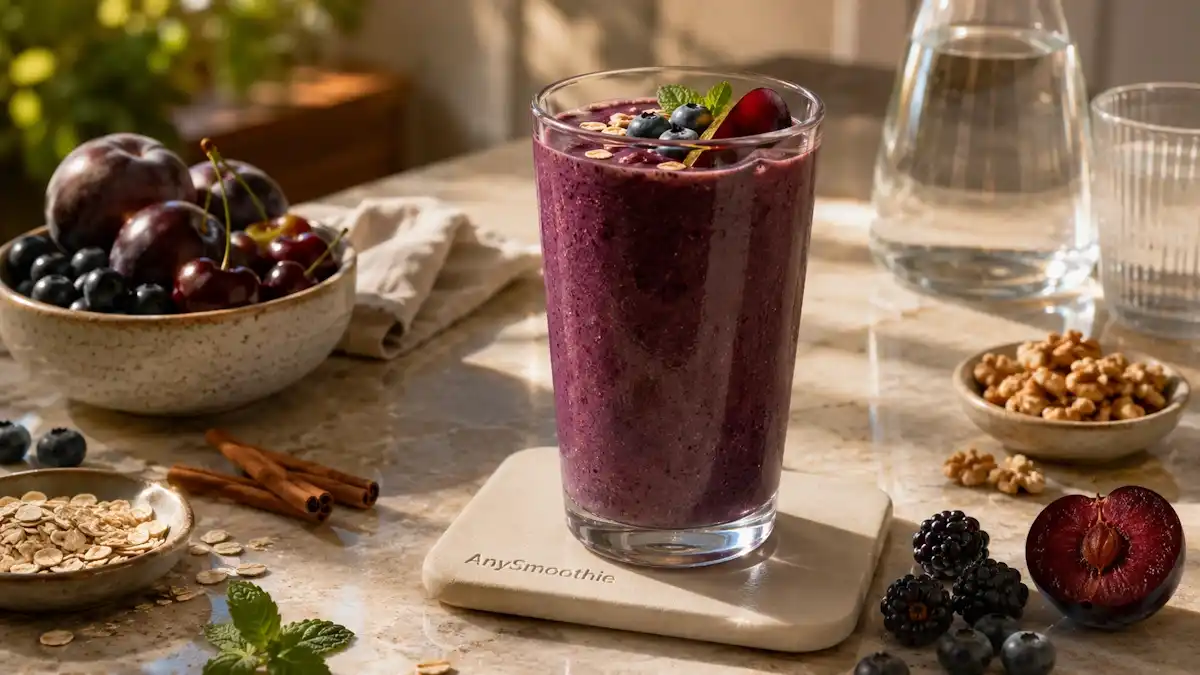
Sugar shows up in more places than dessert. Inside the body, it can bind to proteins and fats and create extra stress over time.
That’s where carnosine smoothies for cellular antiglycation fit in. A well-built smoothie can support steadier glucose response, bring in fiber and antioxidants, and keep added sugar low enough for daily use. The goal is simple, support normal cellular defenses with food-first habits, not medical promises. Carnosine, berries, greens, seeds, and smart protein pairings can all fit into that pattern.
What antiglycation means and where carnosine fits
Glycation is a natural reaction. Sugar molecules stick to proteins or fats, then form sticky byproducts over time. When that process runs too often, the body has to deal with more oxidative stress and more wear on protein structure.
A review in PMC on carnosine’s cellular effects describes its antioxidant and anti-glycation activity. That matters because carnosine is often discussed as part of a broader plan for healthy aging support, not as a stand-alone fix.
A simple look at glycation and advanced glycation end products
Advanced glycation end products, or AGEs, are the compounds that form after sugar reacts with proteins or fats. They build up slowly. Heat can speed the process in cooked food, and a high sugar load can add more pressure inside the body. Over time, that can affect how tissues hold their structure and function.
Why carnosine is discussed in cellular protection circles
Carnosine is a naturally occurring dipeptide found in muscle and brain tissue. It gets attention because it may help buffer glycation stress and support protein stability. A classic paper in Science on carnosine as an antiglycating agent explains why it keeps showing up in this conversation. The interest is practical, carnosine fits into discussions about oxidative balance, not treatment claims.
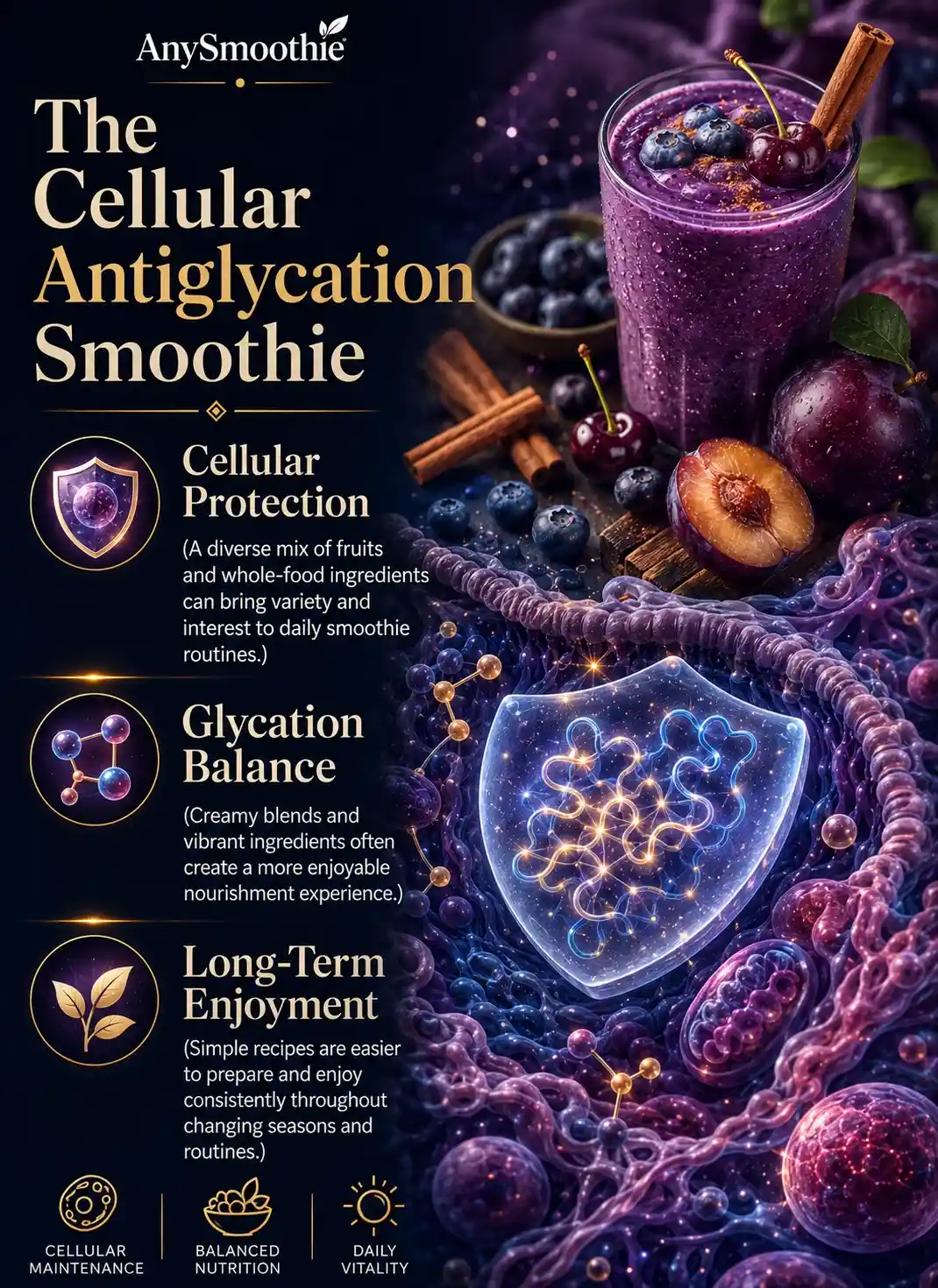
How to build carnosine smoothies for cellular antiglycation
The best smoothie formula is simple. Keep added sugar low, then build around fiber, protein, healthy fats, and polyphenol-rich produce. The same structure used in smoothies for immune system regulation also works here, because it slows the sugar hit and keeps the drink more stable.
A smoothie helps most when it behaves like a balanced snack, not a sweet drink.
Carnosine itself is not a common whole-food smoothie ingredient. If you use a supplement form, follow the product directions and check with a qualified professional if you need guidance.
The best ingredients for a low-glycation smoothie base
- Berries: Blueberries, raspberries, and blackberries add polyphenols with less sugar than many fruits.
- Leafy greens: Spinach, kale, and romaine bring micronutrients without much sweetness.
- Seeds: Chia and flax add fiber, which helps slow digestion.
- Protein: Unsweetened Greek yogurt, kefir, or a clean protein powder helps steady the blend.
- Healthy fats: Avocado, nut butter, or hemp seeds improve fullness.
- Spices and cocoa: Cinnamon and unsweetened cacao add flavor without a sugar spike.
What to limit if you want a lower glycation load
Fruit juice is the biggest trap. It strips out fiber and pushes sugar up fast. Sweetened yogurt, syrups, honey-heavy recipes, and oversized banana portions can do the same thing. A smoothie can look healthy and still work against your antiglycation goal if it tastes more like dessert than fuel. For a practical example of lower-sugar ingredient choices, the nitrate-rich spinach and banana smoothie can show how fruit, greens, and fiber work together without relying on excessive sweetness.
3 Carnosine smoothies for cellular antiglycation
These three blends keep the same core idea, low sugar, enough protein, and ingredients that support cellular balance. Carnosine is optional as a supplement add-in, depending on your product and personal routine.
| Smoothie name | Key ingredients | Main support focus | Sugar level | Best time to drink |
|---|---|---|---|---|
| Berry defense | Blueberries, raspberries, chia, Greek yogurt, optional carnosine | Antioxidants and fiber | Low | Breakfast or mid-morning |
| Green recovery | Spinach, cucumber, avocado, protein powder, lemon, optional carnosine | Steady daily use | Low | Post-workout or lunch |
| Cacao spice | Unsweetened cacao, cinnamon, almond butter, protein, small banana | Polyphenols and satiety | Moderate | Afternoon snack |
The pattern is clear, the sugar stays controlled, while the rest of the ingredients do the real work.
How to use these smoothies in a real routine
Timing matters less than consistency. Some people drink one at breakfast, others use it after training, and some treat it as a snack between meals. The best slot is the one that keeps the recipe repeatable.
Batch prep helps a lot. Keep frozen berries, greens, seeds, and protein on hand, then blend fast and move on. Use sweeteners sparingly, and read labels on commercial protein or carnosine products. If you want more simple formats, look at nutrient-rich smoothies for daily health for ideas that stay easy to repeat.
Conclusion
Carnosine smoothies for cellular antiglycation work best as a formula, not a miracle. Keep sugar low, add fiber and protein, and use berries, greens, cocoa, and seeds to bring in more polyphenols.
That kind of smoothie supports normal cellular defenses and fits into a daily routine without much effort. The real win comes from repetition, not perfection.
Build one solid blend, drink it often, and keep it simple enough to make again tomorrow.
🛡️ Safety Notes & Dietary Interactions
- Supplement Guidance: Carnosine supplements differ in dosage and formulation. If you choose to add a supplemental form to smoothies, follow product directions carefully and avoid exceeding recommended serving sizes.
- Blood Sugar Awareness: Balanced Ingredients: Even antiglycation-focused smoothies can become sugar-heavy when made with fruit juice, syrups, or excessive sweet fruit. Prioritize fiber, protein, and whole-food ingredients for better balance.
- Digestive Tolerance: Individual Response: Ingredients such as chia seeds, flaxseed, protein powders, cacao, and high-fiber greens may affect digestion differently. Introduce new ingredients gradually and monitor personal tolerance.
- Whole-Routine Support: Lifestyle Factors: Cellular health depends on more than a single smoothie. Consistent sleep, physical activity, hydration, stress management, and balanced nutrition remain important parts of healthy aging and metabolic function.
FAQ
What is carnosine and why is it linked to antiglycation?
Carnosine is a naturally occurring dipeptide found in tissues such as muscle and the brain. It is often discussed in healthy aging and cellular protection conversations because research has explored its potential role in supporting normal antioxidant activity and helping manage glycation-related processes.
Can I get carnosine directly from smoothie ingredients?
Most traditional smoothie ingredients do not naturally provide meaningful amounts of carnosine. People interested in carnosine typically use a supplement form alongside a balanced smoothie that contains fiber, protein, healthy fats, and polyphenol-rich foods.
Which fruits work best in a lower-glycation smoothie?
Berries are often favored because they provide fiber and polyphenols while containing less sugar than many tropical fruits. Small portions of apples, pears, or berries generally fit well into smoothies designed around balanced blood sugar and everyday wellness goals.
Why are fiber and protein important in antiglycation-focused smoothies?
Fiber and protein help create a more balanced smoothie by slowing digestion and improving satiety. When combined with whole fruits, greens, seeds, and healthy fats, they help the smoothie feel more satisfying and less dependent on concentrated sources of sweetness.
How often can I drink a carnosine smoothie?
Most people can enjoy these smoothies as part of a regular healthy eating pattern. The key is maintaining variety, using balanced ingredients, and avoiding excessive added sugars. Consistency with overall dietary habits is generally more important than any single smoothie recipe.

Medical Disclaimer: AnySmoothie content is for educational purposes only and is not a substitute for professional medical advice. Consult a healthcare provider for personalized guidance. See our full Disclaimer & Terms of Use. AI Transparency: AnySmoothie may use AI to support content development. All content undergoes human editorial review for accuracy, clarity, and editorial quality. See our full AI Transparency.