
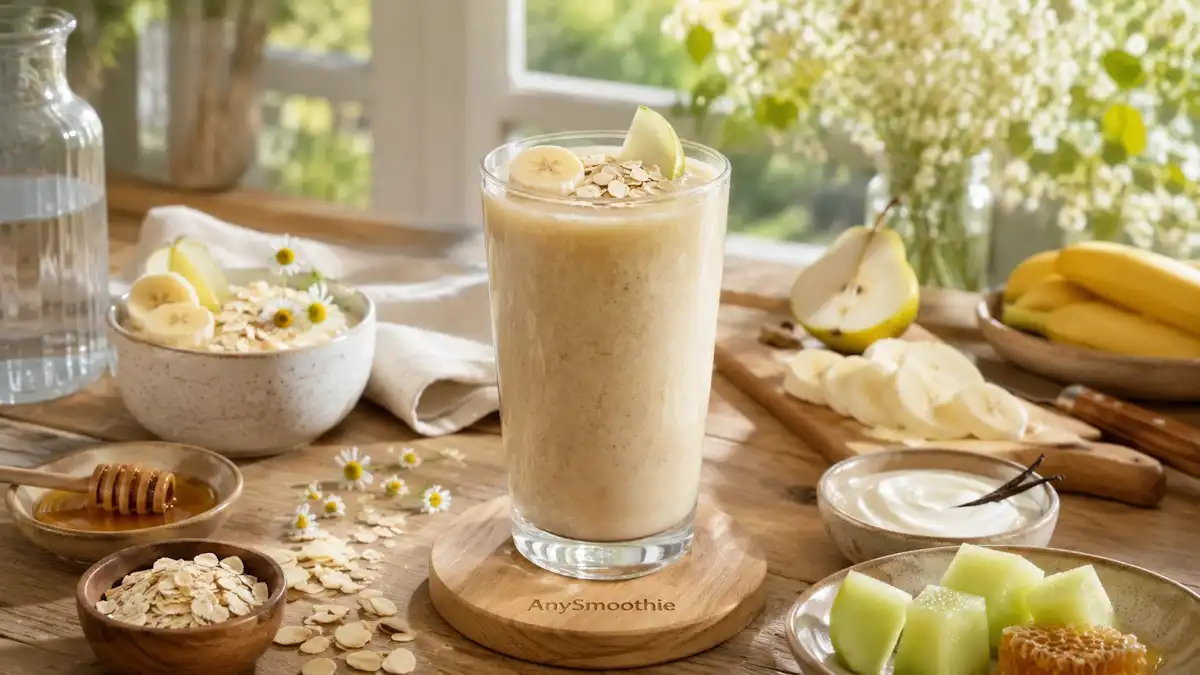
Some smoothies go down like a soft landing, while others feel sharp after a few sips. The difference usually comes down to acid, fat, fiber, and how much volume your stomach has to handle at once.
This gentle ingredient guide keeps the focus on low-acid fruit, lighter bases, and balanced texture. If you want comfort, the blender is only part of the story, because the ingredient mix matters just as much.
Why some smoothies feel easier on heartburn than others
Reflux comfort often comes down to a few simple variables. Acid load matters because citrus and juice-heavy blends can feel bright and harsh. Fat matters because richer ingredients slow stomach emptying. Fiber matters because some types make a smoothie smooth, while others make it dense. Serving size matters too, since a large cup can stretch the stomach and raise pressure. For a medical overview of GERD, see the NIDDK guide.
A few simple ingredient swaps can help create a gentler smoothie experience.
| Ingredient | Effect on reflux comfort | Flavor | Texture | Best use |
|---|---|---|---|---|
| Pear or melon | Usually gentle and low acid | Mild and sweet | Juicy | Base fruit |
| Oat milk | Light and easy to blend | Neutral | Creamy but thin | Everyday base |
| Chia seeds | Adds soft thickness | Neutral | Slightly gel-like | Small amounts |
| Citrus juice | Often more irritating | Bright and sharp | Thin | Usually skip |
| Nut butter | Can feel heavy in larger amounts | Rich | Thick | Tiny amounts, if tolerated |
A calmer blend is usually simple, smaller, and less acidic than most fruit-heavy smoothies.
What tends to make a smoothie gentler
Low-acid fruits, water-rich bases, and modest sweetness are the easiest place to start. Pear, melon, blueberries, and cucumber usually keep the blend bright without pushing acidity too high. Oat milk, almond milk, and water also keep the texture light.
Smaller servings matter too. A 10 to 12 ounce smoothie often feels easier than a huge one because the stomach has less volume to process. Smooth textures help as well, since chunks and seeds can feel rougher on a sensitive upper digestive tract.
Ingredients that often make symptoms worse
Citrus, pineapple, chocolate, peppermint, spicy add-ins, and heavy nut-butter pours are common trouble spots. They do not bother everyone, but they often raise the odds of discomfort.
Banana can be fine for many people, yet a very large portion can still feel dense. Fat slows emptying too, so coconut cream, full-fat dairy, and big spoonfuls of nut butter can make a smoothie sit like a brick instead of a sip.
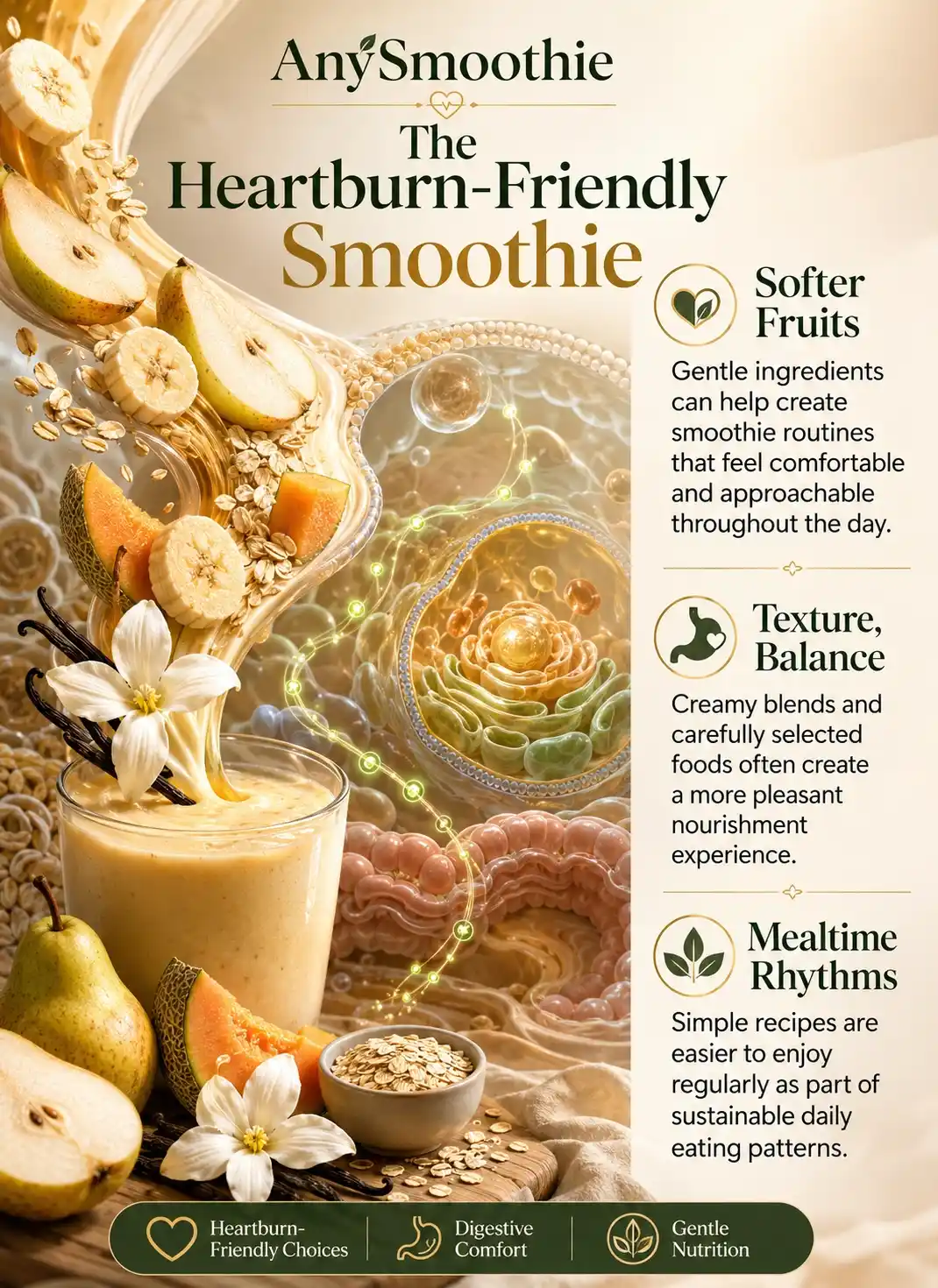
Build a heartburn-friendly smoothie with simple ingredient swaps
Start with a light base, then add fruit, then decide whether you need extra thickness or protein. If banana works for you, a banana smoothie for acid reflux shows how simple the format can stay. If it does not, you can keep the same structure and swap the fruit.
Best bases, fruits, and add-ins for smoother digestion
Oat milk is a strong first pick because it gives body without much acid. Water keeps things even lighter. Almond milk can work if it sits well.
For fruit, pear, melon, blueberries, and papaya are common starting points because they stay mild and do not need much sweetener. Cucumber adds volume and keeps the drink cool without making it heavy. Small amounts of chia can add thickness, while a spoon or two of oats gives a smoother finish. Plain yogurt or kefir can work if dairy already feels calm in your system.
Smart swaps for common trigger ingredients
- Orange juice can change into water or oat milk.
- Pineapple can shift to pear or melon.
- Peppermint can move to vanilla or a small pinch of cinnamon.
- A big scoop of nut butter can shrink to a teaspoon, or disappear completely.
Keep the serving moderate so the glass feels satisfying without sitting like a meal.
3 Smoothie recipes for heartburn support
These recipes stay short on ingredients and easy on texture. Each one keeps acid low and volume reasonable, so the blend feels more like support than strain.
Make your smoothie routine easier on reflux
Slow sipping matters more than people think. A smoothie taken down too fast can put pressure on the upper stomach. Keep late-night servings small, or skip them if evenings are your trigger time.
Test one new ingredient at a time, then keep a simple note on what felt calm and what did not. Comfort is personal, so your best blend may need a few tweaks. If symptoms stay persistent or severe, a qualified clinician can help sort out the pattern.
Conclusion
The best smoothies for heartburn support stay simple, low-acid, and balanced. The right base, fruit, and texture can make a big difference, especially when the serving stays moderate.
Start with one gentle recipe, then adjust one ingredient at a time. That gives you a clearer read on what your body likes, and what it does not.

Medical Disclaimer: AnySmoothie content is for educational purposes only and is not a substitute for professional medical advice. Consult a healthcare provider for personalized guidance. See our full Disclaimer & Terms of Use. AI Transparency: AnySmoothie may use AI to support content development. All content undergoes human editorial review for accuracy, clarity, and editorial quality. See our full AI Transparency.