
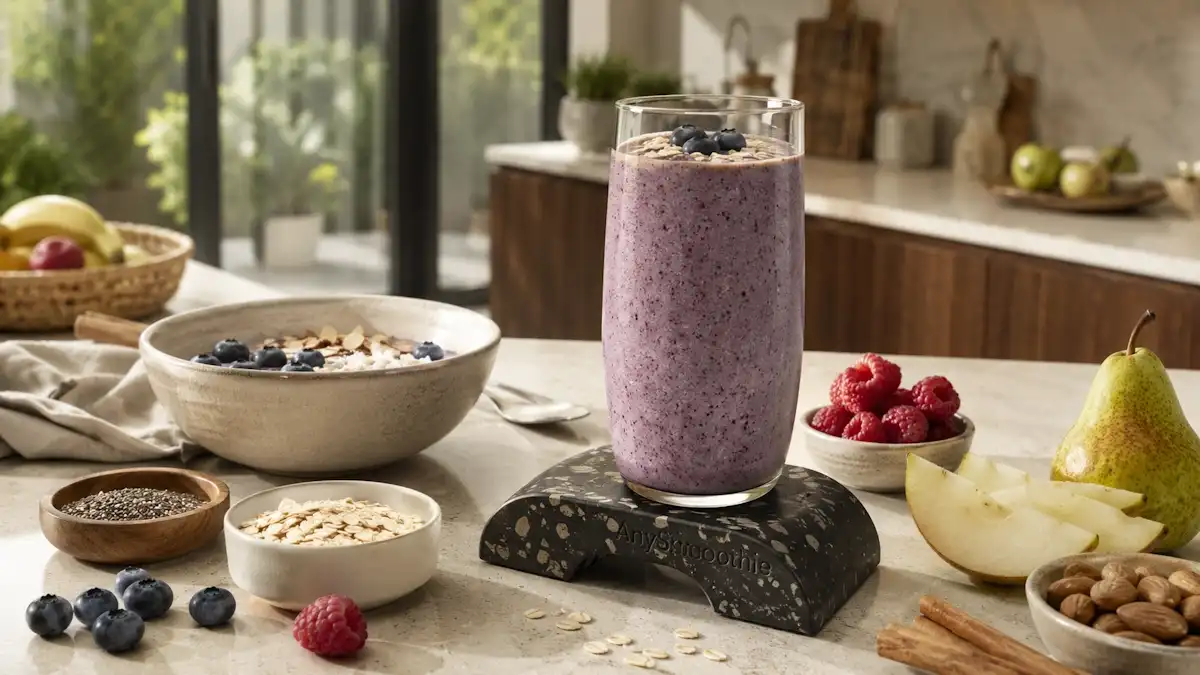
A smoothie can help your day feel steady, or it can hit like dessert in a cup. The difference usually comes down to structure, not luck.
When you build balanced smoothies for prediabetes nutrition routines, you get a drink that supports steadier energy, better fullness, and a calmer daily food pattern. The goal is simple, food-first, and repeatable, not a quick fix.
What makes a smoothie balanced when you are managing prediabetes?
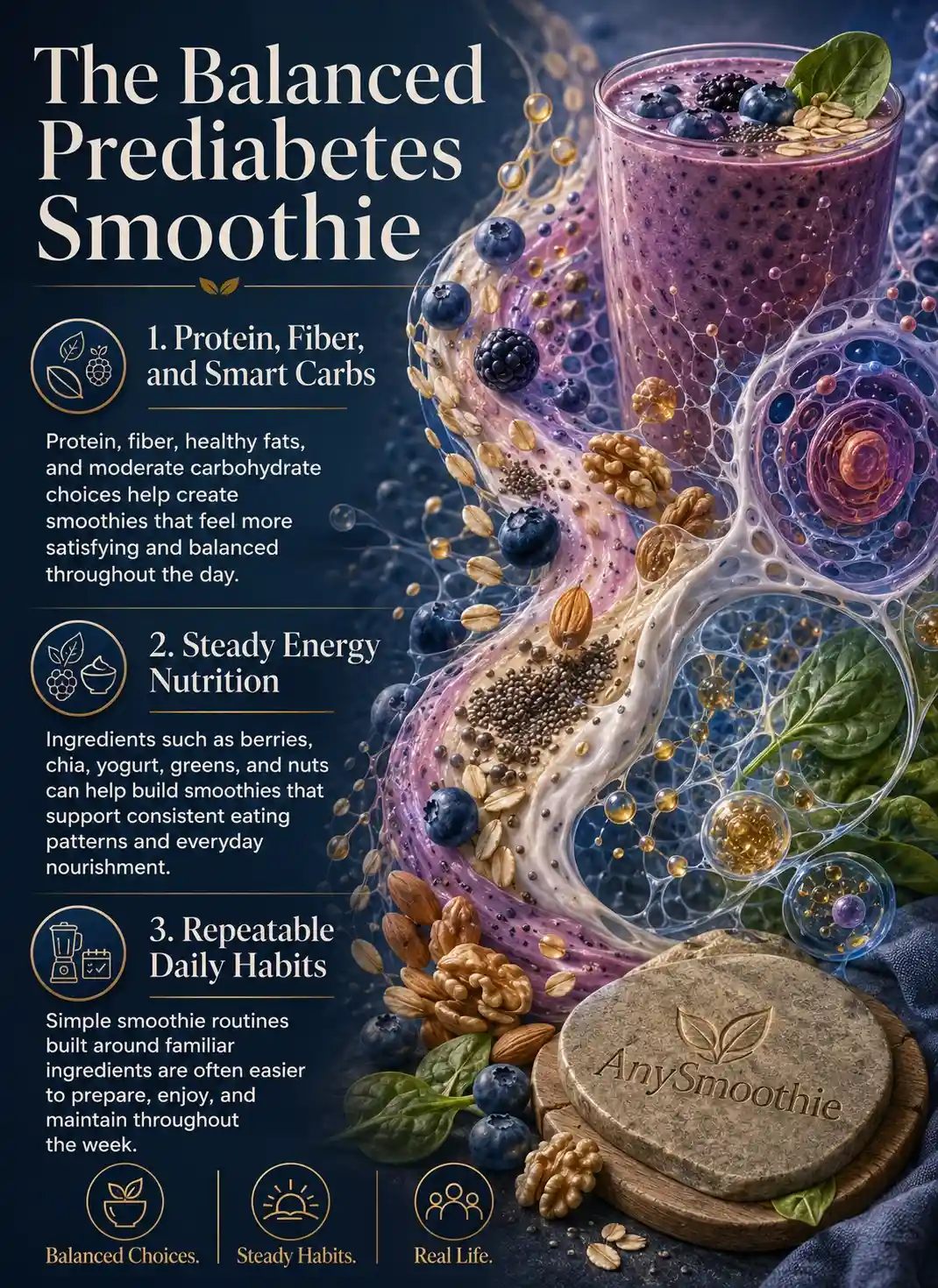
A balanced smoothie brings protein, fiber, healthy fat, and controlled carbs into the same glass. That mix slows digestion, softens the rise in blood sugar, and gives the drink more staying power. For a clear overview of blood sugar management, see Managing Diabetes.
The four parts every smart smoothie should include
- Protein keeps the blend more filling. Greek yogurt, cottage cheese, tofu, or unsweetened protein powder all work well.
- Fiber adds structure. Chia seeds, flax, berries, spinach, and other greens help the smoothie feel less thin and sugary.
- Healthy fats slow the pace of digestion. Nut butter, avocado, chia, and flax make the texture richer too.
- Controlled carbs give flavor without overdoing sweetness. Berries, cherries, kiwi, and a small piece of banana fit well here.
When these pieces show up together, the smoothie starts to act more like a meal. Without them, it can feel more like flavored juice with a thicker texture.
Ingredients that can throw a smoothie out of balance
Fruit juice, sweetened yogurt, large handfuls of banana, honey, and flavored protein powders with added sugar can push the carb load up fast. Oversized portions do the same thing, even when the ingredients look healthy on paper.
A better move is often a small swap. Use unsweetened milk, plain yogurt, or more greens, then let berries or cinnamon do the flavor work.
How to build balanced smoothies into your prediabetes nutrition routine
A good smoothie routine removes guesswork. Once you know your base formula, the drink becomes easy to repeat on busy mornings or planned snack times.
The best smoothie is the one you can make twice a week without thinking.
The table below compares a few simple smoothie styles by protein, fiber, carbs, and best use.
| Smoothie style | Protein | Fiber | Carbs | Best use and prep time |
|---|---|---|---|---|
| Berry yogurt blend | High | High | Moderate | Breakfast, about 5 minutes |
| Green tofu blend | Moderate to high | High | Low to moderate | Light meal, about 5 to 7 minutes |
| Cocoa almond blend | Moderate | Moderate | Low to moderate | Afternoon snack, about 5 minutes |
| Coffee yogurt blend | High | Moderate | Low to moderate | Busy mornings, about 5 minutes |
The pattern is clear. The more protein and fiber you build in, the more useful the smoothie becomes as part of a steady eating routine.
A simple formula you can use every time
Use this base: liquid + protein + fiber + healthy fat + low-sugar fruit or greens.
That formula works with different goals. It can become breakfast, a snack, or a post-workout option, as long as the portions stay reasonable. A plain liquid and one strong protein source do most of the heavy lifting.
When to drink a smoothie so it fits your day
A smoothie works well on a rushed morning when you need something quick. It also fits as a planned snack or alongside another food at a meal.
If you want it to feel more complete, pair it with eggs, nuts, or a slice of whole-grain toast. That extra food can help the meal feel more grounded and less liquid-heavy.
Easy prep habits that save time during the week
Keep freezer packs ready with fruit, greens, and seeds. Store pre-measured add-ins in small containers. Wash greens ahead of time, then keep your ingredient list short.
That way, you spend less time deciding and more time blending. Simple routines win because they are easy to repeat.
3 Balanced Smoothie Recipes for Prediabetes Nutrition Routines
These three ideas keep sugar moderate while still giving you good texture and flavor. Each one can fit into a normal breakfast or snack routine.
How to compare smoothie ingredients before you blend
Label reading helps here. Unsweetened bases, plain dairy or soy, and short ingredient lists usually make it easier to build a better blend. That matters if you’re watching added sugar, especially with diabetes in mind, since the CDC has practical tips on eating well with diabetes.
Best protein bases for steadier smoothie balance
Plain Greek yogurt gives a thick texture and a strong protein boost. Cottage cheese blends in smoothly and adds a rich feel. Unsweetened protein powder is convenient, especially when time is tight.
Silken tofu works well in green or cocoa blends, and unsweetened soy milk adds extra protein without much prep. Each one changes the texture a little, so the best choice depends on what you like to drink.
Better fruit, fiber, and sweetener choices
Berries, cherries, and kiwi keep flavor high while staying more controlled than juice-heavy blends. Small amounts of banana can work too, but they should stay in the background.
Fiber matters because it gives the drink body and slows how fast it moves through the meal. Sweeteners should stay optional, and cinnamon or vanilla can add enough flavor on their own.
Conclusion
Balanced smoothies work best when they follow a simple pattern. Protein, fiber, healthy fats, and modest carbs turn a quick drink into something more stable and more useful.
Once that structure becomes routine, the guesswork drops away. You can blend with more confidence and keep your food choices consistent.
That is the real win with prediabetes-friendly smoothie routines. A better smoothie is not about restriction, it is about repeatable structure that fits real life.
🛡️ Safety Notes & Dietary Interactions
- Balanced Macronutrients Matter: Protein, fiber, healthy fats, and controlled carbohydrates work together to support steadier digestion and meal satisfaction. Focusing on balance often matters more than any single ingredient.
- Liquid Calories Still Count: Even nutritious smoothies can become oversized meals when portions grow too large. Keeping serving sizes reasonable helps maintain the intended nutritional structure.
- Hidden Sugars Add Up Quickly: Sweetened yogurt, fruit juice, flavored protein powders, and added syrups can significantly increase carbohydrate intake. Unsweetened ingredients usually provide greater flexibility and control.
- Consistency Beats Complexity: A simple smoothie formula repeated regularly is often easier to maintain than constantly changing ingredients, recipes, or nutrition strategies from week to week.
FAQ
What makes a smoothie more suitable for a prediabetes nutrition routine?
The article emphasizes structure rather than restriction. A balanced smoothie includes protein, fiber, healthy fats, and moderate portions of carbohydrates in the same meal. This combination helps create a slower digestive profile and greater satiety compared with smoothies built primarily around fruit juice, sweeteners, or large amounts of fruit.
Why are protein and fiber considered so important in these smoothies?
Protein and fiber help transform a smoothie from a quick beverage into a more complete meal or snack. Protein contributes fullness and nutritional structure, while fiber slows digestion and improves texture. The article repeatedly highlights this combination because it helps create smoothies that feel more satisfying and less likely to function like a sugary drink.
Which fruits work best in balanced smoothies for prediabetes?
Berries, cherries, kiwi, and modest portions of banana are highlighted because they provide flavor, color, and nutritional value without requiring excessive sweetness. The article generally favors whole fruit over fruit juice because whole fruit contributes fiber and creates a more balanced nutritional profile within the smoothie.
What ingredients can make an otherwise healthy smoothie less balanced?
Fruit juice, sweetened yogurt, flavored protein powders with added sugar, honey, and oversized portions of fruit can increase carbohydrate content quickly. According to the article, these ingredients may shift a smoothie away from a balanced meal structure and toward something that behaves more like a dessert or sweet beverage.
What is the most important takeaway from the article?
The article consistently returns to the idea of repeatable structure. Rather than focusing on strict rules, it encourages using a simple formula built around protein, fiber, healthy fats, and controlled carbohydrates. Once that framework becomes routine, smoothies become easier to prepare, more predictable nutritionally, and more likely to fit comfortably into everyday eating habits.

Medical Disclaimer: AnySmoothie content is for educational purposes only and is not a substitute for professional medical advice. Consult a healthcare provider for personalized guidance. See our full Disclaimer & Terms of Use. AI Transparency: AnySmoothie may use AI to support content development. All content undergoes human editorial review for accuracy, clarity, and editorial quality. See our full AI Transparency.