
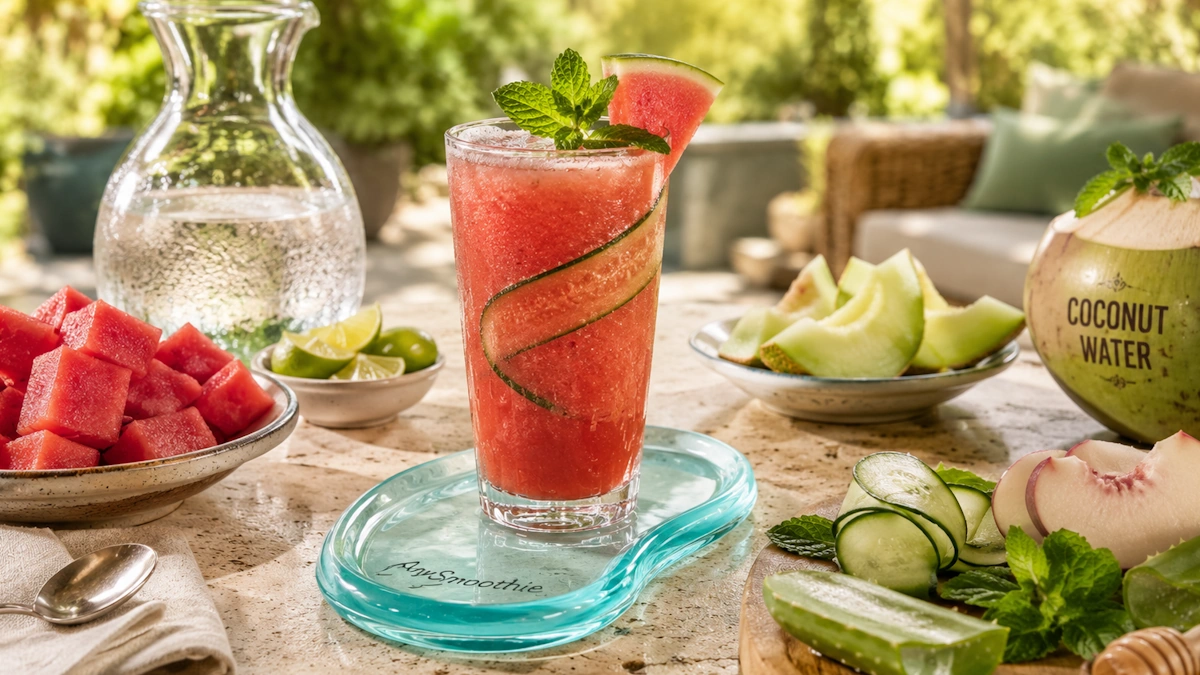
Dry mouth can turn a simple smoothie into a chore. Too thick, too tart, or too icy, and every sip drags across a sensitive mouth.
That is why hydrating smoothies for dry mouth comfort need a softer approach. They should carry moisture, move easily, and leave a clean finish.
The best blends feel calm, not flashy. The sections below keep them simple and easy to adjust.
What Makes a Smoothie Better for Dry Mouth Support?
Dry mouth changes the way food feels. A smoothie that is too thick can cling to the tongue, while one that is too tart can sting. A better blend adds moisture, slides easily, and leaves a soft finish.
A 2023 review of xerostomia and food choices notes that thicker foods like yogurt are often easier to handle than dry or crumbly ones. The same logic applies to drinks, the mouth usually wants flow, not drag.
Choose Ingredients That Add Water Without Harshness
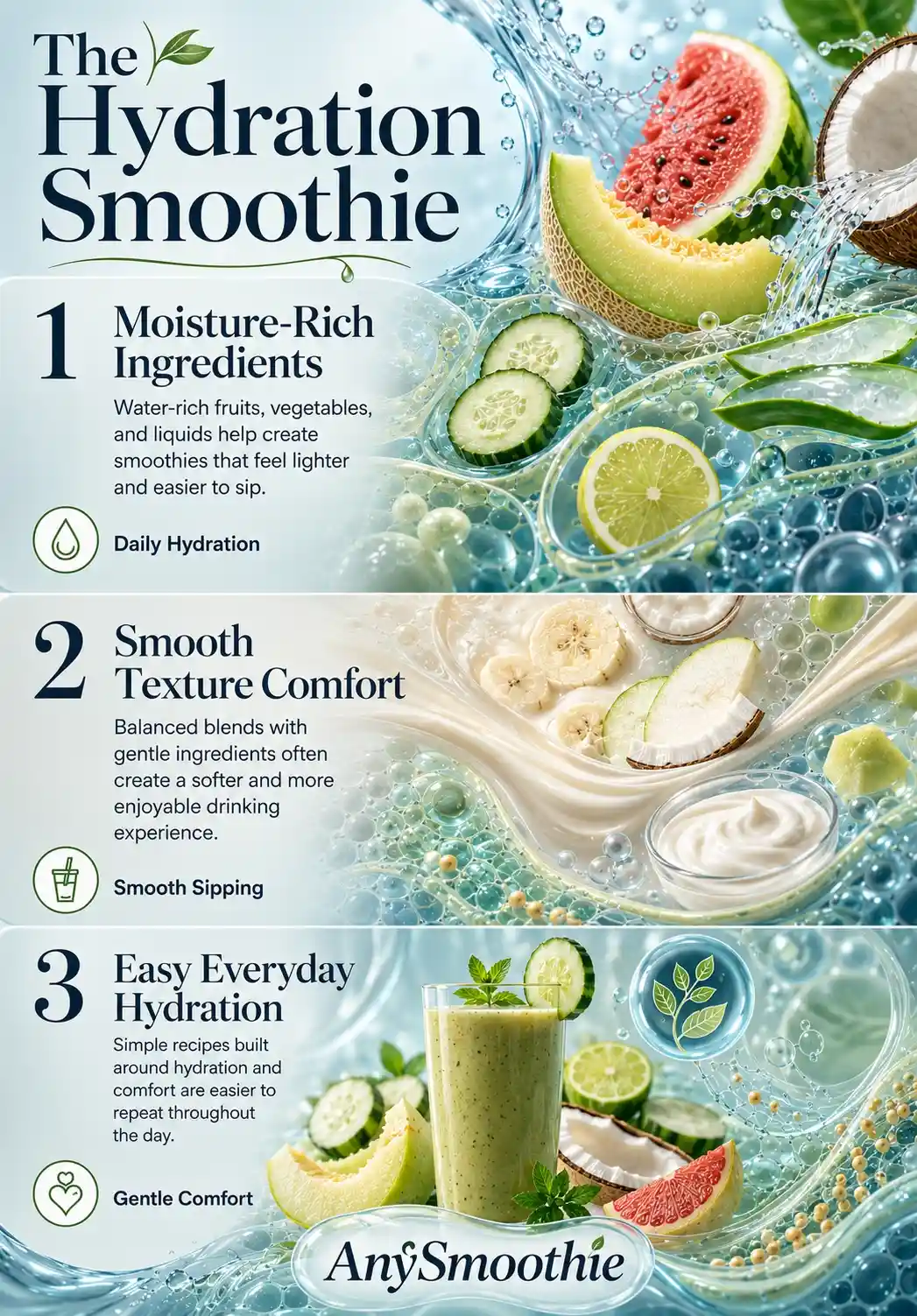
Start with ingredients that bring water into the glass without much bite. Coconut water, milk, kefir, yogurt, cucumber, melon, and soaked oats all add moisture in different ways. The goal is steady sipping and a smoother surface, not a frozen, spoon-thick shake. A thinner base also gives your saliva more room to coat the mouth.
Keep Acidity and Sweetness in Balance
Citrus and pineapple can feel sharp on a dry mouth, especially if the blend also carries a lot of sugar. Bananas, pears, peaches, melon, and a modest handful of berries usually feel gentler. If you want brighter flavor, add a little, then stop before the drink turns tart.
Use Texture to Make Swallowing Easier
Blend longer than you think you need, then thin the smoothie until it moves easily. Small chunks, fibrous bits, and lots of ice can make every sip feel scratchy. A smooth, even texture is easier on a sensitive mouth and usually feels more refreshing.
A dry mouth often wants a drink that feels soft first and flavorful second.
3 Hydrating Smoothie Recipes for Dry Mouth Comfort
These blends stay simple on purpose. Each one uses common ingredients and a mild flavor profile, so you can mix, sip, and adjust without extra effort.
Easy Ways to Make Smoothies More Comfortable Day to Day
Small adjustments matter on dry days. Temperature, thickness, and liquid choice can change how a smoothie feels before the first sip.
Adjust the Thickness Until It Feels Right
If a smoothie feels heavy, add water, milk, or coconut water and blend again. If it feels too thin, add a little banana or a spoon of yogurt. Comfort should guide the final texture.
If a smoothie feels sticky on the tongue, thin it before you finish the glass.
Support Hydration Between Smoothie Breaks
Smoothies work best as part of a wider hydration pattern. Keep plain water nearby and take small sips through the day. The dry mouth management tips from Johns Hopkins Sjogren’s Center also point to steady sipping during meals and avoiding caffeine when it feels drying.
A Quick Comparison of Smoothie Ingredients for Dry Mouth
When you swap ingredients, the main question is simple: do you want more fluid, more cream, or both? This quick chart helps you match the ingredient to the feeling you want.
| Ingredient or base | Hydration support | Texture | Flavor impact | Best use |
|---|---|---|---|---|
| Coconut water | High | Thin and easy to sip | Light, slightly sweet | Fruit-first smoothies |
| Yogurt or kefir | Moderate | Creamy and smooth | Mild tang | Softer, fuller blends |
| Cucumber | High | Very light | Neutral | Cooling mixes |
| Banana | Low to moderate | Silky and thicker | Mild sweetness | Softening sharper flavors |
| Soaked oats | Moderate | Soft, slightly thick | Neutral | Adding body without grit |
The best choice depends on the mouthfeel you want most. Many people do well with a thin base, then a small amount of cream or fruit for balance.
Conclusion
The best hydrating smoothies for dry mouth comfort are gentle, smooth, and easy to customize. They use moisture-rich bases, mild fruit, and a texture that glides instead of grips.
Start with one recipe, thin it until it feels right, and notice which ingredients leave your mouth calmer. Small changes matter more than fancy add-ins. Comfort comes from consistency, and that makes every sip easier to return to.
🛡️ Safety Notes & Dietary Interactions
- Texture Often Matters Most: For dry mouth comfort, texture can be as important as ingredients. Smooth, easy-flowing blends are often more comfortable than thick smoothies that cling to the tongue.
- Acidity Awareness: Citrus, pineapple, and highly tart fruits may feel irritating for some individuals. Milder fruits such as banana, pear, melon, and peach often create a gentler sipping experience.
- Hydration-Friendly Bases: Coconut water, milk, kefir, yogurt, cucumber, and melon contribute fluid while helping maintain a softer mouthfeel that supports easier swallowing and sipping.
- Thickness Can Be Adjusted: A smoothie that feels sticky or pasty may simply need more liquid. Small adjustments with water, milk, or coconut water often improve comfort significantly.
FAQ
Why do some smoothies feel uncomfortable when you have dry mouth?
The article explains that dry mouth changes how foods and drinks interact with the tissues inside the mouth. Thick, icy, fibrous, or highly acidic smoothies may feel rough or irritating. A smoother texture with adequate fluid content often feels easier to sip because it moves more freely across the tongue and oral surfaces.
Which ingredients work best in hydrating smoothies for dry mouth comfort?
Water-rich ingredients such as cucumber, melon, coconut water, yogurt, kefir, milk, banana, and pears are highlighted throughout the article. These foods help create a softer texture while contributing hydration. The goal is not simply adding liquid, but building a smoothie that feels smooth, mild, and comfortable from the first sip to the last.
Why are bananas used so frequently in dry mouth smoothie recipes?
Bananas provide natural sweetness and a silky texture without introducing significant acidity. They blend easily with yogurt, milk, oats, berries, and other hydration-focused ingredients. According to the article, bananas help soften sharper flavors while improving overall mouthfeel, making them particularly useful when comfort is the primary goal.
How can someone make a smoothie easier to swallow?
The article recommends blending thoroughly, limiting fibrous chunks, reducing excessive ice, and adjusting thickness with additional liquid when necessary. If a smoothie feels sticky, heavy, or difficult to move around the mouth, adding water, milk, or coconut water can often improve the drinking experience without changing the recipe dramatically.
What is the most important takeaway from the article?
The central message is that dry mouth smoothies should prioritize comfort before complexity. Water-rich ingredients, moderate sweetness, gentle flavors, and an easy-to-sip texture tend to work better than highly acidic or overly thick blends. Small adjustments to hydration, temperature, and consistency often make a bigger difference than adding specialty ingredients.

Medical Disclaimer: AnySmoothie content is for educational purposes only and is not a substitute for professional medical advice. Consult a healthcare provider for personalized guidance. See our full Disclaimer & Terms of Use. AI Transparency: AnySmoothie may use AI to support content development. All content undergoes human editorial review for accuracy, clarity, and editorial quality. See our full AI Transparency.