
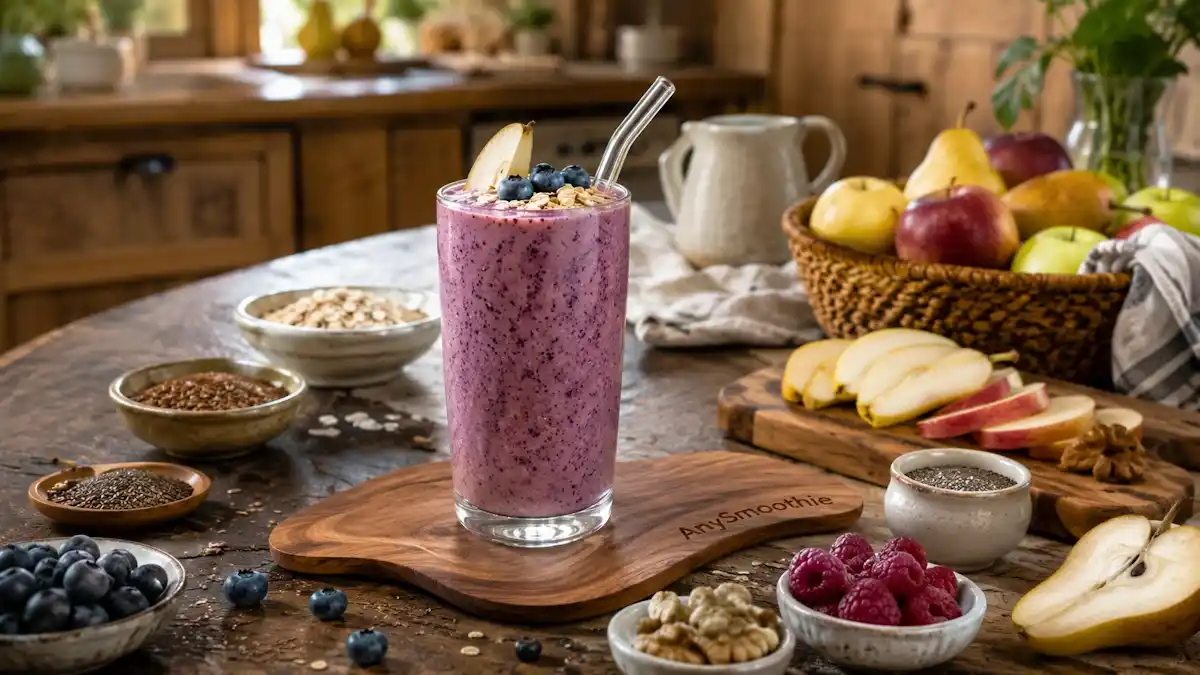
Soft stools, regular fluids, and steady fiber make bathroom trips easier to manage. When that pattern slips, even small strain can feel like a big problem. Fiber smoothies are a practical way to support that routine, but they are not a cure.
They work best when they fit into the rest of your day. That means choosing gentle ingredients, drinking enough water, and keeping meals consistent. The sections below cover how they work, what to blend, what to skip, and three simple recipes you can use right away.
Why fiber smoothies can make daily eating easier when you have hemorrhoids
Fiber changes stool texture by absorbing water and adding bulk. When that bulk stays soft, the colon moves it with less friction, and you usually need less pushing. That matters because strain is what makes bathroom trips feel rough. A NIH review on fiber and hemorrhoids still points to more fiber and less straining as core habits.
Smoothies fit that pattern because they give you fiber and fluid at the same time. They also work when appetite is low or mornings are rushed. If you do better with soft foods during a flare, a smoothie can bridge the gap between meals.
How soluble fiber and water work together
Soluble fiber holds water and turns into a softer gel. Oats, chia, flax, pears, and berries all bring that kind of support. The result is a smoother texture that feels easier to pass.
Water matters just as much. Fiber without enough liquid can sit heavy or dry. That is why a smoothie works best when the liquid base is part of the plan.
Fiber and fluid work best as a pair. One without the other is less helpful.
Why smoothies are easier to build into busy mornings
A smoothie is fast, low-effort, and easy to sip. That makes it useful when you want breakfast without a lot of chewing. It also helps when plain toast or coffee would leave you short on fiber.
Busy mornings are easier when the routine is simple. A blender, a few frozen fruits, and one or two fiber sources can cover a lot of ground. That is the kind of habit that tends to stick.
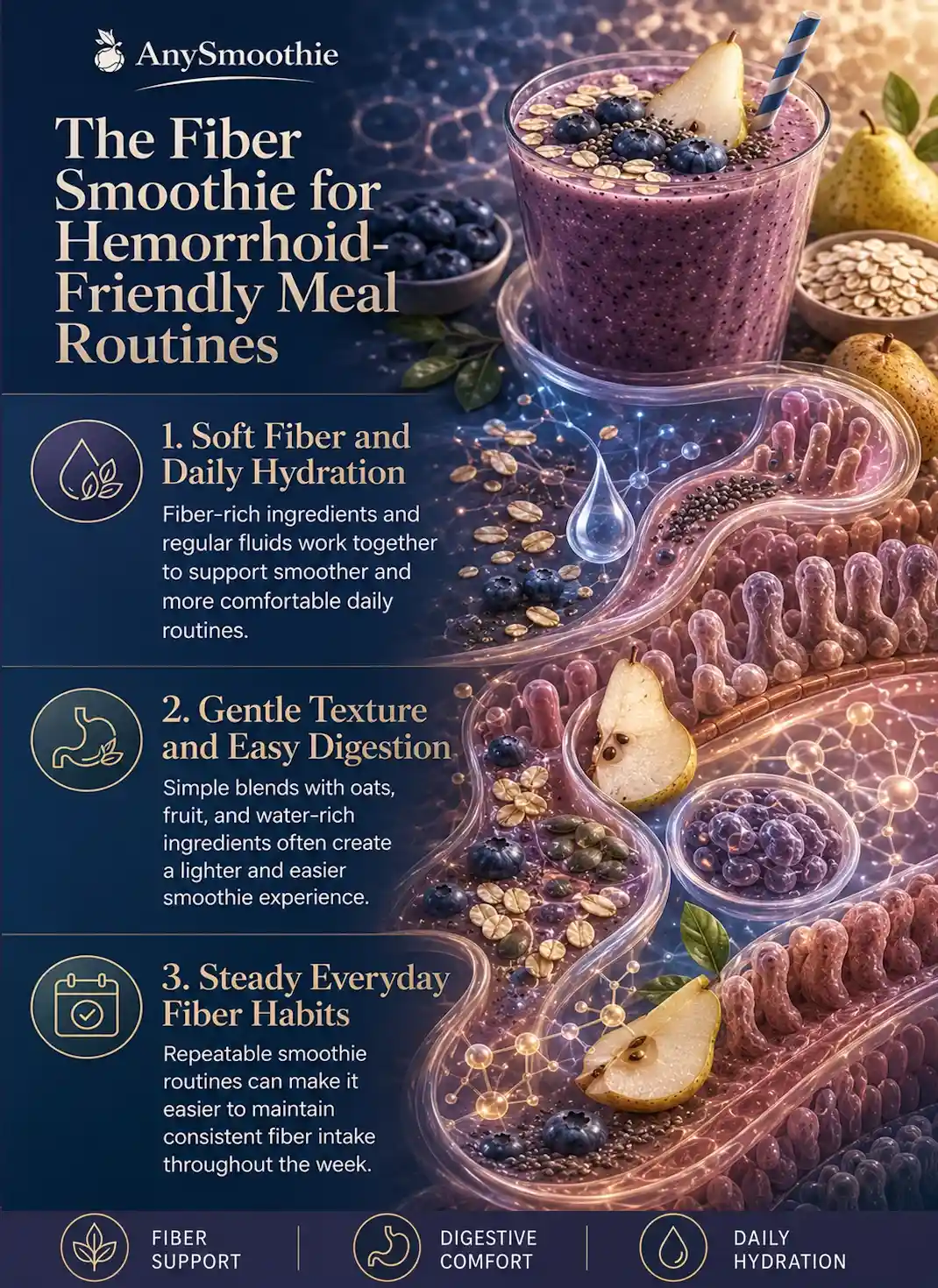
What to put in a hemorrhoid-friendly fiber smoothie
The best blends stay simple. Aim for ingredients that add soft fiber, water, and a smooth texture.
| Ingredient | Fiber type | Digestion support | Best use | Caution |
|---|---|---|---|---|
| Oats | Soluble | Adds gentle body | Breakfast blends | Keep portions modest |
| Chia seeds | Soluble gel | Holds water | Dry-stool days | Thickens fast |
| Ground flaxseed | Mixed | Soft bulk | Creamy recipes | Grind first |
| Berries | Mixed | Flavor and moisture | Daily fruit base | Seeds bother some people |
| Pear | Soluble | Soft, water-rich fruit | Mild sweetness | Use ripe fruit |
| Spinach | Low fiber | Adds volume | Green smoothies | Start with a handful |
| Yogurt or kefir | Low fiber | Creamy texture | When dairy sits well | Skip if it triggers |
| Water or unsweetened milk | None | Keeps it drinkable | Any blend | Avoid sugary bases |
The pattern is simple. Choose one or two fiber sources, add one water-rich fruit, then use enough liquid to keep the drink easy to sip. That gives you thickness without turning the glass into paste.
Best smoothie ingredients for soft, steady fiber support
Oats bring a mild taste and a soft, filling feel. Chia and ground flaxseed add gel-forming fiber, which helps the mix stay smooth. Berries and pears add both fiber and moisture, while bananas improve texture.
Spinach works well in small amounts because it adds volume without a strong flavor. Yogurt or kefir can make the blend creamier if your stomach handles dairy well. Water or unsweetened milk keeps the smoothie light enough for regular use.
Ingredients that may make symptoms worse
Very sweet syrups and fruit-juice-heavy blends can turn a helpful smoothie into a sugar load. Large scoops of protein powder and big spoonfuls of nut butter can also feel heavy. For some people, lots of ice makes the mix harder to tolerate.
Trigger foods vary from person to person. A short ingredient log helps you spot patterns. Write down the blend, the time you drank it, and how you felt an hour later.
How to build a routine that keeps smoothies helpful all week
Hemorrhoid-friendly eating works best when it stays steady. Care instructions from My Health Alberta also point to more fiber and less straining as part of daily bowel care. Make smoothies one part of that pattern, not the whole plan.
A simple timing plan for breakfast, snacks, or recovery days
Breakfast is the easiest slot because it gives you fiber and fluid early. Midmorning also works, especially if lunch tends to be light. On recovery days, a smaller smoothie can replace a skipped meal without feeling heavy.
Smaller servings often work better than one huge glass. That makes the fiber easier to manage across the day. It also keeps the routine from feeling like a chore.
How much to make and how fast to increase fiber
Start with a moderate serving and one new fiber source at a time. That gives your gut time to adjust. Sudden jumps can lead to gas or pressure, even when the ingredients are healthy.
Add more water through the day if you raise fiber in the blend. That simple step keeps the whole routine moving in the right direction. The smoothie helps most when the rest of your day supports it too.
3 Fiber smoothies for hemorrhoid-friendly meal routines
These blends keep the ingredient list short and the texture easy to sip.
Berry oat smoothie for a gentle morning start
Ingredients
- 1 cup frozen berries
- 1/3 cup rolled oats
- 1 tablespoon chia seeds
- 1 to 1 1/2 cups water or unsweetened milk
Blend until smooth.
The oats and chia add soluble fiber, while the berries keep the flavor bright. It works well when you want breakfast that feels light but still carries you through the morning.
Estimated Nutrition per Serving
Estimated with 1 cup unsweetened almond milk.
- Calories: ~320 kcal
- Protein: ~9 g
- Carbohydrates: ~55 g
- Fat: ~9 g
- Fiber: ~17 g
- Sugars: ~17 g
Pear spinach smoothie for extra water and fiber
Ingredients
- 1 ripe pear
- 1 handful spinach
- 1 medium banana
- 1 to 1 1/2 cups water or unsweetened milk
Blend until smooth.
Pear brings soft fiber and water, while spinach adds volume without a strong taste. It fits well after a low-fiber day or a heavy meal.
Estimated Nutrition per Serving
Estimated with 1 cup unsweetened almond milk.
- Calories: ~270 kcal
- Protein: ~6 g
- Carbohydrates: ~59 g
- Fat: ~4 g
- Fiber: ~11 g
- Sugars: ~31 g
A very ripe pear blends more cleanly with the spinach and gives the drink a softer texture. Blend those two with the liquid first, then add the banana for a smoother finish.
Creamy banana flax smoothie for a soft texture
Ingredients
- 1 medium banana
- 1 tablespoon ground flaxseed
- 1/2 cup plain yogurt or dairy-free yogurt
- 1 cup unsweetened milk or water
Blend until smooth.
The creamy texture feels easy to sip when appetite is low. Flax keeps the fiber compact, so the blend stays gentle.
Estimated Nutrition per Serving
Estimated with plain nonfat Greek yogurt and unsweetened almond milk.
- Calories: ~285 kcal
- Protein: ~17 g
- Carbohydrates: ~39 g
- Fat: ~8 g
- Fiber: ~7 g
- Sugars: ~21 g
Ground flax gradually absorbs moisture after blending. If you expect to drink this later rather than immediately, leave it slightly thinner at first so the texture remains soft and easy to sip.
Conclusion
Fiber smoothies work best when they sit inside a steady routine. Keep the liquid high, the fiber moderate, and the ingredients simple enough for your own body.
Adjust slowly, drink enough water, and use softer meals on days when symptoms feel active. The goal is a repeatable routine, not perfection, and that is what makes fiber support easier to live with.
🛡️ Safety Notes & Dietary Interactions
- Soluble Fiber and Hydration Partnership: Oats, chia, flax, and pears absorb water as they move through digestion. Adequate fluid intake helps these fibers support softer stool consistency and smoother digestive transit.
- Gradual Fiber Progression: Increasing fiber too quickly may create unnecessary bloating or digestive pressure. Introducing new fiber sources gradually often supports better tolerance and a more sustainable routine.
- Texture and Digestive Comfort: Smooth, easy-to-sip blends are often easier to incorporate consistently. Excessive seeds, protein powders, or thickening ingredients may make some smoothies feel unnecessarily heavy.
- Routine Consistency Matters: Fiber works best as part of a broader eating pattern. Regular meals, adequate hydration, and steady fiber intake often support digestive comfort more effectively than occasional high-fiber interventions.
FAQ
Why are fiber smoothies commonly recommended in hemorrhoid-friendly meal routines?
Fiber smoothies combine two important elements in one glass: fiber and fluid. The article explains that fiber helps support stool bulk and texture, while liquids help maintain softness. Together, they fit naturally into eating patterns designed to reduce excessive straining and support more comfortable bowel habits over time.
What types of fiber ingredients work best in these smoothies?
The article highlights oats, chia seeds, ground flaxseed, berries, pears, bananas, and small amounts of spinach. These ingredients provide varying combinations of soluble and mixed fibers while maintaining a relatively smooth texture. They also pair well with water, unsweetened milk, yogurt, or kefir to create balanced smoothies that remain easy to drink regularly.
Why is hydration emphasized alongside fiber intake?
Fiber and hydration function as a team. Soluble fibers absorb water and form softer gel-like structures during digestion. Without adequate fluid intake, higher-fiber meals may feel heavier and less comfortable. The article repeatedly notes that increasing water intake alongside fiber-rich smoothies helps support the overall digestive process more effectively.
What smoothie ingredients may be less helpful during sensitive periods?
According to the article, heavily sweetened syrups, fruit juice-based smoothies, oversized portions of nut butter, and large amounts of protein powder may make some blends feel unnecessarily heavy. Highly processed additions can also crowd out fiber-rich whole foods. Simpler recipes often make it easier to identify which ingredients fit comfortably into a daily routine.
How should someone increase fiber when starting a smoothie routine?
The article recommends a gradual approach rather than making large changes immediately. Adding one new fiber source at a time allows the digestive system to adjust while helping identify personal tolerance levels. Smaller servings combined with consistent hydration often create a smoother transition than aggressively increasing fiber intake all at once.

Medical Disclaimer: AnySmoothie content is for educational purposes only and is not a substitute for professional medical advice. Consult a healthcare provider for personalized guidance. See our full Disclaimer & Terms of Use. AI Transparency: AnySmoothie may use AI to support content development. All content undergoes human editorial review for accuracy, clarity, and editorial quality. See our full AI Transparency.