
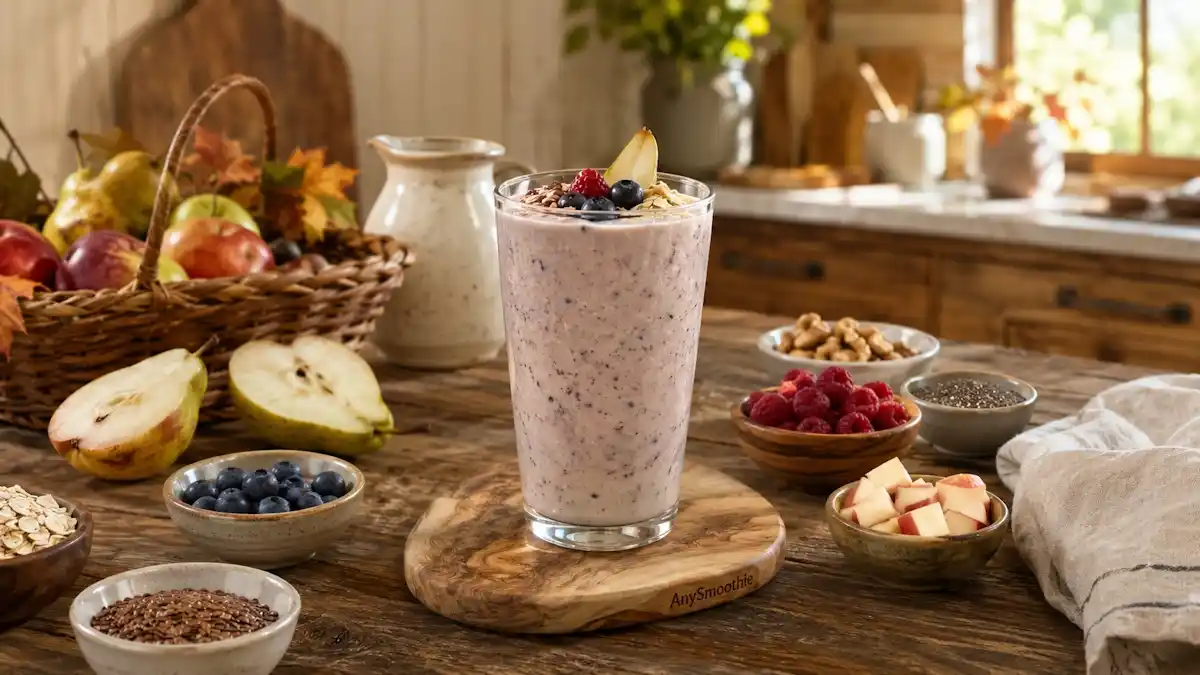
Diverticulosis means small pouches form in the colon wall, and many people want food ideas that feel gentle but still add fiber. Fiber smoothies for diverticulosis can be an easy way to do that because they are soft, flexible, and simple to adjust.
This is about food support, not treatment. The focus here is on ingredients that can help keep digestion regular, plus a few recipes you can make at home without a long prep list. A small blender routine can turn a hard-to-hit fiber goal into something manageable on busy days. Start slow, watch your response, and build from there.
Why fiber smoothies can fit a diverticulosis-friendly routine
Fiber adds bulk to stool, which can support smoother bowel movements when fluids stay steady. Johns Hopkins Medicine has a helpful overview of foods for diverticulosis and diverticulitis, and the basic message is simple, increase fiber in a way your body can handle. Many people do better when they raise fiber step by step instead of making a sudden jump.
How fiber supports healthy digestion and regularity
Soluble fiber dissolves in water and forms a softer gel. Oats, chia, and some fruit do this well. Insoluble fiber adds more structure and helps move material through the gut. Both matter, and both work best when you drink enough.
That mix can support stool texture and regularity without making every meal feel heavy. The goal is steady intake, not a huge dose in one sitting.
Why smoothies can be easier than bulky high-fiber meals
A smoothie can pack fruit, seeds, oats, and liquid into one cup. That matters on mornings when chewing a big salad or grain bowl feels like too much.
Blending also helps soften sharper textures. For people with low appetite, a smoothie often feels easier to finish than a plate of fibrous food.
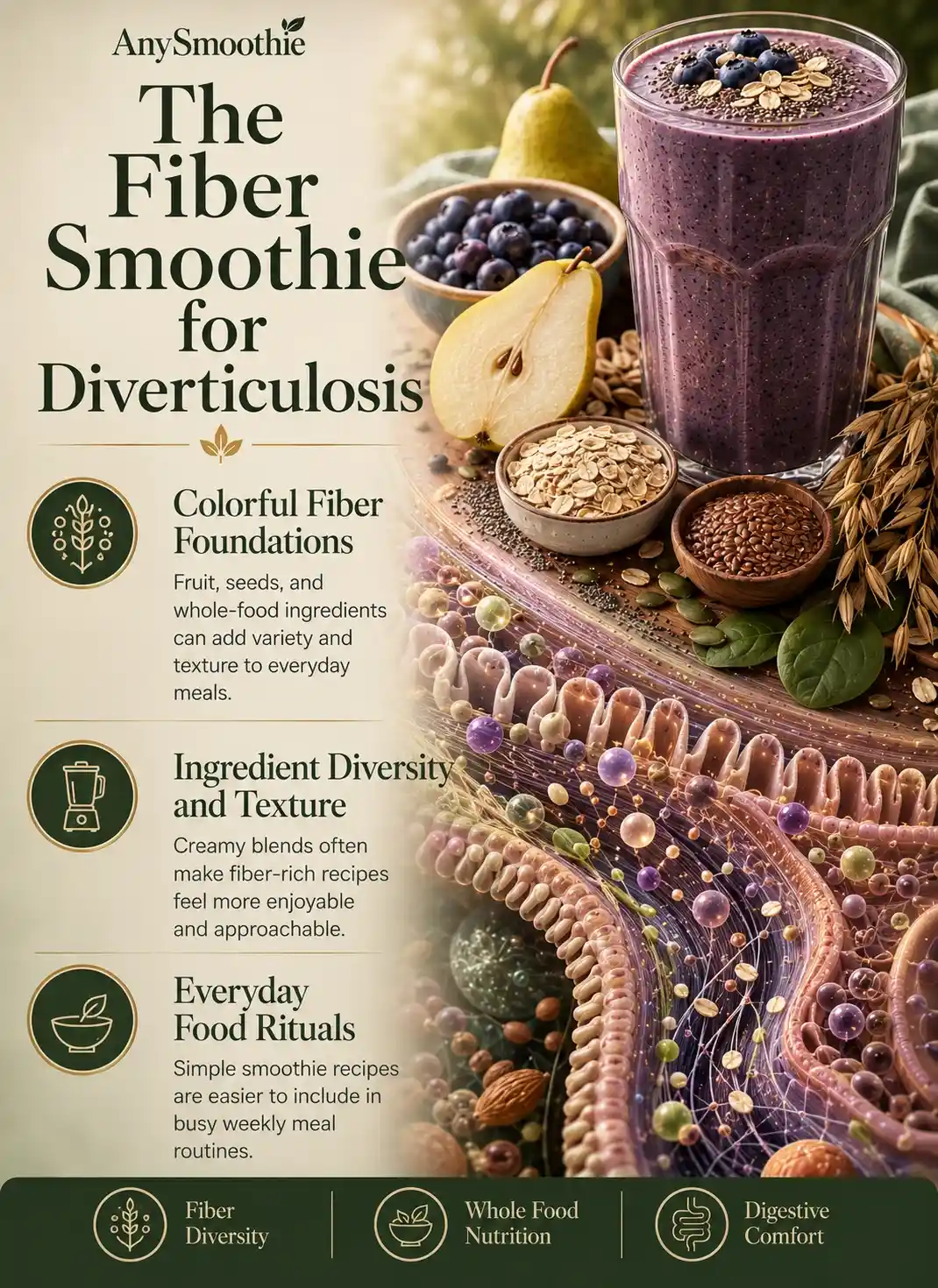
The best ingredients to build a high-fiber smoothie
The best blends keep the fiber steady and the texture smooth. Tolerance still varies, so the same recipe may feel perfect to one person and too thick to another.
Fruits that bring fiber without too much sugar
Start with berries, pears, apples with skin, kiwi, or avocado. Berries are a strong choice because they bring fiber and bright flavor without much work. Ripe fruit blends better, and frozen fruit can thicken the drink without adding sugar.
Seeds, oats, and vegetables that blend in well
Chia seeds and ground flaxseed add fiber in small amounts, and oats bring a creamy body. Spinach and cucumber blend in quietly, so they raise the fiber count without a strong taste. Seeds keep thickening after blending, so let the smoothie sit a minute before you sip.
Liquids and add-ins that keep the smoothie gentle
Use water, unsweetened milk, kefir if it sits well with you, or plain yogurt if it fits your diet. Enough liquid helps the blender work and keeps the drink easy to sip. For a plain food reference, UCSF Health’s diverticular disease and diet page is a clean place to start.
Ingredients to limit if your gut is sensitive
Some smoothie add-ins make the drink less balanced. A simpler recipe often feels better, especially when you are raising fiber slowly.
Very sugary bases and heavy add-ins
Fruit juice, sweetened yogurt, ice cream, and syrups can push sugar up fast. They also crowd out the ingredients that give the smoothie better structure and slower digestion. A smoothie should taste good, but it should still behave like food.
Large amounts of raw greens, skins, or seeds all at once
Big handfuls of raw greens or a pile of seeds can feel rough when your gut is not used to them. Fruit skins can also make a smoothie feel gritty if you use too much at once. Start smaller, then adjust.
Simple recipes are easier to repeat, and repetition is what makes a routine stick.
Comparison table: smoothie ingredients and how they fit a diverticulosis-friendly plan
Here is a quick way to compare common smoothie add-ins.
| Ingredient type | Fiber benefit | Texture | Digestion comfort | Best use |
|---|---|---|---|---|
| Berries | Moderate fiber and color | Smooth with tiny seeds | Usually easy | Base fruit |
| Chia seeds | High soluble fiber | Thickens fast | Best in small amounts | Boosting thickness |
| Ground flaxseed | Mild fiber and fats | Fine, less gritty | Often gentle | Easy add-in |
| Oats | Soft, steady fiber | Creamy | Good for many people | Breakfast blends |
| Spinach | Light fiber | Smooth when blended well | Usually mild | Balancing sweet fruit |
| Water or unsweetened milk | No fiber, but helps blend | Thin to medium | Very easy | Adjusting texture |
The easiest blends usually pair one fruit, one fiber booster, and one mild liquid. That keeps the taste clean and the texture predictable.
3 Fiber smoothies for diverticulosis
These ideas stay simple on purpose.
How to make fiber smoothies easier on your stomach
Use gentle fiber sources like oats, chia, or ripe fruit, and add them slowly so your gut can adjust. Blend the smoothie well with enough liquid, since thick, gritty drinks can feel rough on digestion. It also helps to skip huge servings at first, even if fiber is the goal. If a smoothie still feels heavy, cut back on seeds or add yogurt for a smoother finish.
Start with smaller servings and add fiber slowly
Begin with an 8-ounce glass, not a giant blended bowl. Then watch how the texture and fiber load feel over the next few hours. Gradual changes usually fit better than a sharp jump.
Pair smoothies with enough water during the day
Fiber works best when fluid intake stays steady. Sip water through the day, especially if your smoothie includes oats, seeds, or flax. When hydration stays up, the drink tends to feel lighter and easier to move through.
Conclusion
Fiber smoothies can be a simple, flexible way to support regular digestion when you choose the right mix. Keep the base gentle, build fiber slowly, and pay attention to texture as much as flavor.
The best recipe is the one you can repeat. Start small, stay hydrated, and let your body tell you which version feels best. That steady approach often works better than chasing the highest fiber count.
🛡️ Safety Notes & Dietary Interactions
- Gradual Fiber Progression: Increasing fiber too quickly may create unnecessary digestive discomfort. Building intake gradually often allows the digestive system more time to adapt to higher fiber exposure.
- Hydration and Fiber Synergy: Soluble fibers such as chia and oats absorb water as they move through digestion. Consistent fluid intake helps support smoother stool texture and overall digestive comfort.
- Texture Load Awareness: Large amounts of seeds, raw greens, or fibrous ingredients can make smoothies feel unnecessarily dense. Simpler blends are often easier to tolerate and repeat consistently.
- Balanced Ingredient Selection: Combining fruit, fiber, and adequate liquid creates a gentler smoothie structure. Excess sweeteners and highly processed add-ins may reduce overall nutritional balance.
FAQ
Why are smoothies often recommended for people with diverticulosis?
Smoothies provide a practical way to include fiber-rich foods in a softer and easier-to-consume format. Because ingredients are blended together, many people find them less intimidating than large salads or bulky high-fiber meals. The article emphasizes that smoothies can make daily fiber intake feel more manageable while allowing gradual adjustments based on individual tolerance.
What types of fiber are most commonly used in diverticulosis-friendly smoothies?
The article highlights both soluble and insoluble fiber sources. Soluble fibers from oats, chia seeds, and certain fruits help create a softer gel-like texture, while insoluble fibers contribute structure and support digestive movement. Combining both types through whole foods may help create a more balanced smoothie than relying heavily on one source alone.
Why is gradual fiber introduction emphasized so strongly?
Increasing fiber intake too aggressively may create bloating, fullness, or digestive discomfort for some individuals. The article recommends starting with modest portions and allowing the body time to adapt. A gradual approach also makes it easier to identify which ingredients and fiber levels fit comfortably into a long-term digestive wellness routine.
Which ingredients work best in a gentle fiber smoothie?
Berries, pears, bananas, avocado, oats, chia seeds, ground flaxseed, spinach, kefir, yogurt, and unsweetened milk alternatives are highlighted throughout the article. These foods contribute fiber, texture, hydration, or nutritional density while helping maintain a smoother consistency that many people find easier to tolerate than heavily fortified blends.
Why is hydration considered so important when increasing fiber intake?
Fiber and hydration work together throughout digestion. Ingredients such as oats, flax, and chia absorb water and change texture as they move through the digestive tract. The article repeatedly notes that maintaining adequate fluid intake alongside fiber-rich smoothies may help support digestive comfort and make higher-fiber eating patterns easier to sustain over time.

Medical Disclaimer: AnySmoothie content is for educational purposes only and is not a substitute for professional medical advice. Consult a healthcare provider for personalized guidance. See our full Disclaimer & Terms of Use. AI Transparency: AnySmoothie may use AI to support content development. All content undergoes human editorial review for accuracy, clarity, and editorial quality. See our full AI Transparency.