
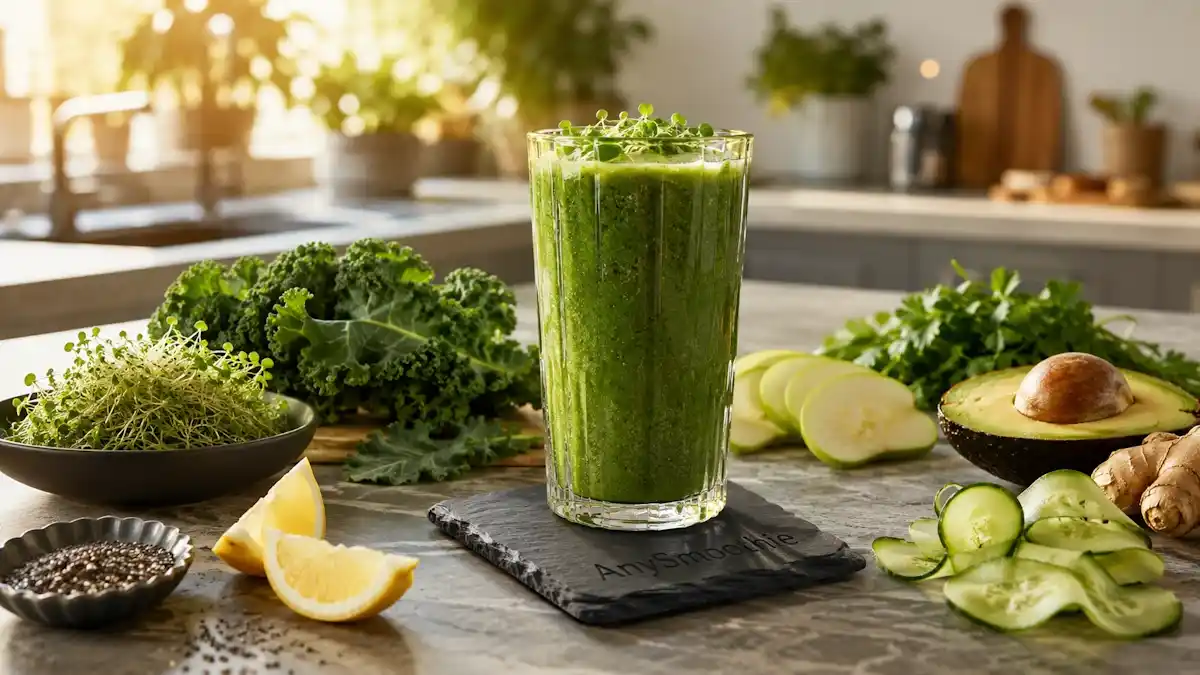
People looking at cruciferous smoothies for intestinal AhR support usually want a simple food routine with a real biological basis. That makes sense. Broccoli, kale, cabbage family greens, and a few smart add-ins can bring plant compounds, fiber, and texture that fit daily life.
AhR, or the aryl hydrocarbon receptor, is a cellular sensing pathway. In plain terms, it helps intestinal cells respond to certain food compounds and outside inputs. This article stays on the food side of the story, with practical smoothie ideas, not treatment claims.
How Cruciferous Smoothies Support Intestinal Balance
Cruciferous smoothies can add fiber and plant compounds that help keep digestion steady. Ingredients like kale, broccoli, and cabbage may support healthy bowel habits, although they can feel harsh for some people. Blending them with fruit, yogurt, or ginger can make them easier to digest and more palatable.
Digestive Resilience and Cellular Maintenance Balance
Cruciferous vegetables contain compounds that can interact with intestinal signaling after you eat them. When you blend them into smoothies, you make them easier to use often, which matters more than any one serving.
The real value comes from the mix of plant compounds, fiber, and supporting ingredients. That mix may help the gut environment stay steady, which matters for cellular upkeep and daily digestive comfort.
What AhR does in the gut, in simple terms
AhR is part of the gut’s sensing system. It responds to certain food-derived molecules and environmental inputs, then helps cells adjust their activity.
That is why it comes up in talks about barrier support, immune communication, and intestinal adaptation. It is a signaling pathway, not a magic switch. For a clear scientific overview, see this review on gut microbiota and AHR signaling.
Why cruciferous plants are a useful starting point
Broccoli, kale, cabbage, and sprouts contain glucosinolates, which can break down into active compounds during chopping, chewing, and blending. Freshness matters. So does how you prep them.
For example, lightly steaming broccoli before blending can soften the texture without wiping out the plant profile. Pairing bitter greens with fruit or ginger also helps the smoothie stay usable day after day. Research on phenolic metabolites and AHR signaling shows why plant-derived compounds matter in this pathway.

Cruciferous Nutrition and Intestinal Communication Dynamics
| Functional Ingredient | Digestive Communication Context | Intestinal Wellness Role | Smoothie Ingredient Source | Everyday Wellness Perspective |
|---|---|---|---|---|
| Broccoli Sprout Compounds | High in bioactive plant precursors | Supports healthy gut signaling and cellular response patterns | Broccoli sprouts, lightly steamed broccoli | Best for a small, concentrated botanical boost |
| Kale Derived Phytonutrients | Brings bitter greens and sulfur-rich plant compounds | Fits routines aimed at steady digestive resilience | Baby kale, curly kale | Easy to rotate in when you want a greener base |
| Chia Seed Fiber Sources | Adds gel-forming soluble fiber | Supports a smoother digestive texture and satiety | Chia seeds | Helps a smoothie feel more complete |
| Ginger Root Compounds | Adds sharp aromatic compounds | Supports comfortable digestion and flavor balance | Fresh ginger | Useful when cruciferous flavors need softening |
| Green Apple Polyphenols | Adds tartness and plant polyphenols | Supports a balanced, fresh taste profile | Green apple | Good for beginners who want milder greens |
These ingredients work best as part of a pattern, not as a one-off fix. Consistency beats intensity here.
How to build a cruciferous smoothie that is easy to digest and actually tastes good
A good cruciferous smoothie has balance. You want greens for phytonutrients, fruit for flavor, fiber for texture, and enough liquid to keep it easy to drink. Too much raw brassica flavor can turn a healthy plan into a chore.
Start with one mild green if you are new to this. Then build upward. A little ginger or green apple can cut bitterness fast. Healthy fats, such as nut butter, avocado, or yogurt, may also help with the absorption of certain plant compounds.
The best ingredients for nutrient partitioning and smoother digestion
Leafy greens bring the plant compounds. Chia or flax add fiber and body. Yogurt or kefir can improve texture if dairy works for you. Ginger and green apple improve taste without heavy sweetness.
A simple rule works well: use one bitter element, one bright element, and one creamy or thickening element. That keeps the smoothie useful, not punishing.
3 easy smoothie formulas to rotate through the week
- Mild starter blend: baby kale, green apple, cucumber, chia, and water or coconut water.
- Greener fiber blend: broccoli sprouts, kale, frozen pear, flax, ginger, and unsweetened kefir.
- Morning reset blend: spinach, cucumber, apple, avocado, and a plain protein source if you use one.
3 Cruciferous Smoothie Recipes for Gut Wellness
A mild green smoothie for beginners
Ingredients
- 1 cup baby kale
- 1/2 green apple
- 1/2 cucumber
- 1/2 teaspoon freshly grated ginger
- 1 tablespoon chia seeds
- 1 cup cold water or unsweetened almond milk
Blend until smooth.
This version is easier on the palate because the apple and cucumber soften the bite of the greens.
If the texture feels rough, blend the greens with liquid first, then add the rest. That small step makes a big difference.
Estimated Nutrition per Serving
Estimated with unsweetened almond milk.
- Calories: ~180 kcal
- Protein: ~7 g
- Carbohydrates: ~24 g
- Fat: ~7 g
- Fiber: ~9 g
- Sugars: ~11 g
A higher-fiber broccoli and kale smoothie
Ingredients
- 1/2 cup lightly steamed and cooled broccoli
- 1 cup kale
- 1/2 green apple
- 1 tablespoon chia seeds
- 1 cup cold water or plain kefir
Blend until smooth.
This recipe brings a stronger plant load while staying bright enough to drink often.
Keep the broccoli portion modest at first. You can build up as your taste and tolerance improve.
Estimated Nutrition per Serving
Estimated with plain low-fat kefir.
- Calories: ~250 kcal
- Protein: ~13 g
- Carbohydrates: ~36 g
- Fat: ~8 g
- Fiber: ~10 g
- Sugars: ~19 g
I’d let the steamed broccoli cool completely before blending. Warm broccoli against cold kefir can make the flavor seem more pronounced, while chilled broccoli integrates much more quietly with the apple.
A recovery-friendly smoothie for busy mornings
Ingredients
- 1 cup frozen mixed berries
- 1 cup kale
- 1/2 teaspoon freshly grated ginger
- 3/4 cup plain Greek yogurt
- 1/2 cup water, as needed
Blend until smooth.
This one works well after training or on rushed mornings, when you want something fast and steady.
Frozen fruit gives better texture, and the ginger keeps the flavor sharp. It is a simple setup you can repeat without much thinking.
Estimated Nutrition per Serving
Estimated with nonfat plain Greek yogurt.
- Calories: ~250 kcal
- Protein: ~21 g
- Carbohydrates: ~42 g
- Fat: ~2 g
- Fiber: ~10 g
- Sugars: ~21 g
Lifestyle Habits Associated With Digestive Recovery Balance
Smoothies work better when the rest of your day supports them. Hydration matters because fiber needs water to move well. Sleep, meal timing, and a mix of plant foods also help the gut handle more variety.
Fiber diversity matters too. Different fibers feed gut microbes in different ways. If you ramp up too fast, bloating can show up, so gradual changes work better. For a helpful look at how gut inputs can shape AhR-linked signaling, see this article on probiotics and intestinal AhR ligands.
Fiber diversity and hydration communication patterns
Aim for a mix of greens, seeds, fruit, beans, oats, and whole vegetables across the week. Then keep water intake steady. That pairing helps the whole system feel smoother.
How to use smoothies without crowding out whole foods
Use smoothies as a tool, not the whole plan. They fit well at breakfast or after exercise, but chew real food later in the day.
Whole vegetables, protein, and fats still matter. Smoothies work best when they support those meals, not replace them.
Conclusion
Cruciferous smoothies can be a simple way to bring more plant compounds, fiber, and gut-friendly variety into your day. The biggest wins come from starting small, keeping the flavor balanced, and rotating ingredients so the routine stays easy to repeat.
AhR gets attention for a reason, but the practical side is simpler than the science jargon. Build a smoothie you’ll actually drink, pair it with steady hydration and whole foods, and let small habits do the long work.
🛡️ Safety Notes & Dietary Interactions
- Glucosinolate Activation and Digestive Adaptation Dynamics: Cruciferous vegetables like broccoli, kale, cabbage, and sprouts contain glucosinolates that break down into biologically active plant compounds during chopping, chewing, and blending. Introducing these foods gradually may help support smoother digestive adaptation, especially for people not used to higher-fiber or sulfur-rich plant intake.
- Fiber Diversity and Microbiome Communication Balance: Chia, flax, greens, fruit, oats, and cruciferous vegetables contribute different fiber structures that interact with gut microbes in distinct ways. Rotating fiber sources across the week may help support broader microbiome diversity and steadier digestive comfort compared to relying on one single “superfood” ingredient repeatedly.
- Bitterness Balance and Smooth Digestive Tolerance: Raw brassica vegetables can feel intense when blended in large amounts, particularly for beginners. Pairing greens with citrus, ginger, cucumber, avocado, yogurt, or green apple often creates a more balanced texture and flavor profile that supports long-term consistency without overwhelming digestion or taste preferences.
- Hydration Support and Fiber Movement Coordination: Higher-fiber smoothies generally work best when daily hydration stays consistent. Soluble fibers absorb water and create gel-like textures during digestion, which may support smoother satiety and digestive pacing but can also feel heavy if fluid intake remains too low across the day.
FAQ
What is AhR and why does it appear in gut-health discussions so often?
AhR, or the aryl hydrocarbon receptor, is a cellular sensing pathway involved in how intestinal cells respond to certain food-derived compounds and environmental inputs. Researchers often discuss it in relation to gut barrier communication, immune signaling, and intestinal adaptation dynamics. In practical nutrition terms, it is less about “activating a switch” and more about supporting balanced cellular communication through dietary variety.
Why are cruciferous vegetables considered useful for intestinal wellness routines?
Broccoli, kale, cabbage, sprouts, and similar vegetables contain glucosinolates and sulfur-rich plant compounds that participate in broader digestive and cellular signaling pathways. They also contribute fiber and phytonutrients that support microbiome diversity and digestive resilience. Smoothies make these foods easier to consume consistently, especially for people who struggle with large vegetable portions in meals.
Why does blending greens with citrus or ginger improve the smoothie so much?
Cruciferous greens naturally contain bitter and sulfur-forward flavor compounds that can feel overpowering on their own. Ingredients like lemon, ginger, cucumber, or green apple soften that intensity while improving freshness and texture. This balance matters because long-term consistency usually depends more on flavor practicality than on maximizing ingredient intensity in one serving.
How does fiber diversity support gut balance and digestive comfort?
Different fibers nourish different microbial populations inside the gut. Chia, flax, greens, oats, fruit, beans, and cruciferous vegetables all provide distinct fermentable compounds that contribute to microbiome diversity. Rotating these foods gradually often supports steadier digestive adaptation and may feel smoother than dramatically increasing fiber intake all at once.
Why are smoothies considered a tool rather than a complete nutrition strategy?
Smoothies are useful because they simplify plant intake, hydration, and nutrient density, especially during busy mornings or post-exercise routines. However, whole foods still provide chewing mechanics, satiety, protein structure, and meal variety that smoothies alone cannot fully replace. Most balanced wellness routines use smoothies to support broader nutrition patterns rather than substitute every meal.

Medical Disclaimer: AnySmoothie content is for educational purposes only and is not a substitute for professional medical advice. Consult a healthcare provider for personalized guidance. See our full Disclaimer & Terms of Use. AI Transparency: AnySmoothie may use AI to support content development. All content undergoes human editorial review for accuracy, clarity, and editorial quality. See our full AI Transparency.