
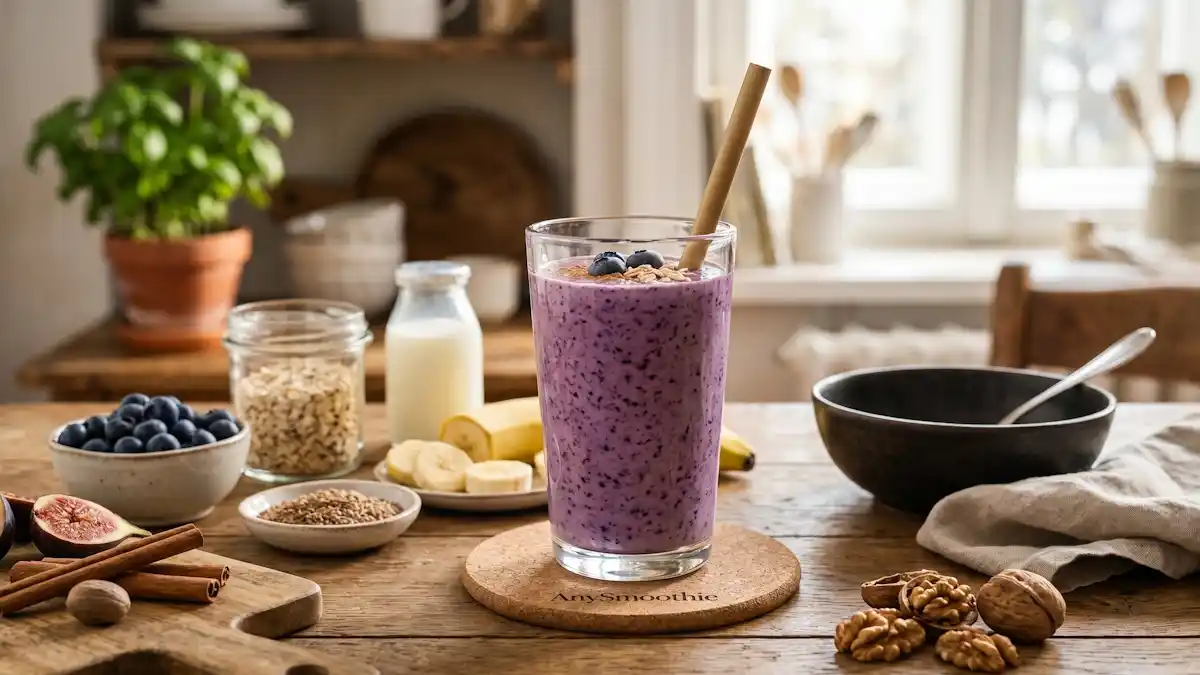
Tributyrin is a butyrate source, and some people add it to smoothies because the habit is easy to keep. Tributyrin smoothies for colon integrity aim to support the gut lining with butyrate delivery, plus fiber, protein, and enough fluid to keep the drink comfortable. The details matter, though. Food choices, hydration, and your own digestion all shape how well the smoothie fits your day. If you want a simple routine that feels sustainable, start with the basics and keep the blend gentle.
What tributyrin does inside the gut and why smoothie format makes sense
Tributyrin is a triglyceride that breaks down into butyrate after digestion. Butyrate is a short-chain fatty acid that colon cells use as fuel. A recent review on tributyrin and gut repair is available in this PMC article on intestinal barrier support. The big idea is simple. Tributyrin is not about a quick fix. It is about steady support for the environment inside the colon.
How tributyrin supports the colon barrier
The colon lining depends on a healthy barrier. That barrier helps keep the inner surface of the gut in good shape while food moves through. Butyrate-related support may help colon cells stay active and well fed, which matters for that lining.
A better barrier environment is usually less dramatic than people expect. It is more like keeping a brick wall in decent repair than rebuilding it after a storm. The support works best when the rest of the day also makes sense, with enough water, fiber, and regular meals.
Why smoothies are a practical way to take it
Smoothies fit into daily life because they are easy to repeat. They can also carry fiber, protein, and fats that slow digestion a bit. That can help the drink feel more balanced and less sharp.
They also help with taste. Tributyrin products can have a strong flavor or smell, so a smoothie can soften that edge. A breakfast smoothie or post-workout blend is often the easiest place to build the habit.
For a broader look at how butyrate supports colonocyte function, see this Clinical Nutrition review on butyrate and human health.
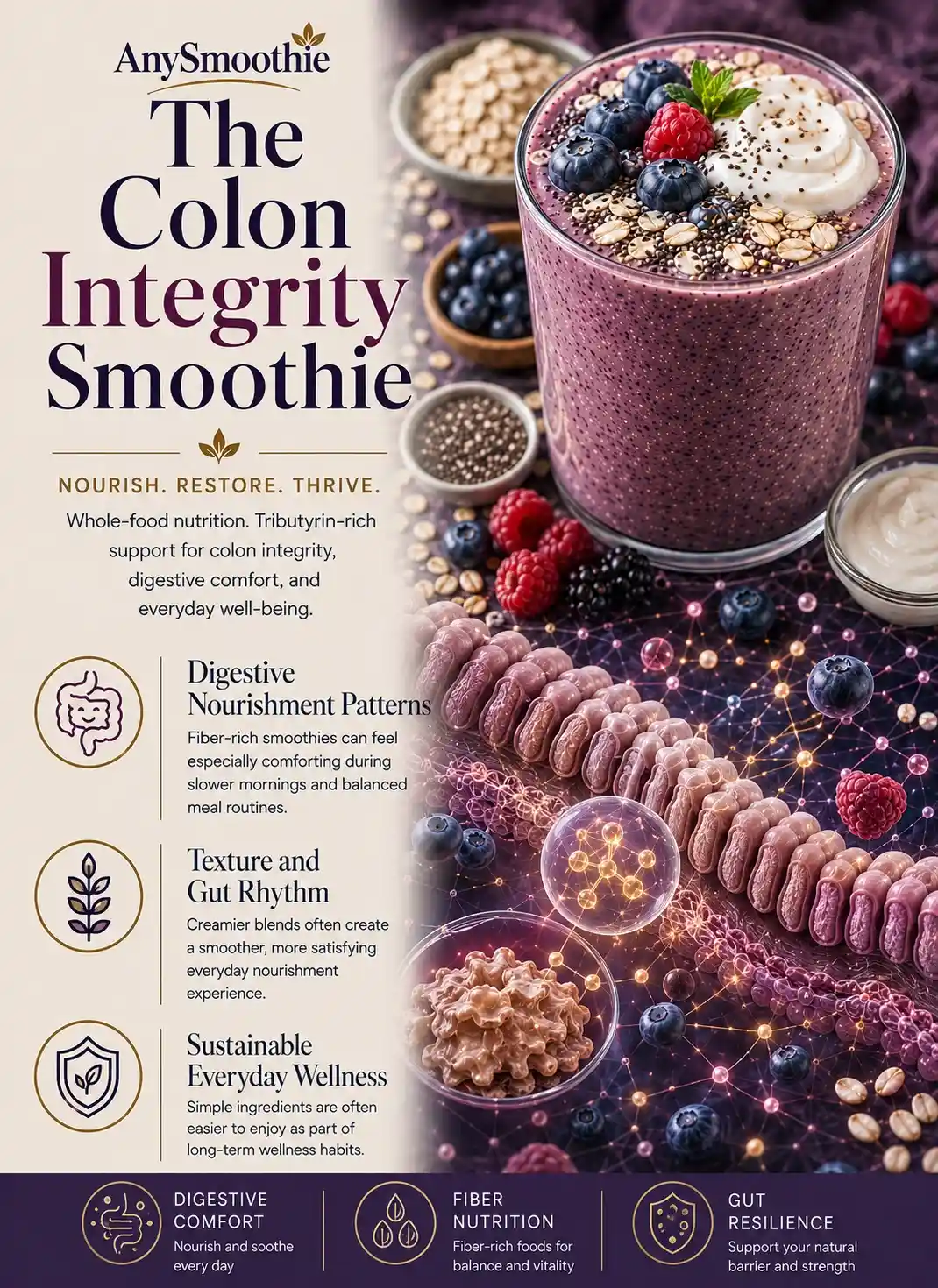
How to build a colon-supportive tributyrin smoothie without overdoing it
The best smoothie is usually the one your gut accepts more than once. That means a simple base, moderate fiber, and enough fat to keep it satisfying. If the blend gets too dense, too sweet, or too cold, it can become hard to repeat.
| Ingredient | Purpose | Best Use | Watch For | Example |
|---|---|---|---|---|
| Water or unsweetened milk alternative | Keeps the blend light | Daily base | Too little liquid makes it thick | Water, almond milk |
| Kefir or plain yogurt | Adds protein and a cultured base | Breakfast smoothies | Dairy may not sit well for everyone | Plain kefir |
| Oats, chia, or psyllium | Adds soluble fiber and texture | Small amounts at first | Too much can bloat sensitive guts | 1 tbsp chia |
| Almond butter or avocado | Adds fat and satiety | Fuller smoothies | Heavy blends can feel rich | 1 tbsp almond butter |
A gut-friendly smoothie should feel easy before it feels impressive.
Choose the right base, fiber, and fats
Water, kefir, and unsweetened milk alternatives all work well as a base. Kefir adds tang and protein. Unsweetened almond milk keeps the flavor light. Oats, chia, and small amounts of fruit add texture without turning the glass into a sugar bomb.
Healthy fats matter too. Almond butter, avocado, or a little flax can make the smoothie more filling. Start small if you are new to tributyrin or fiber-rich drinks. A half-size smoothie is often a better test than a full glass.
What to avoid if you want better digestion
Large scoops of sweeteners can crowd out the rest of the formula. Giant piles of seeds, frozen fruit, and protein powder can do the same. Very thick blends can also feel heavy, especially first thing in the morning.
Very cold smoothies can be rough for some people. So can drinks packed with too many add-ins at once. Keep the first few versions simple, then adjust one ingredient at a time.
3 tributyrin smoothie recipes for colon integrity
These three options are easy to rotate through the week. Each one keeps the ingredient list short and the texture manageable.
How to use tributyrin smoothies safely and consistently
Start with the amount on the product label, or less if that feels smarter for your system. One change at a time makes it easier to see what your gut likes. Pay attention to bloating, stool changes, and general comfort over several days, not just one meal.
A study on tributyrin administration and intestinal health in ScienceDirect’s review of tributyrin delivery also points to a simple truth, delivery matters. That is why product form, timing, and ingredients all deserve attention.
Start with a small amount and track how you feel
A lower starting amount can help you notice your response before you increase it. Keep the smoothie consistent for a week. Then judge the pattern. If it feels good, keep going. If it feels off, simplify the recipe before changing the supplement itself.
Choose a product and ingredients you can use every week
Flavor, price, and texture all matter. The best routine is one you can repeat without planning your whole day around it. If the smoothie becomes annoying, it will fade fast. If it stays easy, it has a real chance of becoming habit.
Conclusion
Tributyrin smoothies for colon integrity work best when they stay simple, balanced, and easy to repeat. The strongest formula usually pairs a gentle base with modest fiber, moderate fat, and a tributyrin product used as directed. That approach supports the colon barrier without making the drink hard to digest.
Pick one recipe, keep it steady for a week, and see how your body responds. Small, repeatable choices usually go farther than complicated plans.
🛡️ Safety Notes & Contraindications: Tributyrin Smoothies
Lipid Metabolism Considerations: Tributyrin is a triglyceride; individuals with severe hypertriglyceridemia or disorders of fat malabsorption (such as exocrine pancreatic insufficiency) should consult a physician before use.
Gastrointestinal Adaptation: Introducing butyrate sources can occasionally cause temporary changes in bowel habits, gas, or mild bloating; start with a lower dose to allow the gut microbiome and colonocytes to adapt.
Satiety and Caloric Density: Tributyrin and common base ingredients like avocado are calorically dense; monitor overall daily intake if weight management is a primary goal.
Bowel Obstruction Risk: While fiber is recommended for synergistic effects, individuals with active intestinal strictures or a history of bowel obstructions must avoid high-fiber add-ins (like chia or raw oats) and stick to a low-residue base.
Medical Oversight: If you have been diagnosed with inflammatory bowel disease (IBD), Celiac disease, or chronic diarrhea, do not use smoothies to self-treat clinical symptoms; seek guidance from a gastroenterologist.
FAQ
How does the “Triglyceride Structure” of Tributyrin optimize distal butyrate delivery?
Tributyrin consists of three butyrate molecules bound to a glycerol backbone. Biochemically, this structure is more resistant to rapid upper-GI absorption compared to free butyrate salts. Supporting this physiological system through a lipid-based smoothie ensures that pancreatic lipases gradually cleave the butyrate molecules as the bolus moves toward the lower small intestine and colon. This optimizes the natural pathways of “distal delivery,” providing a direct fuel source for the cells of the lower gut.
Why is Butyrate considered the “Preferred Fuel” for colonic epithelial cells?
Colonocytes (the cells lining the colon) derive up to 70% of their energy from the oxidation of butyrate. Biochemically, this fatty acid is a primary substrate for mitochondrial beta-oxidation within the gut lining. Supporting this physiological system through tributyrin intake facilitates the biochemical mechanics of “colonocyte respiration,” ensuring the epithelial barrier has the energy required to maintain tight junctions and cellular turnover.
What is the role of Tributyrin in supporting the “Mucosal Shield”?
The colonic barrier depends on a thick layer of mucus secreted by specialized goblet cells. Biochemically, butyrate signaling helps regulate the expression of MUC2 genes, which are responsible for the structural architecture of the mucus layer. Supporting this physiological system through targeted smoothies facilitates the biochemical mechanics of “barrier cushioning,” helping to maintain a protective interface between the gut lining and luminal contents.
How does “Lipid-Emulsion Stability” in a smoothie affect tributyrin handling?
Tributyrin is a fat-soluble molecule. Biochemically, blending it with other lipids (like avocado or nut butters) creates a stable emulsion that mimics the natural structure of dietary fats. Supporting this physiological system through a well-emulsified smoothie optimizes the natural pathways of “bile-salt interaction,” ensuring the biochemical mechanics of fat digestion are efficient and that the tributyrin is correctly processed by intestinal lipases.
How does “Mitochondrial Priming” in colonocytes influence gut oxygen levels?
Healthy colonocytes consume high amounts of oxygen through butyrate oxidation, which helps maintain an anaerobic (oxygen-free) environment in the colonic lumen. Biochemically, this low-oxygen state is essential for the survival of beneficial, fiber-fermenting bacteria. Supporting this physiological system through tributyrin delivery optimizes the natural pathways of “epithelial oxygen consumption,” facilitating the biochemical mechanics of a balanced and resilient microbial habitat.

Medical Disclaimer: AnySmoothie content is for educational purposes only and is not a substitute for professional medical advice. Consult a healthcare provider for personalized guidance. See our full Disclaimer & Terms of Use. AI Transparency: AnySmoothie may use AI to support content development. All content undergoes human editorial review for accuracy, clarity, and editorial quality. See our full AI Transparency.