
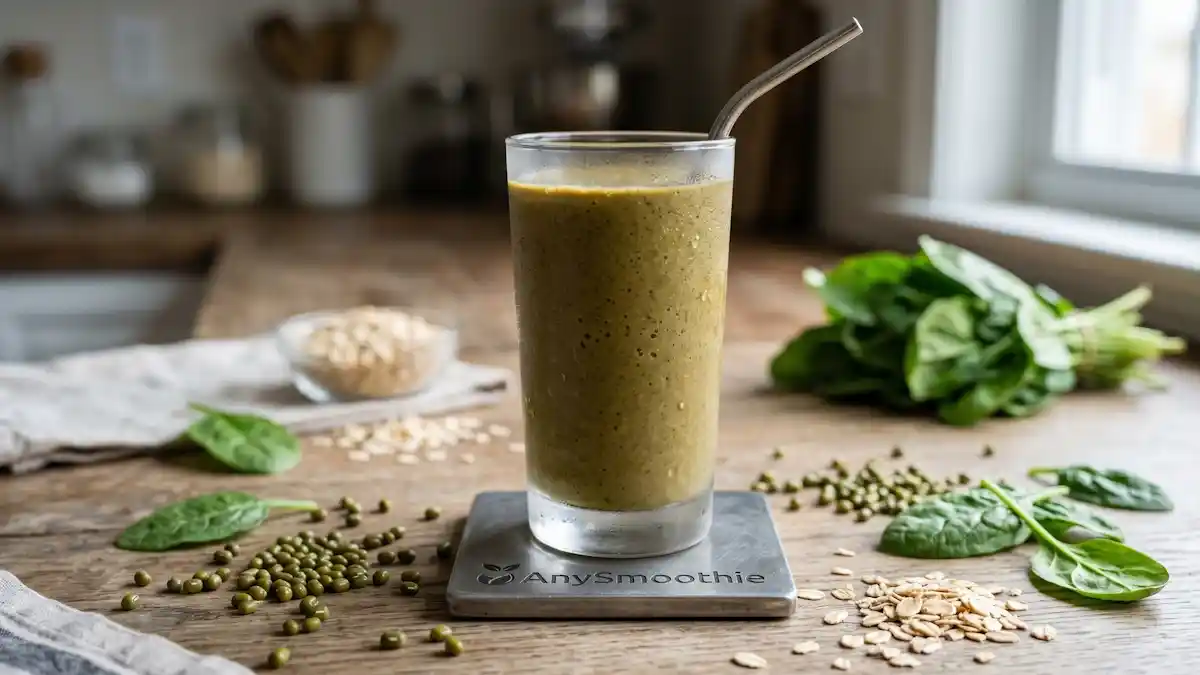
Molybdenum is a trace mineral, but it pulls real weight in the body. One of its main jobs is helping enzymes do their work, especially sulfite oxidase, which supports the normal handling of sulfites.
That matters if you want a molybdenum smoothie for sulfite oxidase support that feels gentle and practical. This article is about food-based support, not treatment. The goal is simple, help the body process sulfites more efficiently with nutrient-aware smoothie building, easy ingredients, and smart pairing.
What sulfite oxidase does, and why molybdenum matters
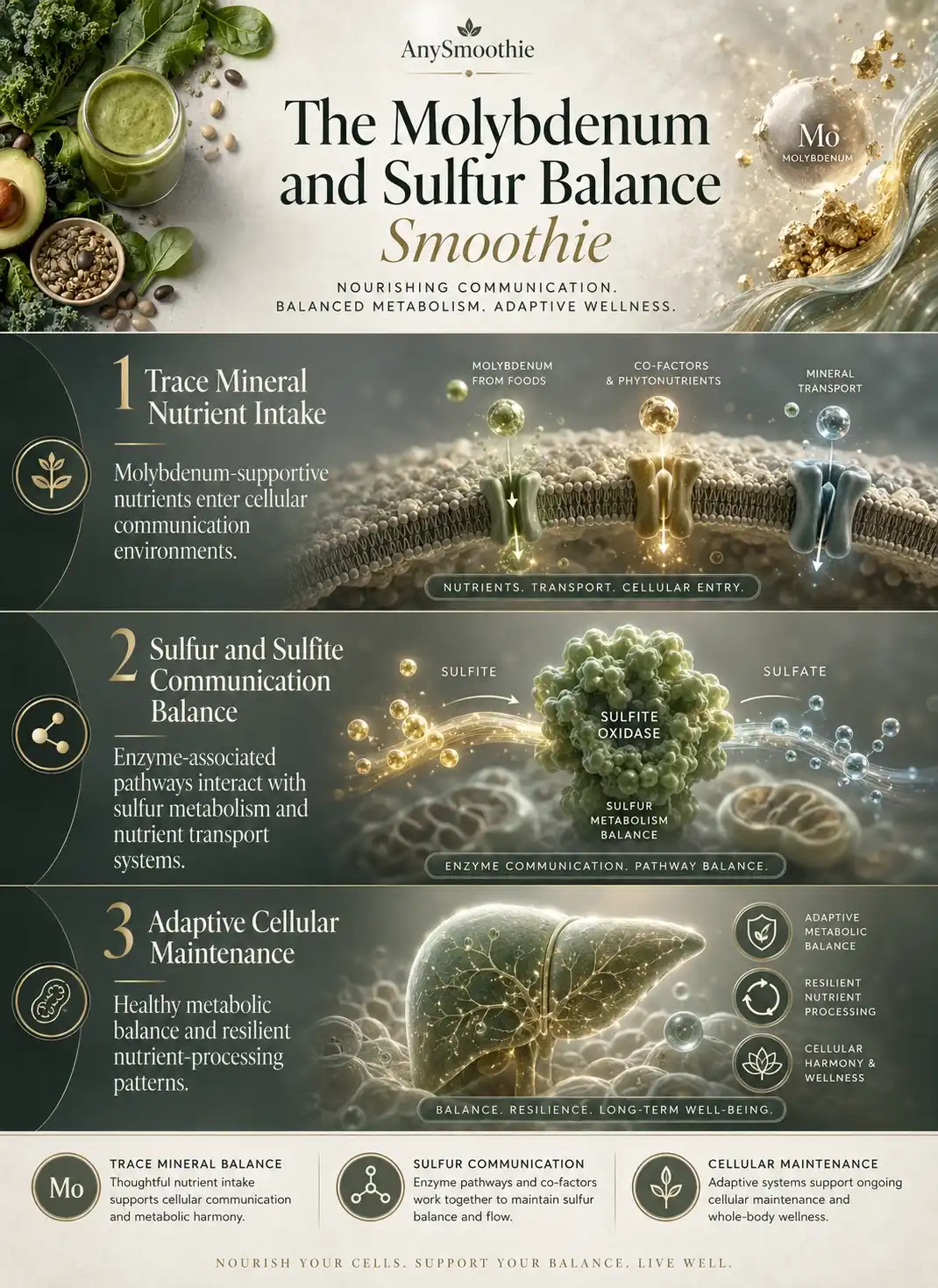
For the enzyme, is easier to grasp when you look at how the body handles sulfur compounds. Sulfite oxidase helps convert sulfite into sulfate, which the body can process and remove. Without enough molybdenum, the enzyme can’t work well, and sulfite can build up. Some people may think trace minerals don’t matter much, but molybdenum is needed in tiny amounts for this step to happen at all.
How sulfite processing works in the body
Sulfites show up in some foods and drinks, and they can also come from normal metabolism. Dried fruit, wine, vinegar-heavy foods, and some packaged items may contain them. The body usually handles them with an enzyme step that changes sulfite into sulfate.
That step matters because sulfate is easier for the body to manage. A review in PMC’s article on molybdenum in enzymes describes sulfite oxidase as the main molybdenum-dependent enzyme for this process. In plain language, it helps keep sulfur metabolism moving in the right direction.
Why molybdenum is the nutrient behind the enzyme
Sulfite oxidase depends on molybdenum as a cofactor. Without enough of that trace mineral, the enzyme cannot do its job as well. The body uses molybdenum in small amounts, but those small amounts matter.
The Linus Pauling Institute’s molybdenum overview explains this link clearly. Food-based intake supports overall micronutrient status, and that gives the enzyme the raw material it needs for normal activity.
Signs your smoothie may need a gentler mineral balance
If a smoothie feels too sharp, too heavy, or too complex, the blend may need a reset. Some people do better with softer fruit, fewer greens, and a lighter mineral load.
That does not point to a diagnosis. It just means the body often likes balance. A smoother texture, cleaner flavor, and simpler ingredient list can make the drink easier to use day after day.
Small, steady inputs often work better than big, complicated blends.
How to build a molybdenum smoothie that supports recovery and digestion
A good smoothie here has four parts. Start with a mineral source, add a soft fruit base, include a little fat or protein, then finish with a bright note. That gives you a drink that feels steady instead of watery or overly sweet.
For a broader mineral reference, the Oregon State molybdenum page is a useful anchor. The point is not to chase a huge nutrient list. It is to build a blend that supports digestion, absorption, and a calm start to the day.
Mineral Balance and Everyday Recovery
| Functional Ingredient | Nutrition Context | Wellness Role | Ingredient Source | Everyday Use |
|---|---|---|---|---|
| Brazil Nuts | Dense mineral texture | Adds richer depth | Whole nuts | Common in creamy blends |
| Pear | Soft fruit sweetness | Balances sharper notes | Fresh fruit | Used in lighter smoothies |
| Parsley | Fresh herbal brightness | Creates cleaner finish | Fresh herbs | Pairs with citrus |
| Pumpkin Seeds | Earthy nutrient density | Adds fuller texture | Whole seeds | Common in wellness blends |
| Lemon | Bright citrus acidity | Sharpens fruit flavors | Whole citrus | Used in fresher recipes |
That mix keeps the drink simple, but it still gives you texture, flavor, and a more complete mineral profile.
Choose ingredients that keep the blend calm and nutrient-dense
Soft fruits work well because they blend fast and taste mild. Pear, berries, and ripe banana can all soften the edge of mineral-rich ingredients. Light greens like parsley or baby spinach add color without making the drink taste harsh.
Seeds help too. Pumpkin seeds bring body, while citrus lifts the flavor. The goal is a smoothie that feels clear and easy, not overloaded with powders and add-ins.
Balance molybdenum with supportive minerals and fats
A trace mineral works better in a meal pattern that feels steady. A little fat, from nuts, seeds, yogurt, or plant yogurt, helps the drink hold you better. It also slows down the sugar rush from fruit.
That matters for metabolic efficiency in a simple sense. The smoothie should feel like food, not a spike. Keep the portions modest, and use ingredients that your stomach already knows.
Use flavor to make mineral-rich smoothies easy to drink
Flavor drives consistency. If the drink tastes flat, you will skip it. If it tastes bright, you will come back to it.
Lemon, pear, berries, and herbs give you that lift. A squeeze of citrus can wake up a heavy blend. A little vanilla can soften the edges. Good flavor makes the routine sustainable.
3 Molybdenum smoothie recipes for sulfite oxidase support
These ideas are built for real kitchens. Each one works as breakfast, a between-meal snack, or a lighter recovery blend. Use them as part of a broader food routine, not as a standalone fix.
How to use the smoothie in a real-life routine without overcomplicating it
Use the smoothie when your body wants something gentle. Breakfast is the easiest time. So are between-meal windows or the end of a demanding day.
Start with a small serving if the blend is new. Pay attention to taste, texture, and how well it sits. If you take supplements, have a health condition, or are pregnant, check with a qualified professional before changing mineral intake, since molybdenum needs can vary.
Conclusion
A well-built smoothie can support sulfite oxidase function through steady, food-based nutrition. The strongest approach is also the simplest one, use calm ingredients, keep the texture easy to digest, and pair molybdenum-rich foods with fruit, fats, and bright flavor.
That kind of blend is easy to repeat, and repetition matters more than perfection. Simple ingredients, used consistently, often do the most useful work.
🛡️ Safety Notes & Contraindications: Molybdenum smoothie
Copper antagonism: high doses of molybdenum can significantly increase the urinary excretion of copper, potentially leading to a copper deficiency; individuals with low copper levels or anemia should avoid excessive daily molybdenum intake.
Gout and Uric Acid: molybdenum is also a cofactor for xanthine oxidase, the enzyme that produces uric acid; if you have a history of gout or hyperuricemia, monitor your levels as high intake may trigger flares.
Legume sensitivity: many molybdenum-rich foods are legumes (like mung beans); if you have a severe lectin sensitivity or G6PD deficiency, ensure beans are properly cooked and soaked, or choose alternative sources like spinach and oats.
Pregnancy and development: while molybdenum is an essential trace mineral, excessive supplementation during pregnancy should be avoided as safe upper limits for concentrated forms are strictly defined to prevent developmental interference.
Tungsten interaction: tungsten can compete with molybdenum for the same enzyme binding sites; if you have occupational exposure to tungsten, your requirement for molybdenum may be higher, but this should be managed by a clinical professional.
FAQ
How does Molybdenum function as the “Active Key” for Sulfite Oxidase?
Sulfite oxidase is the enzyme responsible for the final step in sulfur metabolism: converting potentially reactive sulfites into stable sulfates. Biochemically, this enzyme is strictly dependent on the Molybdenum Cofactor (MoCo). Supporting this physiological system through molybdenum-rich smoothies ensures that the enzyme has its necessary “active key” to function. This optimization facilitates the biochemical mechanics of sulfur clearance, preventing metabolic drag and supporting systemic homeostasis.
Why is the conversion of Sulfite to Sulfate critical for “Tissue Integrity”?
Sulfate is a primary building block for glycosaminoglycans (GAGs), which provide structural support to cartilage, skin, and connective tissues. Biochemically, if the sulfite-to-sulfate conversion is sluggish, the body may face a shortage of usable sulfate for these structural components. Supporting the physiological systems of the sulfur pathway optimizes the natural pathways of “GAG synthesis,” ensuring that the biochemical mechanics of tissue repair and structural resilience are well-maintained.
How does Molybdenum support “Mitochondrial Priming” by reducing sulfite load?
Excessive sulfite levels can interfere with mitochondrial respiration by inhibiting certain enzyme complexes. Biochemically, a well-supported sulfite oxidase enzyme prevents this accumulation, protecting the mitochondria from metabolic “interference.” Supporting this physiological system through targeted nutrient partitioning optimizes the natural pathways of energy production, ensuring that the biochemical mechanics of the electron transport chain operate in a clean, efficient environment.
What is the synergy between Riboflavin (B2) and Molybdenum in sulfur handling?
While molybdenum is the direct cofactor for sulfite oxidase, riboflavin supports the broader flavoprotein network involved in electron transfer and redox balance. Biochemically, these systems work in tandem to keep the sulfur pathway moving forward. Supporting these physiological systems simultaneously through ingredients like spinach and legumes optimizes the natural pathways of metabolic flow, providing a dual-action approach to enzymatic efficiency and cellular resilience.
Why are Legumes the preferred “Moco-Base” for sulfur-support smoothies?
Legumes, particularly mung beans and lentils, are among the densest food sources of molybdenum. Biochemically, they provide the mineral within a whole-food matrix rich in fiber and amino acids like molybdenum-binding ligands. Supporting the physiological systems of uptake through legume-based smoothies facilitates the natural pathways of mineral delivery. This “food-first” strategy ensures that the biochemical mechanics of enzyme support are consistent and sustainable for daily metabolic work.

Medical Disclaimer: AnySmoothie content is for educational purposes only and is not a substitute for professional medical advice. Consult a healthcare provider for personalized guidance. See our full Disclaimer & Terms of Use. AI Transparency: AnySmoothie may use AI to support content development. All content undergoes human editorial review for accuracy, clarity, and editorial quality. See our full AI Transparency.