
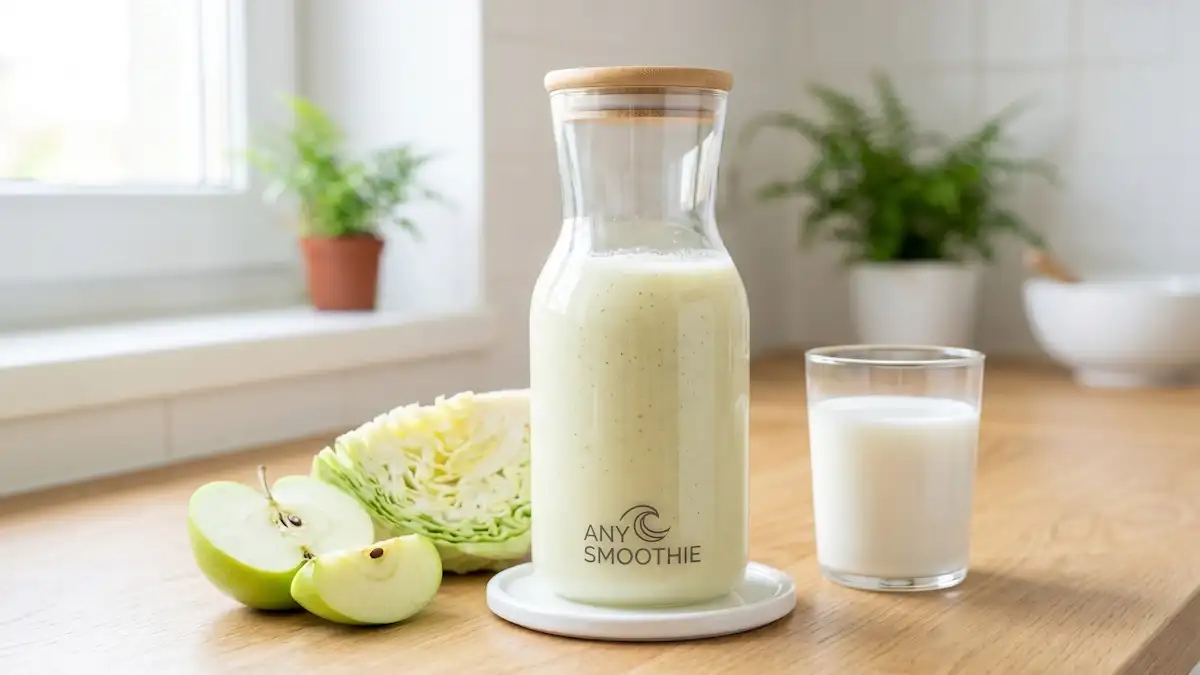
Smoothies can fit a kidney-friendly routine when the ingredients stay simple. The goal is clear, keep phosphorus and potassium lower, while still making something tasty, filling, and easy to digest.
That means the liquid base matters, fruit choice matters, and add-ins matter even more. With the right mix, smoothies for kidney health can feel light without tasting plain.
Renal Load Management: Building Smoothies That Stay Gentle on the Kidneys
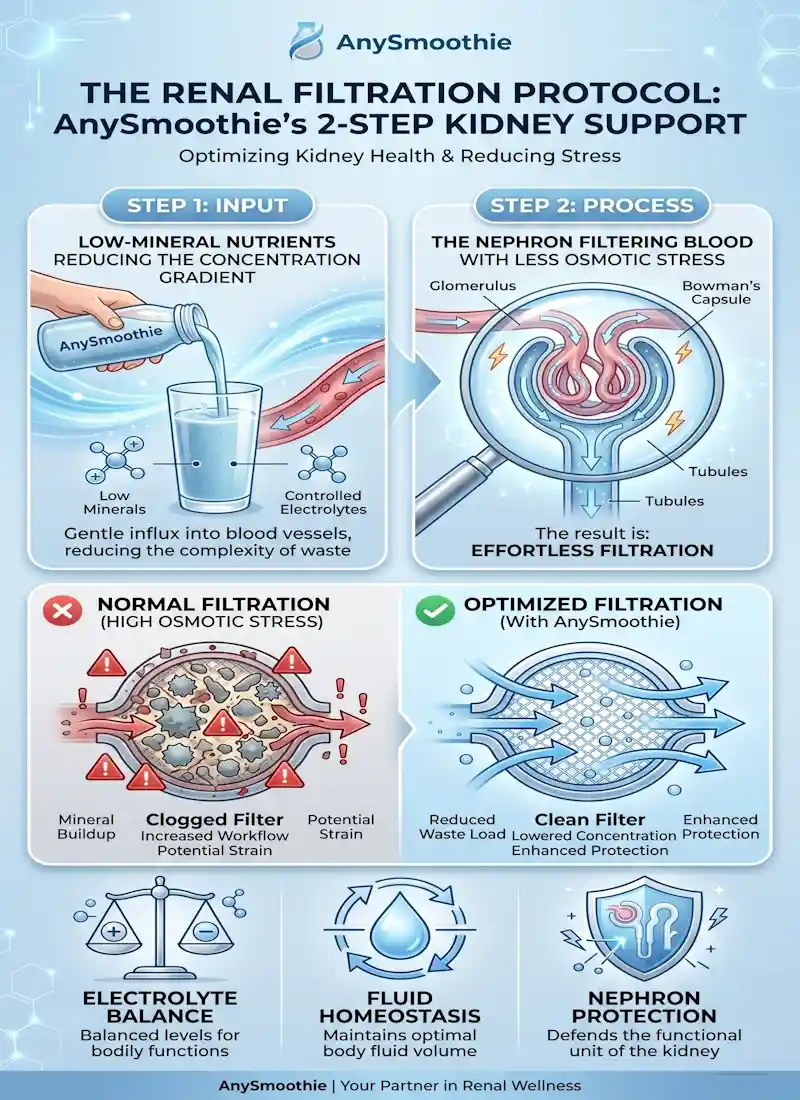
When you blend a smoothie, you are not only mixing flavor. You are also deciding how much mineral load goes into the glass. That is why the base matters so much. For a closer look at the research. With the right balance, a smoothie can stay simple, fresh, and kinder to the body.
Glomerular Pressure: Supporting the Filtration Barrier
A lower-mineral liquid base helps keep the drink simpler on the body.
Here is a simple comparison of common bases:
| Liquid base | Potassium content (mg) | Phosphorus content (mg) | Bioavailability of protein | Impact on renal acid load (PRAL) |
|---|---|---|---|---|
| Rice milk, unfortified | Very low, often about 20 to 50 per cup | Very low, often about 15 to 30 per cup | Low | Lowest mineral burden |
| Almond milk, leached | Low, often about 30 to 80 per cup | Low, often about 15 to 35 per cup | Low | Low |
| Macadamia milk | Low, often about 20 to 60 per cup | Low, often about 15 to 30 per cup | Low | Low |
Rice milk is the gold standard here because it usually keeps the mineral burden the lowest. Almond milk and macadamia milk can still work, but labels matter.
The liquid base sets the tone before anything else goes in the blender.
Fruit makes a smoothie taste alive, but potassium can climb fast if you choose poorly. Apples, berries, grapes, and pineapple work well in small portions because they add flavor without pushing the mix too hard.
A few ingredients need more caution. Bananas, dates, coconut water, and large amounts of avocado can raise potassium fast. Portion size matters as much as the ingredient itself.
A smart smoothie often uses one main fruit, then backs it up with ice or a low-mineral milk. That keeps the taste bright and the texture smooth.
Alkaline Priming: Supporting the Body’s Natural pH Buffering
Phosphorus hides in more places than most people expect. Dairy yogurt, protein powders with phosphate additives, nuts in big amounts, seeds, and packaged ingredients with long labels can all push the load higher.
Read labels for words like phosphate, phosphoric, and phosphorus. If a product lists several additives, it usually deserves a second look.
A little fiber or fat can help a smoothie feel more complete. Small amounts of oat fiber, chia, or nut butter can improve texture and slow the pace of digestion. Still, those add-ins can raise phosphorus or potassium too, so smaller portions are usually safer.
Flavor helps too. Lemon juice, lime juice, cinnamon, vanilla, mint, and a touch of honey or maple syrup can make a low-mineral smoothie taste finished. That matters because a drink you enjoy is one you’ll use again.
3 Kidney-Kind Low-Mineral Smoothie Recipes
These recipes stay simple on purpose. Amounts may need to change based on lab results or a care plan, since kidney needs can vary.
Biohacking Hydration: Optimizing Fluid Dynamics for Nephron Health
A smoothie can support hydration, but portion size still matters. A large blender full of fruit can turn a kidney-friendly recipe into too much of a good thing.
Keep servings moderate, especially if the rest of the day already includes potassium-rich foods. Smaller portions also make it easier to keep your mineral intake steady.
Phytochemical Shielding: Reducing Oxidative Stress in Renal Tissues
Label reading is the last filter. Fortified milks, protein powders, and packaged add-ins often hide phosphorus or potassium under long ingredient lists.
Check the front label, then scan the ingredient list. If you see phosphate additives or several mineral-fortified ingredients in one drink, the smoothie may no longer fit a low-mineral plan.
Conclusion
The best smoothies for kidney health keep the formula simple. Start with a low-mineral liquid, choose fruit with care, and use flavor boosters that don’t load the drink down.
Rice milk often gives the cleanest base, while small portions of berries, apples, pears, peaches, and pineapple keep things workable. With a little label reading and a steady hand on portions, kidney-friendly smoothies can still be satisfying, flavorful, and easy to make.
⚠️ SAFETY NOTES: Kidney Health Smoothies
INDIVIDUAL LAB VALUES: Nutritional needs for kidney health are highly individualized. These recipes are general guidelines; always adjust your mineral intake (Potassium and Phosphorus) based on your latest laboratory results (GFR, Creatinine, Electrolytes) and your nephrologist’s specific advice.
PHOSPHATE ADDITIVES: Carefully read labels on non-dairy milks and protein powders. Avoid any ingredient containing the word “PHOSPHATE” (e.g., dicalcium phosphate, sodium hexametaphosphate), as these chemical additives are highly taxing on compromised kidneys.
FLUID RESTRICTION: If you are on a fluid-restricted diet (common in advanced CKD or dialysis), remember that smoothies count toward your daily liquid total. Measure your portions carefully to avoid fluid overload.
OXALATE CONCERNS: Many kidney-friendly fruits are safe, but some common smoothie greens like spinach and Swiss chard are extremely high in oxalates, which can cause kidney stones. Stick to low-oxalate greens or skip them if you are prone to stones.
STARFRUIT (KARAMBOLA) WARNING: Never add starfruit to a kidney-friendly smoothie. It contains a potent neurotoxin that the kidneys cannot filter, which can be lethal for individuals with chronic kidney disease.
FAQ
How does a low-PRAL liquid base support glomerular pressure?
The Potential Renal Acid Load (PRAL) of a liquid base determines the amount of acid the kidneys must neutralize and excrete. Biochemically, high-acid loads can increase glomerular pressure and metabolic strain. Supporting the physiological systems of the kidney with low-PRAL bases like unfortified rice milk optimizes the natural pathways of acid-base balance. This strategy ensures that the filtration barrier is not overwhelmed by excessive metabolic byproducts, maintaining the structural integrity of the nephrons.
Why are phosphate additives more critical to monitor than organic phosphorus?
Organic phosphorus found in whole foods is only partially absorbed (40-60%), whereas inorganic phosphate additives (found in fortified milks and powders) have an absorption rate of nearly 100%. Biochemically, these additives bypass the body’s natural pathways of regulated uptake, leading to rapid increases in serum levels. Supporting the physiological systems of mineral filtration requires a “label-first” approach to identify phosphoric acid or polyphosphates, ensuring the biochemical mechanics of phosphorus clearance remain efficient.
How do low-potassium fruits influence the metabolic flux in renal tissues?
Fruits like apples and berries provide essential phytochemicals without the high potassium load that can stress the potassium-sodium pump in renal cells. Biochemically, managing potassium influx supports the physiological systems involved in maintaining the resting membrane potential of cells. By optimizing the natural pathways of mineral partitioning, these low-potassium choices facilitate steady nutrient delivery while reducing the excretory demand on the distal tubules of the kidney.
What is the role of “Alkaline Priming” in supporting renal pH buffering?
Alkaline priming involves selecting ingredients that produce alkaline metabolites, helping the body neutralize the acid load generated by protein metabolism. Biochemically, this supports the physiological systems of the bicarbonate buffer system. Optimizing this natural pathway through the use of specific fruits and vegetables in a smoothie reduces the need for the kidneys to synthesize ammonia to excrete acid, thereby supporting the long-term metabolic efficiency of renal tissues.
How does “Phytochemical Shielding” protect the renal filtration barrier?
Phytochemicals like quercetin (from apples) and anthocyanins (from berries) support the physiological systems involved in neutralizing reactive oxygen species within the glomerulus. Biochemically, these compounds facilitate mitochondrial priming and support the structural integrity of the podocytes (cells in the filtration barrier). By optimizing the natural pathways of antioxidant defense, this “shielding” approach reduces the oxidative stress associated with daily filtration work, supporting systemic metabolic resilience.

Medical Disclaimer: AnySmoothie content is for educational purposes only and is not a substitute for professional medical advice. Consult a healthcare provider for personalized guidance. See our full Disclaimer & Terms of Use. AI Transparency: AnySmoothie may use AI to support content development. All content undergoes human editorial review for accuracy, clarity, and editorial quality. See our full AI Transparency.