
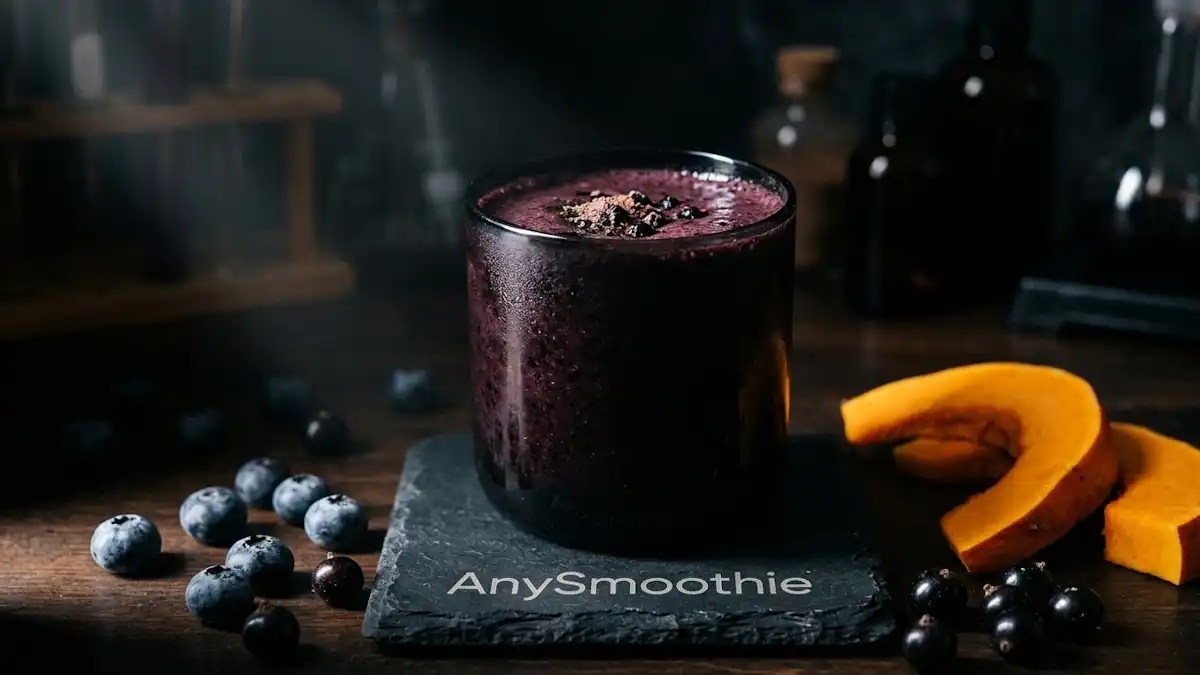
Rhodopsin is the light-sensing pigment in your rod cells, and it helps your eyes adjust when the lights go down. People look for food-based support because night vision depends on nutrient status, not just time in the dark.
A rhodopsin regeneration smoothie for night vision is not a cure, and it won’t create instant results. It can, however, support the body’s natural visual cycle with vitamin A precursors, antioxidants, zinc, and healthy fats that help absorption.
The goal here is simple, practical support. For a clear overview of how rod vision works, the NIH night vision physiology guide is a useful reference.
The visual cycle: how rhodopsin powers your night vision
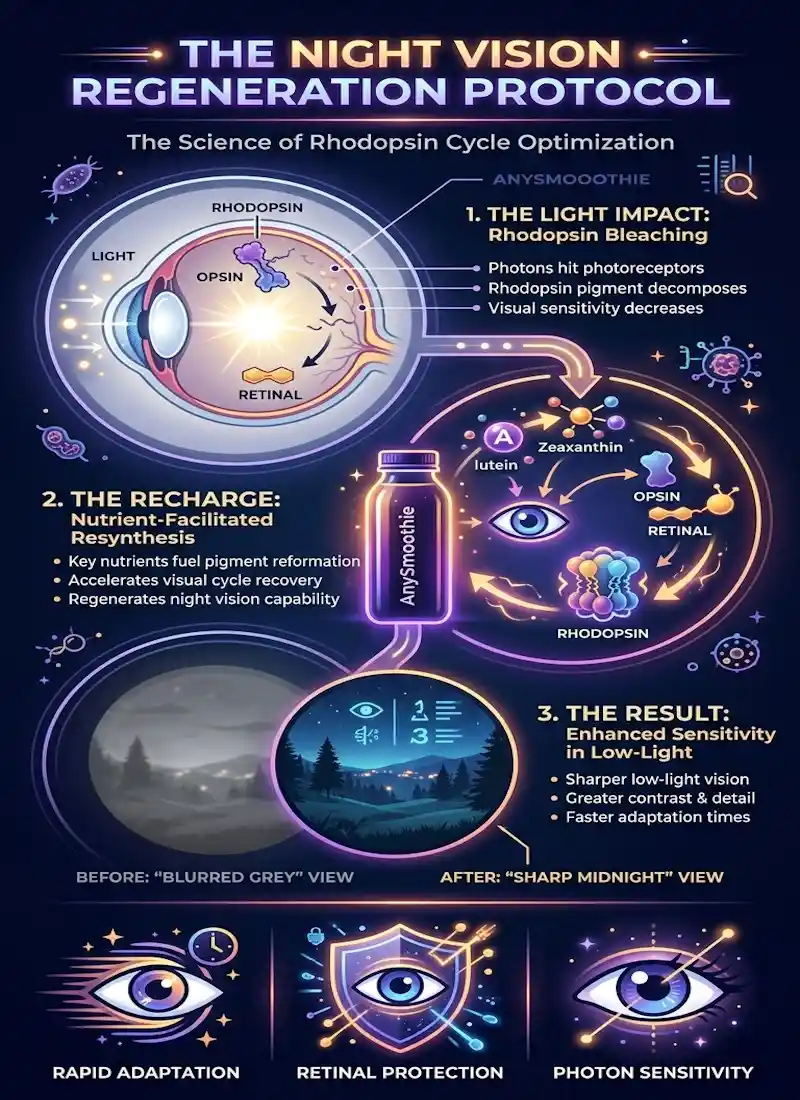
Rods are built for low light. They rely on rhodopsin, a pigment that changes shape when light hits it. That change is the spark that starts night vision.
After exposure to light, rhodopsin breaks apart. The retina then has to rebuild it through the visual cycle, using vitamin A derived compounds and help from the retinal pigment epithelium. That rebuilding step matters because your eyes do not switch from bright light to darkness all at once. They adapt over time, and that delay is normal.
Nutrition supports the systems behind that process. If vitamin A intake is low, the eye has less raw material for 11-cis-retinal, the active part of rhodopsin. Healthy fats also matter because fat-soluble nutrients absorb better when they travel with lipid. In other words, your smoothie can help with nutrient partitioning before the visual cycle even starts.
Photo-bleaching and recovery, the speed of sensory adaptation
Bright light bleaches rhodopsin fast. If you walk from a bright room into a dark hallway, your rods need time to recover. That recovery is called dark adaptation.
The speed of that shift depends on several things. Vitamin A status is one. Antioxidant support is another, because the retina works hard and uses a lot of oxygen. Dietary fat helps too, since retinoids move better when they are paired with lipid.
Bilberry often comes up in this conversation because it is tied to dark adaptation support. The evidence is mixed, and the American Academy of Ophthalmology notes that night-vision claims are not conclusive. Still, bilberry fits the smoothie idea well because it adds anthocyanins, which support a strong antioxidant profile.
Pigment precursors and co-factors that help the eyes do the job
A good eye-support smoothie does more than mix fruit. It pairs retinoid precursors, antioxidants, and mineral co-factors so the body can move nutrients where they are needed. That matters because the visual cycle is a chain, not a single step.
The chemistry behind rhodopsin regeneration is tied to how vitamin A is absorbed, transported, and recycled in the retina. A clear review of that process appears in Chemistry of the Retinoid Cycle. The takeaway is simple: the eye needs substrate, transport, and repair support.
Anthocyanins and retinoids, the nutrient pair that supports visual pigment renewal
Anthocyanins from bilberry and blackcurrant support antioxidant defenses. Retinoids from beta-carotene rich foods provide the building blocks for visual pigment renewal. Together, they fit the same recovery window.
| Ocular nutrient | Primary mechanism | Target tissue | Best smoothie pairing | Synergistic lipid |
|---|---|---|---|---|
| Bilberry anthocyanins (V. myrtillus) | Supports dark adaptation speed and antioxidant defense | Rods | Blackcurrant, lemon, spinach | Chia or flax |
| Beta-carotene (pro-vitamin A) | Precursor for 11-cis-retinal | Retina, retinal pigment epithelium | Carrot, mango, orange | Avocado or coconut |
| Zinc | Enzyme cofactor for vitamin A metabolism | Retinal pigment epithelium | Pumpkin seed, cacao, oat milk | Nut butter |
Bilberry gets the most attention for dark adaptation, while beta-carotene supplies the raw material for the visual cycle. Zinc keeps the system moving.
Zinc dynamics, the gatekeeper of vitamin A transport to the retina
Zinc helps enzymes handle vitamin A metabolism, and it supports proteins involved in retinal function. That makes it part of the delivery chain, not a stand-alone fix.
In smoothie form, zinc is easy to add. Pumpkin seeds work well, and hemp seeds are another good option. A spoonful of tahini can also fit if you want a richer blend. Keep the dose food-based and steady, since metabolic efficiency often comes from consistency, not giant swings.
3 rhodopsin support smoothie recipes for night use and recovery
These blends are built for different needs, but each one supports the same visual cycle logic. They keep lipids in the mix so fat-soluble nutrients absorb better.
Biohacking ocular flux: protecting the retina from blue light stress
Even a great smoothie can’t outwork poor light habits. Long screen sessions, bright overhead lights, and late-night phone use all push the retina harder than it needs to work.
That does not mean you need to fear screens. It means you should support recovery. Antioxidants help buffer oxidative load, while lutein-rich foods support the macular pigment that filters harsh light. Good sleep and lower evening brightness matter just as much as nutrition.
Lutein synergy: supporting macular pigment optical density
Lutein is often paired with eye-support smoothies because it helps support macular pigment optical density, or MPOD. That pigment acts like a built-in filter near the center of vision.
Leafy greens such as spinach and kale work well in smoothies. Egg yolk and avocado also fit, especially if you want better absorption. When lutein rides with fat, the body handles it more efficiently.
Conclusion
A rhodopsin support smoothie works best as part of a bigger routine. Good sleep, less evening screen glare, and a nutrient-rich diet all help the eyes recover.
The most useful ingredients are steady and familiar, bilberry, beta-carotene sources, zinc, lutein, and healthy fats. Together, they support the natural pathways that rebuild rhodopsin and help your vision adjust in low light.
That is the real value here. You are not forcing night vision, you are feeding the systems that make it work.
⚠️ SAFETY NOTES & CONTRAINDICATIONS: Rhodopsin Regeneration
SMOKERS & BETA-CAROTENE: If you are a current or former smoker, high doses of isolated beta-carotene supplements have been linked to an increased risk of lung cancer. Stick to whole-food sources like carrots or mangoes in your smoothies, which are generally considered safe.
VITAMIN A TOXICITY: While beta-carotene is a precursor, excessive intake of preformed Vitamin A (retinoids) can lead to hypervitaminosis A, causing liver stress and bone thinning. Do not combine these smoothies with high-dose Vitamin A supplements without professional guidance.
ZINC-COPPER BALANCE: High daily intake of zinc (from pumpkin seeds or supplements) can interfere with copper absorption, potentially leading to anemia or immune suppression. Ensure your overall diet remains mineral-balanced.
NIGHT BLINDNESS DIAGNOSIS: If you experience sudden or severe “night blindness” (nyctalopia), do not rely on smoothies. This can be a sign of serious underlying conditions like retinitis pigmentosa or severe deficiency that require urgent ophthalmological evaluation.
BLOOD SUGAR & RETINAL HEALTH: High-sugar smoothies (even from natural fruit) can cause insulin spikes that negatively impact microvascular retinal health. Always pair sweet fruits with fiber and protein to stabilize the glycemic response.
FAQ
What is rhodopsin and why does it need “regeneration”
Rhodopsin is a biological pigment found in the rod cells of the retina, responsible for vision in low-light conditions. When light hits rhodopsin, it “bleaches,” initiating a nerve impulse. To see again in the dark, the pigment must be chemically rebuilt. Providing specific nutrients in a smoothie supports the physiological systems involved in this enzymatic recycling, optimizing the natural pathways of dark adaptation and sensory recovery.
How do Bilberry anthocyanins accelerate night vision recovery
Bilberries (Vaccinium myrtillus) are rich in specific anthocyanins that have a high affinity for the retinal pigment epithelium. Biochemically, these compounds support the rate-limiting steps of rhodopsin resynthesis. By increasing the speed at which the pigment “recharges” after being exposed to bright light, you support the natural pathways of visual sensitivity, making the transition to darkness faster and more efficient.
Why is Zinc included in a night vision smoothie
Zinc is a vital cofactor for the enzyme retinol dehydrogenase, which converts vitamin A into its active form (11-cis-retinal) used in the visual cycle. Furthermore, zinc is required for the transport of vitamin A from the liver to the eye. Including zinc-rich seeds in your smoothie supports the physiological systems of nutrient transport, ensuring the “building blocks” of vision reach the retina where they are needed for mitochondrial priming and pigment repair.
Can blackcurrants provide similar benefits to bilberries
Yes, blackcurrants contain high levels of cyanidin-3-glucoside, which has been shown to support the regeneration of rhodopsin. While bilberries are the gold standard for dark adaptation, blackcurrants provide a complementary spectrum of polyphenols that support the structural integrity of the retinal capillaries. This dual-action approach optimizes the natural pathways of ocular blood flow and nutrient delivery to the photoreceptors.
Does blue light exposure affect the need for this smoothie
Modern digital environments expose the eyes to constant high-energy blue light, which can accelerate the depletion of visual pigments and induce oxidative stress in the retina. A rhodopsin support smoothie provides a “biochemical shield” of antioxidants and pigments. This supports the physiological systems involved in neutralizing light-induced free radicals, ensuring your sensory organs maintain peak metabolic efficiency despite the demands of a screen-heavy lifestyle.

Medical Disclaimer: AnySmoothie content is for educational purposes only and is not a substitute for professional medical advice. Consult a healthcare provider for personalized guidance. See our full Disclaimer & Terms of Use. AI Transparency: AnySmoothie may use AI to support content development. All content undergoes human editorial review for accuracy, clarity, and editorial quality. See our full AI Transparency.