
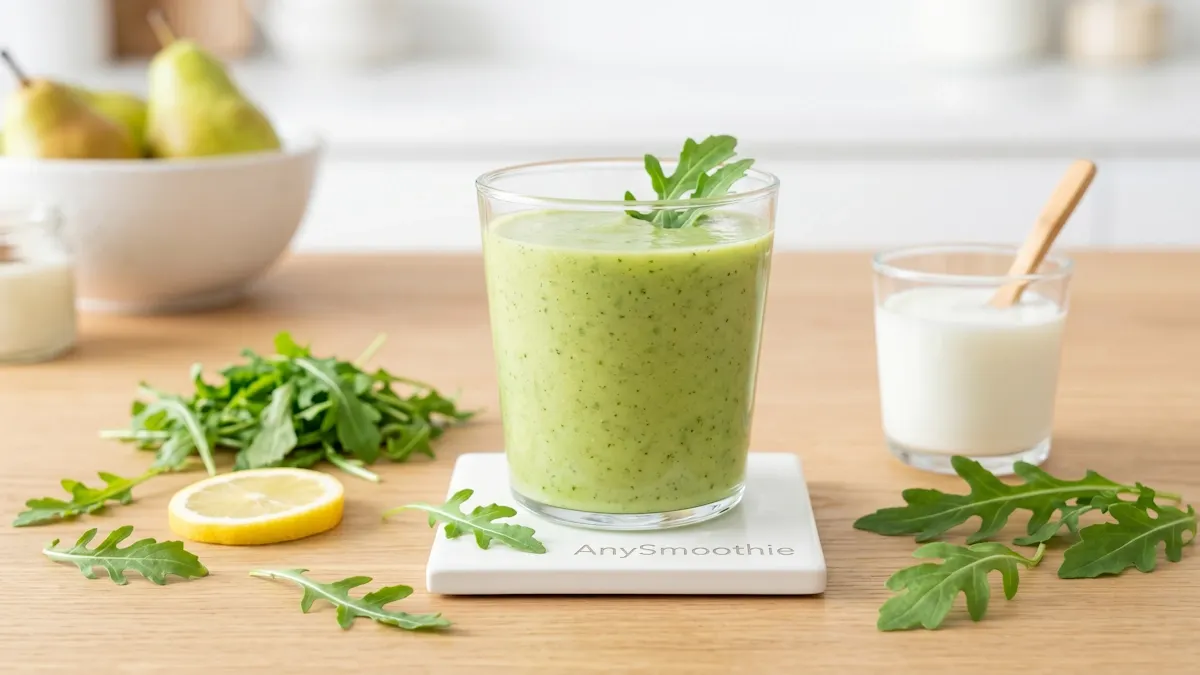
You blend up a green smoothie every morning. It tastes fresh and packs vitamins. But soon fatigue hits, or back pain creeps in. Those greens might load your system with oxalates.
Oxalate sensitivity means your body struggles with these plant compounds. They form sharp crystals that stress kidneys. Many chase health through spinach-packed drinks. Yet they overlook the risks.
This guide shares smoothies for oxalate sensitivity. You’ll get tasty recipes that protect your kidneys. Science backs calcium binding and gut health fixes. Low-oxalate swaps keep nutrition high. Recipes follow soon.
The Silent Accumulator: Understanding Oxalate Sensitivity
Plants make oxalates as defenses. Humans absorb them poorly. Over time, they build up. This leads to hyperoxaluria, or overload. Your kidneys suffer most.
Symptoms sneak in. Joint pain flares. Urinary issues arise. Kidney stones form often. Think of oxalates like sand in your engine. They grind away quietly.
Your gut microbiome plays a key role. Bacteria like Oxalobacter formigenes break down oxalates. More diversity means better protection. Antibiotics or poor diet wipe them out. As a result, absorption rises.
Smoothies amplify the problem. A cup of spinach dumps hundreds of milligrams. Most pass through fine. But for sensitive folks, they overload. Studies show 80 percent of stones tie to calcium oxalate crystals. Awareness helps. Check your habits now.
For exact oxalate levels in foods, see the oxalate content database.
Calcium Oxalate Crystals: Why Your “Healthy” Greens Might Be Hurting You
Oxalates bind calcium in your kidneys. They create painful crystals. Your body tries to flush them. Stones block flow instead.
Greens seem healthy. Yet spinach and chard pack oxalates. They block iron too. Arugula stays low. Kale works in small amounts.
Here’s a quick comparison of common smoothie greens:
| Oxalate Content (mg per 100g) | Risk Level | Nutritional Payoff | Best Swap Suggestion |
|---|---|---|---|
| Spinach: 970 | High | Iron, vitamins A/C/K | Arugula |
| Swiss Chard: 645 | High | Vitamins A/K, minerals | Baby kale |
| Arugula: 12 | Low | Vitamins C/K, flavor | Use freely |
Data comes from nutrition studies. High-risk greens form stones fast. Low ones deliver benefits without harm.
Arugula and baby kale act as safe havens. They boost eye health and immunity. Swap them in. Your blender thanks you.
Low-Oxalate Superfood Swaps: Rebuilding Your Blender Base
Ditch high-oxalate bases. Build with winners under 50mg per 100g. Arugula leads leafy greens. Romaine lettuce follows close. Baby kale fits too.
Fruits shine bright. Blueberries clock at 2mg. Apples and pears stay low. They add sweetness and fiber.
Veggies round it out. Cucumber hydrates at 1mg. Zucchini blends smooth. Celery brings crunch.
Here’s a list of top swaps:
- Arugula (12mg): Peppery bite, vitamin K boost. Use 1-2 cups.
- Romaine (5mg): Crisp base, folate rich. Pairs with fruits.
- Baby kale (20mg): Tender texture, antioxidants. Steam lightly first.
- Blueberries (2mg): Antioxidant power, low sugar.
- Apples (1mg): Fiber for gut, natural sweet.
- Cucumber (1mg): Hydration hero, neutral taste.
- Pears (3mg): Creamy blend, prebiotic fiber.
- Zucchini (15mg): Mild filler, vitamin C.
- Celery (10mg): Electrolytes, detox aid.
These keep vitamins and fiber high. Antioxidants fight inflammation. Avoid nuts, beets, rhubarb. They spike levels.
Nutrition stays strong. You protect kidneys at the same time.
From Spinach to Arugula: Choosing Low-Stone-Risk Leafy Greens
Spinach tastes earthy. But it risks crystals. Switch to arugula. Its mild pepper adds crunch. Blends silky in smoothies.
Swiss chard brings color. Yet oxalates hide inside. Baby kale swaps perfect. Tender leaves pack nutrients. No bitterness.
Romaine offers bulk. Watercress zings flavor. Limit to 1-2 cups per serving. Taste improves fast.
These greens support immunity. Eye health benefits come free. No stone worry. Experiment in your next blend.
3 Kidney-Safe Low-Oxalate Smoothie Recipes
These recipes stay under 20mg oxalates total. Each serves one. Prep takes 5 minutes. They pair calcium to bind oxalates. Probiotics feed your gut microbiome. Oxalobacter formigenes thrives. Recovery follows.
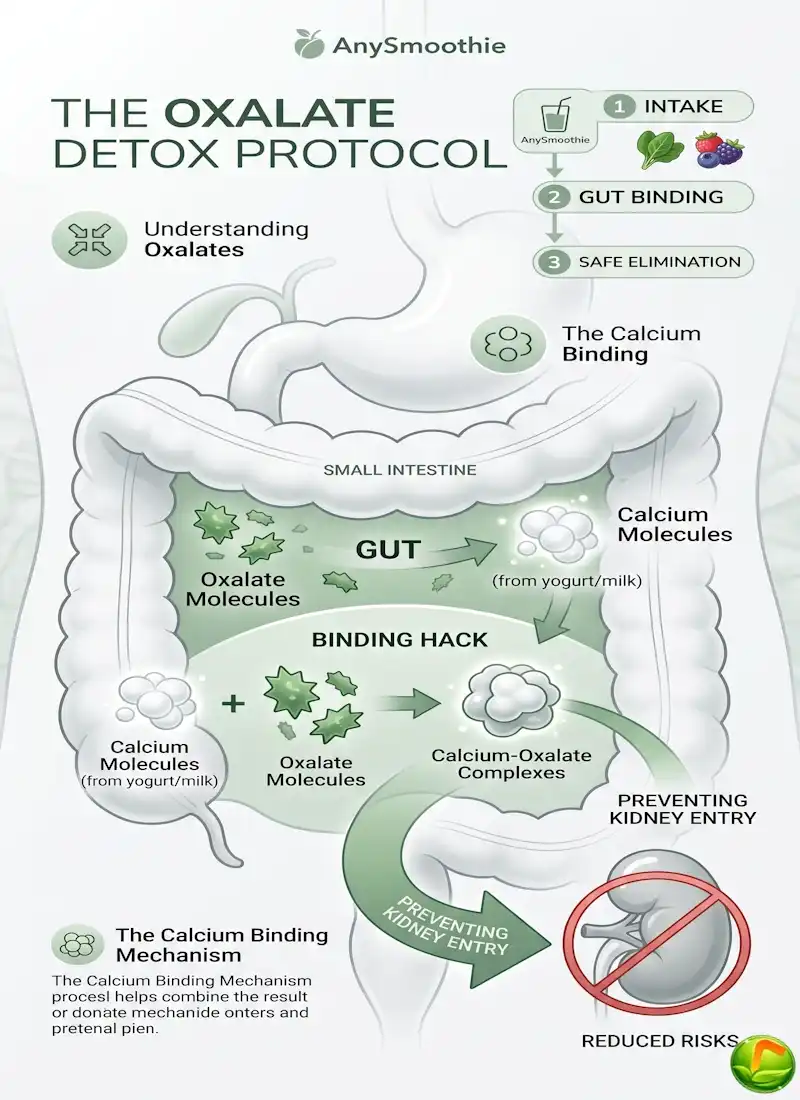
The Science of Binding: Using Calcium to Neutralize Oxalates
Calcium traps oxalates in your gut. Soluble forms work best. They form harmless complexes for excretion. Absorption drops sharp.
Dairy shines. Yogurt delivers 300mg per half cup. Fortified plant milks help too. Skip high-ox almonds.
Studies confirm it. Pairing cuts urinary oxalate 50 percent. Stone risk falls. Gut bacteria assist.
Add to every smoothie. Bioavailability matters. Eat with meals. Vitamin D boosts uptake.
Research on dietary calcium and Oxalobacter shows clear wins.
Timing Your Smoothie: Why Calcium-Rich Additions Are Non-Negotiable
Add 300mg calcium per serving. Yogurt or kefir first. Blend with greens.
Best at breakfast. Or pair with meals. Empty gut absorbs more oxalates. Avoid that trap.
Vitamin D helps use calcium. Sun or supplements work. Test your urine levels.
Recipes show it. Track symptoms. Adjust as needed.
Conclusion
Spot high-ox traps like spinach. Swap to arugula or kale. Bind with calcium always. These smoothies for oxalate sensitivity ease pain fast.
Gut diversity grows stronger. Kidneys thank you. Consult your doctor for tests. Probiotics may help more.
Which recipe wins for you? Share swaps below. Thrive without worry. Your blender waits.
⚠️ Specific Safety Notes for Oxalate Sensitivity:
Hydration is Mandatory: No matter how low-oxalate your smoothie is, dehydration is the #1 driver of stone formation. Ensure you drink at least 2.5 liters of water daily to keep urine diluted.
Calcium Pairing: Always include a calcium source (yogurt, kefir, or fortified milk) in your smoothie. If you are dairy-free, ensure your substitute contains at least 300mg of calcium per serving to effectively bind any trace oxalates.
Avoid “Stone-Heavy” Add-ins: Be cautious with almonds, cashews, and soy protein, as these are hidden high-oxalate traps. Stick to pumpkin seeds, sunflower seeds, or hemp hearts.
Vitamin C Supplements: If you are stone-prone, avoid high-dose Vitamin C supplements (above 1000mg). Stick to the whole-food amounts found in the citrus and berries of these recipes.
Consult Your Doctor: If you have active kidney stones or chronic kidney disease (CKD), consult your urologist or nephrologist. Nutritional changes should support, not replace, medical treatment.
FAQ
Can I still use leafy greens if I have oxalate sensitivity?
Yes, but you must choose wisely. Avoid high-oxalate greens like spinach, beet greens, and Swiss chard. Instead, opt for arugula, kale, or romaine lettuce, which provide similar nutrients with a fraction of the oxalate load.
What is the “Calcium Hack” for smoothies?
If you consume medium-oxalate foods, always add a source of calcium (like Greek yogurt or calcium-fortified milk) to your smoothie. Calcium binds to oxalates in the digestive tract, allowing them to be excreted safely through the stool instead of passing through the kidneys.
Does boiling greens reduce oxalates for smoothies?
Yes, boiling high-oxalate greens and discarding the water can reduce oxalate content by 30-80%. However, it’s often more practical for smoothies to simply start with low-oxalate raw ingredients like arugula or bok choy.
Are nuts and seeds safe for a low-oxalate smoothie?
Almonds and cashews are very high in oxalates and should be avoided. Better alternatives for creaminess and healthy fats include pumpkin seeds (pepitas), flaxseeds, or sunflower butter, which have a significantly lower oxalate profile.
How do I know if I have oxalate sensitivity?
Common signs include recurring kidney stones, joint pain, or unexplained “sand-like” grit in the urine. If you suspect sensitivity, transitioning to a low-oxalate smoothie protocol and monitoring symptom relief is a key biohacking strategy.

Medical Disclaimer: AnySmoothie content is for educational purposes only and is not a substitute for professional medical advice. Consult a healthcare provider for personalized guidance. See our full Disclaimer & Terms of Use. AI Transparency: AnySmoothie may use AI to support content development. All content undergoes human editorial review for accuracy, clarity, and editorial quality. See our full AI Transparency.