
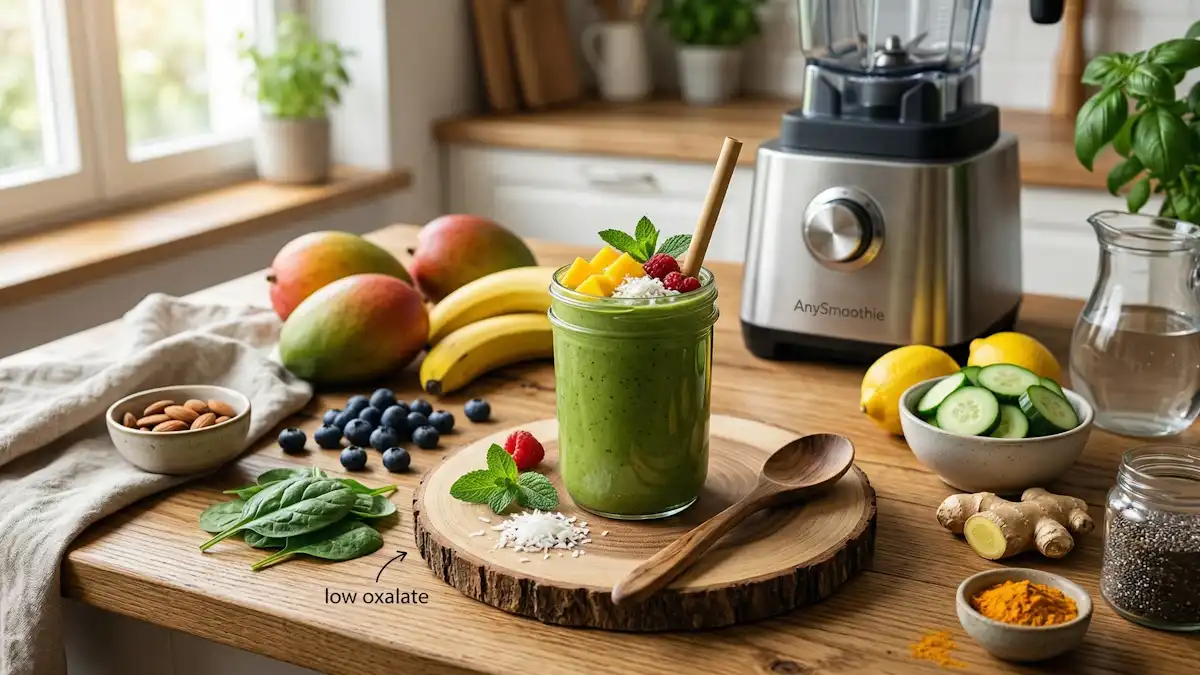
You sip your green smoothie after a workout. It tastes fresh and healthy. Hours later, sharp pain hits your side. Kidney stones strike again. Many people face this issue because everyday greens like spinach pack oxalates. These compounds bind with calcium in your kidneys. They form crystals that turn into painful stones.
Calcium oxalate stones make up about 80% of cases. Your body absorbs some oxalates from food. Too much tips the balance. Gut health plays a role too. Poor bacteria mean more absorption. You want nutrition without the risk.
This guide shows you low oxalate smoothies that taste great. You’ll dodge common traps. Learn smart swaps for ingredients. Try three easy recipes. Plus, pick up tips to cut absorption. Blend daily and stay stone-free.
The Oxalate Trap: Why “Healthy” Green Smoothies Can Cause Stones
Green smoothies seem perfect. Spinach and kale fill Instagram feeds. Yet they load your system with oxalates. Think of oxalates as tiny magnets. They grab calcium and build sharp crystals in your kidneys. One cup of raw spinach delivers around 750mg. That’s enough to spark trouble for stone-formers.
Most folks don’t notice at first. Pain builds over time. You pass a stone and swear off greens. But you don’t have to. Safer choices keep the benefits. Nutrients stay high. Risk drops low.
Understanding Calcium Oxalate and the Biohacker’s Mineral Balance
Oxalates bind calcium right in your kidneys. Crystals grow fast. They cause agony when they move. About 80% of stones form this way. Diet drives it home.
Your gut controls absorption. Healthy bacteria break down oxalates. Low diversity means more slips through. Biohackers track this. They balance minerals like magnesium and citrate. These block crystal growth.
For example, a daily green blast leaves you doubled over. Switch bases and pain fades. Low oxalate smoothies restore balance. You get vitamins without the stab.
High-Oxalate Greens vs. Safe Alternatives: Your Comparison Guide
Spinach dominates recipes. It hides high oxalates well. Kale sits in the middle. Both pack nutrition. However, they raise risks.
Romaine and arugula change the game. These deliver crunch and vitamins. Oxalates stay tiny. You blend without worry.
Here’s a quick comparison of popular bases:
| Smoothie Base | Oxalate Content (mg per cup) | Kidney Stone Risk Level | Primary Nutrient Benefit | Best Pairing for Safety |
|---|---|---|---|---|
| Spinach | ~750 | High | Iron, vitamin K | Calcium sources (risky) |
| Kale | ~100 | Medium | Vitamins A, C | Boiling to reduce oxalates |
| Romaine/Arugula | ~5-10 | Low | Vitamins A, K, hydration | Dairy or citrus daily |
Romaine and arugula shine as daily drivers. Stone-prone folks thrive on them. No surprises. Keep smoothies packed with good stuff.
Essential Low-Oxalate Ingredient Swaps for Smoothies
Swap smart and your blender stays kidney-friendly. High-oxalate picks sneak into recipes. Fruits, nuts, and milks add up too. Easy fixes keep taste alive. You’ll boost digestion. Stones stay away.
Start with greens. Ditch spinach for romaine. It adds crisp without the load. Arugula brings peppery zip. Both clock under 10mg per cup.
Nuts next. Almonds hide 120mg per ounce. Hemp seeds offer protein instead. Zero oxalates. Omega-3s flow free.
Milks matter. Almond milk loads 15mg per cup. Coconut milk drops to trace amounts. Creamy texture holds.
Fruits help. Skip rhubarb. Grab apples or pears. Cucumber hydrates like celery but safer.
These changes make low oxalate smoothies simple. Nutrition holds strong.
Replacing Spinach and Almonds with Romaine, Arugula, and Hemp
Romaine swaps for spinach easy. One cup gives mild flavor. Ultra-low oxalates at 5mg. It blends smooth. Pairs with fruits perfect.
Arugula steps up next. Peppery bite wakes your drink. Still under 10mg. Vitamin K stays high. Daily use fits fine.
Almonds out. They spike risk fast. Hemp hearts in. Two tablespoons pack 10g protein. Negligible oxalates. Nutty taste blends well.
Coconut milk replaces almond milk. One cup stays low at 2mg. Zucchini beats celery. Mild, watery crunch. No oxalate bump.
| Swap From | Swap To | Why It Works | Portion Tip |
|---|---|---|---|
| Spinach | Romaine | Crunchy, 5mg oxalates | 2 cups |
| Almonds | Hemp hearts | Protein, zero oxalates | 2 tbsp |
| Almond milk | Coconut milk | Creamy, trace oxalates | 1 cup |
| Celery | Cucumber/Zucchini | Hydrating, low risk | 1 medium |
Flavor matches every time. Apple with romaine refreshes. Pear and hemp creams up. No stone surprises ahead.
3 Kidney-Safe Low-Oxalate Smoothie Recipes
Recipes make it real. These use safe picks only. Prep takes under 5 minutes. Each serves one or two. Taste excites. Variety keeps you hooked.
First brings refresh. Second creams smooth. Third bursts fruit. All under 20mg oxalates total.
The ‘Stone-Shield’ Lemon and Romaine Refresh
Ingredients
- 2 cups romaine lettuce
- 1 medium cucumber, chopped
- Juice of 2 lemons
- 1 medium green apple, cored and chopped
- ¼ cup fresh mint leaves
- 1 cup unsweetened coconut water
- 2 tablespoons hemp hearts
Chop the produce roughly. Pour the coconut water and lemon juice into the blender first, then add the remaining ingredients. Start on low speed and gradually increase to high. Blend for about 45 seconds until smooth.
Romaine, cucumber, apple, and lemon can fit into a relatively low-oxalate ingredient pattern, although exact oxalate values vary with variety, portion, growing conditions, and measurement method. Lemon provides citrate, while cucumber and coconut water contribute fluid. The smoothie can complement normal hydration but should not be described as detoxifying the body or shielding the kidneys throughout the day.
Estimated Nutrition per Serving
- Calories: ~300 kcal
- Protein: ~11 g
- Carbohydrates: ~49 g
- Fat: ~11 g
- Fiber: ~10 g
- Sugars: ~27 g
Creamy Cucumber Hemp Dream
Ingredients
- 1½ cups arugula
- 1 medium zucchini, chopped
- ½ avocado
- 2 tablespoons hemp hearts
- 1 medium pear, cored and chopped
- Juice of 1 lime
- 1 cup unsweetened coconut milk beverage
Pour the coconut milk and lime juice into the blender first. Add the zucchini, arugula, pear, hemp hearts, and avocado. Blend on high for about 1 minute. Scrape down the sides and blend again until creamy.
Arugula and zucchini can be useful choices when building a lower-oxalate smoothie, while avocado and hemp hearts provide fiber and unsaturated fats. Exact oxalate amounts cannot reliably be assigned to the complete smoothie from standard food values, and hemp hearts should not be assumed to contain zero oxalate.
Estimated Nutrition per Serving
- Calories: ~430 kcal
- Protein: ~13 g
- Carbohydrates: ~55 g
- Fat: ~22 g
- Fiber: ~17 g
- Sugars: ~28 g
If I were making this after a workout, I’d blend the zucchini and coconut milk first before adding the pear and avocado. It breaks down the zucchini more completely and keeps the final texture creamy rather than slightly fibrous.
Berry Bliss with Low-Oxalate Twists
Ingredients
- ½ cup strawberries
- ½ cup blueberries
- 1 cup romaine lettuce
- ½ medium banana
- ½ cup plain unsweetened coconut yogurt
- 1 tablespoon chia seeds, soaked
- 1 tablespoon fresh lemon juice
Soak the chia for about 10 minutes. Blend the strawberries, blueberries, romaine, banana, and lemon juice until smooth. Add the coconut yogurt and soaked chia, then pulse until creamy.
Strawberries and blueberries can fit into a lower-oxalate ingredient pattern in moderate portions, while romaine is another relatively low-oxalate choice. Chia seeds contain oxalate, however, so they should not be characterized as contributing only a negligible amount. Individual needs and food tolerance also vary, making “no risk” inappropriate for a kidney-stone-focused recipe.
Estimated Nutrition per Serving
- Calories: ~260 kcal
- Protein: ~5 g
- Carbohydrates: ~40 g
- Fat: ~11 g
- Fiber: ~11 g
- Sugars: ~23 g
Critical Strategies to Minimize Oxalate Absorption
Swaps start the win. Habits seal it. Cook smart. Time right. Pair foods wise. Customize your low oxalate smoothies further.
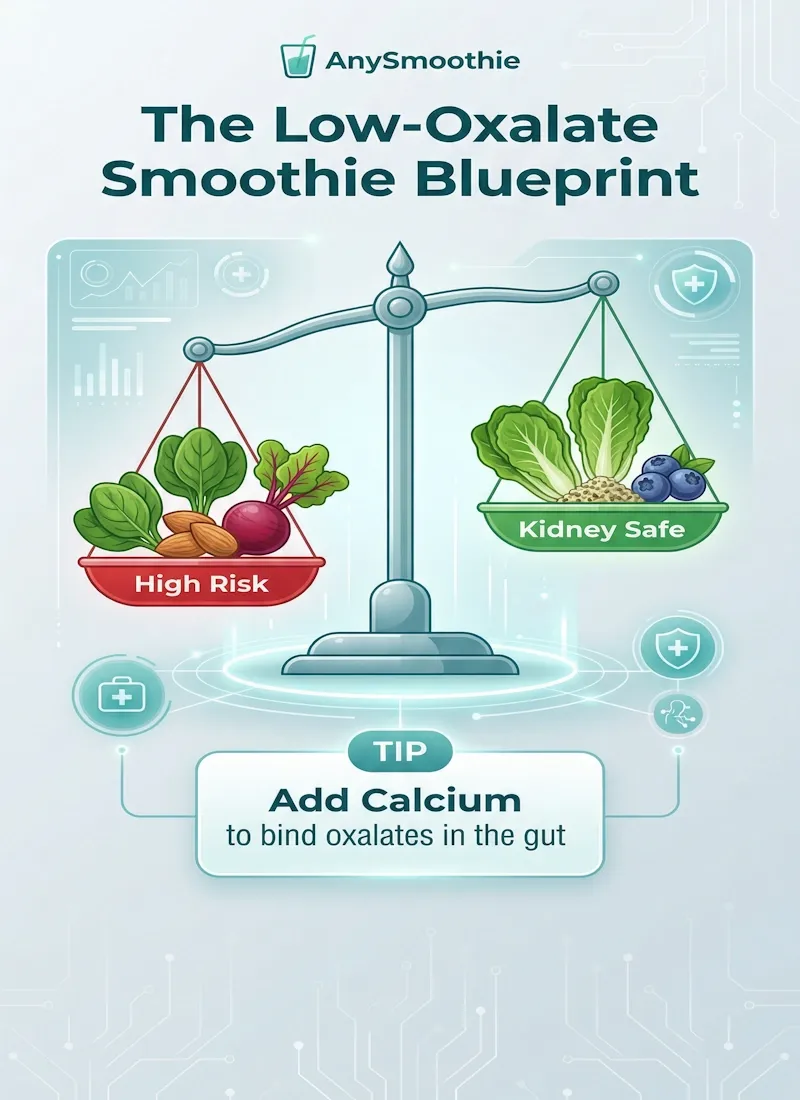
Boil greens when possible. Cuts oxalates half. Add calcium sources. They bind in gut. Water flows constant.
See a sample low oxalate smoothie for pairing ideas.
The Calcium “Binding” Trick and Why Hydration is Your Best Defense
Pair oxalates with calcium. Yogurt or cheese in smoothies binds them. They exit gut bound. Kidneys stay clear.
Boil kale or spinach halves oxalates. Quick blanch works. For raw bases like romaine, no need.
Hydrate heavy. Aim 3 liters water daily. Lemon adds citrate. It dissolves crystals.
Magnesium helps too. 300mg supplement daily. Foods like pumpkin seeds fit low-oxalate.
Daily checklist:
- Drink water first thing.
- Add dairy to blends.
- Boil if using medium greens.
- Track urine clear.
Conclusion
Consult your doctor always. These stack safety high. Stones fade back.
Low oxalate smoothies now fit your life. You swapped spinach for romaine and arugula. Hemp beat almonds clean. Three recipes refresh, cream, and fruit up your days.
Habits lock it in. Bind with calcium. Hydrate nonstop. Boil when needed. Pain from “healthy” drinks ends here.
Your stone-free future starts now. Blend one recipe today. Share your tweaks in comments. Grab more kidney tips by subscribing. Smooth sailing ahead.
⚠️ Specific Safety Notes:
The Calcium Rule: If you are prone to stones, never drink a medium-to-high oxalate smoothie on an empty stomach without a calcium source. Adding Greek yogurt, milk, or a calcium-fortified plant milk ensures the oxalates bind in your gut rather than your kidneys.
Vitamin C Caution: While lemon juice is great for citrate, avoid adding high-dose Vitamin C supplements (ascorbic acid) to your smoothies. In some individuals, excess Vitamin C breaks down into oxalates, potentially increasing stone risk.
Hydration is Key: No smoothie can replace water. Aim for a urine output of at least 2.5 liters a day. If your urine is dark yellow, your smoothie’s oxalate concentration becomes more dangerous.
De-stoning with Citrate: Adding the juice of half a lemon to every smoothie is a powerful strategy. Citrate binds to calcium in the urine, preventing it from forming crystals with any oxalates that did slip through.
Genetic Factors: If you have a history of Hyperoxaluria or Gastric Bypass surgery, your absorption rates are much higher. Consult your urologist or renal dietitian before making green smoothies a daily habit.
FAQ
Is Kale safe for someone with a history of kidney stones?
Kale is considered “medium-oxalate.” While it’s much safer than spinach (which has about 7 times more oxalates), it should still be used in moderation. If you are highly stone-prone, boiling kale for 5-7 minutes before blending can reduce its oxalate content by nearly 50%.
Why does adding yogurt or milk help prevent kidney stones?
This is the “Calcium Binding Trick.” When you consume calcium with oxalate-rich foods, they bind together in your stomach and intestines before reaching your kidneys. This allows the oxalates to be excreted through waste rather than forming crystals in your urinary tract.
Are all berries safe for a low-oxalate diet?
Most berries like blueberries and strawberries are low to moderate. However, raspberries and blackberries are higher in oxalates. Stick to blueberries and strawberries as your “daily drivers” for kidney-safe smoothies.
Can I use almond milk if it’s just a small amount?
Almonds are one of the highest oxalate sources. Even almond milk can contain significant amounts (approx. 15mg per cup). If you have a history of stones, it’s safer to swap to coconut milk, rice milk, or hemp milk, which have negligible oxalate levels.
How much water do I really need to drink to flush oxalates?
The goal for stone-formers is to produce at least 2 to 2.5 liters of urine a day. This usually requires drinking about 3 liters (10-12 cups) of fluid. Adding lemon juice to your water or smoothies provides citrate, which further helps inhibit stone formation.

Medical Disclaimer: AnySmoothie content is for educational purposes only and is not a substitute for professional medical advice. Consult a healthcare provider for personalized guidance. See our full Disclaimer & Terms of Use. AI Transparency: AnySmoothie may use AI to support content development. All content undergoes human editorial review for accuracy, clarity, and editorial quality. See our full AI Transparency.