
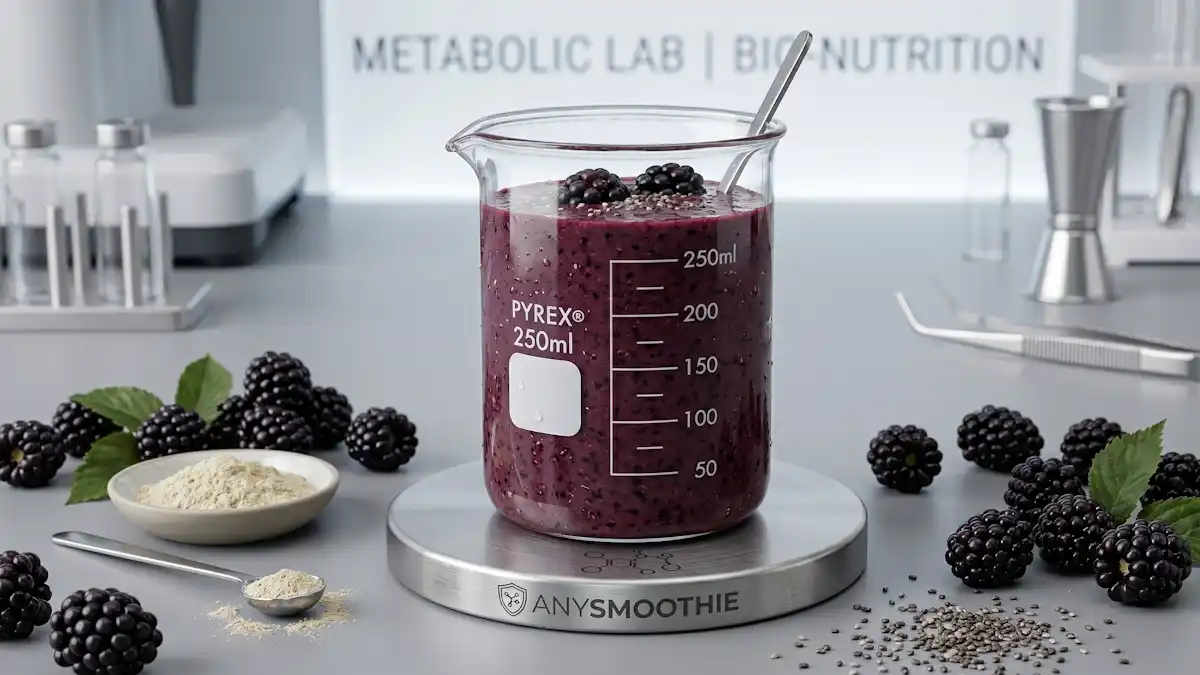
A smoothie can do more than taste good after breakfast. With the right mix, it can slow alpha-glucosidase, the enzyme that helps break complex carbs into smaller sugars in the small intestine.
That matters when you want a steadier rise after meals instead of a sharp spike. The best blends use polyphenols, fiber, and acid to support gentler carbohydrate breakdown and a smoother glucose influx. This post keeps the science practical and shows which ingredients make a smoothie for alpha glucosidase inhibition work well.
The enzyme blockade, how carbohydrate breakdown speeds up glucose entry
Alpha-glucosidase sits on the brush border of the small intestine. After you eat starch, it helps finish the last step of digestion by trimming larger carb fragments into glucose that the gut can absorb.
When that enzyme works quickly, glucose moves into the bloodstream faster. The result is a bigger post-meal rise, especially when the meal is low in fiber and high in refined starch.
For a plain-language summary of the target, the NIH overview of alpha-glucosidase inhibitors explains how slowing carbohydrate absorption can soften the post-meal glucose curve. A smoothie can support that same direction when it adds viscosity, acidity, and plant compounds that slow the pace of digestion.
Brush border dynamics, how alpha-glucosidase drives glucose flux
The brush border is the packed edge of the intestinal lining. It is where enzymes, transporters, and incoming food meet.
Alpha-glucosidase works with sucrase, maltase, and related enzymes to turn complex carbs into simple sugars. If a meal is fast to digest, the glucose flux is fast too.
A smoothie can help when it is thick, low in sugar, and rich in berry pigments or other polyphenols. Chia, flax, avocado, and similar ingredients slow the emptying rate, so the small intestine sees a gentler stream instead of a rush.
What makes a smoothie for alpha glucosidase inhibition actually work
The goal is glycemic influx attenuation, not total shutdown of digestion. You want a smoother curve, less sugar load, and a formula the body can handle without a sharp surge.
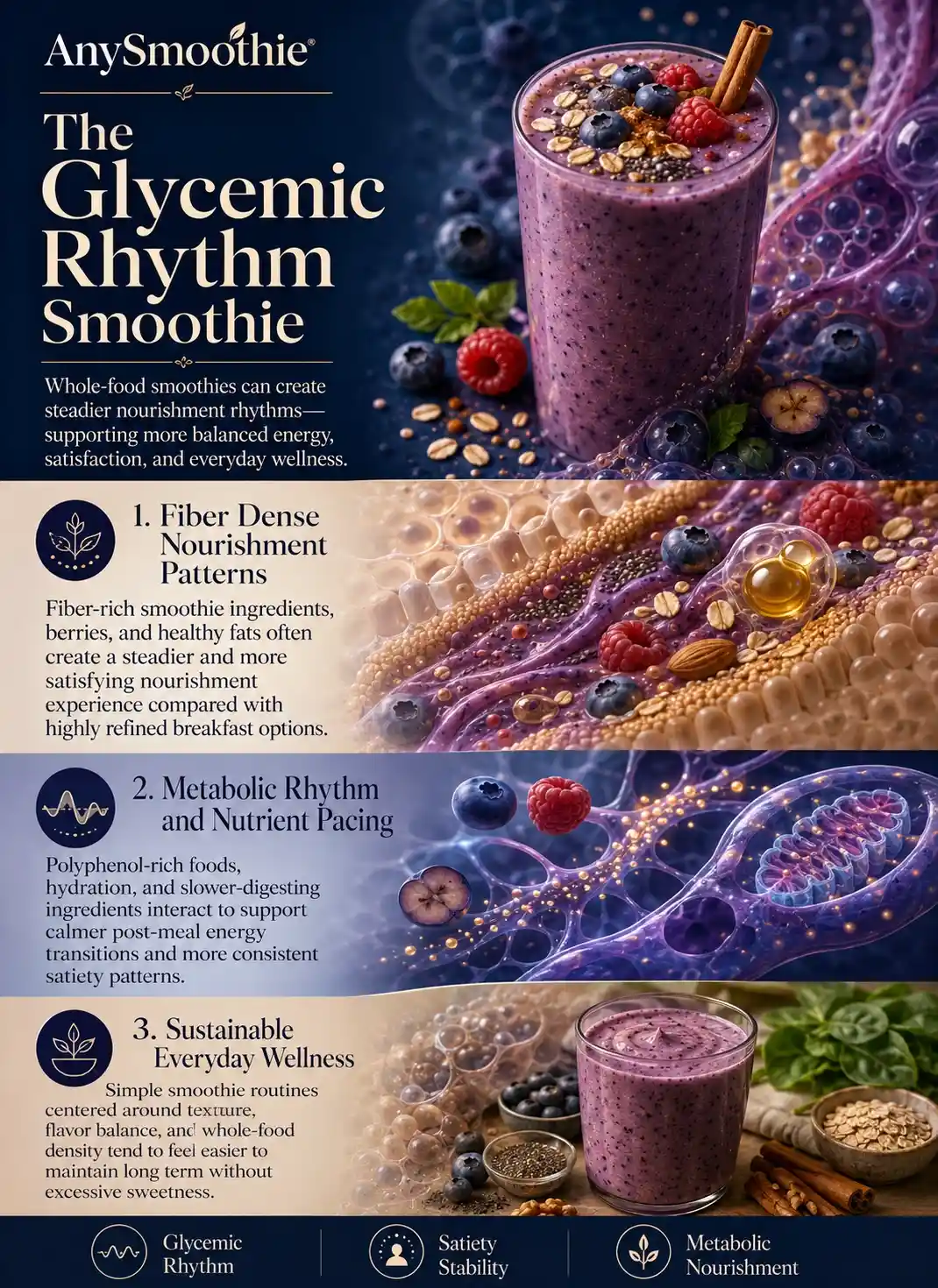
That starts with ingredient choice. Polyphenols can support enzyme modulation, while fiber changes the speed at which the stomach empties. Texture matters too, because a thicker smoothie tends to slow how fast it moves through the gut.
Polyphenols that support competitive binding
Chlorogenic acid and anthocyanins are the two polyphenol groups that fit this topic best. Chlorogenic acid shows up in green coffee and artichoke, while anthocyanins come from blackberries, mulberries, and other dark fruit.
These compounds may support alpha-glucosidase inhibition by affecting how easily the enzyme binds to carbohydrate substrates. In simple terms, they can help soften the pace of sugar release after a meal. Chlorogenic acid is also interesting because it is studied for its effect on hepatic glucose-6-phosphatase, which gives it a second angle in glucose support.
The systematic review in Nutrition & Diabetes links slower carbohydrate digestion with lower acute post-meal glucose and insulin responses. That is the basic logic behind a smart smoothie formula.
Fiber, viscosity, and acid balance make the formula stronger
Chia, flax, avocado, Greek yogurt, and similar ingredients add body. They also slow gastric emptying, which gives the enzymes less of a free ride.
Acid helps too. Lemon or lime can brighten the flavor and cut the need for extra fruit. Unsweetened liquids, such as water, unsweetened almond milk, or plain kefir, keep the sugar load lower.
A good formula slows digestion without turning the smoothie into dessert.
3 smoothie builds that support slower carbohydrate release
This comparison shows how three common enzyme modulators fit into a smoothie. The best choice depends on taste, caffeine tolerance, and how much sweetness you want to keep out of the glass.
| Enzyme modulator | Physiological mechanism | Inhibition potency | Best smoothie pairing | Synergistic nutrient |
|---|---|---|---|---|
| Chlorogenic acid, from green coffee or artichoke | Competitive support for alpha-glucosidase, with extra interest for hepatic glucose-6-phosphatase activity | Moderate, steady support | Blackberry or cocoa blends | Chia or flax |
| Anthocyanins, from blackberries or mulberries | May alter enzyme shape and slow carbohydrate cleavage | Moderate, strongest in berry-rich blends | Berry yogurt or berry-kefir smoothies | Soluble fiber |
| L-arabinose | Non-competitive interference with sucrase and maltase complexes | Useful in sucrose-heavy formulas | Citrus-berry smoothies with little added sweetener | Polyphenol-rich fruit |
The pattern is clear. Pair a polyphenol source with fiber, keep the base low in sugar, and use acidity to hold the taste together.
The “Glyco-Delay” Blackberry, Green Coffee, and Chia Blend
Ingredients
- ¾ cup frozen blackberries
- ¾ cup brewed and completely cooled green coffee
- 1 tablespoon chia seeds
- ½ cup unsweetened almond milk
- ½ teaspoon vanilla extract
- ½ cup ice, optional
Pour the cooled green coffee and almond milk into the blender first. Add the blackberries, chia seeds, vanilla, and ice if using. Blend until completely smooth. Let the smoothie stand for 3–5 minutes if you prefer a thicker consistency.
Blackberries provide fiber and anthocyanins, while chia contributes fiber and ALA omega-3 fatty acids. Green coffee contains chlorogenic acids, which have been studied in relation to carbohydrate and glucose metabolism. However, this smoothie should not be described as an alpha-glucosidase inhibitor or expected to counteract a carbohydrate-heavy meal.
Estimated Nutrition per Serving
- Calories: ~150 kcal
- Protein: ~5 g
- Carbohydrates: ~22 g
- Fat: ~7 g
- Fiber: ~12 g
- Sugars: ~7 g
A Mulberry, Cinnamon, and Flax Smoothie for Daily Use
Ingredients
- 1 cup fresh mulberries
- 1 cup unsweetened soy milk
- 1 tablespoon ground flaxseed
- ½ teaspoon cinnamon
- ½ teaspoon vanilla extract
- ½ cup ice
Pour the soy milk into the blender first. Add the mulberries, ground flaxseed, cinnamon, vanilla, and ice. Blend until creamy and completely smooth.
Mulberries provide fiber, vitamin C, and polyphenols, while ground flax contributes fiber, lignans, and ALA omega-3 fatty acids. Cinnamon has been studied in relation to glucose metabolism, but individual post-meal glucose responses vary and the smoothie should not be expected to reliably slow or control a glucose rise.
Estimated Nutrition per Serving
- Calories: ~210 kcal
- Protein: ~11 g
- Carbohydrates: ~25 g
- Fat: ~9 g
- Fiber: ~7 g
- Sugars: ~13 g
A Tart Green Coffee, Avocado, and Cocoa Blend for Low Sugar Intake
Ingredients
- ¾ cup brewed and completely cooled green coffee
- ½ avocado
- 1 tablespoon unsweetened cocoa powder
- ½ cup unsweetened soy milk
- 1 tablespoon fresh lemon juice
- ½ teaspoon cinnamon
- ½ cup ice
Pour the cooled green coffee and soy milk into the blender first. Add the avocado, cocoa, lemon juice, cinnamon, and ice. Blend until thick and completely smooth.
Avocado provides fiber and unsaturated fat, while cocoa contributes flavanols and other polyphenols. Green coffee supplies chlorogenic acids. Together they create a relatively low-sugar blend, but they should not be expected to produce a predictable glucose response or guarantee steady energy.
Estimated Nutrition per Serving
- Calories: ~230 kcal
- Protein: ~7 g
- Carbohydrates: ~18 g
- Fat: ~17 g
- Fiber: ~10 g
- Sugars: ~3 g
If I were making this for the first time, I’d start with slightly less green coffee and add more after tasting. Its tart, bitter edge can dominate the cocoa quickly, while avocado makes it easy to adjust the liquid without losing the creamy texture.
The PMC review on alpha-glucosidase inhibition and post-meal responses also reinforces the broader point, slower digestion and glucose uptake help flatten the post-meal curve.
How to build the best formula without making it taste medicinal
Keep the fruit portion modest. A handful of berries is enough in most cases, and the rest of the volume can come from fiber, greens, or unsweetened liquid.
If you want better taste, use acid first, then sweetness only if you still need it. Lemon, lime, vanilla, and cinnamon all help without pushing the sugar load up.
Timing matters too. If your goal is a gentler glucose curve, use the smoothie with a carb-heavy meal or right after it. That puts the fiber and polyphenols in the same window as the starch. A slower rise also gives mitochondria a calmer fuel signal, which supports metabolic efficiency after the meal.
Easy ingredient swaps for taste, texture, and tolerance
Spinach adds volume with little flavor. Plain kefir or unsweetened yogurt gives creaminess. Lemon brightens the blend fast.
People who are sensitive to caffeine can choose decaf green coffee extract or skip green coffee entirely and lean on berries instead. The main job is the same, support enzyme modulation and keep the glucose rise slower.
Conclusion
The best smoothie for alpha glucosidase inhibition is built around polyphenols, fiber, and a low sugar base. That mix supports gentler carbohydrate breakdown and a slower glucose rise after meals.
The goal is not to promise treatment. It is to shape the post-meal curve in a smarter direction and make the drink easy enough to repeat.
Start with one simple recipe, keep the formula tight, and adjust the thickness, acid, and fruit level until it fits your taste and tolerance.
🛡️ Safety Notes & Contraindications
Gastrointestinal Carbohydrate Fermentation: CRITICAL: Because this formulation protocol actively delays and restricts upper GI starch digestion, a higher quota of undigested oligosaccharides will inevitably escape into the colon. In individuals with active Small Intestinal Bacterial Overgrowth (SIBO) or severe dysbiosis, this unabsorbed carbohydrate flux triggers intense bacterial fermentation, leading to osmotic flatulence, painful meteorism, and altered transit kinetics.
Hypoglycemia Risk with Co-Medication Dynamics: If you are currently prescribed pharmacological alpha-glucosidase inhibitors (e.g., Acarbose, Miglitol) or insulin-sensitizing therapeutics, stacking this high-affinity polyphenol protocol can trigger an excessive additive enzymatic blockade, resulting in unexpected, acute hypoglycemic drops. Portions must be carefully titrated.
Green Coffee Caffeine and Cortisol Influx: Raw green coffee infusions are heavily dense in acido clorogenico, but inherently carry native caffeine pools. In cortisol-sensitive phenotypes or individuals with unmanaged HPA-axis anxiety metrics, caffeine can accelerate hepatic glycogenolysis. Utilize highly purified, decaffeinated green coffee bean extracts if focus is required without systemic stimulation.
Oxalate Density in Dark Berry Accumulations: Utilizing massive baseline quantities of blackberries and mulberries daily to maximize anthocyanin delivery introduces a dense, concentrated structural load of oxalates. Individuals with a clinical history of calcium-oxalate nephrolithiasis must balance this flux with a rich calcium or magnesium co-factor base to precipitate oxalates directly in the bowel lumen.
Nutrient Adsorption and Medication Malabsorption: The highly viscous hydrophilic gels formed by chia and flax seeds can non-specifically coat the mucosal lining or trap oral prescription drugs within the chimo grid. To guarantee therapeutic absorption safety, consume oral medications at least 1 hour before or 3 hours after this enzyme-blocking smoothie protocol.
FAQ
How do “Anthocyanins and Chlorogenic Acid” facilitate the competitive inhibition of alpha-glucosidase?
Alpha-glucosidase breaks down carbohydrate fragments by binding them at its active catalytic site. Biochemically, polyphenols like chlorogenic acid (from green coffee) and anthocyanins (from blackberries and mulberries) mimic these carbohydrate structures, allowing them to occupy or alter the enzyme’s active site. Supporting this physiological system through polyphenol-dense smoothies optimizes the natural pathways of “competitive binding,” temporarily slowing enzyme kinetics so glucose enters the blood in a controlled stream rather than a sudden surge.
Why is the intestinal “Brush Border Membrane” the primary target for modulating glucose flux?
The brush border is the highly folded mucosal surface of the small intestine where terminal digestion and carrier-mediated transport occur simultaneously. Biochemically, if simple starches reach an unshielded brush border, alpha-glucosidase and associated disaccharides drive a rapid, high-velocity glucose influx. Supporting this physiological system with plant compounds and organic acids creates a molecular barrier along the microvilli, tempering enzyme-substrate collisions and smoothing downstream glycemic flux.
What is the role of “Viscosity Modulation” in blunting intestinal glucose transport?
Soluble fibers, such as the mucilage in chia and flax seeds, form a dense, viscoelastic hydrogel when hydrated. Biochemically, this gel matrix encapsulates dietary starches and increases the physical distance nutrients must travel to reach the brush border enzymes. Supporting this physiological system through high-viscosity smoothies optimizes the natural pathways of “delayed gastric emptying,” ensuring the small intestine receives a manageable, metered delivery of nutrients rather than an overwhelming bolus.
How does “L-Arabinose” provide non-competitive interference within the disaccharidase complex?
L-arabinose is a natural plant-derived pentose sugar that behaves differently than traditional fuel sources. Biochemically, it acts as a non-competitive inhibitor of the sucrase-maltase enzyme complex, meaning it binds to an allosteric site rather than the primary active pocket, down-regulating the enzyme’s overall catalytic power. Supporting this physiological system by integrating arabinose-containing target fruits optimizes the natural pathways of “enzymatic deceleration,” specifically lowering the glycemic impact of sucrose-heavy inputs.
Why does slowing down carbohydrate cleavage support cellular “Mitochondrial Priming”?
When glucose floods the bloodstream rapidly, cells undergo an abrupt intracellular influx of pyruvate, which can overload the mitochondrial electron transport chain and trigger a spike in cellular oxidative stress. Biochemically, slowing carbohydrate digestion via enzyme inhibition delivers glucose to the tissues at a pace that matches routine cellular respiration. Supporting this physiological system facilitates the biochemical mechanics of “metabolic priming,” allowing mitochondria to process incoming fuel with maximal ATP efficiency and minimal cellular friction.

Medical Disclaimer: AnySmoothie content is for educational purposes only and is not a substitute for professional medical advice. Consult a healthcare provider for personalized guidance. See our full Disclaimer & Terms of Use. AI Transparency: AnySmoothie may use AI to support content development. All content undergoes human editorial review for accuracy, clarity, and editorial quality. See our full AI Transparency.