
A high protein smoothie works when your day is messy. That means busy mornings, rushed lunches, and post-workout hunger that shows up before dinner does.
The best version is simple. It gives you protein for muscle support, fiber for fullness, and enough fat to slow the burn, without turning into a sugar drink in a blender.
What makes a high protein smoothie worth making
A smoothie earns its place when it solves a real problem. It should buy you time, hold you over, and support your body without a long prep session.
Protein matters because it helps maintain lean mass, supports recovery, and keeps daily intake from falling too low. That matters even more if you sit most of the day or skip meals. A smoothie is useful when you need protein fast and your schedule is running the show.
The best blends do more than hit a protein number. They balance protein, fiber, fats, and texture so you feel fed, not just full of liquid. Watered-down fruit smoothies spike and fade fast. A better one feels like a meal you can actually use.
For context on how protein source affects muscle support, a recent trial comparing whey, pea, and collagen found clear differences in muscle protein synthesis, especially when the protein dose was above basic needs. You can see the study here.
The protein anchor: supporting muscle mass in a sedentary world
Protein is the base of the smoothie because it does the heavy lifting. It supports repair, helps preserve lean tissue, and gives your body a clear amino acid signal.
That matters in a sedentary world. Many people go hours without eating, then try to fix everything with one large meal at night. A better pattern is to give muscle a steady supply of building blocks earlier in the day. That supports metabolic demand and makes the smoothie more than a snack.
Leucine threshold: the biochemical trigger for cellular repair
Leucine is the amino acid signal that helps switch on muscle repair pathways. You do not need a lab coat to use that idea. You just need enough leucine-rich protein in the glass.
This is why protein choice matters, not just total grams. Some powders are high in protein but low in leucine. Others trigger the repair signal faster. Whey does that well, which is why it often works so well after training or at breakfast.
Metabolic stability: pairing protein with slow-release lipids
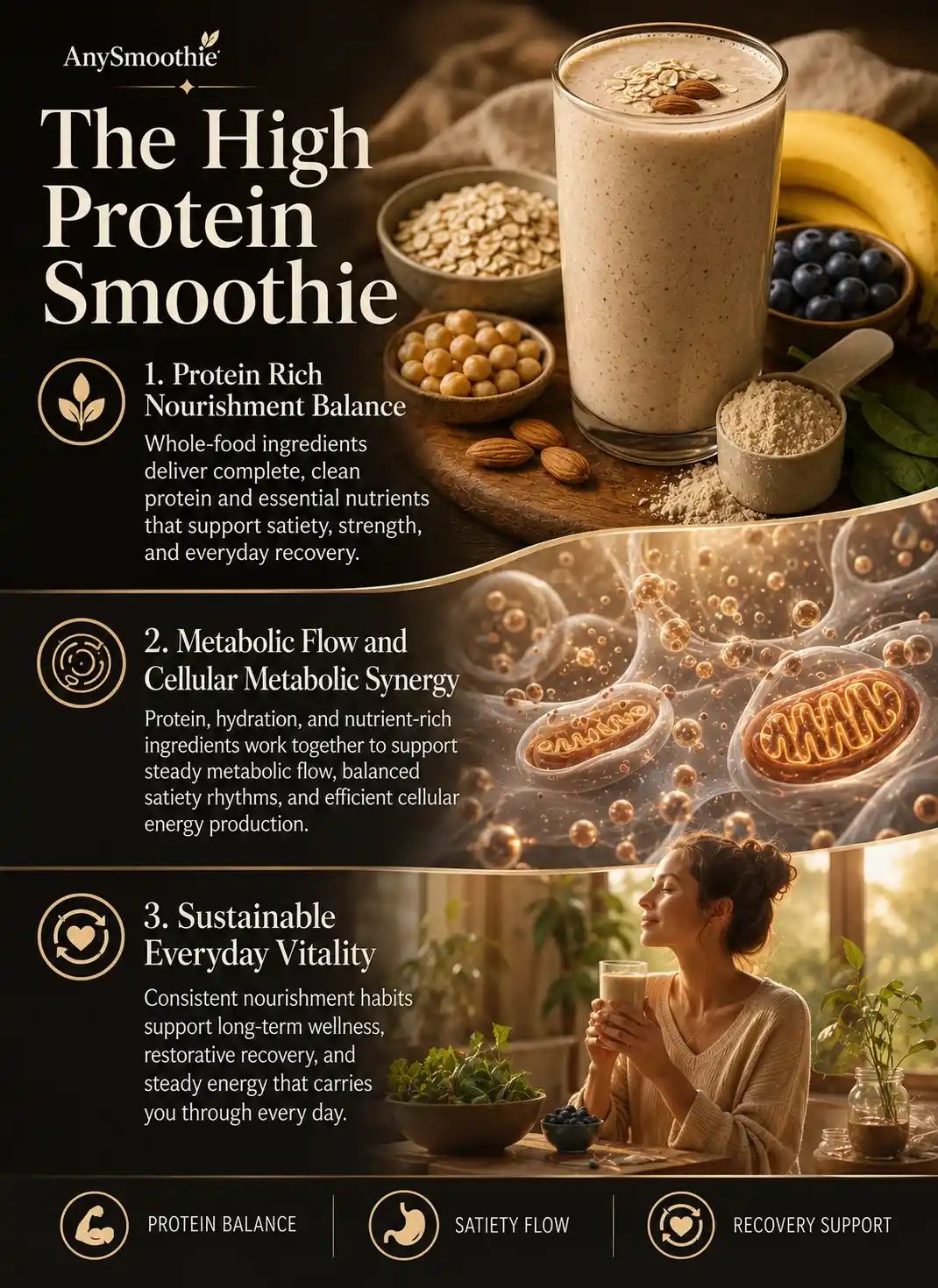
A good smoothie should help you stay steady for a few hours, not leave you hunting for snacks. That means pairing protein with slow-release fats and a bit of fiber.
Fats like almond butter, chia, flax, or avocado slow digestion and improve staying power. They also make the smoothie feel more like a meal. You do not need a huge amount. A spoonful or two is enough in most cases.
The goal is balance, not calorie overload. A smoothie that is too lean can feel thin in both texture and appetite control.
Amino acid partitioning: directing nutrients to tissues, not storage
When protein is paired with fat and fiber, the meal tends to digest more slowly. That helps amino acids enter the bloodstream in a steadier stream. In practical terms, you get better nutrient partitioning, with less of the quick crash that comes from fruit-heavy blends.
Fiber also helps here. It slows gastric emptying and adds structure. That makes the smoothie more satisfying and keeps it from feeling like sweet juice.
Easy add-ins include spinach, frozen cauliflower, berries, oats, and chia. Spinach brings volume with little taste. Oats add body. Berries keep flavor strong without making the drink overly sweet.
Choosing the right protein for your goal and your stomach
Different protein sources fit different jobs. Whey isolate is the gold standard for rapid metabolic priming. Collagen supports structural integrity. Pea and rice blends are a solid plant-based option when dairy is off the table.
Here is a quick comparison.
| Protein source | Speed of absorption | Leucine content (MPS activation) | Digestive effort | Impact on satiety |
|---|---|---|---|---|
| Whey Isolate | Fast | High, strongest trigger | Low for most people | High |
| Collagen Peptides | Fast to moderate | Low, weaker trigger | Very low | Moderate |
| Pea/Rice Protein Blends | Moderate | Moderate, better when blended | Moderate | High |
Whey isolate is the best fit when you want fast recovery or a quick breakfast that works hard. Collagen is useful as an add-in when you want something easy on the stomach and care about connective tissue support. Pea and rice blends make sense when you want dairy-free protein with a more rounded amino acid profile.
If you want a deeper look at whey versus collagen, this summary from Build Nutrition is a useful reference. It reinforces the main point, which is that the protein source changes the result.
When to reach for whey, collagen, or a plant blend
Use whey when you need speed. That fits post-workout windows, rushed mornings, and times when you have been under-eating.
Use collagen when you want an easy extra scoop in a smoothie, but you are not relying on it as your main protein. It mixes well and keeps the texture smooth.
Use a pea and rice blend when you want dairy-free support or a more balanced plant option. A clean blend also works well in smoothies that need a neutral flavor.
3 “high-protein” real life smoothie recipes
These are not fancy. They are built for repeat use, which matters more than novelty.
The “Quick-Prime” Whey Isolate, Almond Butter, and Spinach Stack
Ingredients
- 1 scoop whey isolate
- 1 cup unsweetened almond milk
- 1 tablespoon almond butter
- 1 cup fresh spinach
- ½ medium banana
- ½ cup ice
Pour the almond milk into the blender first. Add the whey isolate, almond butter, spinach, banana, and ice. Blend until completely smooth and creamy.
Whey isolate provides rapidly digested, high-quality protein, while almond butter contributes unsaturated fats and a little additional protein. Spinach adds folate, carotenoids, and other micronutrients without strongly changing the flavor. The banana supplies carbohydrates and improves texture, making this suitable for breakfast or as part of post-workout nutrition.
Estimated Nutrition per Serving
- Calories: ~340 kcal
- Protein: ~32 g
- Carbohydrates: ~26 g
- Fat: ~14 g
- Fiber: ~6 g
- Sugars: ~10 g
The Busy-Day Blender Cup for Lunch or Between Meetings
Ingredients
- 1 scoop protein powder
- ¼ cup rolled oats
- ¾ cup frozen mixed berries
- 1 tablespoon ground flaxseed
- 1 cup low-fat milk
- ½ cup plain Greek yogurt
- ½ cup ice, optional
Pour the milk into the blender first. Add the Greek yogurt, protein powder, oats, frozen berries, flaxseed, and ice if using. Blend until thick and completely smooth.
Protein powder, milk, and Greek yogurt provide a substantial protein base, while oats, berries, and flax contribute carbohydrates and fiber. Flax also supplies ALA omega-3 fatty acids. The combination makes this more substantial than a simple fruit smoothie and can work as a convenient meal-style option when the overall portion fits your needs.
Estimated Nutrition per Serving
- Calories: ~490 kcal
- Protein: ~46 g
- Carbohydrates: ~55 g
- Fat: ~12 g
- Fiber: ~11 g
- Sugars: ~26 g
If I were taking this with me between meetings, I’d blend the oats especially well rather than adding more yogurt for thickness. It stays easier to drink after sitting for a while, since both oats and flax continue absorbing liquid.
The Dairy-Free Blend for Gentle Digestion and Steady Energy
Ingredients
- ½ scoop pea protein
- ½ scoop rice protein
- 1 medium banana
- 1 tablespoon almond butter
- ¼ cup rolled oats
- 1 cup unsweetened almond milk
- ½ cup ice
Pour the almond milk into the blender first. Add the pea and rice proteins, banana, almond butter, oats, and ice. Blend until creamy and completely smooth.
Combining pea and rice proteins provides a complementary plant-protein amino acid profile. Banana and oats supply carbohydrates and fiber, while almond butter contributes unsaturated fat. This dairy-free combination can be useful for people who prefer to avoid dairy, although digestive tolerance and energy responses remain individual.
Estimated Nutrition per Serving
- Calories: ~460 kcal
- Protein: ~31 g
- Carbohydrates: ~58 g
- Fat: ~15 g
- Fiber: ~10 g
- Sugars: ~17 g
Biohacking the busy schedule: strategic timing for protein pacing
The best timing is the one you can repeat. That said, a high protein smoothie often works best at breakfast, after training, mid-afternoon, or anytime a meal might get skipped.
Protein pacing matters because your body responds better when protein is spread across the day instead of piled into one meal. That can support appetite control and muscle support at the same time.
Satiety signaling: how protein modulates ghrelin and PYY
Protein helps support fullness signals, including ghrelin and PYY. In plain terms, it can help you feel satisfied longer and reduce the pull toward mindless snacking.
That is one reason protein-rich breakfasts often work so well. Research on liquid breakfasts found that protein-rich versions can improve satiety and reduce later intake. You can read one such study here.
Conclusion
The best high protein smoothie is the one you will make on a rushed Tuesday, not the one that looks perfect online. Build it around a strong protein source, then add a little fat, some fiber, and enough fruit for taste.
Whey isolate is the fastest tool. Collagen is an easy add-in. Pea and rice blends are a solid dairy-free path. Keep the formula simple, repeat it often, and let consistency do the work.
⚠️ Safety Notes for High Protein Smoothies
Kidney Function: While high protein intake is generally safe for healthy individuals, those with pre-existing chronic kidney disease (CKD) should strictly monitor their daily protein grams. Rapid nitrogen load can place excessive filtration stress on compromised kidneys.
Heavy Metal Testing: Protein powders, especially plant-based ones (pea/rice), can accumulate heavy metals like lead or arsenic from the soil. Always choose brands that provide third-party lab transparency (COA) for purity.
Amino Acid Imbalance (Collagen): Collagen is an incomplete protein (missing tryptophan). Do not rely on it as your sole source of protein. If using collagen, always pair it with a complete protein source like whey, dairy, or a pea/rice blend to ensure a full amino acid profile.
Digestive Enzymes: High-protein liquid meals can sometimes cause bloating if consumed too fast. Your stomach needs time to release pepsin. Sip your smoothie slowly over 10-15 minutes to allow proper enzymatic breakdown.
Artificial Sweeteners: Many “High Protein” powders use Sucralose or Acesulfame K. These can disrupt the gut microbiome and affect insulin sensitivity. Opt for unflavored versions or those sweetened with stevia/monk fruit.
FAQ
Why is a high-protein smoothie essential for a “real life” busy schedule
In a busy lifestyle, protein is often the first macronutrient to be under-consumed. Protein provides the nitrogen and amino acids required to support the body’s natural repair pathways. By integrating a high-protein smoothie into your day, you provide a concentrated dose of these building blocks, supporting physiological systems involved in maintaining lean muscle mass and preventing the metabolic slowdown associated with low protein intake.
What is the “Leucine Threshold” and why does it matter
Leucine is a specific branched-chain amino acid that acts as a primary signaling molecule for muscle protein synthesis. To “trigger” the body’s natural building pathways, a specific concentration of leucine (the threshold) must be reached in the blood. A high-quality protein smoothie ensures you hit this threshold quickly and efficiently, supporting mitochondrial priming and ensuring your body stays in a state of repair rather than breakdown.
How does protein help manage energy levels during a stressful day
Protein has a higher thermic effect and a lower glycemic impact than carbohydrates. Consuming a high-protein blend supports the body’s natural release of satiety hormones like PYY and GLP-1. This biochemical signaling helps stabilize blood sugar levels and suppresses ghrelin (the hunger hormone), supporting metabolic efficiency and preventing the “afternoon crash” common in high-stress environments.
Can I mix different types of protein in one smoothie
Yes, and it can be a strategic biohack. Pairing a fast-acting protein like whey isolate with a structural protein like collagen or a slow-digesting casein-based source supports a multi-stage release of amino acids. This optimizes nutrient partitioning, providing immediate support for muscle repair while ensuring a steady supply of nitrogen to support the physiological systems of the skin, hair, and joints throughout the day.
Is it okay to use a protein smoothie as a meal replacement
When designed correctly with added lipids (like avocado or nut butters) and micronutrients (like leafy greens), a high-protein smoothie acts as a nutrient-dense anchor for your metabolism. It supports the natural pathways of nutrient delivery while significantly reducing the digestive load on your system. This allows your body to divert more energy toward cognitive tasks and physical performance, making it a highly efficient “real life” tool.

Medical Disclaimer: AnySmoothie content is for educational purposes only and is not a substitute for professional medical advice. Consult a healthcare provider for personalized guidance. See our full Disclaimer & Terms of Use. AI Transparency: AnySmoothie may use AI to support content development. All content undergoes human editorial review for accuracy, clarity, and editorial quality. See our full AI Transparency.