
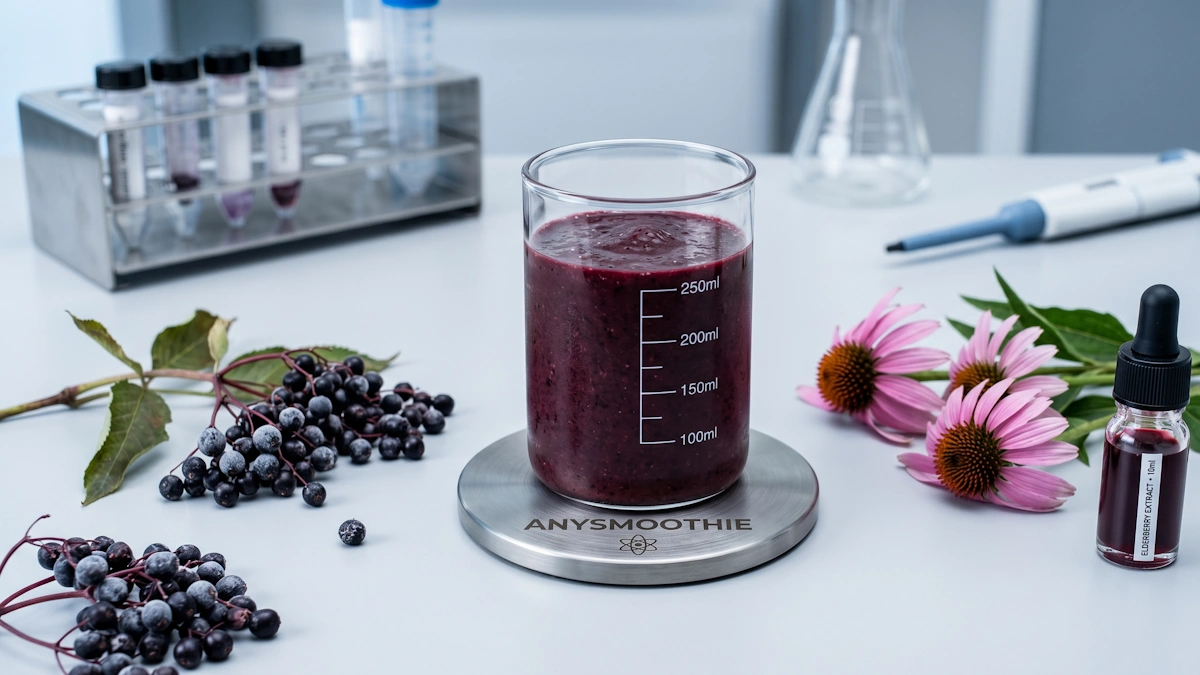
Cytokines are small messengers, and they help immune cells stay coordinated. They tell the body when to react, when to hold back, and when to reset. Food can’t control that system, but it can support the conditions that keep it steady.
An elderberry smoothie for cytokine modulation is a food-first way to support normal immune response. The goal is balance, not force. Elderberry brings anthocyanins, while the smoothie format makes it easy to combine fruit, fiber, protein, and fat in one glass.
That mix matters when you want something practical, repeatable, and easy to digest. The best version works like a well-timed signal, not a loud alarm.
The Cytokine Dialogue: Coordination of the Immune Response
Cytokines are the immune system’s message network. They help cells communicate fast, then settle down when the job is done. When that timing is off, the body can feel out of sync.
So the aim is not to shut cytokines down. It is to support clear signaling and a return to baseline. A balanced read of the evidence appears in this elderberry review from NCBI, which shows why context matters. Some findings point toward immune support, while others show lower inflammatory signaling. Both patterns matter.
Antiviral priming and the role of interferon signaling
Interferon sits near the front of the body’s antiviral response. It helps cells notice stress early and respond in time. Elderberry is often discussed here because it may support that alarm system without pushing the immune response too hard.
That is the useful middle ground. You want the body alert, but not flooded. In a smoothie, elderberry fits that role well because it pairs with other foods that keep the response even.
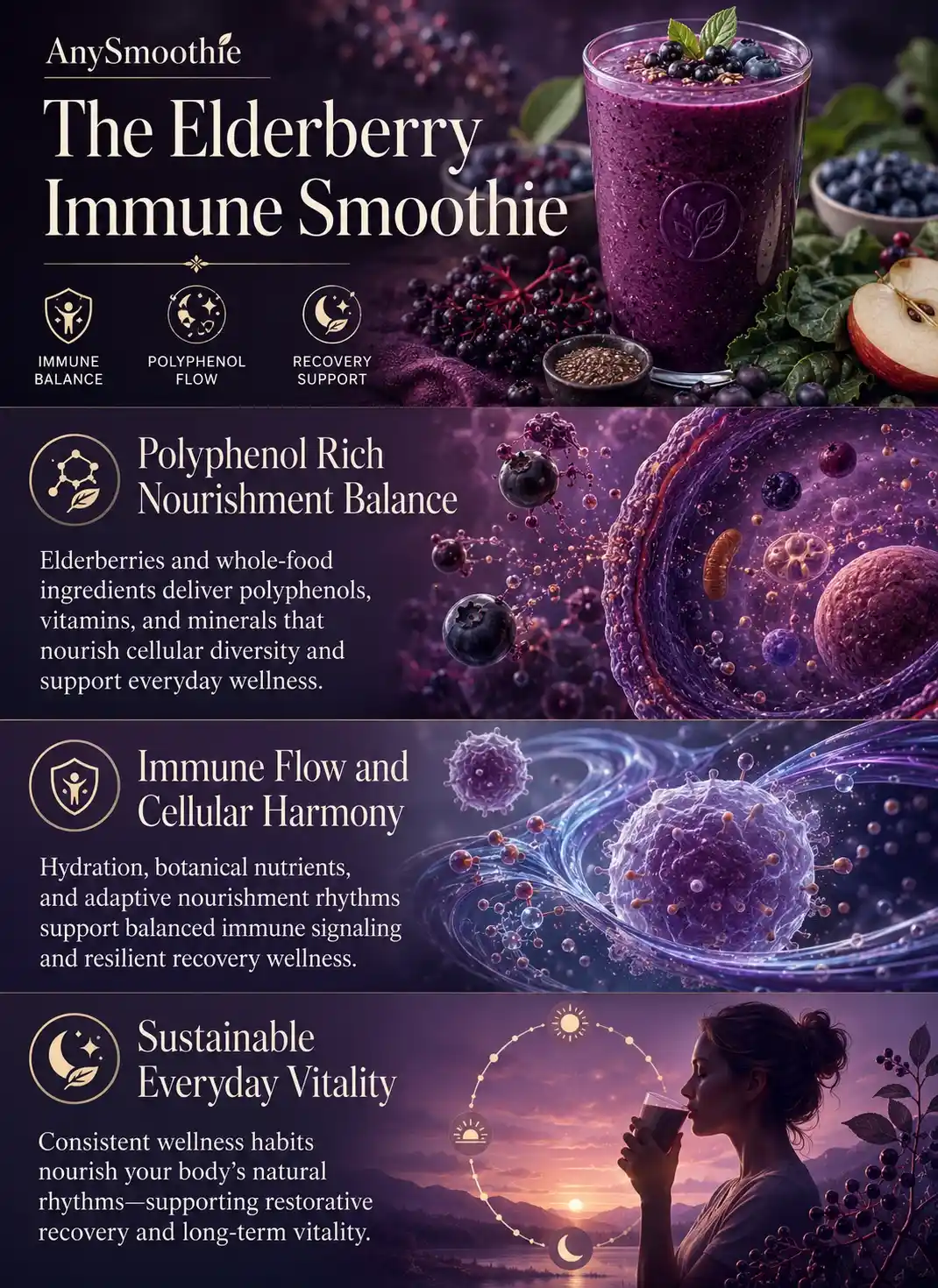
Anthocyanin Dynamics: Molecular Decoys and Cellular Defense
Elderberries are dark for a reason. Their skins are rich in anthocyanins, the pigments tied to antioxidant activity. These compounds help support redox balance when immune activity rises and oxidative stress does too.
Research on elderberry extract has also looked at antiviral and immunomodulatory effects in lab settings, including a high-quality elderberry extract study. That does not turn elderberry into a cure. It does explain why the fruit is often used as support for immune signaling.
What to pair with elderberry for better absorption
Pair elderberry with vitamin C, citrus, blueberries, yogurt, kefir, chia, flax, or nut butter. Vitamin C helps recycle antioxidants. Fat and fiber slow digestion, so nutrients arrive in a steadier stream.
That matters for nutrient partitioning. A smoothie can either spike and fade, or it can deliver a more even supply. Elderberry works better in the second version.
3 Elderberry Smoothie Recipes That Support Immune Modulation
These three ideas keep the same goal in view. Each one supports balance, but each has a different feel.
| Criterion | Elderberry (Anthocyanins) | Vitamin C (Ascorbic Acid) | Zinc (Mineral) |
|---|---|---|---|
| Physiological mechanism | Supports cytokine balance and interferon signaling | Helps recycle antioxidants and supports epithelial barrier integrity | Supports enzyme function and T-cell maturation |
| Primary site of action | Innate immune cells and mucosal defense | Gut lining, blood, and immune cells | Immune cells and epithelial tissues |
| Best smoothie pairing | Echinacea tea, berries, lemon | Kiwi, orange, strawberries | Greek yogurt, pumpkin seeds, chia |
| Synergistic nutrient | Vitamin C | Elderberry anthocyanins | Protein or vitamin C |
Elderberry is the most distinctive of the three when you want to support the interferon pathway without pushing the system too hard.
Biohacking the Innate Response: Supporting Macrophage Efficiency
Macrophages are early responders. They clear debris, watch for trouble, and help shape the next wave of signaling. That work takes energy, so food quality matters.
Plant fractions from elderberry also showed dendritic-cell activity in a PLOS One study, which is one reason elderberry gets attention in immune-support formulas. In a smoothie, the practical goal is simple, support the innate response without making digestion feel heavy.
Mitochondrial priming: energy flux for antibody production
Mitochondria power immune work, and they need usable fuel. When you include yogurt, seeds, or nut butter, you slow the glucose curve and give the body a steadier supply of amino acids and fats.
That helps with metabolic efficiency. A well-built smoothie can support the cells doing the work while still feeling light on the stomach.
How to Use Elderberry Smoothies Safely and Smartly
Elderberry works best as part of a balanced diet, not as a cure. Choose cooked elderberry products or a trusted syrup, and keep portions reasonable. More is not better here.
If you are pregnant, immune compromised, or taking medication, check with a qualified professional before using elderberry often. Do the same with zinc, since too much can create its own problems. A good smoothie supports routine and balance, not extremes.
Conclusion
An elderberry smoothie can be a simple way to support cytokine balance, antioxidant defense, and immune readiness. It works best when elderberry is paired with vitamin C, protein, fiber, or fat, because that keeps the signal steady.
The clearest takeaway is simple. Consistency beats intensity. A calm, well-built smoothie supports the body better than a heavy-handed one.
🛡️ Safety Notes & Contraindications
Raw Elderberry Toxicity: CRITICAL: Never use raw, uncooked elderberries or their leaves/stems in a smoothie. They contain cyanogenic glycosides (sambunigrin) which can cause severe nausea, vomiting, and dizziness. Only use commercially prepared syrups, cooked concentrates, or standardized extracts.
Autoimmune Conditions: Since elderberry can modulate cytokine production and stimulate immune signaling, individuals with diagnosed autoimmune diseases (e.g., Lupus, Rheumatoid Arthritis, MS) should consult their immunologist before use, as it may potentially exacerbate symptoms.
Zinc Supplementation Limits: While zinc supports T-cell function, excessive intake (over 40mg/day) can induce copper deficiency and paradoxically suppress immune health. Ensure the zinc dose in your smoothie is moderate and accounts for your total dietary intake.
Immunosuppressant Medications: If you are taking immunosuppressant drugs (e.g., corticosteroids or transplant medications), avoid elderberry smoothies, as they may counteract the intended effect of the medication.
- Pregnancy and Lactation: Due to a lack of long-term clinical safety data regarding concentrated elderberry use during pregnancy, healthcare provider consultation is required.
FAQ
How do “Anthocyanins” in elderberry support biochemical redox balance?
Elderberries are exceptionally rich in anthocyanins, which are potent antioxidant pigments. Biochemically, these compounds support the body’s natural pathways for managing oxidative stress that naturally arises during an immune response. Supporting this physiological system through anthocyanin-dense smoothies facilitates the biochemical mechanics of “redox homeostasis,” helping cells remain stable while the immune system remains active.
Why is “Interferon Signaling” the primary target for antiviral priming?
Interferon is a key cytokine that sits at the front line of the antiviral response, helping cells detect and respond to stress signals early. Biochemically, elderberry may support this early-warning system without overstimulating the broader immune response. Supporting this physiological system optimizes the natural pathways of “immune readiness,” ensuring the body remains alert but not overwhelmed.
What is the role of “Vitamin C” in recycling antioxidants within the smoothie matrix?
Vitamin C (ascorbic acid) acts as a critical partner for the polyphenols found in elderberry. Biochemically, it helps recycle used antioxidants and supports the integrity of the epithelial barrier. Supporting this physiological system by pairing elderberry with citrus or kiwi facilitates the biochemical mechanics of “synergistic defense,” ensuring that the immune messengers have the raw materials required for sustained coordination.
How does “Nutrient Partitioning” prevent a sharp cytokine spike?
The kinetics of a smoothie—how fast its nutrients enter the system—change the body’s response. Biochemically, adding fiber (chia, flax) and healthy fats (nut butter, yogurt) slows digestion. Supporting this physiological system ensures that immune-modulating compounds arrive in a “steady stream” rather than a rapid bolus, which optimizes the natural pathways of nutrient partitioning and metabolic efficiency.
Why is “Mitochondrial Priming” necessary for high-volume antibody production?
Immune activity, particularly the work of macrophages and the production of antibodies, is an energy-intensive process. Biochemically, the mitochondria must provide a constant flux of ATP to fuel these cellular defenses. Supporting this physiological system through balanced smoothies that include protein and slow-release carbohydrates facilitates the biochemical mechanics of “bioenergetic support,” ensuring the immune system has a reliable fuel supply during periods of increased demand.

Medical Disclaimer: AnySmoothie content is for educational purposes only and is not a substitute for professional medical advice. Consult a healthcare provider for personalized guidance. See our full Disclaimer & Terms of Use. AI Transparency: AnySmoothie may use AI to support content development. All content undergoes human editorial review for accuracy, clarity, and editorial quality. See our full AI Transparency.