
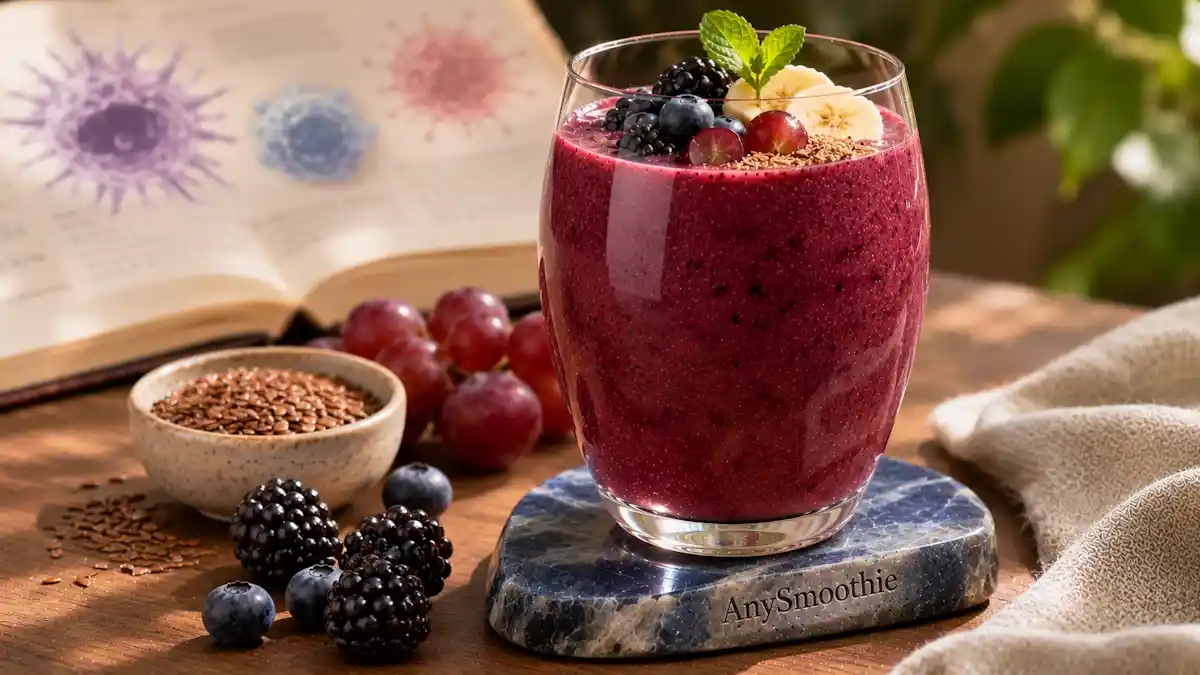
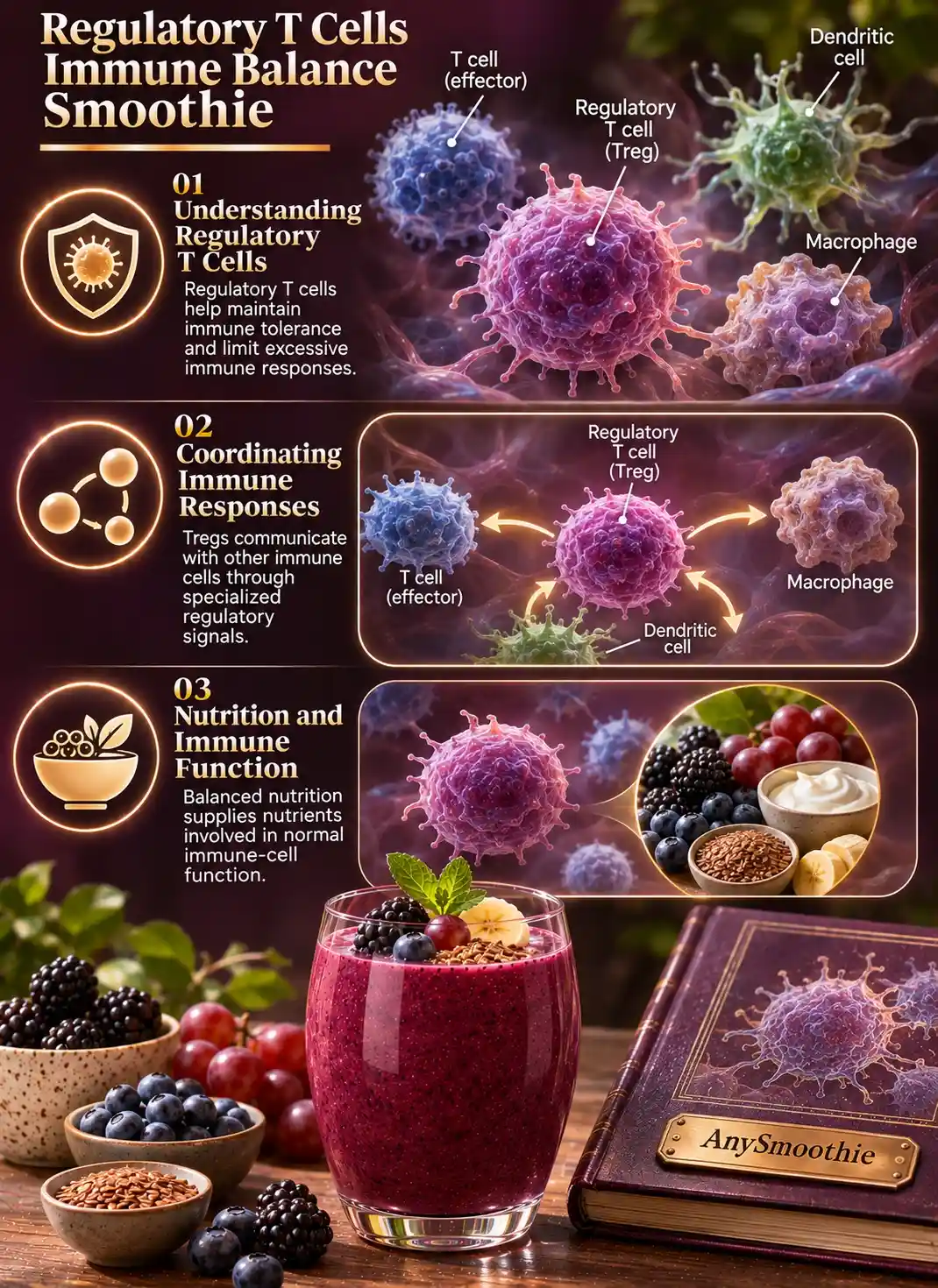
No smoothie has been shown to control regulatory T-cell signaling or treat a health condition. Regulatory T cells, or Tregs, are part of your immune system’s normal checks and balances.
Smoothies can supply nutrients that support normal immune function, but overall eating habits matter more than any single recipe. For another food-focused perspective involving autoimmune conditions, see gentle smoothies for lupus-friendly meal routines. If you’re interested in smoothies for regulatory T-cell signaling, approach them as convenient food rather than targeted treatment.
Start with what Tregs do, then choose among three recipes based on your taste and dietary needs.
What regulatory T cells do, and what food can realistically support
Tregs help keep immune responses under control, including responses that could damage your own tissues. A scientific review of regulatory T-cell function describes their role in maintaining immune balance. Cytokines are another part of immune communication, explored in elderberry smoothie for cytokine modulation; this does not establish a Treg-specific effect.
Their activity depends on genetics, health conditions, and signals in surrounding tissues. Because these influences interact, eating one ingredient doesn’t predict a particular change in Treg activity. More Treg activity also isn’t a universal health goal; context matters.
How nutrients fit into immune signaling
A varied diet supplies protein, vitamins, minerals, and fats that cells use for normal maintenance and communication. These nutrients support many processes throughout your body, rather than acting only on Tregs.
Fiber also feeds gut microbes. Researchers study compounds those microbes produce, including short-chain fatty acids and immune regulation. For another example of microbial metabolite pathways, see smoothies for gut-derived indole metabolites. Indole metabolites and short-chain fatty acids are distinct groups of microbial compounds. However, findings about microbial compounds don’t prove that drinking a smoothie changes Treg signaling in people.
What smoothies can and cannot do
Smoothies offer a convenient way to combine fruit, vegetables, fiber, and protein. Because blending retains the edible ingredients, these recipes contain fiber rather than removing it through straining.
Still, a smoothie doesn’t replace prescribed treatment or a varied diet. If you have an immune-related condition or medically restricted diet, discuss food changes with a registered dietitian or your treating clinician. For another example of nutrition during an immune-related seasonal condition, see smoothies for seasonal allergy nutrition support.
3 Smoothies for Regulatory T-Cell Signaling
Each recipe makes one serving. Nutrition figures are estimates, not medical claims; brands, produce sizes, and substitutions can change the totals.
Berry Oat Kefir Smoothie
Ingredients
- 3/4 cup plain kefir
- 1/2 cup blueberries
- 1/2 cup strawberries
- 1/4 cup rolled oats
- 1 tablespoon ground flaxseed
- 1/2 cup water
Instructions
Combine all ingredients and blend until smooth. Adjust with water as needed for a thinner, drinkable texture.
Estimated Nutrition (per serving)
- Calories: ~290 kcal
- Protein: ~13 g
- Carbohydrates: ~44 g
- Fat: ~9 g
- Fiber: ~9 g
- Sugars: ~18 g
Kiwi Spinach Avocado Smoothie
Ingredients
- 1 cup unsweetened soy milk
- 1 cup baby spinach
- 1 medium kiwi
- 1/4 medium avocado
- 1 tablespoon chia seeds
- 1/2 medium banana
Instructions
Peel the kiwi and banana, remove the avocado skin and pit, then blend all ingredients until creamy. Serve promptly.
Estimated Nutrition (per serving)
- Calories: ~280 kcal
- Protein: ~11 g
- Carbohydrates: ~34 g
- Fat: ~13 g
- Fiber: ~12 g
- Sugars: ~18 g
Raspberry Cocoa Tofu Smoothie
Ingredients
- 3/4 cup unsweetened soy milk
- 1/2 cup silken tofu
- 1/2 cup raspberries
- 1/2 medium banana
- 1 tablespoon unsweetened cocoa powder
- 2 tablespoons rolled oats
Instructions
Peel the banana, then combine everything in a blender. Blend until smooth, pausing to scrape down the sides if needed.
Estimated Nutrition (per serving)
- Calories: ~265 kcal
- Protein: ~17 g
- Carbohydrates: ~37 g
- Fat: ~7 g
- Fiber: ~9 g
- Sugars: ~18 g
How to choose a smoothie that fits your day
Choose by flavor, texture, and nutritional needs, rather than expecting a particular immune effect.
| Smoothie | Nutritional strengths | Texture | Flavor | Best fit |
|---|---|---|---|---|
| Berry Oat Kefir | Protein and fiber | Thick, lightly grainy | Tangy and fruity | A tart breakfast option |
| Kiwi Spinach Avocado | Highest estimated fiber | Creamy, with seed texture | Fresh and mildly sweet | A dairy-free green option |
| Raspberry Cocoa Tofu | Highest estimated protein | Thick, with berry seeds | Tart cocoa | A cocoa-flavored snack |
The cocoa recipe provides the most estimated protein, while the green option leads in estimated fiber.
Adjust sweetness, fiber, and protein
Taste before adding sweeteners. Riper bananas usually taste sweeter, while berries and plain kefir contribute tartness. Honey, syrups, and sweetened milk alternatives add sugars, so account for them if you’re monitoring intake.
If you’re unused to fiber-rich foods, start with a smaller portion and increase gradually. Human studies of dietary fiber and gut fermentation show variable responses; a higher fiber total doesn’t predict a particular immune effect.
For additional protein, a tolerated plain yogurt or higher-protein milk alternative can help. Remember that additions change the nutrition estimates and portion size.
Keep portions and dietary needs in mind
Fruit, dairy, soy, seeds, and other smoothie ingredients don’t suit everyone. Check packaged-product labels for allergens, added sugars, and serving sizes. Even plain or unsweetened products can differ in protein and calories.
For dairy avoidance, a suitable nondairy kefir may work. If you avoid soy, both the milk and tofu in the cocoa recipe need replacements. Choose familiar, tolerated substitutes rather than assuming every plant-based product fits your needs.
Substitutions won’t necessarily provide the same nutrition. Also, decide whether the smoothie fits as a snack or part of a meal.
Conclusion: Choose food you enjoy, with realistic expectations
These recipes offer convenient ways to include produce, fiber, and protein within a balanced eating pattern. Research on immune regulation doesn’t establish that smoothies specifically control regulatory T-cell signaling.
Let taste and dietary fit guide your choice. Choose ingredients you enjoy and tolerate, then adjust portions to your needs. Keep any medical treatment decisions separate from what goes into your blender, with guidance from your healthcare team when needed.
🛡️ Safety Notes & Dietary Interactions
- Immune-System Expectations: These smoothies provide ordinary nutrients and fiber, but none has been shown to control Treg signaling. Avoid treating increased or decreased Treg activity as an automatic health benefit.
- Fiber Tolerance: The kiwi-spinach-avocado smoothie contains an estimated 12 grams of fiber, while the other recipes provide about 9 grams. Increase portions gradually if fiber intake is low.
- Allergen Awareness: Kefir, soy milk, tofu, flax, chia, and other ingredients may cause intolerance or allergic reactions. Check labels carefully and use substitutions that match your established dietary requirements.
- Medical Diets: Immune-related conditions may involve individualized dietary restrictions or treatments. Discuss major dietary changes with your treating clinician or registered dietitian rather than using smoothies as targeted immune therapy.
FAQs
Can these smoothies actually increase regulatory T-cell activity?
There is no established evidence that these smoothies specifically increase or decrease regulatory T-cell activity. Tregs respond to complex signals involving genetics, health conditions, tissues, and immune communication. The recipes provide nutrients and fiber that support normal nutrition, but they cannot be used to target Treg signaling predictably.
Which smoothie has the most protein?
The Raspberry Cocoa Tofu Smoothie has the highest estimated protein content, at about 17 grams per serving. Silken tofu and soy milk provide much of that protein. The Berry Oat Kefir contains about 13 grams, while Kiwi Spinach Avocado provides about 11 grams, based on the article’s estimates.
Which smoothie provides the most fiber?
The Kiwi Spinach Avocado Smoothie has the highest estimated fiber content at about 12 grams per serving. Chia, spinach, kiwi, avocado, and banana all contribute. If you’re not accustomed to this much fiber, a smaller serving may be more comfortable before gradually increasing your intake.
Does the fiber in these smoothies change Treg signaling?
Fiber supports gut microbial fermentation, and researchers study microbial compounds such as short-chain fatty acids in relation to immune regulation. However, that research does not establish that drinking one of these smoothies changes Treg signaling in a predictable way. Higher fiber intake should therefore be viewed as nutritional support, not targeted immune modulation.
What if I need to avoid dairy or soy?
The recipes can be adapted, but substitutions change their nutritional profiles. The green and cocoa smoothies use soy milk, while the berry recipe uses kefir. A suitable nondairy kefir can replace dairy kefir, while soy-free alternatives can replace soy milk and tofu. Choose products that fit your allergies and dietary requirements.

Medical Disclaimer: AnySmoothie content is for educational purposes only and is not a substitute for professional medical advice. Consult a healthcare provider for personalized guidance. See our full Disclaimer & Terms of Use. AI Transparency: AnySmoothie may use AI to support content development. All content undergoes human editorial review for accuracy, clarity, and editorial quality. See our full AI Transparency.