
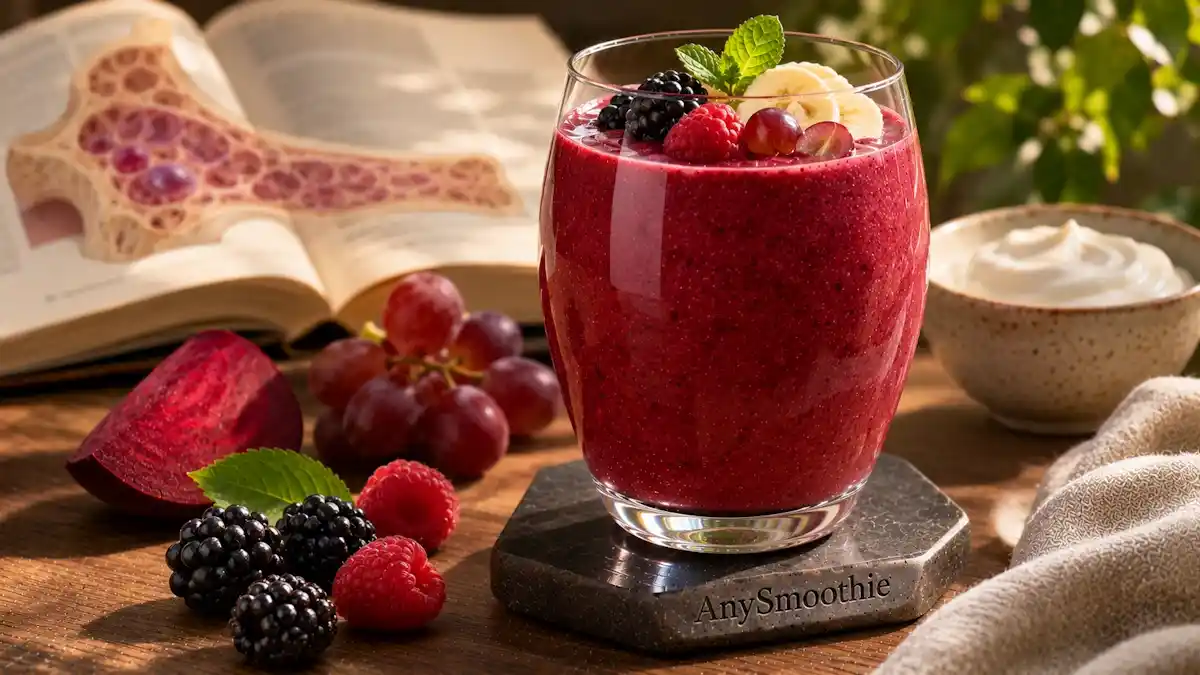
If you’re exploring smoothies for hematopoietic stem cell signaling, focus on balanced nutrition: no established recipe controls these signals or treats disease. Food supplies nutrients the body uses for normal functions, including blood cell production.
A smoothie can help you combine several foods when that suits your appetite and routine. Start with what the science supports, then try three recipes based on taste and dietary needs.
How smoothies for hematopoietic stem cell signaling fit into a balanced diet
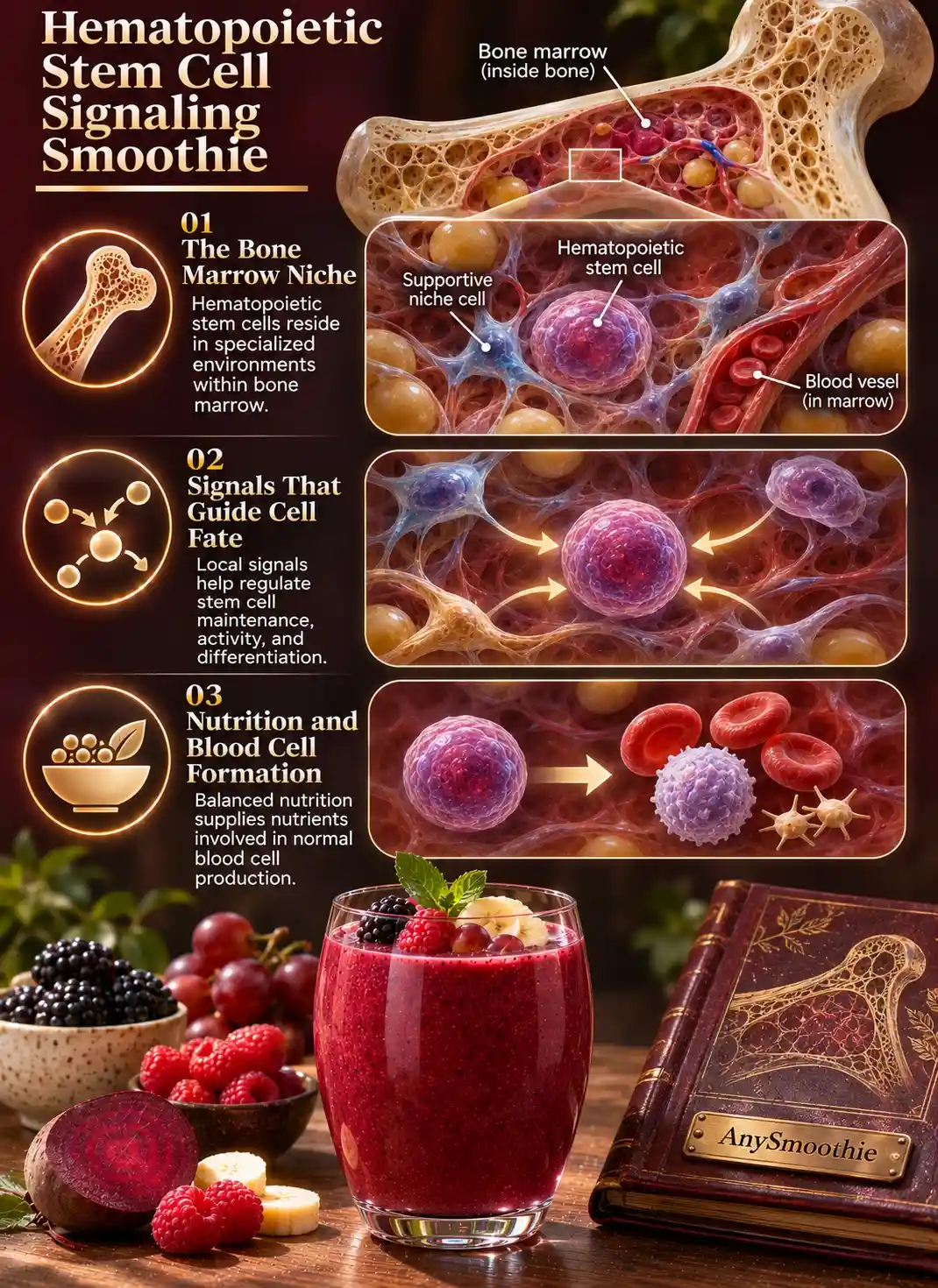
Hematopoietic stem cells are blood-forming cells found mainly in bone marrow. They produce the cells that carry oxygen, fight infections, and help blood clot. Many immune cells also circulate through or reside in lymphatic tissues; for a broader overview of this connected system, see smoothies for lymphatic flow.
Signaling describes messages that cells receive from other cells and their surroundings. Research on hematopoietic stem cell niches and signals describes how local chemical messengers, including cytokines, help regulate blood cell development. Mast cells are another immune-cell population within the broader hematopoietic lineage; a related overview appears in mast cell support smoothies for stability. Hydrogen sulfide is another endogenous signaling molecule discussed in sulfur-rich smoothies for h2s signaling.
Food provides nutrients for normal body functions. For example, protein supplies amino acids, while iron, folate, and vitamin B12 contribute to normal red blood cell production. Folate also participates in DNA nucleotide synthesis, a related process explored in folate smoothies for dna nucleotide synthesis. However, eating these nutrients doesn’t mean you can direct stem cell behavior.
Research does not establish that smoothies switch hematopoietic stem cell signals on or off. These drinks belong alongside other foods in a varied diet. They also can’t diagnose a nutrient deficiency or replace prescribed treatment for one.
3 Smoothies for Hematopoietic Stem Cell Signaling
These recipes are nutrient-rich food options, not methods for altering stem cell activity. Each makes one serving. Nutrition figures are estimates and may vary by brand, produce size, and any substitutions.
Blueberry, Spinach, and Chia Smoothie
Ingredients
- 3/4 cup plain low-fat kefir
- 1/2 cup blueberries, fresh or frozen
- 1 cup baby spinach
- 1/2 medium banana
- 1 tablespoon chia seeds
Instructions
Blend all ingredients until smooth. Add a splash of water if needed, and serve right away.
The banana softens the kefir’s tang, while blueberries provide most of the fruit flavor. Chia seeds add texture and thicken the drink as it stands. For a thinner result, blend in water gradually.
Estimated Nutrition (per serving)
- Calories: ~260 kcal
- Protein: ~13 g
- Carbohydrates: ~42 g
- Fat: ~6 g
- Fiber: ~8 g
- Sugars: ~27 g
Orange, Carrot, and Oat Smoothie
Ingredients
- 3/4 cup plain nonfat Greek yogurt
- 1 small peeled orange
- 1/2 cup chopped carrot
- 1/4 cup rolled oats
- 1 tablespoon pumpkin seeds
- 1/4 cup water, plus more as needed
Instructions
Blend the yogurt, orange, carrot, oats, pumpkin seeds, and water until smooth. Let it sit for a few minutes if you prefer softer oats, then blend again.
Greek yogurt gives this recipe its protein-rich base. Meanwhile, the whole orange adds citrus flavor without juice concentrate. Chop the carrot into small pieces so your blender can break it down more easily.
Estimated Nutrition (per serving)
- Calories: ~300 kcal
- Protein: ~25 g
- Carbohydrates: ~38 g
- Fat: ~6 g
- Fiber: ~7 g
- Sugars: ~18 g
Cherry, Tofu, and Cocoa Smoothie
Ingredients
- 1/2 cup silken tofu
- 3/4 cup frozen pitted cherries
- 1/2 cup unsweetened soy milk
- 1 tablespoon almond butter
- 1 tablespoon unsweetened cocoa powder
Instructions
Blend all ingredients until creamy. Add a little more soy milk to thin the smoothie, if desired.
Silken tofu blends into a soft base without a strong flavor. Cherries supply tartness, while cocoa adds a slightly bitter chocolate note. Almond butter makes the drink richer, so expect a more substantial texture than a fruit-only blend.
Estimated Nutrition (per serving)
- Calories: ~315 kcal
- Protein: ~14 g
- Carbohydrates: ~29 g
- Fat: ~17 g
- Fiber: ~8 g
- Sugars: ~17 g
Compare the three smoothies by taste, texture, and nutrition
Choose the combination that sounds appealing and fits your eating pattern.
| Smoothie | Nutritional emphasis | Texture | Flavor | Best fit |
|---|---|---|---|---|
| Blueberry, Spinach, and Chia | Fiber and fruit | Thick, lightly seedy | Sweet and mild | A berry-forward breakfast |
| Orange, Carrot, and Oat | Protein and carbohydrates | Hearty and smooth | Bright and lightly sweet | A filling snack |
| Cherry, Tofu, and Cocoa | Protein and unsaturated fat | Creamy | Tart cherry with cocoa | A richer, less fruity option |
The orange version has the highest estimated protein content, while the cherry recipe contains more fat. None has demonstrated an advantage for directing stem cell signaling.
Choose and prepare smoothies safely, especially during treatment
Choose according to taste, dietary needs, and tolerance. A thick, seedy drink may not appeal when your appetite is low. Likewise, citrus or cocoa may bother you if your mouth or stomach feels sensitive.
Read labels for added sugar and allergens. These recipes contain milk, soy, or almonds, and individual products may contain other allergens. A substitution can change both nutrition and consistency.
People having a stem cell transplant or other immune-suppressing treatment should ask their care team which foods are safe. These recipes aren’t automatically suitable during treatment. Memorial Sloan Kettering’s eating guidance after stem cell transplant includes detailed food-handling precautions.
Food rules may be stricter during treatment, so use only ingredients and preparation practices approved by your care team. This includes decisions about raw produce, frozen fruit, and cultured dairy products. NMDP also provides food storage and preparation guidance for transplant recipients. General recipe instructions don’t replace your team’s requirements.
Conclusion: Keep the focus on food, not signaling
Smoothies can make it easier to include a mix of foods in a balanced diet. Choose a recipe for its flavor, texture, and nutritional fit.
They aren’t a proven way to direct hematopoietic stem cell signaling or treat disease. If treatment affects what you can eat, your care team’s guidance should determine which ingredients and preparation methods belong in your routine.
🛡️ Safety Notes & Dietary Interactions
- Transplant Food Safety: During stem cell transplantation or immune-suppressing treatment, raw produce, frozen fruit, kefir, yogurt, and preparation methods may require specific restrictions from your care team.
- Allergen Awareness: The recipes contain dairy, soy, almond, chia, pumpkin seeds, or other potential allergens. Check individual labels and use substitutions only when they fit your dietary requirements.
- Digestive Tolerance: Chia, oats, spinach, carrots, and seeds increase fiber and texture. Start with smaller portions if appetite is reduced or digestion is sensitive, and thin thicker blends.
- Nutrient Deficiency: Iron, folate, and vitamin B12 support normal blood-cell production, but smoothies cannot diagnose or correct deficiencies. Follow prescribed supplementation or treatment rather than increasing ingredients independently.
FAQs
Can these smoothies actually change hematopoietic stem cell signaling?
There is no established evidence that any of these smoothies can switch hematopoietic stem cell signaling on or off. Their role is nutritional: they provide protein, carbohydrates, fats, fiber, and micronutrients used in normal body functions. Stem cell behavior depends on complex cellular and tissue signals that food cannot be targeted to control.
Which smoothie has the most protein?
The Orange, Carrot, and Oat Smoothie has the highest estimated protein content, at about 25 grams per serving. Greek yogurt provides most of that protein, with pumpkin seeds and oats contributing smaller amounts. The higher protein content makes it a filling option, but it does not give this recipe a special effect on stem cell signaling.
Are these smoothies suitable during a stem cell transplant?
Not automatically. During transplantation or immune-suppressing treatment, food-safety requirements can be stricter than ordinary kitchen practices. Raw produce, frozen fruit, cultured dairy, and preparation methods may need individual approval. Your transplant or oncology care team should determine which ingredients and handling practices are appropriate for your current treatment stage.
Which recipe is easiest to adjust if my appetite is low?
The Blueberry, Spinach, and Chia Smoothie can be made thinner by gradually adding water, while the Cherry, Tofu, and Cocoa Smoothie can be loosened with additional soy milk. Smaller servings may also feel easier. If appetite loss is significant or persistent, discuss nutrition needs with your treatment team rather than relying on smoothies alone.
Do iron, folate, or vitamin B12 in food directly stimulate blood-cell production?
Not in a predictable, targeted way. Iron, folate, and vitamin B12 are nutrients involved in normal blood-cell production, but consuming more does not automatically increase production or correct a deficiency. If blood tests identify a deficiency during treatment, supplementation and dietary changes should follow the recommendations of the appropriate healthcare professional.

Medical Disclaimer: AnySmoothie content is for educational purposes only and is not a substitute for professional medical advice. Consult a healthcare provider for personalized guidance. See our full Disclaimer & Terms of Use. AI Transparency: AnySmoothie may use AI to support content development. All content undergoes human editorial review for accuracy, clarity, and editorial quality. See our full AI Transparency.