
Folate helps cells carry out chemical reactions that supply building blocks for DNA. Smoothies can bring folate-containing foods into your diet, but they don’t guarantee a particular effect on DNA production or health.
The useful goal is dietary variety, rather than expecting one drink to change a cellular process. These three recipes combine familiar foods in single-serving portions, with different flavors and textures. Start with what folate contributes, then choose a blend that fits your appetite.
How folate supports the building blocks of DNA
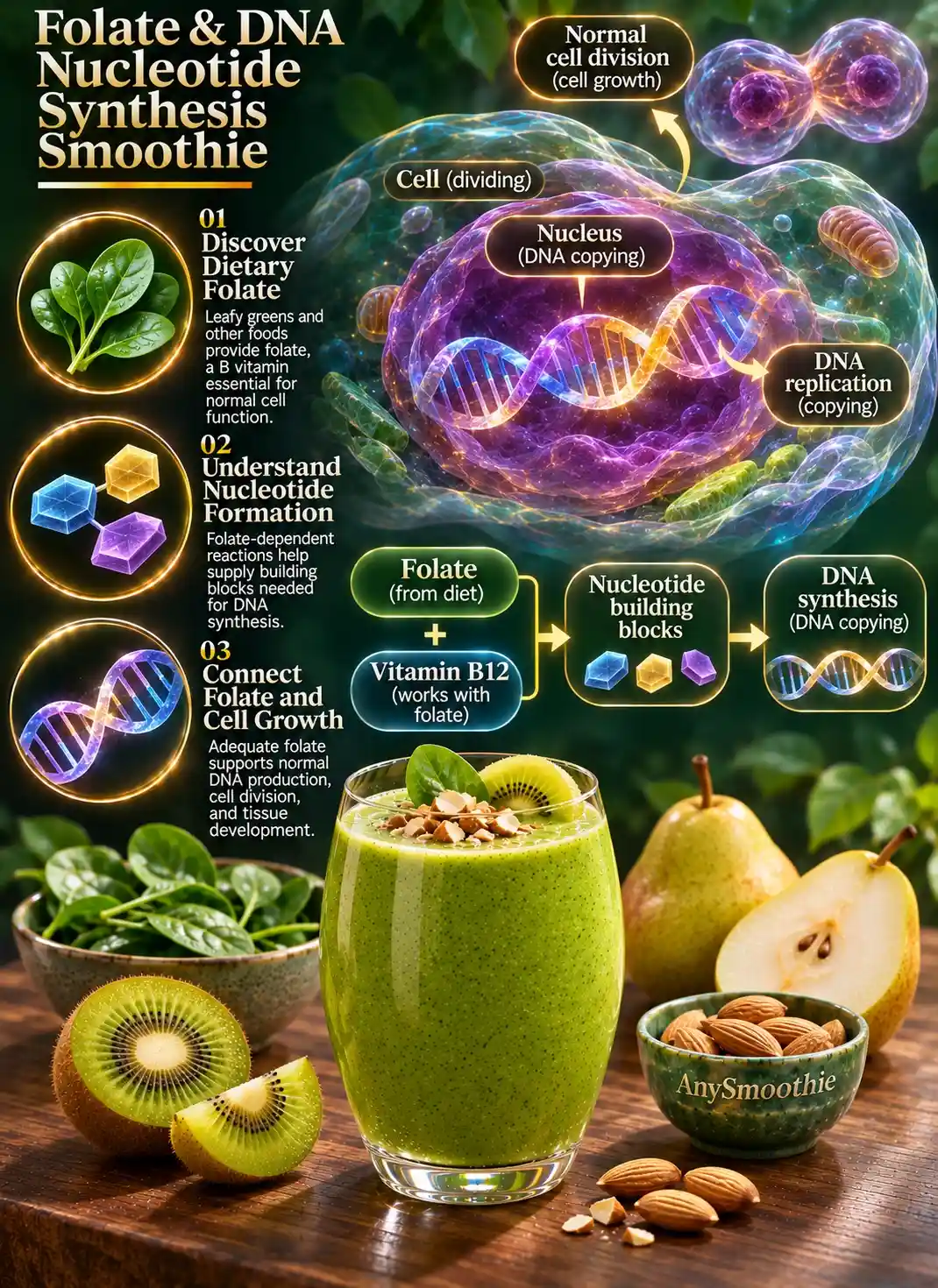
Folate, also called vitamin B9, participates in one-carbon metabolism. This group of reactions transfers small chemical units between molecules. Some of those reactions help supply materials for making DNA nucleotides.
A related methyl-donor pathway is explored in tmg smoothie for daily performance.
Food folate occurs naturally in vegetables, beans, and fruit. Folic acid is a form used in many fortified foods and supplements. The body absorbs and processes these forms differently, so their listed amounts aren’t directly interchangeable.
Why nucleotide synthesis needs folate
Folate-derived coenzymes carry one-carbon units used to make purines and thymidylate. Purines include adenine and guanine, two bases found in DNA. Thymidylate is a nucleotide precursor that supplies DNA with thymine.
For a related look at purine metabolism, see inosine smoothies for purine metabolism.
The Linus Pauling Institute’s folate explanation describes these roles in DNA metabolism. However, supplying folate doesn’t independently control how much DNA a cell makes. Enzymes, other nutrients, and signals that regulate cell division also matter.
Another cellular process involving chromatin organization and gene regulation is discussed in smoothies for histone acetylation and gene regulation.
A smoothie contributes food to that broader nutritional picture. It doesn’t establish that nucleotide synthesis has increased or that a health outcome will follow.
What folate-rich foods can add to a smoothie
Leafy greens, beans, citrus, and avocado are practical choices. Spinach blends easily with fruit, while white beans add body without a strong flavor. Orange brings acidity, and avocado creates a thicker texture.
Folate content varies with the food, serving size, storage, and preparation. A loosely filled cup of spinach also differs from a tightly packed cup, which makes precise nutrient claims difficult without standardized measurements.
Activated sugar building blocks also participate in a different cellular process, glycoprotein formation, explored in smoothies for glycosylation and glycoprotein synthesis.
Smoothies are only one option. You can also include these foods in salads, bean dishes, or meals with whole fruit.
3 Folate Smoothies for DNA Nucleotide Synthesis
Each recipe makes one serving. These combinations include foods recognized in MedlinePlus’s guide to dietary folate. Nutrition estimates are approximate; brands, produce size, and preparation affect the totals. The figures aren’t measured folate values.
Green Citrus and Chia Smoothie
Ingredients
- 1 cup raw spinach
- 1 medium orange, peeled
- 1/2 medium banana
- 1/2 cup plain 2% Greek yogurt
- 1 teaspoon chia seeds
- 1/2 cup cold water
Instructions
Add the water and yogurt first, followed by the remaining ingredients. Blend until smooth, adding water as needed.
Estimated Nutrition (per serving)
- Calories: ~250 kcal
- Protein: ~14 g
- Carbohydrates: ~42 g
- Fat: ~5 g
- Fiber: ~8 g
- Sugars: ~24 g
Berry and White Bean Smoothie
Ingredients
- 3/4 cup strawberries
- 1/2 cup blueberries
- 1/3 cup drained and rinsed white beans
- 3/4 cup plain low-fat kefir
- 1 tablespoon ground flaxseed
- 1/4 cup cold water
Instructions
Combine everything in a blender and blend until creamy. Thin with more water if needed, particularly when using frozen berries.
Estimated Nutrition (per serving)
- Calories: ~290 kcal
- Protein: ~15 g
- Carbohydrates: ~43 g
- Fat: ~7 g
- Fiber: ~12 g
- Sugars: ~21 g
Avocado, Edamame, and Pineapple Smoothie
Ingredients
- 1/2 cup shelled edamame
- 1/4 medium avocado
- 1 cup raw spinach
- 1/2 cup pineapple chunks
- 3/4 cup unsweetened soy milk
Instructions
Use cooked, cooled edamame. Blend all ingredients until smooth, adding a splash of water if needed to loosen the texture.
Estimated Nutrition (per serving)
- Calories: ~310 kcal
- Protein: ~18 g
- Carbohydrates: ~31 g
- Fat: ~14 g
- Fiber: ~11 g
- Sugars: ~16 g
Compare the smoothies and choose one that fits your day
Choose according to flavor, appetite, and dietary preferences rather than expecting different effects on DNA synthesis.
| Smoothie | Nutritional emphasis | Texture | Flavor profile | Best use |
|---|---|---|---|---|
| Green Citrus and Chia | Lightest; moderate protein | Light and creamy | Bright, citrus-forward | Smaller breakfast or snack |
| Berry and White Bean | Most fiber | Thick and creamy | Tart, berry-forward | Substantial snack |
| Avocado, Edamame, and Pineapple | Most protein and fat | Dense and velvety | Mildly tropical | More substantial breakfast option |
The green citrus blend has the lowest estimated calories, while the avocado blend provides more protein. Meanwhile, the berry option has the highest estimated fiber. These differences describe the recipes, not a ranking of their effects on cellular pathways.
Total folate intake matters more than choosing a recipe by its name. The NIH’s folate guidance identifies many dietary sources, including vegetables, legumes, and fortified foods. No single smoothie needs to supply everything.
Adjust sweetness or thickness to taste. Also consider allergies and personal dietary needs: the first two recipes contain dairy, and the third contains soy. Substitutions will change the nutrition estimates.
Conclusion: Keep folate-containing foods part of a varied diet
These smoothies offer practical ways to include folate-containing foods alongside protein and fiber. Their contribution is nutritional, while DNA nucleotide synthesis depends on many coordinated cellular processes.
Choose the flavors you enjoy and keep other folate sources in your meals. Variety gives you more ways to include the nutrient without relying on one drink or expecting a guaranteed biological result.
🛡️ Safety Notes & Dietary Interactions
- Folate Intake: These smoothies provide folate-containing foods, but they should not be used to deliberately increase folate beyond dietary needs. Consider total intake from fortified foods and supplements when reviewing overall consumption.
- Fiber Adjustment: White beans, flaxseed, chia, edamame, spinach, berries, and avocado make these blends fiber-rich. Increase portions gradually if higher-fiber foods are unfamiliar, and adjust liquid for comfortable digestion.
- Dairy and Soy: The Green Citrus and Berry smoothies contain dairy, while the Avocado-Edamame smoothie contains soy. Check labels and choose appropriate alternatives for milk or soy allergies and dietary restrictions.
- Preparation Hygiene: Use cooked, cooled edamame and properly drained beans, wash fresh produce, and keep dairy or soy-based smoothies refrigerated. Ingredient substitutions can also change the nutritional profile.
FAQs
Which smoothie provides the most estimated folate-rich ingredients?
The recipes all emphasize recognized folate-containing foods, but the article does not provide measured folate values for individual smoothies. Spinach, beans, edamame, avocado, and orange are practical sources, while actual folate amounts vary with portions, preparation, storage, and produce differences.
Does more folate automatically increase DNA nucleotide synthesis?
No. Folate-derived coenzymes participate in reactions supplying components for purine and thymidylate synthesis, but DNA production depends on many coordinated processes. Providing additional folate through one smoothie does not establish that a cell will increase nucleotide synthesis or DNA production.
Why does the Berry and White Bean Smoothie contain beans?
White beans provide folate alongside protein, carbohydrates, and fiber while contributing body without a strongly dominant flavor. They also make this recipe the highest-fiber option, at an estimated 12 grams per serving, which can make it particularly filling.
Can I make the smoothies without dairy or soy?
Yes, but substitutions change the nutritional profile. The Green Citrus and Berry smoothies contain dairy, while the Avocado-Edamame smoothie contains soy. Appropriate plant-based or non-soy alternatives can be used according to dietary needs, but protein, fat, calories, and other nutrients may differ.
Is one of these smoothies enough to meet my folate needs?
Not necessarily. The article emphasizes total folate intake from a varied diet rather than relying on one smoothie. Vegetables, legumes, fruit, and fortified foods can all contribute. Individual requirements also vary, so a smoothie should be considered one part of the overall dietary pattern.

Medical Disclaimer: AnySmoothie content is for educational purposes only and is not a substitute for professional medical advice. Consult a healthcare provider for personalized guidance. See our full Disclaimer & Terms of Use. AI Transparency: AnySmoothie may use AI to support content development. All content undergoes human editorial review for accuracy, clarity, and editorial quality. See our full AI Transparency.