
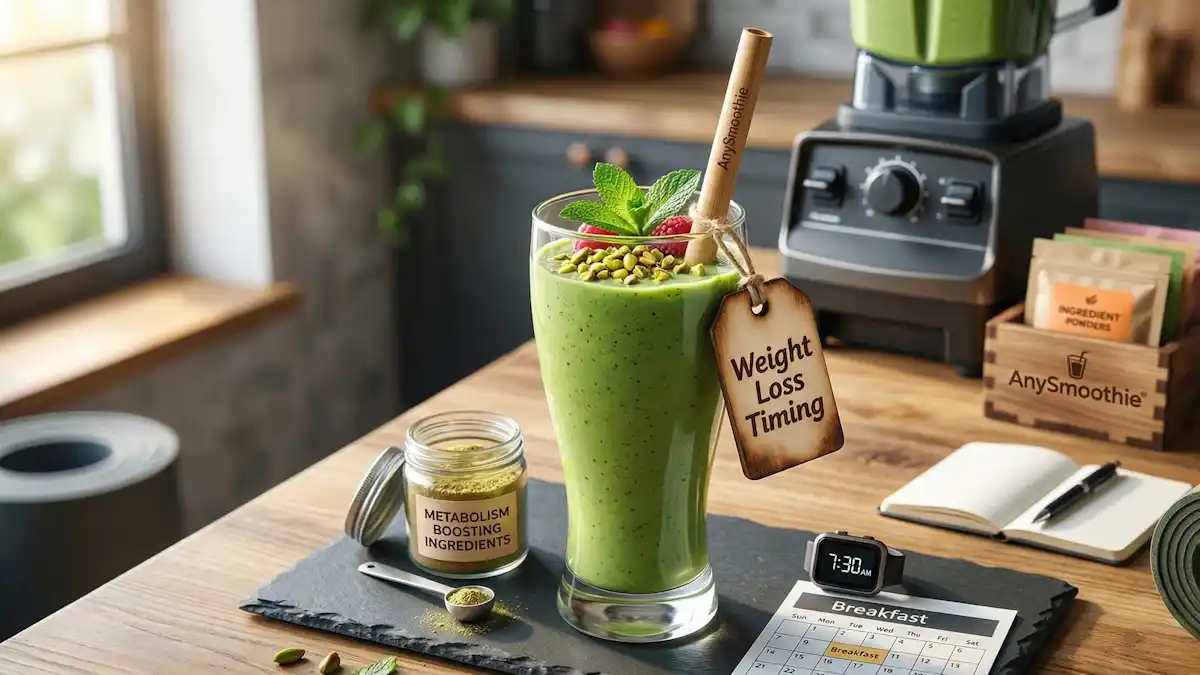
Smoothies aren’t automatically fattening or slimming, it all depends on what’s in them, how much you drink, and where they fit in your day. For most people, the best time to drink smoothies for weight loss is when a smoothie helps control hunger, replaces a high-calorie meal or snack, or supports workout recovery without pushing your daily calories too high.
That means there isn’t one perfect hour that works for everyone. Your best window may be breakfast if it keeps you full, mid-afternoon if it stops vending machine cravings, or after exercise if it helps you recover without leading to overeating later. Timing matters, but so do portion size, protein, fiber, and how your smoothie affects blood sugar and hunger.
So if you’re wondering about smoothie for breakfast vs dinner for weight loss, pre-workout vs post-workout smoothies for fat burn, or even, can I drink a smoothie at night and lose weight, the smart answer comes down to matching smoothie timing to your habits, appetite, and total intake, which is exactly where we’ll start.
The best time to drink smoothies for weight loss depends on your hunger and routine
Weight Loss Programs
Diet & Weight Loss

Diet & Weight Loss

Diet & Weight Loss
The Mediterranean Diet – Diamond Evergreen Digital Diet Program
Diet & Weight Loss
When people ask about the best time to drink smoothies for weight loss, they often want a single answer. In real life, timing works better as a personal tool. A smoothie helps most when it shows up at the point in your day where hunger usually knocks your plans off track.
For some people, that means breakfast. For others, it’s the late afternoon slump, or right after a workout. The clock matters, but your appetite, habits, and smoothie ingredients matter more.
Why timing affects fullness, cravings, and calorie intake
A smoothie can either calm hunger or wake it up. The difference usually comes down to protein, fiber, and volume. When your smoothie includes Greek yogurt, protein powder, milk, chia seeds, oats, berries, or greens, it tends to stay with you longer and slow down that “I need a snack now” feeling.
On the other hand, a smoothie made mostly with fruit juice, sweetened yogurt, sherbet, or large amounts of frozen fruit can hit fast and fade fast. You get quick energy, then a drop, and that often leads to more grazing later. It’s a bit like building a campfire with paper instead of logs. It flares up, then burns out.
That also ties into blood sugar. In simple terms, a very sugary smoothie can raise blood sugar quickly, which pushes insulin up too. Then, if the drink doesn’t have enough protein or fiber to slow things down, you may feel hungry again sooner. EatingWell’s guide to protein shake timing explains why protein can help with staying power, especially when you’re using a smoothie as part of a meal.
The practical takeaway is simple:
- If you’re often hungry an hour after your smoothie, it probably needs more protein or fiber.
- If you snack hard at 3 p.m., that may be your best smoothie window.
- If drinking smoothies on an empty stomach for metabolism leaves you shaky or starving, switch to a more balanced blend.
A good smoothie should buy you time until your next planned meal, not send you hunting for crackers an hour later.
This is why smoothie for breakfast vs dinner for weight loss is not really a breakfast-versus-dinner contest. It’s about when a smoothie helps you eat less overall without feeling deprived.
What matters more than the clock, smoothie quality and portion size
Even perfect timing can’t fix a smoothie that drinks like dessert. A large blend with juice, honey, two scoops of nut butter, sweetened yogurt, granola, and extra toppings can pack more calories than the meal it was supposed to replace.
That’s why smoothie quality and portion size have to come first. If you’re using one as a meal replacement, it should be built to fill you up. If it’s a snack, it should be smaller and lighter. This smoothie timing guide gets one thing right, the best timing depends on your goal, and your recipe has to match that goal.
A simple way to think about it is this:
| Smoothie type | Best use | What it should include | | | | | | Meal replacement smoothie | Breakfast, lunch, or dinner when replacing a full meal | Protein, fiber-rich fruit or veggies, liquid base, and a moderate amount of healthy fat | | Snack smoothie | Mid-morning, afternoon, or pre-workout | Smaller portion, lighter ingredients, enough protein or fiber to take the edge off hunger |
If you’re comparing pre-workout vs post-workout smoothies for fat burn, the answer still comes back to purpose. Before exercise, a lighter smoothie may work better so you don’t feel too full. After exercise, a smoothie with protein and some carbs can help recovery and may prevent overeating later.
The same logic applies if you’re wondering, can I drink a smoothie at night and lose weight? Yes, if it fits your calories and stops late-night snacking. No, if it turns into an extra meal on top of dinner.
Most people do best with a smoothie that is:
- Based on whole fruit, not mostly juice
- Built around protein
- Large enough to satisfy, but not oversized
- Matched to the role it plays, meal or snack
In other words, the meal replacement smoothies timing guide is less about magic hours and more about smart trade-offs. A well-built smoothie at the right hunger point can help with weight loss. A high-calorie smoothie at the wrong portion can quietly work against it.
Morning smoothies can work well if breakfast is when you struggle most
If mornings are where your eating plan falls apart, a smoothie can be a smart fix. For many people, the best time to drink smoothies for weight loss is not based on the clock alone. It’s based on when they need the most help staying on track.
Breakfast is often that weak spot. Maybe you skip it, grab a pastry on the go, or feel ravenous by 10 a.m. In that case, a balanced smoothie can act like a guardrail. It gives you something quick, filling, and easy to repeat on busy days.
When a breakfast smoothie helps with weight loss
A breakfast smoothie works best when your usual morning pattern leads to overeating later. If you often leave the house with just coffee, you’re more likely to chase energy with snacks. If your grab-and-go breakfast is a muffin or sugary bar, hunger can rebound fast.
That’s where a smoothie can help. It’s not magic, but it can be a better trade. You get a meal that takes only a few minutes, travels well, and is easier to repeat than cooking eggs or oatmeal every day.
This timing tends to help most if you:
- skip breakfast and then get overly hungry before lunch
- rely on pastries, drive-thru items, or sweet coffee drinks
- snack hard in the late morning because breakfast didn’t stick
- need something portable for work, school drop-off, or commuting
Consistency matters more than perfection. A decent smoothie every weekday morning will usually beat a great breakfast you only make once in a while. That’s why meal timing often comes down to real life, not ideal life.
There’s also a simple appetite benefit. Starting the day with protein and fiber may help reduce cravings earlier in the day, especially if your usual breakfast is light on both. EatingWell’s smoothie ideas for weight loss show the kind of balanced ingredients that make a smoothie feel more like a meal and less like a sweet drink.
If breakfast is where your routine slips, a smoothie can turn a chaotic morning into a repeatable win.
This doesn’t mean everyone needs a smoothie first thing. If you already eat a solid breakfast and feel fine until lunch, you may not gain much from changing it. But if mornings feel messy, this is often one of the easiest places to improve your day.
Smoothie for breakfast vs dinner for weight loss, which is better
When people compare a smoothie for breakfast vs dinner for weight loss, they usually want one winner. In practice, the better choice is the one that replaces your most common bad decision.
Breakfast smoothies can help stop the early slide. If your day starts with nothing, then turns into pastries, office snacks, and constant grazing, a filling smoothie in the morning may lower cravings before they build. It sets the tone, and for some people, that matters a lot.
Dinner smoothies can help for a different reason. If your hardest time is evening, a planned smoothie may prevent takeout, second helpings, or random late-night eating. This matters if you do well all day, then lose control after dinner.
Here’s the simplest way to think about it:
| Timing | Usually better for | Main benefit | | | | | | Breakfast | People who skip breakfast or get hungry early | Helps reduce morning cravings and impulse eating | | Dinner | People who overeat at night | Can replace a heavier meal or limit late snacking |
So, which is better? Choose breakfast if your poor food choices happen before noon. Choose dinner if evenings are where calories pile up.
This lines up with the bigger point in any meal replacement smoothies timing guide. The best smoothie time is the moment it prevents overeating, not the moment that sounds healthiest on paper. A morning smoothie won’t solve night snacking, and a dinner smoothie won’t fix a pattern of skipping breakfast and raiding the break room by 10 a.m.
If you’re also curious about can I drink a smoothie at night and lose weight?, the answer is yes, if it replaces a heavier meal or cuts off late snacking. But if it becomes an extra meal after dinner, it works against you.
And if your goal is steady eating across the day, breakfast often gets the edge. After all, it’s easier to avoid a food spiral than to clean one up later. Even broader timing advice, like Cleveland Clinic’s look at late breakfast and early dinner, comes back to the same idea: your eating window and routine can shape how much you eat overall.
How to build a breakfast smoothie that keeps you full
A breakfast smoothie only helps with weight loss if it actually holds you over. If it’s mostly fruit juice and frozen fruit, it may taste healthy but fade fast. That’s why drinking smoothies on an empty stomach for metabolism is not the real goal. Fullness is.
A simple formula works well:
- Add a protein source, such as Greek yogurt, cottage cheese, milk, soy milk, or protein powder.
- Include fruit for flavor and carbs, such as berries or half a banana.
- Toss in greens if you like, such as spinach, because they add volume without many calories.
- Use a fiber-rich add-in, like chia seeds, flax, or oats.
- Blend with an unsweetened liquid, such as unsweetened almond milk, dairy milk, or soy milk.
That mix slows digestion and helps the smoothie act more like breakfast, not dessert in a cup. Protein helps with staying power, while fiber adds bulk and can keep hunger from bouncing back too soon. Together, they matter more than fancy add-ins.
Keep two things in check. First, watch liquid calories. Juice, sweetened coffee creamers, and large amounts of flavored milk can quietly turn a reasonable breakfast into a calorie bomb. Second, keep added sugars low. Honey, syrups, sweetened yogurt, and sugary protein powders can make the drink less filling for the calories.
If you want a quick gut check, ask yourself this: would this smoothie keep me satisfied until lunch? If the answer is no, it’s probably too light. A good breakfast smoothie should feel like a real meal, not a polite appetizer.
This is also where people get tripped up by talk about the science of smoothie timing and insulin spikes. Timing matters some, but composition matters more. A balanced breakfast smoothie with protein and fiber is less likely to leave you hungry than a sugary one, even if you drink both at the same time. For weight loss, that difference is what counts.
Using smoothies around workouts can support fat loss without slowing progress
When workout smoothies help, they usually do so in a simple way. They improve energy before training, support recovery after, and make it easier to stick to your calorie goal later in the day. That matters a lot when you’re trying to figure out the best time to drink smoothies for weight loss.
Still, timing is not magic. A smoothie before or after exercise can be useful, but fat loss still comes down to your total daily intake, your hunger, and how well your plan fits real life.
Pre workout vs post workout smoothies for fat burn
A pre-workout smoothie can work well if you train hungry and feel flat, shaky, or distracted. That’s especially true before a longer run, a hard lifting session, or an early morning workout when your tank feels half-empty. In that case, a light smoothie with some carbs and a little protein can help you train better without sitting heavy in your stomach.
A post-workout smoothie has a different job. It helps recovery, takes the edge off hunger, and can stop the “I earned everything in the kitchen” effect later. That can be a real win for fat loss, because the calories after training often matter more than the workout drink itself. For a basic look at post-workout recovery ideas, see this post-workout smoothie guide.
One point is easy to miss. There is no special anabolic window that makes or breaks fat loss in 30 minutes. Your body does not turn a reasonable smoothie into a problem just because you drank it an hour later. In other words, pre-workout vs post-workout smoothies for fat burn is mostly about performance, recovery, and appetite control, not a secret fat-burning switch.
Who should drink a smoothie before exercise, and who should wait until after
For some people, drinking first makes training feel much better. This often fits:
- morning exercisers who wake up low on energy
- people who feel weak, dizzy, or unfocused without some fuel
- anyone doing a longer or harder session that needs more than coffee
On the other hand, waiting until after may be smarter if your stomach is picky. That group often includes people who get bloated when they drink too close to exercise, those doing short workouts, or anyone who would rather eat a solid meal later and use a smoothie only if needed.
Think of it like this: if food before training helps you perform, use it. If it sloshes around and makes your workout worse, don’t force it.
The mistake that turns a workout smoothie into extra calories
The biggest mistake is treating every workout like it earned a giant smoothie. Most people overestimate calories burned, especially after moderate sessions. A 30-minute workout does not automatically call for a café-style blend with juice, nut butter, honey, granola, and full-fat frozen yogurt.
Keep the smoothie matched to the workout and the role it plays. For weight loss, the best options usually have:
- protein to support recovery and fullness
- fiber from fruit, oats, chia, or flax
- a reasonable portion
- fewer dessert-style extras
If your smoothie tastes more like milkshake night than workout fuel, it’s probably too much.
Lunch, afternoon, and evening can be smart smoothie times too
Morning gets most of the attention, but it isn’t the only useful window. For plenty of people, the best time to drink smoothies for weight loss shows up later, when busy schedules, low energy, or late cravings start steering food choices.
A smoothie can work at lunch, in the afternoon, or even at night, as long as it has a clear job. It should either replace a meal, hold you over, or stop a predictable overeating pattern. If it just adds calories on top of what you’d eat anyway, the timing stops helping.
A smoothie at lunch can help when you usually make rushed food choices
Lunch is often where good plans fall apart. You’re busy, you’re out of the house, and suddenly it’s chips, takeout, or whatever is closest. In that situation, a smoothie can be a practical backup, but only if it works as a real meal.
That means it needs enough substance to carry you through the afternoon. A lunch smoothie that’s mostly fruit and liquid may feel light at first, then leave you starving an hour later. For better staying power, include protein, fiber, and enough volume to make it feel like lunch, not a side drink.
A solid lunch smoothie usually includes a few basics:
- a protein source, like Greek yogurt, cottage cheese, soy milk, or protein powder
- a fiber source, like berries, spinach, chia, flax, or oats
- a moderate fat source, if needed, like peanut butter or avocado
- an unsweetened liquid base, so calories don’t climb too fast
Think of it like packing a full lunch into a cup. If your smoothie wouldn’t keep you satisfied until your next planned meal, it’s probably too small or too light. For recipe ideas that fit that more filling style, EatingWell’s smoothie recipes for weight loss are a useful place to start.
An afternoon smoothie may stop the craving cycle before dinner
Late afternoon is a danger zone for a lot of people. Energy drops, stress is up, and sweets start calling your name. If that’s when you drift toward cookies, candy, or random pantry snacking, a planned smoothie can cut that cycle off before dinner.
This is where timing matters in a very practical way. A balanced smoothie at 3 or 4 p.m. can take the edge off hunger, steady your appetite, and help you arrive at dinner calmer. That often leads to better portions and fewer “I could eat everything” moments.
Still, an afternoon smoothie should match its role. There’s a big difference between a snack smoothie and a meal replacement smoothie:
| Smoothie type | Best use | What it should do | | | | | | Snack smoothie | Mid-afternoon between meals | Take the edge off hunger without feeling heavy | | Meal replacement smoothie | When replacing lunch or dinner | Keep you full for several hours |
A snack smoothie is usually smaller and simpler. It might have protein plus fruit, or fruit plus yogurt and spinach. A meal replacement smoothie needs more structure and more staying power. If you mix those up, it’s easy to under-eat and rebound later, or overdo calories without meaning to.
If you need ideas for satisfying but lighter blends, Everyday Health’s weight-loss smoothie roundup shows the kind of combinations that can work well in that afternoon slot.
A smart afternoon smoothie should calm hunger, not act like a warm-up for dinner.
Can I drink a smoothie at night and lose weight
Yes, you can, if it helps you control total calories and avoid late-night snacking. No, if it becomes an extra meal on top of dinner.
That’s the clean answer to can I drink a smoothie at night and lose weight. Night isn’t automatically bad. What matters is whether the smoothie replaces something heavier, helps you skip dessert, or keeps you from grazing through the kitchen.
For example, if evenings are when you usually eat dinner, then circle back for ice cream, chips, or “just a few bites,” a planned smoothie may actually help. It can create a stopping point. On the other hand, if you already had a filling dinner and then add a large smoothie anyway, you’re probably just stacking calories.
A few practical tips make evening smoothies work better:
- Keep them moderate in size.
- Focus on protein and fiber, not just fruit.
- Go easy on juice, syrups, and dessert-style add-ins.
- Avoid very heavy or sugary blends right before bed if they leave you feeling too full.
Some people also find that a rich smoothie close to bedtime just doesn’t sit well. That’s not a weight loss issue so much as a comfort issue. If it messes with sleep or digestion, move it earlier or keep it lighter.
So, if you’re weighing a smoothie for breakfast vs dinner for weight loss, the better choice is still the one that fixes your hardest part of the day. For some, that’s morning chaos. For others, it’s the nighttime snack spiral.
How to choose the right smoothie timing for your goals
The best time to drink smoothies for weight loss is the time that solves a real problem in your day. Not the time that sounds clean or disciplined. If a smoothie helps you avoid a calorie-heavy meal, steady your appetite, or stop a snack spiral, the timing is probably doing its job.
That also means timing can backfire. A well-made smoothie can support weight loss, but an extra smoothie on top of your usual meals can quietly slow it down. Think of it like parking a car in the right spot, placement matters, but only if you needed to stop there in the first place.
A simple meal replacement smoothies timing guide
Keep this practical. Use a meal replacement smoothie when it steps into the slot where you usually go off plan. For some people, that’s breakfast because mornings turn into pastries and sweet coffee. For others, it’s lunch because work leads to takeout, or dinner because evenings turn into second helpings.
Use a snack smoothie for a different job. It’s there to bridge a long gap between meals, not to act like a bonus treat. If lunch is at noon and dinner won’t happen until 7, a small smoothie at 3 or 4 p.m. can take the edge off and help you show up to dinner less ravenous.
A simple way to decide is this:
| Your situation | Best move | Why it works | | | | | | You overdo one meal often | Use a meal replacement smoothie in that slot | It swaps a weak point for a more controlled option | | You get overly hungry between meals | Use a smaller snack smoothie | It prevents the hunger rebound that leads to overeating | | You already ate a full meal | Skip the smoothie | Stacking it on top usually adds calories without helping |
This is the key rule in any meal replacement smoothies timing guide: replace, don’t stack. If you drink a smoothie with breakfast, then still eat the same breakfast, the timing isn’t helping. The same goes for dinner. If you’re asking, can I drink a smoothie at night and lose weight? Yes, but only if it replaces something heavier or cuts off late snacking.
If you want a simple outside check, this smoothie timing guide makes the same point well, timing works when it matches the purpose of the smoothie.
The right smoothie time is usually the moment it prevents a bad decision, not the moment it looks healthiest on paper.
Signs your smoothie timing is helping, or hurting, your results
Good timing usually feels pretty clear after a few days. You have fewer cravings, your energy stays more even, and portion control gets easier. You aren’t white-knuckling your way to the next meal, and dinner doesn’t feel like a free-for-all.
You’ll often notice smaller wins, too. Maybe you stop prowling the pantry at 4 p.m. Maybe breakfast holds you until lunch. Maybe your usual nighttime snack habit fades because your dinner smoothie actually replaces something. Those are strong signs your timing fits your routine.
Bad timing leaves clues as well. If you’re hungry soon after, the smoothie may be too light or placed at the wrong time. If weight loss stalls, look at whether the smoothie is replacing food or simply adding to it. And if you keep pouring smoothies into the day because they seem healthy, that’s usually the problem right there. Health.com’s look at smoothie mistakes highlights how easy it is for “healthy” drinks to work against a calorie deficit.
Another red flag is when the smoothie sets off more hunger instead of less. That’s often blamed on the science of smoothie timing and insulin spikes, but the simpler issue is usually this: the smoothie was too sugary, too small, or not needed in the first place. If you’re still hungry fast, this piece on why smoothies don’t always fill you up is a helpful reminder that fullness depends on what you drink and when you drink it.
Don’t change five things at once. Test one timing shift for one to two weeks. For example, move your smoothie from breakfast to mid-afternoon, or turn a dinner smoothie into a true meal replacement instead of an add-on. Then watch what happens to hunger, cravings, portions, and your weekly trend. That gives you a real answer, instead of a guess.
Conclusion
There isn’t one best time to drink smoothies for weight loss. The right time is when a balanced smoothie helps manage hunger, fits your routine, and replaces a higher-calorie meal or snack instead of adding to it.
For some people, that means breakfast, especially if mornings lead to pastries or random snacking later. For others, it works better around workouts for recovery, in the afternoon to stop the craving cycle before dinner, or in the evening if it helps replace heavier choices and cut off late-night grazing.
So skip the idea that drinking smoothies on an empty stomach for metabolism, or stressing over the science of smoothie timing and insulin spikes, will decide your results. Instead, pick one problem time in your day and test a balanced smoothie there for the next week, then see if your hunger, cravings, and portions improve.
Smoothie Timing for Weight Loss FAQ
Is it better to drink a smoothie in the morning or at night for weight loss?
For most people, the morning is the best time. A high-protein, high-fiber smoothie for breakfast can jumpstart your metabolism and keep you full until lunch, preventing mid-morning snacking. Drinking a smoothie at night is okay, but it should be lower in fruit and sugar to avoid insulin spikes before sleep.
Should I drink my weight loss smoothie before or after a workout?
It depends on your goal. A pre-workout smoothie (30-60 minutes before) provides quick energy from fruit carbs. However, a post-workout smoothie is often better for weight loss because it focuses on protein to repair muscle, which increases your resting metabolic rate.
Can replacing one meal a day with a smoothie help me lose weight?
Yes, meal replacement is a proven strategy for weight loss, provided the smoothie is nutritionally complete. It must contain healthy fats, protein, and fiber to be a true “meal.” Replacing your highest-calorie meal (often lunch or dinner) with a balanced smoothie usually yields the best results.

The AnySmoothie team is all about smarter smoothie recipes made with whole-food ingredients. Everything we share centers on balanced nutrition, steady energy, and low-glycemic choices, so you can sip a smoothie that keeps you full, feels good, and helps you avoid sugar crashes.
- Disclaimer: This content is for educational use only. These smoothie recipes and nutrition details aren’t a substitute for medical advice from a licensed health professional. Please read our full Medical Disclaimer here.
Dietary Supplements

Dietary Supplements

Dietary Supplements
Dietary Supplements
Dietary Supplements