
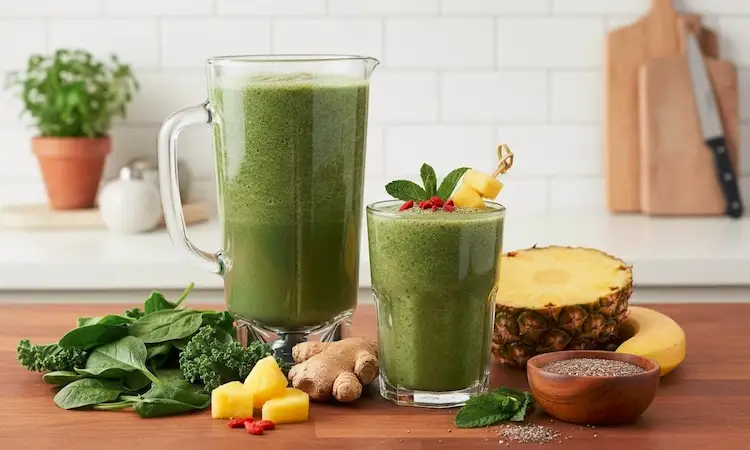
You can’t spot-reduce belly fat with any one drink, no matter how “healthy” it sounds. But the right smoothie to reduce belly fat at home can support overall fat loss by keeping you full, cutting cravings, and helping you avoid big sugar spikes that make it harder to stick with a plan.
“Belly fat” usually means two things. Subcutaneous fat is the soft layer you can pinch under your skin. Visceral fat sits deeper, around your organs, and it’s the one tied more closely to higher risks for heart disease and type 2 diabetes.
Weight Loss Programs
Diet & Weight Loss
Diet & Weight Loss
Diet & Weight Loss
Diet & Weight Loss
Smoothies fit best when they work like a real meal, not a sweet snack in a cup. That means you’ll want a smart mix of protein (like Greek yogurt or protein powder), fiber (berries, chia, flax, leafy greens), and healthy fats (nut butter, avocado), with little to no added sugar.
In this post, you’ll get 5 filling, low-sugar recipes, plus a simple build-your-own formula you can repeat on busy mornings. You’ll also learn the most common smoothie mistakes that stall progress, like “fruit-only” blends, oversized portions, and sneaky add-ins that turn a light smoothie into a dessert.
Can a smoothie really help reduce belly fat at home? What to know first
A smoothie to reduce belly fat at home can help, but not because it “melts” belly fat. Belly fat tends to shrink when your overall body fat drops, and that happens from a calorie deficit over time (you consistently take in less energy than you use). A well-built smoothie makes that easier by keeping you full, steadying your energy, and replacing higher-calorie choices you might grab when you’re hungry.
The key is how you use it. Smoothies work best as a planned meal (or a planned snack) that fits your day. If you add a smoothie on top of your normal meals, it can backfire by pushing calories up.
Why belly fat is hard to lose (and why your smoothie plan needs patience)
If belly fat feels stubborn, you’re not imagining it. Your body doesn’t “choose” where to lose first, and the midsection is often one of the last places to visibly change. A few common, very normal reasons it can feel extra tough include:
- Stress: When you’re stressed, it’s easier to crave quick comfort foods, snack more, and sleep worse. Stress hormones like cortisol are also linked with changes in appetite and weight patterns (here’s a clear overview from Baylor Scott and White: How stress can impact your weight).
- Not enough sleep: Short sleep can ramp up hunger and make “good enough” food choices harder the next day.
- High-sugar drinks: Juice, sweet coffee drinks, soda, and “healthy” bottled smoothies can add a lot of calories without making you feel full.
- Big portions (even of healthy foods): Smoothies are easy to overserve because they go down fast.
- Inconsistent routines: A solid week, then a chaotic week, then a restart. Your body responds to what you do most of the time.
A realistic expectation: if you’re consistent, many people notice better energy and fewer cravings within 1 to 2 weeks, then visible changes in 4 to 8 weeks. Faster and slower both happen, it depends on starting point, stress, sleep, and consistency.
To stay motivated, track progress in ways that actually reflect belly changes:
- Waist measurement: Measure at the navel once per week, same time of day.
- How clothes fit: Jeans and waistbands are honest feedback.
- Progress photos: Same lighting, same pose, every 2 to 4 weeks.
- Hunger and cravings: Fewer “I need something sweet” moments is a real win.
If you want a simple refresher on how fat loss works, WebMD has a straightforward guide to a calorie deficit.
The 3 jobs a belly-fat-friendly smoothie should do
A smoothie only supports fat loss if it behaves like a real meal. Think of it like building a sturdy chair: if one leg is missing, you wobble. A belly-fat-friendly smoothie has three jobs.
- Keep you full for hours (protein plus fiber)
Protein helps you feel satisfied, and fiber slows digestion so you don’t get hungry again in an hour.
Simple targets to remember:- Protein: include a solid protein source every time (Greek yogurt, cottage cheese, milk, soy milk, kefir, or protein powder).
- Fiber: add at least one fiber booster (berries, chia seeds, ground flax, oats, leafy greens, or cauliflower rice).
- Keep sugar steady (skip juice and added sweeteners)
A “fruit-only” blend can taste great, but it often drinks like dessert. To keep your energy steady:- Use whole fruit, not juice.
- Skip honey, agave, and sweetened yogurt most days.
- Keep fruit portions reasonable (for many people, 1 cup of berries or 1 small banana is plenty).
- Add cinnamon, vanilla extract, or unsweetened cocoa for flavor without extra sugar.
- Fit your day (so it actually replaces something)
The best smoothie is the one that helps you stick to a routine.- Fast breakfast: great when mornings are rushed.
- Planned lunch: works if you build it big enough and pair it with something crunchy (like a handful of nuts or veggie sticks) if needed.
- Post-workout: useful when you need protein quickly, but only if it replaces a snack or becomes your meal, not an extra add-on.
Quick reality check: if your smoothie is 600 to 900 calories and you still eat the same lunch, it’s not supporting fat loss. It’s just extra.
Best time to drink a smoothie for weight loss: breakfast, lunch, or after workouts?
There isn’t one perfect time. The “best” time is when it helps you keep calories in check without feeling deprived.
Breakfast (often the easiest win)
Pros:
- Replaces common high-calorie choices (pastries, sugary cereal, drive-thru).
- Sets your appetite up for the day, especially with protein and fiber.
- Easy to repeat daily, which builds consistency.
Cons:
- If you make it too light (mostly fruit and liquid), you may feel hungry by mid-morning and snack more.
Lunch (works well if you plan for it)
Pros:
- Can prevent the mid-day “I’ll grab whatever” trap.
- Easy to prep ahead and take to work.
Cons:
- Some people want to chew at lunch. If that’s you, a smoothie can feel unsatisfying unless it’s thicker and higher in protein and fiber.
After workouts (helpful, but easy to overdo)
Pros:
- Convenient way to get protein in when you’re not hungry for a full meal.
- Can support recovery if it includes enough protein.
Cons:
- It can turn into extra calories if you also eat your normal meal right after. A post-workout smoothie should be part of your plan, not a bonus.
A simple rule you can use: pick the time when you’re most likely to make an impulsive, high-sugar choice, then place your smoothie there as the planned alternative.
Key ingredients for a smoothie to reduce belly fat at home (and what to limit)
When you build a smoothie to reduce belly fat at home, think less about “fat-burning” ingredients and more about meal structure. The smoothies that actually help with fat loss tend to do the same things every time: keep you full, keep sugar steady, and keep your portions realistic.
A simple way to picture it is building a team. Protein is the anchor, fiber is the slow-down, low-sugar fruit is the flavor, and a small amount of healthy fat helps cravings stay quiet.
Protein that keeps you full: Greek yogurt, cottage cheese, tofu, and protein powder
Protein is the part that makes a smoothie feel like breakfast, not a sweet drink. It helps with fullness (so you stop thinking about food an hour later) and it helps you hold onto muscle while you lose weight, which matters for metabolism and long-term results. Research on higher-protein diets often shows better satiety and lean-mass retention during weight loss (see the study summary on PubMed: Higher protein intake preserves lean mass and satiety with weight loss).
Easy, grocery-store protein options (pick one):
- Greek yogurt (plain, unsweetened): thick, tangy, and easy to blend. Use about 1/2 to 1 cup.
- Cottage cheese: surprisingly smooth when blended and very filling. Use about 1/2 cup.
- Silken tofu (plant-based, neutral flavor): makes smoothies creamy without dairy. Use about 1/3 to 1/2 cup.
- Protein powder: convenient when you need a fast option. Use about 1 scoop.
A quick label rule that saves you: choose plain yogurt and unsweetened protein powder whenever you can. Flavors like “vanilla ice cream” or “birthday cake” often come with added sugar or sweeteners that can turn your smoothie into dessert. If you want ideas for whole-food protein add-ins, this list is a solid starting point: 4 High-Protein Ingredients to Add to Your Smoothie.
Fiber for a flatter-feeling stomach: oats, chia, flax, and berries
Fiber is like putting a speed bump in digestion. It helps you feel satisfied, and soluble fiber (the gel-forming kind) is especially good at slowing things down so you feel fuller longer. Oats are a classic example, and research has looked at oats and satiety in detail (overview here: Dietary fiber and satiety: the effects of oats on satiety).
Practical fiber boosters that work in almost any blender:
- Rolled oats: adds thickness and staying power. Start with 1/4 cup (dry).
- Chia seeds: swell up and make smoothies more pudding-like. Start with 1 tablespoon.
- Ground flaxseed: mild flavor, blends easily. Start with 1 tablespoon.
- Berries: fiber plus sweetness without going overboard. Use 1/2 to 1 cup.
One heads-up: if your current diet is low in fiber, adding chia, flax, and oats all at once can cause gas or bloating at first. Start smaller (like 1 teaspoon chia or flax), then build up over a week or two. Also, drink extra water that day since fiber does its best work when you’re hydrated.
Low-sugar fruit choices that still taste sweet
Fruit is not the enemy, but it’s easy to overdo it in a smoothie because it drinks fast. The sweet spot is using fruit for flavor and nutrients, without turning your cup into a sugar bomb.
Great low-sugar (but still sweet) picks:
- Berries (strawberries, blueberries, raspberries)
- Kiwi
- Green apple
- Banana, but use half instead of a whole one (it still sweetens plenty)
If your smoothie tastes “flat” without lots of fruit, try adding cinnamon, vanilla extract, or unsweetened cocoa instead of more fruit.
Also, watch the difference between fruit and fruit juice. Juice is missing most of the fiber, so it’s easier to drink a lot of sugar quickly without feeling full. Whole fruit takes up more space, digests slower, and generally keeps cravings calmer. For more low-sugar fruit ideas, this guide is helpful: Low Sugar Fruits for Smoothies.
Healthy fats that help cravings, but can raise calories fast
Healthy fats can make your smoothie feel rich and satisfying, which is helpful when you’re trying to reduce snacking. The catch is simple: fat is calorie dense, so portions matter.
Good options (choose one, most days):
- Avocado: creamy and mild. Use 1/2 of a small avocado.
- Nut butter (peanut, almond, cashew): adds flavor fast. Use 1 tablespoon.
The most common “why isn’t this working?” smoothie problem is stacking fats without noticing it: avocado plus nut butter plus chia plus flax can turn a reasonable smoothie into a high-calorie one quickly. Seeds are healthy, but they count too.
What to limit (because sugar or calories add up fast)
If your goal is a smoothie that supports fat loss, these are the add-ins to keep occasional:
- Fruit juice (including “100% juice”)
- Honey, agave, maple syrup, and other sweeteners
- Sweetened yogurt and flavored milks
- Big handfuls of granola (easy to overserve)
- Multiple fats in one smoothie (avocado plus nut butter plus seeds)
5 easy smoothie recipes to reduce belly fat at home (simple, filling, low added sugar)
These recipes won’t “burn” belly fat on contact (nothing does), but they do make fat loss easier to stick with. Each one is built like a real meal: protein for fullness, fiber for steady appetite, and little to no added sugar. Use frozen fruit to keep things thick and cold without juice, and adjust the liquid based on how powerful your blender is.
A quick portion note: these are designed as a meal smoothie, not a tiny snack. If you’re using them as a snack, cut the recipe in half.
High-Protein Berry Smoothie (best for breakfast)
This is the classic smoothie to reduce belly fat at home because it’s simple, high-protein, and not overly sweet.
Ingredients (1 large smoothie)
- 1 cup unsweetened milk (dairy milk or soy milk)
- 1 cup frozen mixed berries
- 3/4 cup plain Greek yogurt
- 1 tablespoon ground flaxseed
- Optional: 1 scoop unsweetened protein powder
- Optional: 1/2 teaspoon vanilla extract
- Ice or water, as needed (to blend)
Steps
- Add milk, Greek yogurt, flax, and protein powder (if using) to the blender.
- Add frozen berries on top.
- Blend until thick and smooth, adding a splash of water if it stalls.
- Taste, then add vanilla or a few ice cubes if you want it colder.
Why it helps: Protein plus fiber helps you stay full longer, and berries keep sweetness up without adding much sugar.
Easy swaps
- More protein: swap Greek yogurt for skyr or blended cottage cheese.
- Dairy-free: use soy milk plus a plant-based, unsweetened protein powder.
- Budget: frozen berries and store-brand yogurt work great.
- Out of milk: use water plus extra yogurt to keep it creamy.
- Protein powder swap: pea protein works well with berries.
If you want a similar no-added-sugar flavor profile, EatingWell has a solid example to compare: No-Added-Sugar Strawberry Protein Shake.
Green Gut-Helper Smoothie (low sugar, high fiber)
This one tastes fresher than you’d expect. The avocado makes it creamy, and the lemon keeps it bright.
Ingredients (1 smoothie)
- 1 to 2 cups spinach (or 1 cup chopped kale, stems removed)
- 1/2 avocado
- 1/2 green apple, cored and chopped
- 1 tablespoon chia seeds
- 1/2 to 3/4 cup plain Greek yogurt (or silken tofu for dairy-free)
- 1 to 1 1/4 cups water or unsweetened almond milk
- Juice of 1/2 lemon
- Optional: 4 to 6 ice cubes
Steps
- Blend liquid, yogurt (or tofu), chia, and lemon first.
- Add greens, apple, and avocado.
- Blend until fully smooth, scraping down once if needed.
- Adjust thickness with more water, or add ice to chill.
Why it helps: It’s low added sugar and packs fiber plus healthy fat, which helps appetite feel calmer.
Make it taste better (fast)
- Start with 1 cup spinach instead of 2, then build up as you get used to it.
- If it’s too “green,” add 1/2 cup frozen pineapple or mango (still keep it modest).
- Use frozen apple slices if you want it thicker without extra sweeteners.
Oatmeal Smoothie (keeps you full for hours)
This one drinks like a bowl of oatmeal, but you can take it out the door. Great for people who get hungry mid-morning.
Ingredients (1 smoothie)
- 1/4 cup rolled oats
- 1 cup unsweetened milk (dairy or soy)
- 1/2 banana (fresh or frozen)
- 1 tablespoon nut butter (peanut or almond)
- 1 tablespoon ground flaxseed
- 1/2 teaspoon cinnamon
- Pinch of salt (optional, helps flavor)
- Ice or water, as needed
Steps
- Add milk and oats to the blender, let sit 2 minutes (this softens oats).
- Add banana, nut butter, flax, cinnamon, and salt.
- Blend until smooth. Add ice for a thicker shake, or water to thin it out.
Why it helps: Oats plus flax bring fiber, and the nut butter adds staying power, so you stay satisfied longer.
Don’t let it turn into concrete
- If it gets too thick, add 2 to 6 tablespoons water and re-blend.
- For a colder smoothie, add ice instead of extra banana.
Gluten-free note: oats are naturally gluten-free, but cross-contact happens; buy certified gluten-free oats if you need that.
Green Tea Berry Smoothie (a light pick-me-up)
Think of this as your “mid-morning reset” smoothie. It’s lighter than the oatmeal version, but still balanced.
Ingredients (1 smoothie)
- 1 cup brewed green tea, cooled (unsweetened)
- 1 cup frozen berries
- 1/2 cup plain Greek yogurt
- 1 tablespoon chia seeds
- 1/2 banana (fresh or frozen)
- Optional: squeeze of lemon
Steps
- Add cooled green tea, yogurt, chia, and banana to the blender.
- Add frozen berries.
- Blend until smooth, then let it sit 2 minutes to thicken (chia needs a moment).
Why it helps: Green tea may offer small support, but the real win is protein plus fiber with minimal added sugar.
If you’re sensitive to caffeine
- Use decaf green tea, or use half tea and half water to reduce caffeine.
For another high-protein berry approach, see this dietitian-created recipe: A Dietitian’s #1 High-Protein Smoothie Recipe for Weight Loss.
Simple Low-Sugar Protein Shake (for busy days)
This is the “I need food now” option. Keep the ingredients in your freezer and pantry and you can make it in under 2 minutes.
Ingredients (1 shake)
- 1 to 1 1/4 cups water or unsweetened almond milk
- 1 scoop unsweetened protein powder
- 3/4 to 1 cup frozen berries
- 1 tablespoon ground flaxseed
- Optional: 1/4 teaspoon cinnamon
- Optional: 1/4 teaspoon vanilla extract
- Ice, as needed
Steps
- Add liquid and protein powder first, blend for 5 seconds (helps prevent clumps).
- Add frozen berries and ground flax.
- Blend until smooth, add ice for a thicker texture.
Why it helps: It’s high-protein with fiber and keeps added sugar close to zero.
Texture upgrade without extra sugar
- Add ice for a thicker shake.
- Add a pinch of cinnamon for sweetness vibes.
- Add a tiny splash of vanilla extract (unsweetened) to round out the flavor.
How to use a belly fat smoothie plan without stalling your progress
A smoothie to reduce belly fat at home works best when it replaces something, not when it gets added on top of your usual routine. The most common stall happens when a “healthy” smoothie becomes a sneaky extra meal, especially when portions creep up and calorie-dense add-ins pile in.
The goal is simple: use smoothies like a repeatable, filling meal option that helps you stay in a calorie deficit without feeling like you’re white-knuckling hunger.
Make it a meal, not an extra: simple portion and calorie control tips
Smoothies can backfire when they become a snack after breakfast, plus lunch, plus dinner. It’s easy to drink hundreds of calories quickly, then still eat the same meals because you didn’t really “feel” like you ate.
A better approach is to pick one smoothie a day, then plan the rest of your day like normal food.
A few rules that keep progress moving:
- Choose your smoothie slot: breakfast or lunch is usually the easiest. Treat it as a meal, not a filler.
- Pair it with a real-food meal later: think of it like this, your smoothie is one sturdy stepping stone, not the whole bridge. Have a simple protein-and-veg meal later to keep your day balanced.
- Use a standard cup size: aim for a consistent container so your “normal” doesn’t quietly become 24 to 32 ounces. A 16-ounce cup is a practical default for many people.
- Measure calorie-dense add-ins: nut butter, seeds, oats, and avocado are great, but they’re easy to over-pour.
- Peanut or almond butter: start with 1 tablespoon, not a “heaping spoon”
- Chia or ground flax: 1 tablespoon
- Oats: 1/4 cup
- Don’t stack fats out of habit: chia plus flax plus nut butter plus avocado is how a reasonable smoothie turns into a high-calorie one.
If you want a quick checklist of common ways smoothies can sabotage weight loss, this summary is helpful: 6 Smoothie Mistakes That Could Be Sabotaging Your Weight Loss Goals.
Build-your-own smoothie formula (no guesswork)
If you want consistency without getting bored, use a formula. You’re basically building a plate in a cup: liquid, protein, fiber, a small amount of fat (optional), then flavor.
Here’s the simple template:
- 1 cup liquid: water, unsweetened milk (dairy, soy, or almond), or cooled unsweetened green tea
- 1 protein source (pick one): plain Greek yogurt, cottage cheese, silken tofu, kefir, or unsweetened protein powder
- 1 to 2 fiber add-ins (pick 1 or 2): chia, ground flax, rolled oats, berries, spinach, cauliflower rice
- Optional 1 small fat add-in (pick one): 1 tablespoon nut butter or 1/4 to 1/2 avocado
- Flavor: cinnamon, ginger, unsweetened cocoa, lemon juice, vanilla extract (unsweetened)
Two quick combos you can make from basic groceries:
- Berry Oat Protein (thick and filling)
- 1 cup unsweetened milk (or water)
- 3/4 cup plain Greek yogurt
- 1 cup frozen mixed berries
- 1/4 cup rolled oats
- Cinnamon
- Green Tea Citrus Ginger (fresh, not too sweet)
- 1 cup cooled green tea (unsweetened)
- 1 scoop unsweetened protein powder (or 1/2 cup Greek yogurt)
- 1 cup frozen berries (or 1/2 cup berries plus 1/2 green apple)
- 1 tablespoon chia
- Lemon juice plus fresh or ground ginger
For another mix-and-match approach that’s easy to follow, the VA’s “Create Your Own Smoothie” handout is a solid reference: Create Your Own Smoothie.
Common mistakes that make smoothies feel healthy but lead to belly fat gain
Most “smoothie stalls” come down to sugar and portion creep. These are the big ones, plus the quick fix for each.
- Using juice as the base: juice adds sugar fast and doesn’t fill you up.
Fix: use water, unsweetened milk, or unsweetened tea. - Adding honey, maple syrup, or agave: it turns a meal smoothie into dessert.
Fix: sweeten with berries, half a banana, cinnamon, or vanilla extract instead. - Using sweetened yogurt: flavored yogurts can add a lot of sugar.
Fix: buy plain, then add fruit and spices for flavor. - Too much fruit: “all fruit” smoothies drink like a sugar rush and can leave you hungry.
Fix: keep fruit to 1 to 1 1/2 cups total, and prioritize berries. - Huge portions: a smoothie can be two meals in one cup if you’re not careful.
Fix: use the same cup daily (often 16 ounces), and don’t “top off” with extra ingredients. - Adding multiple fats: nut butter plus avocado plus seeds adds up quickly.
Fix: choose one main fat add-in, or skip it if you already use chia or flax. - Skipping protein: without protein, your smoothie won’t keep you full.
Fix: add a clear protein source every time (Greek yogurt, cottage cheese, tofu, kefir, or protein powder).
What to eat with smoothies during the day (simple belly-fat-friendly pairings)
A smoothie plan works best when the rest of the day stays simple and protein-forward. You don’t need fancy meals. You need repeatable meals that keep you full and make it easy to stay consistent.
Easy pairings (mix and match):
- Eggs plus veggies: scrambled eggs with spinach and peppers, or an omelet with a side of sliced tomatoes.
- Chicken or bean salad: chicken breast or chickpeas, mixed greens, chopped veggies, olive oil and vinegar.
- Tuna wrap with veggies: tuna (or salmon) in a whole-grain wrap, add crunchy veggies, keep sauces light.
- Veggie soup plus protein: a big bowl of vegetable soup, plus Greek yogurt on the side or a couple hard-boiled eggs.
- Lean protein plus roasted vegetables: chicken, turkey, tofu, or fish with roasted broccoli, zucchini, or cauliflower, add a small portion of rice or potatoes if you need it.
Two habits make this work even better:
- Drink water through the day (fiber works best when you’re hydrated).
- Get enough total protein across meals, not just in the smoothie. When protein is low, cravings tend to get loud at night.
If you treat your smoothie as one planned meal, keep the add-ins measured, and anchor the rest of the day with simple protein and vegetables, you can stick with a smoothie to reduce belly fat at home without hitting that frustrating “why did I stop losing?” wall.
Conclusion
The best smoothie to reduce belly fat at home isn’t a magic drink, it’s a repeatable meal you actually enjoy. Keep it high-protein, high-fiber, and low in added sugar, and make sure it replaces breakfast, lunch, or a snack instead of piling on extra calories. Stick to the simple structure you used here, protein plus fiber plus whole fruit, then measure calorie-dense add-ins like nut butter, oats, chia, and avocado.
Pick one recipe and run it for the next 7 days. If it’s too thick, add water or ice, not juice. If it’s not sweet enough, use berries, cinnamon, or vanilla extract, not honey.
Track progress where it shows up first, your waist measurement once a week, or how your jeans fit. Thanks for reading, share which recipe you’ll start with and what swaps worked best for you.
If you’re pregnant, managing diabetes, or on kidney-related diet limits, check in with your clinician before making big changes.

The AnySmoothie team is all about smarter smoothie recipes made with whole-food ingredients. Everything we share centers on balanced nutrition, steady energy, and low-glycemic choices, so you can sip a smoothie that keeps you full, feels good, and helps you avoid sugar crashes.
- Disclaimer: This content is for educational use only. These smoothie recipes and nutrition details aren’t a substitute for medical advice from a licensed health professional. Please read our full Medical Disclaimer here.
Dietary Supplements
Dietary Supplements
GlucoBerry – Daily Support for Healthy Blood Sugar and Energy
Dietary Supplements
Joint Genesis – Daily Support for Comfortable, Confident Movement
Dietary Supplements
Audifort – Daily Support for Brain Clarity and Comfortable Hearing
Dietary Supplements