
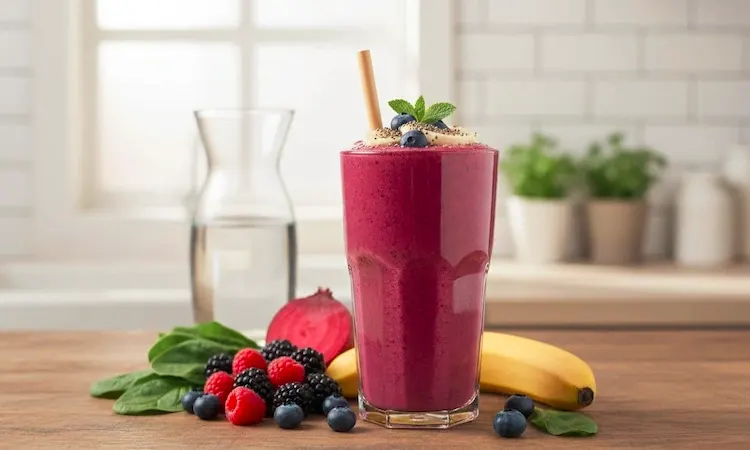
Smoothies feel like the safe choice. It’s fruit, maybe some yogurt, maybe a handful of spinach. What could go wrong?
Here’s the simple truth: are fruit smoothies fattening? Not automatically. A fruit smoothie can fit into weight loss, weight maintenance, or weight gain, it depends on what’s inside it, how big it is, and whether it replaces a meal or stacks on top of your usual food.
Weight Loss Programs
Diet & Weight Loss

Diet & Weight Loss
Diet & Weight Loss
Diet & Weight Loss
BellyFlush™ – Gut Cleanse and Digestive Detox for Weight Support
A small homemade smoothie (around 1 cup) can land roughly in the 200 to 300 calorie range when it’s mostly fruit plus a protein, blended with water or unsweetened milk. But many cafe smoothies are served in 16 to 24 oz cups and can easily reach 400 to 600 calories, and sometimes more, especially when juice, sweetened yogurt, syrups, or nut butters show up.
If you’ve ever finished one and still felt snacky, you’re not imagining it. Let’s break down why.
Are fruit smoothies fattening? The real answer depends on calories and portions
Weight gain isn’t caused by one “bad” food. It happens when you regularly take in more calories than your body uses. Smoothies can make that easier because they’re fast to drink, and big servings don’t always feel as filling as chewing the same foods.
Think of it like this: eating fruit is like walking up a hill, it takes time. Drinking fruit is like taking an elevator, you get there quickly, but you don’t notice the climb.
Smoothies make “a lot” feel like “a little”
A smoothie can contain:
- 2 to 3 servings of fruit
- a sweetened base (juice, flavored yogurt)
- calorie-dense extras (nut butter, granola)
All in one cup you can finish in five minutes.
Recent nutrition guidance often suggests keeping smoothies closer to 8 to 12 ounces if weight management is the goal, mainly because it helps control total calories and keeps the smoothie from turning into a stealth meal plus dessert.
Real-world calorie examples (small vs large)
Calories vary wildly, but these examples show how portions change the story:
| Smoothie style | Typical serving size | What often drives calories up |
|---|---|---|
| Homemade, measured ingredients | ~8 to 12 oz | Usually controlled fruit and an unsweetened base |
| “Large” fruit smoothie (banana-berry-yogurt type) | ~16 to 24 oz | Bigger portion, more yogurt or milk, sometimes added sweeteners |
| Cafe or chain smoothie | ~20 to 24 oz | Juice bases, sherbet, sweetened add-ins, oversized cups |
In recent menu and recipe comparisons, large fruit smoothies (16 to 24 oz) commonly fall around 400 to 700 calories, and some cafe smoothies can reach 500 to 800 plus depending on ingredients and size.
A homemade banana-berry-yogurt recipe can also climb fast. One example recipe totals about 515 calories for a bigger blended serving. If that batch pours two cups, that’s roughly 250 calories per cup (still fine for many people), but if you drink the whole thing as a “snack,” it can tip your day over without you noticing.
On the other end, a more tropical, richer smoothie (think pineapple, banana, coconut-style ingredients) can land around the low-500s for a single serving. That’s not “bad,” but it’s closer to a meal than a beverage.
For more context on smoothie nutrition and common pitfalls, Northwestern Medicine’s overview is a solid starting point: 6-Facts-You-Should-Know-About-Smoothies
Why smoothies can sneak in extra calories (even when they taste “light”)
Some ingredients add calories fast without making your smoothie look bigger.
Common “calorie boosters” include big portions, juice or lemonade bases, sweetened yogurt, honey or syrup, nut butters, coconut cream, granola, and “extra fruit” (especially when it becomes 2 bananas plus mango plus berries).
Also, sweetness can fool your appetite. When a smoothie tastes like fruit punch, it’s easy to drink it like fruit punch. The British Heart Foundation has a clear explainer on why smoothies can turn sugary quickly, and how that compares to whole fruit:5-a-day/smoothies
One more issue: some store-bought smoothies are closer to “sweet drinks” than “blended fruit.” Sugar levels can be high enough that you can overdo them the same way you might overdo soda, especially when the bottle is large and easy to sip mindlessly.
Homemade vs store bought smoothies: what changes the calorie load
The biggest difference is control.
Homemade smoothies let you measure fruit, choose unsweetened liquids, and add protein or fiber with intent. Store-bought and cafe smoothies often come with unknown portions, sweetened bases, and default sizes that are bigger than most people need.
If you buy smoothies often, check the posted nutrition info when it’s available, and treat the smoothie like food, not “just a drink.” The Center for Science in the Public Interest explains how many popular smoothie-shop drinks are built with high-calorie bases (like juice blends, sherbet, and frozen yogurt): whats-best-smoothies-shakes
What makes a fruit smoothie better for weight loss or weight maintenance
A weight-friendly smoothie isn’t about removing fruit. It’s about building something that actually satisfies you.
A simple formula that works for many people is:
Fruit + protein + fiber, blended with water or unsweetened milk
Why this helps: fruit brings taste and nutrients, protein helps you stay full, and fiber slows digestion so you don’t feel hungry again 45 minutes later.
Add protein so your smoothie actually keeps you full
Fruit alone digests quickly. That’s great before a workout, but it can be frustrating if your smoothie is breakfast and you’re hungry by mid-morning.
Adding protein changes the whole experience because it makes the smoothie feel more like a meal.
Practical protein options that blend well:
- Greek yogurt (plain is easiest to keep sugar down)
- Cottage cheese (sounds odd, tastes mild when blended)
- Milk (dairy) or unsweetened soy milk
- A scoop of protein powder (whey, pea, or another type you tolerate)
If your smoothie is meant to replace breakfast or lunch, protein becomes even more important. Without it, you can end up “double eating,” drinking the smoothie and then still wanting a full meal soon after.
If you want a quick reminder of common smoothie mistakes that can work against weight goals (including low protein and oversized servings), Health.com lays them out clearly: smoothie-mistakes
Use fiber to slow things down (and keep the calories reasonable)
Fiber is one reason whole fruit is linked with better weight outcomes than fruit juice. Blending whole fruit keeps most of the fiber. Juicing removes much of it.
So the base matters:
- Whole fruit blended with a low-sugar liquid keeps more fiber and texture.
- Fruit juice as a base adds sugar and calories, and you lose the “slow down” effect fiber gives.
Easy fiber add-ins that can work well in small amounts:
- Spinach or kale (adds bulk, not much sugar)
- Chia seeds (a small amount goes a long way)
- Ground flaxseed
- Oats (small scoop for texture and staying power)
A quick caution: “healthy extras” still count. A tablespoon of chia is different from a quarter cup of granola. The first supports fullness with a modest calorie bump, the second can turn your smoothie into dessert.
If you want an example of a fiber-forward smoothie, EatingWell’s chia seed smoothie recipes show how fiber-rich ingredients can fit without relying on juice: raspberry-mango-chia-seed-smoothie
How to make a fruit smoothie that is not fattening: simple rules and examples
A smoothie shouldn’t be a mystery. If you build it the same way most days, you’ll start to learn what keeps you full and what makes you snacky.
A simple smoothie checklist (portion, base, fruit, extras)
Use this as a quick gut-check before you blend (or before you order):
- Pick an unsweetened base: water, unsweetened almond milk, unsweetened soy milk, or plain milk.
- Skip juice most days. It raises calories fast and doesn’t help fullness much.
- Measure fruit: about 1/2 to 1 cup fruit works well for many smoothies. You can always add ice for volume.
- Add protein: Greek yogurt, cottage cheese, milk, soy milk, or protein powder.
- Add fiber on purpose: spinach, chia, flax, or a small scoop of oats.
- Measure calorie-dense extras: nut butter, coconut products, and granola can be great, but only in small portions.
- Choose a serving size that matches your goal: many people aim for roughly 8 to 12 oz for a snack, and up to 16 oz for a meal replacement, as long as it includes protein and not a lot of sugary add-ins.
A helpful mindset: if your smoothie is a snack, keep it snack-sized. If it’s a meal, build it like a meal.
If you buy smoothies out, it helps to compare what you’d make at home versus what you’re getting in a large cup. Iowa State University Extension has a straightforward comparison of homemade smoothies versus fast-food versions that highlights how quickly calories and sugar can climb: smoothie-smackdown-homemade-vs-fast-food/
3 quick smoothie ideas: lower sugar, higher protein, still tastes good
1) Berry Greek yogurt smoothie with spinach
Blend berries (fresh or frozen), plain Greek yogurt, a handful of spinach, water (or unsweetened milk), and ice.
Why it’s weight-friendly: measured fruit, strong protein base, spinach adds fiber and volume without turning it sweet.
2) Banana peanut butter “light” smoothie
Blend half a banana, milk or unsweetened soy milk, plain yogurt (or protein powder), cinnamon, and a measured spoon of peanut butter.
Why it’s weight-friendly: you still get the banana-and-peanut-butter flavor, but the portion stays realistic, and protein helps it stick with you.
3) Tropical mango-pineapple with chia
Blend a small portion of mango and pineapple with water (or plain yogurt), a spoon of chia, and lots of ice.
Why it’s weight-friendly: tropical fruit tastes intense, so you often need less of it. Chia slows digestion, and skipping juice keeps the calories from jumping.
If one of these feels “too healthy,” don’t rush to add honey. First try vanilla extract, cinnamon, or extra ice for that milkshake texture. Your taste buds adjust faster than you’d think.
Conclusion
Fruit smoothies can be fattening when they’re oversized, heavy on juice and sweetened add-ins, and treated like an extra drink on top of meals. But the same idea, blended fruit with the right base, can support weight goals when portions are reasonable and you include protein and fiber.
If you want a simple next step, make a measured homemade smoothie 2 to 3 times this week, keep it in the 8 to 12 oz range, and notice your hunger two hours later. That “how do I feel after?” test is often more useful than any rule. With a few smart choices, fruit smoothies can be a helpful habit instead of a hidden calorie trap.

The AnySmoothie team is all about smarter smoothie recipes made with whole-food ingredients. Everything we share centers on balanced nutrition, steady energy, and low-glycemic choices, so you can sip a smoothie that keeps you full, feels good, and helps you avoid sugar crashes.
- Disclaimer: This content is for educational use only. These smoothie recipes and nutrition details aren’t a substitute for medical advice from a licensed health professional. Please read our full Medical Disclaimer here.
Dietary Supplements
Dietary Supplements
GlucoBerry – Daily Support for Healthy Blood Sugar and Energy
Dietary Supplements
Joint Genesis – Daily Support for Comfortable, Confident Movement
Dietary Supplements
Audifort – Daily Support for Brain Clarity and Comfortable Hearing
Dietary Supplements