
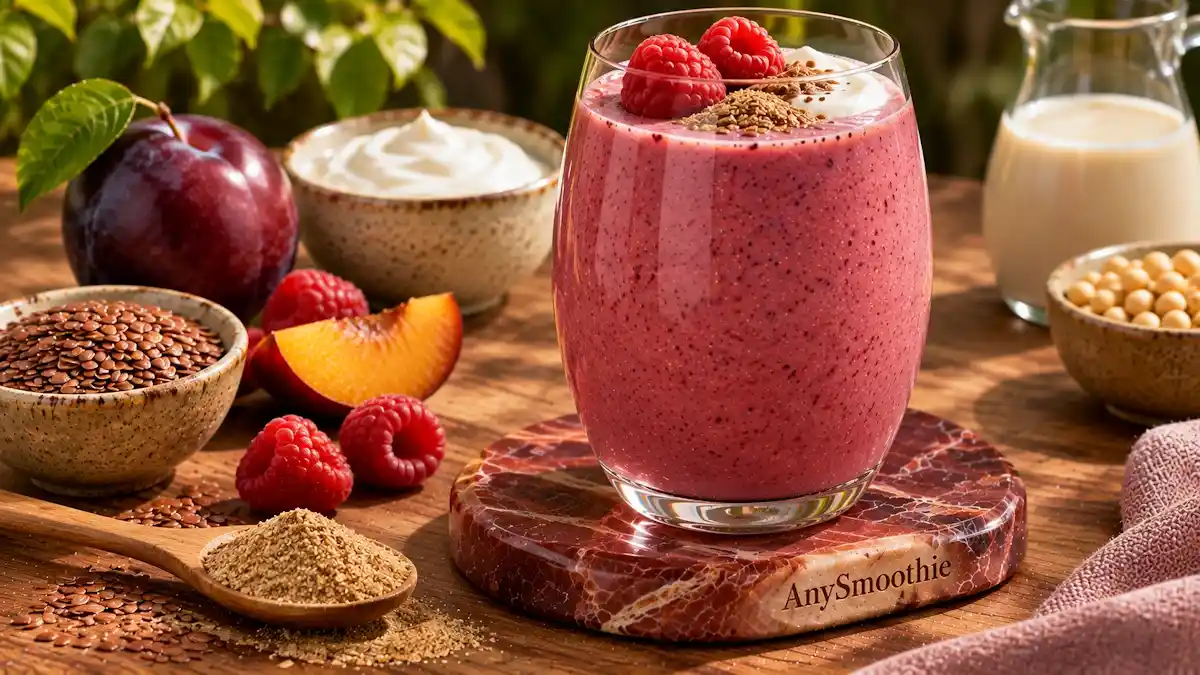
A smoothie makes ground flax easy to add to a meal, but enterolactone production depends on both flax lignans and gut microbes. Flaxseed is a rich source of dietary lignan precursors, which intestinal bacteria can transform into other compounds.
The three recipes below offer different flavors and textures without promising a particular biological result. Start with the combination you enjoy, then consider what happens after you drink it.
How flax lignans become enterolactone in the gut
The smoothie supplies plant compounds. Your digestive system and resident microbes determine what happens next, through several biochemical steps that blending alone cannot perform.
Ground flax supplies lignans that gut microbes can transform
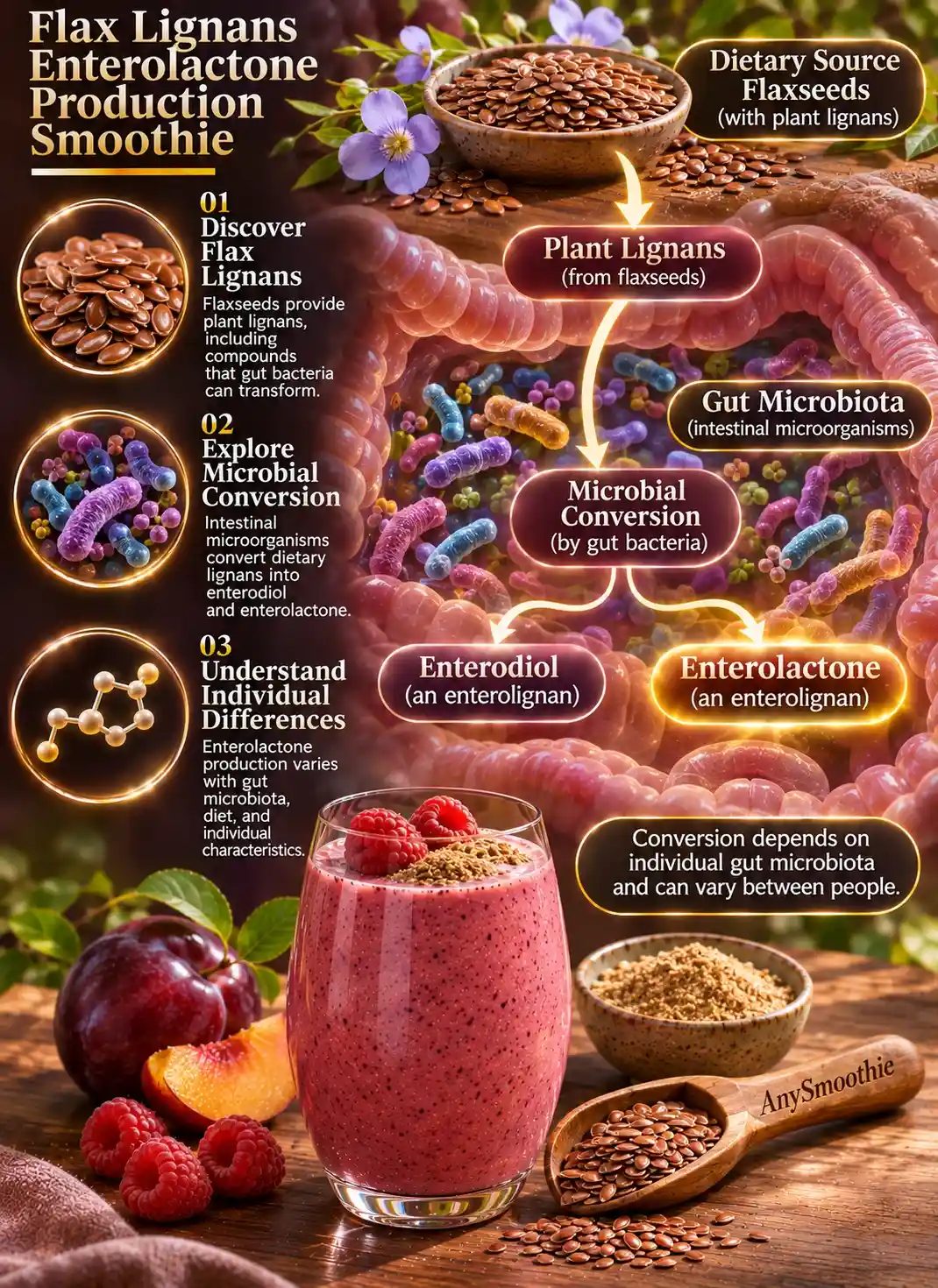
Flax contains the lignan secoisolariciresinol diglucoside (SDG). Bacterial enzymes can remove its sugar groups and carry out further transformations. The pathway includes intermediate compounds such as enterodiol before enterolactone forms.
A review of lignan metabolism describes how different intestinal bacteria participate in these conversions. Several microbial activities contribute, rather than one ingredient completing the entire process.
Grinding breaks the seed coat and makes flax easier to incorporate into food. It also improves access to the seed’s contents. However, a measured spoonful cannot establish how much enterolactone someone will produce.
Fiber intake and digestive regularity are also discussed in smoothies for constipation relief.
Why enterolactone production differs from person to person
People have different gut microbial communities, including differences in bacteria capable of processing lignans. Their usual eating patterns and digestion also affect the conditions in which those microbes work.
Research published in BMC Microbiology examined lignan intake, microbes, and enterolactone, illustrating why intake and microbial composition belong in the same discussion. Food intake alone doesn’t explain every difference between people.
For a related discussion of microbial communities in a different environment, see smoothies for oral microbiome balance.
After microbial conversion, the body can absorb and further process these compounds. Therefore, a recipe cannot predict a person’s enterolactone level. Adding more flax isn’t automatically better, and a larger portion also changes the smoothie’s fiber content and texture.
A separate look at intestinal responses to plant-derived compounds appears in cruciferous smoothies for intestinal ahr activation.
3 Flax Lignan Smoothies for Enterolactone Production
Each recipe makes one serving and uses ground flaxseed as its lignan source.
For another food-focused look at flaxseed, oats, and digestive fiber, see fiber smoothies for diverticulosis.
Berry-Banana Flax Kefir Smoothie
Kefir provides a tangy, cultured dairy base, but it doesn’t guarantee changes to your gut microbes.
Ingredients
- 1 tablespoon ground flaxseed
- 1 cup plain low-fat kefir
- 1/2 cup blueberries
- 1/2 medium banana
- 1 tablespoon rolled oats
Instructions
Blend until smooth, adding a little cold water if needed.
Estimated Nutrition (per serving)
- Calories: ~225 kcal
- Protein: ~13 g
- Carbohydrates: ~39 g
- Fat: ~5 g
- Fiber: ~7 g
- Sugars: ~23 g
Cocoa-Pear Soy Flax Smoothie
Pear gives this dairy-free smoothie a thicker texture, while cocoa adds a lightly chocolatey flavor.
Ingredients
- 1 tablespoon ground flaxseed
- 1 cup unsweetened soy milk
- 1 medium pear
- 1 teaspoon unsweetened cocoa powder
- 1 teaspoon almond butter
Instructions
Core and chop the pear, then blend all ingredients until creamy.
Estimated Nutrition (per serving)
- Calories: ~260 kcal
- Protein: ~11 g
- Carbohydrates: ~38 g
- Fat: ~10 g
- Fiber: ~10 g
- Sugars: ~22 g
Mango-Spinach Flax Yogurt Smoothie
Mango softens the yogurt’s tartness, while spinach adds color. The thick texture works well for a spoonable snack.
Ingredients
- 1 tablespoon ground flaxseed
- 3/4 cup plain 2% Greek yogurt
- 1/2 cup mango chunks
- 1 cup baby spinach
- 1/4 cup water
Instructions
Blend until smooth, adding more water to reach the preferred consistency.
Estimated Nutrition (per serving)
- Calories: ~205 kcal
- Protein: ~18 g
- Carbohydrates: ~23 g
- Fat: ~5 g
- Fiber: ~5 g
- Sugars: ~17 g
Nutrition estimates are approximate and rounded. Brands, fruit size, and measuring differences will change the totals, so treat these figures as general comparisons.
Choose a smoothie that fits your taste and routine
These differences can help you choose among the three recipes.
| Smoothie | Main distinction | Nutritional character | Texture and flavor | Best suited to |
|---|---|---|---|---|
| Berry-banana kefir | Cultured dairy option | Moderate protein and fiber | Tangy, fruity, drinkable | Fans of tart fruit smoothies |
| Cocoa-pear soy | Dairy-free option | Highest estimated fiber and fat | Thick, mildly chocolatey | A substantial snack |
| Mango-spinach yogurt | Protein-focused option | Highest estimated protein | Creamy, tart, tropical | Fans of spoonable smoothies |
Choose by flavor and dietary fit, rather than assuming one recipe produces more enterolactone.
Make flax smoothies easy to enjoy regularly
Blend ground flax thoroughly so it disperses throughout the drink. Because flax absorbs liquid, a smoothie may thicken as it sits. Add water gradually until the texture suits you.
Plain, unsweetened dairy or plant-based options let the fruit provide most of the sweetness. However, substitutions change flavor and nutrition. Soy milk and almond milk, for example, aren’t interchangeable protein sources.
Choose a recipe that works with your routine. A drinkable texture may suit breakfast, while a thicker blend may be easier to enjoy with a spoon.
Adjust fiber intake with comfort in mind
If flax or higher-fiber meals are new to you, increase fiber gradually rather than changing several meals at once. Adequate fluids may also help with digestive comfort.
These recipes contain different allergens, including milk, soy, and almonds. Dairy-free doesn’t mean suitable for every food allergy, and swapping ingredients changes the nutritional estimates.
If you have food allergies, dietary restrictions, or concerns about adding fiber, seek individualized guidance from a registered dietitian or another qualified healthcare professional. Your needs matter more than following any recipe unchanged.
Conclusion: Keep the focus on a smoothie you enjoy
These smoothies offer convenient ways to include flax lignans in meals. Gut microbes play a key role in converting those compounds into enterolactone, so the same recipe won’t produce an identical response in everyone.
Choose the flavor and texture you enjoy enough to repeat. Treat it as one part of your overall eating pattern, without expecting a guaranteed biological result.
🛡️ Safety Notes & Dietary Interactions
- Fiber Adjustment: Each smoothie contains ground flax, with additional oats, pear, spinach, or fruit. If higher-fiber foods are unfamiliar, increase gradually and maintain adequate fluid intake for digestive comfort.
- Allergen Awareness: The recipes include dairy kefir or yogurt, soy milk, and almond butter. Check ingredient labels carefully, especially when substituting products or preparing smoothies for someone with multiple food allergies.
- Flax Portioning: More flax does not guarantee greater enterolactone production and also increases fiber and energy intake. Keep portions practical rather than increasing flax specifically to influence microbial conversion.
- Digestive Tolerance: Kefir, yogurt, soy, flax, oats, and fruit may affect individuals differently. If a new combination causes persistent bloating, discomfort, or bowel changes, reduce the portion and reassess the ingredients.
FAQs
Does eating more flax guarantee more enterolactone production?
No. Flax supplies lignan precursors such as SDG, but intestinal bacteria perform the transformations leading toward enterolactone. Because gut microbial communities differ between people, increasing flax does not provide a predictable enterolactone output or guarantee a particular biological response.
Which smoothie has the most fiber?
The Cocoa-Pear Soy Flax Smoothie provides the highest estimated fiber, at approximately 10 grams per serving. The Berry-Banana Flax Kefir Smoothie provides about 7 grams, while the Mango-Spinach Flax Yogurt Smoothie provides approximately 5 grams. The higher-fiber option may also feel thicker and more filling.
Why is ground flax used instead of whole flaxseed?
Grinding breaks the seed coat and makes flax easier to incorporate into a smoothie, allowing its contents to be more accessible. It does not, however, determine how much lignan reaches microbial conversion or how much enterolactone an individual ultimately produces.
Can I use a dairy-free smoothie if I avoid milk?
Yes. The Cocoa-Pear Soy Flax Smoothie is already dairy-free, using unsweetened soy milk as its base. The other recipes can be adapted with suitable plant-based alternatives, but substitutions may change protein, fat, flavor, texture, and overall nutritional estimates.
Does kefir increase enterolactone production?
The article does not establish that kefir increases enterolactone production. Kefir provides a cultured dairy base, but the conversion of flax lignans depends on intestinal microbial activity. Therefore, using kefir does not guarantee a particular change in gut microbes or predict an individual’s enterolactone production.

Medical Disclaimer: AnySmoothie content is for educational purposes only and is not a substitute for professional medical advice. Consult a healthcare provider for personalized guidance. See our full Disclaimer & Terms of Use. AI Transparency: AnySmoothie may use AI to support content development. All content undergoes human editorial review for accuracy, clarity, and editorial quality. See our full AI Transparency.